Not every respray needs bare metal. If the old paint is sound and well stuck down, it's flatted, keyed and painted over, and it becomes part of the base for the new finish. The old paint has to come off when it can't be trusted to hold: when it's cracked, crazed, flaking, bubbling with rust underneath, or already so thick from earlier resprays that more paint on top would fail too. Rust under it, or cracks down into the primer, take it right back to bare metal.
Here's how to tell which your car needs, and what the extra work involves.
What is a bare metal respray?
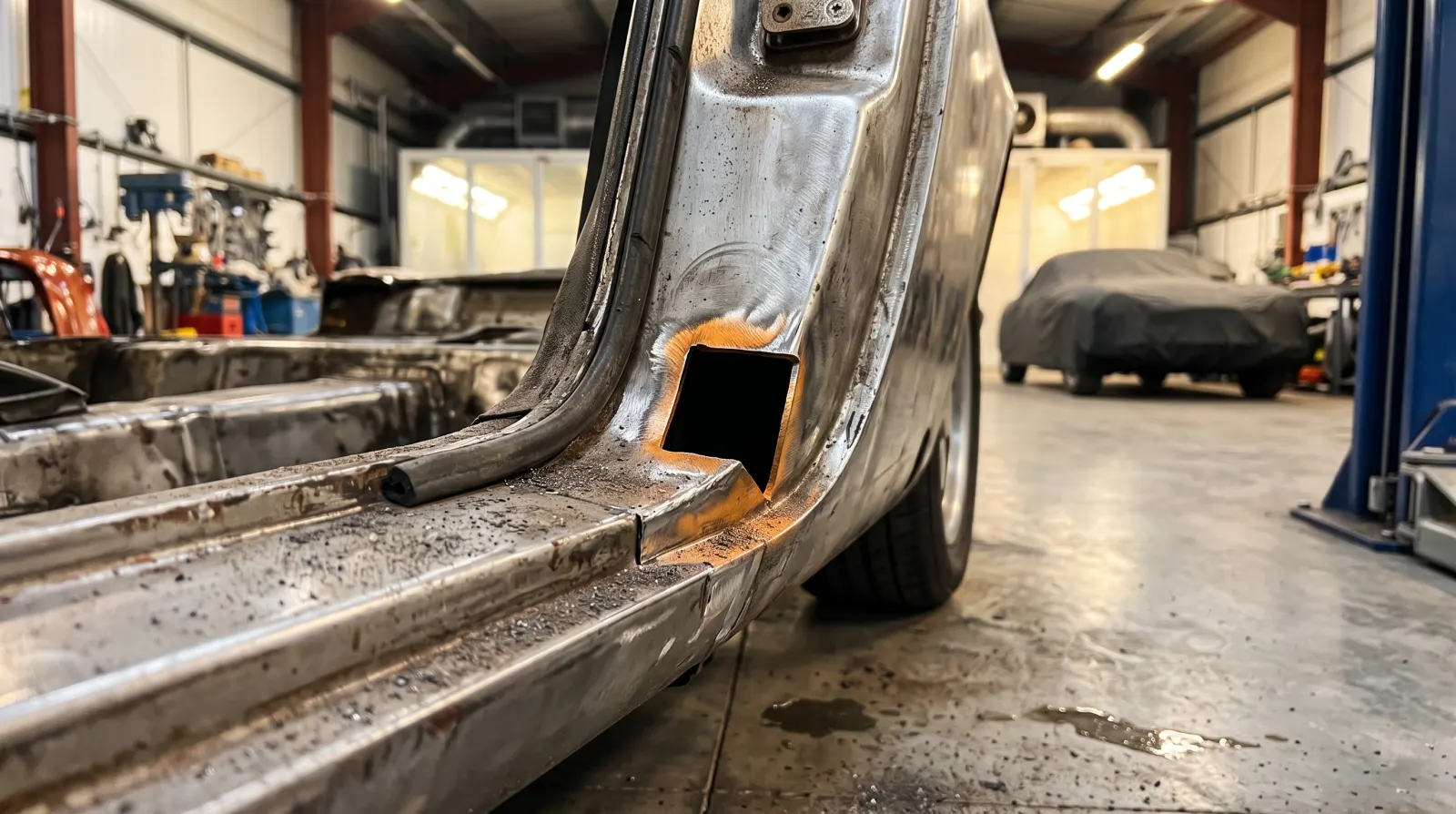
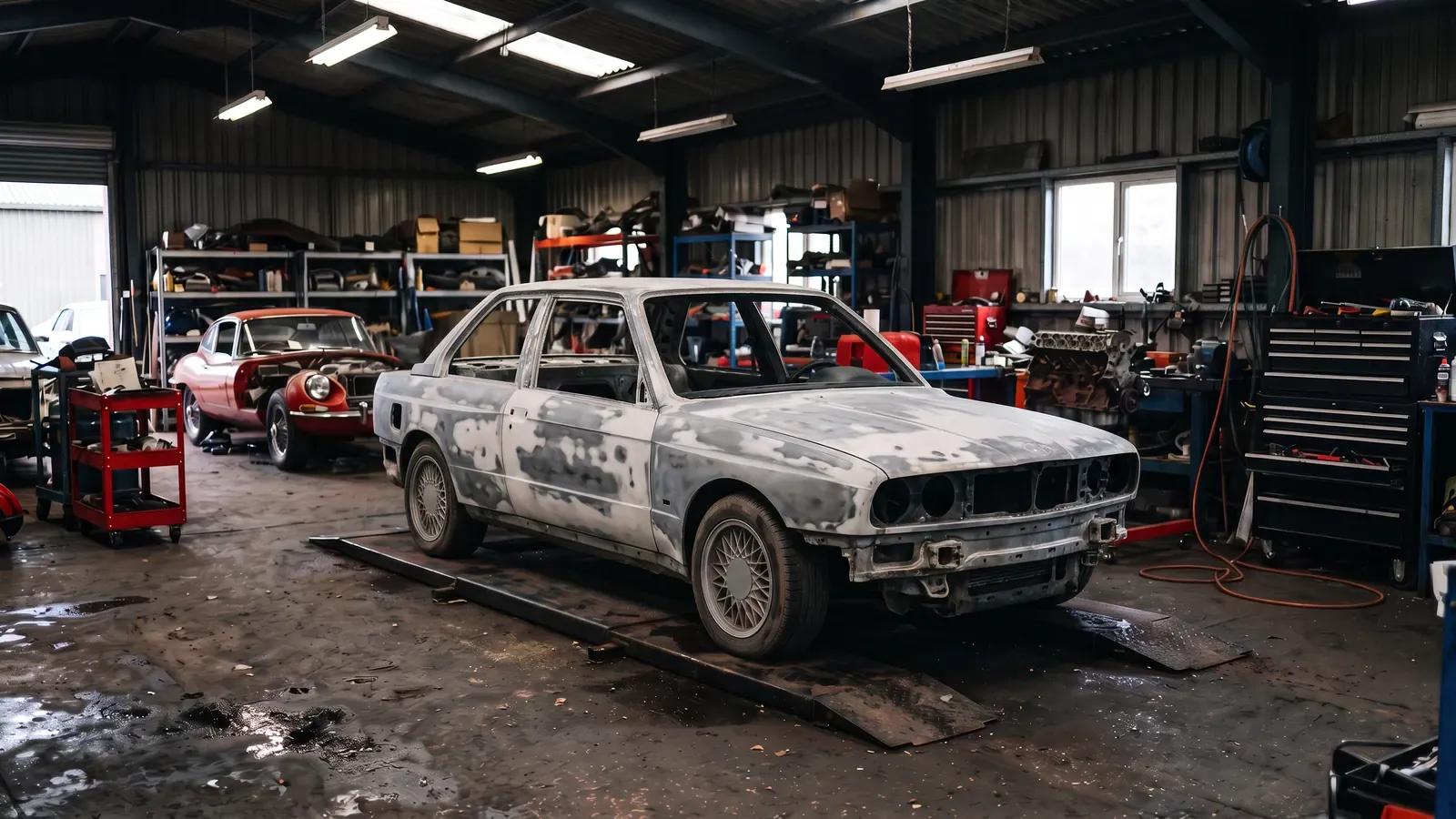
It's a respray where the old paint, primer and any old filler come off, right down to the steel or aluminium, and the car is primed and painted from scratch. Nothing of the old finish is left under the new one.
The alternative is flatting. Flatting means sanding the existing paint smooth and keying it, so it has a fine scratch for the new paint to grip. Chips and scratches are feathered in, primed where they need it, and the new colour goes over the top.
When can new paint go over the old?
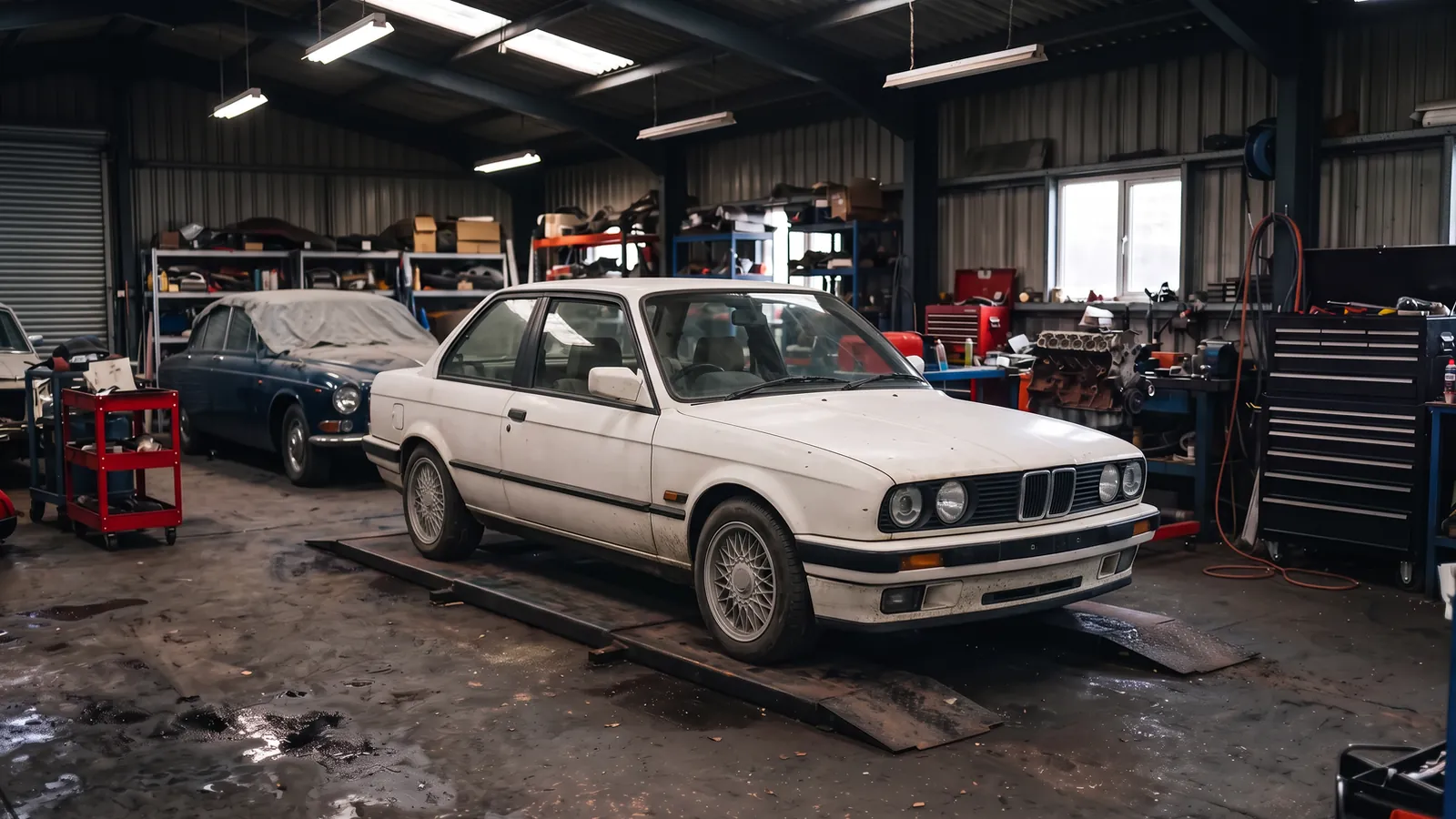
When the old paint is sound. That means it's firmly stuck and even, with no cracks, no bubbles and no rust under it. On a car like that, taking it all back to metal adds hours and cost the car doesn't need. See resprays for how the rest of the job runs.
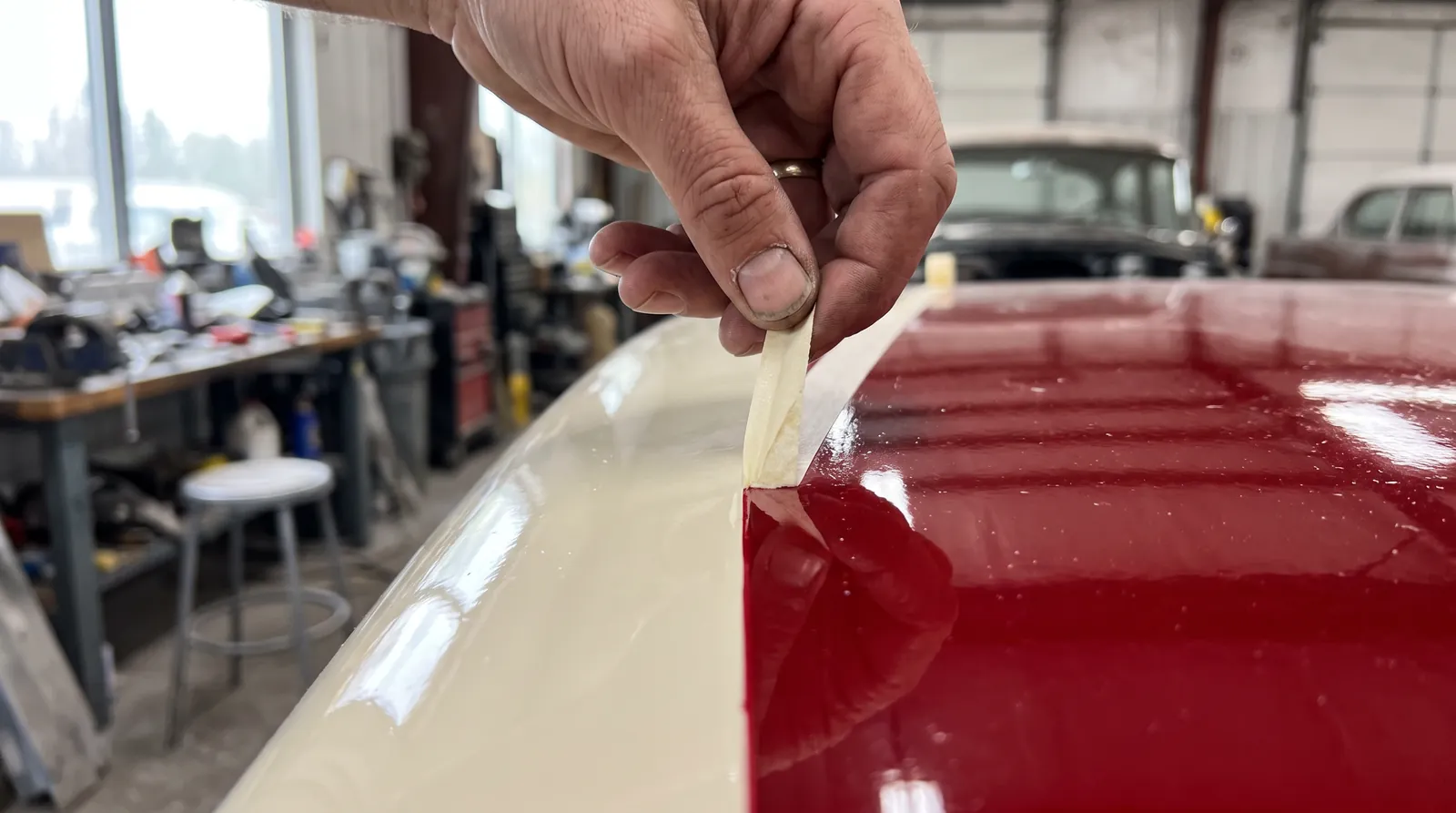
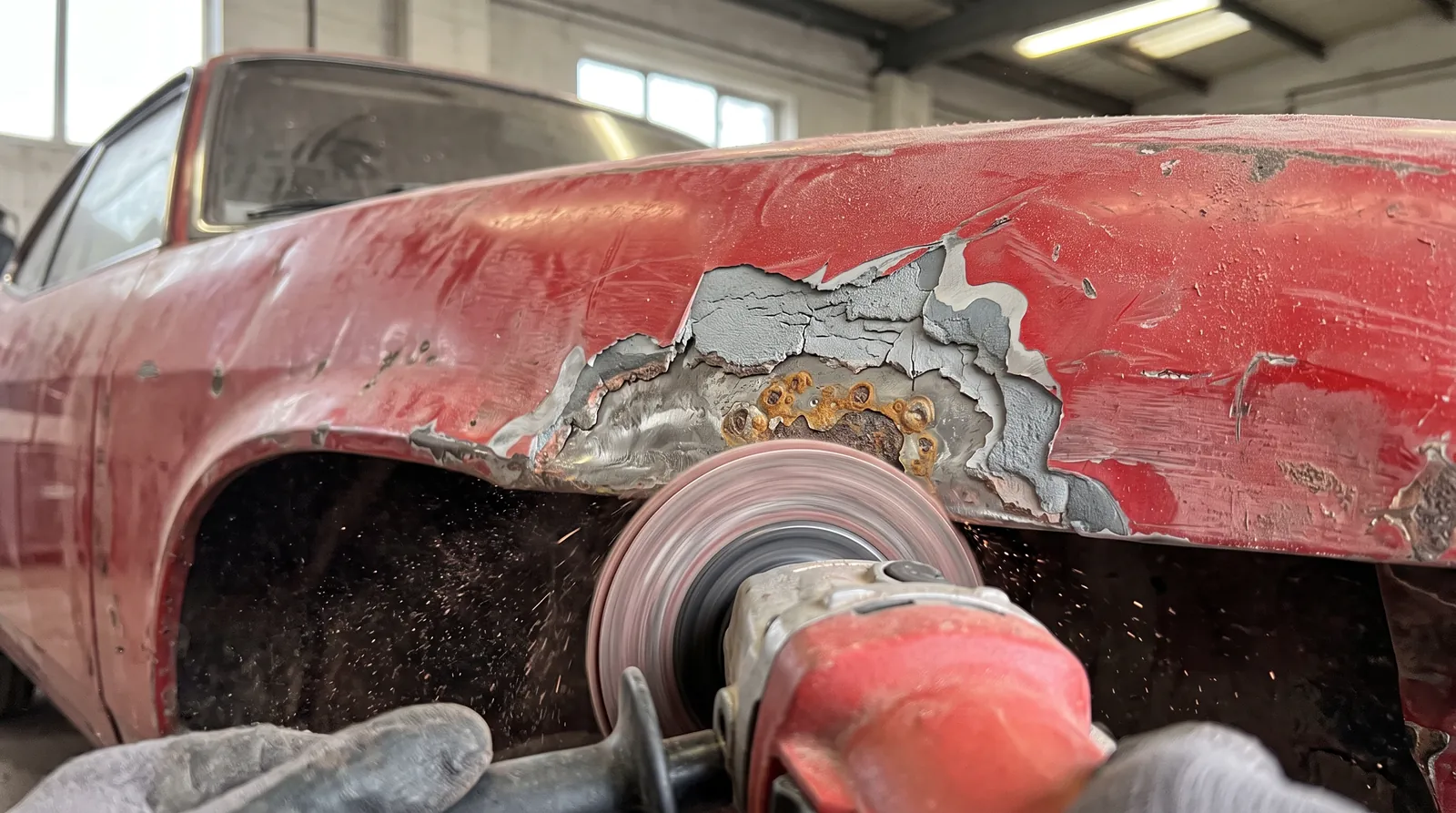
What are the signs the old paint has to come off?
Any sign that the old paint is losing its grip or breaking up. New paint is only as good as what it sits on, so if the layer underneath is failing, the new finish fails with it.
- Cracking. Breaks in the paint, often next to filled seams or panel edges. PPG's guide to cracking says that if the cracks have gone into the primer, all the paint comes off the affected area. Cracks in the top coat only can be sanded back to a sound finish.
- Crazing. A mass of tiny cracks that looks like a loss of gloss until you get close. PPG lists too thick a paint film among the causes of crazing, and its fix is to sand the area back to a sound finish.
- Flaking and peeling. Paint coming away in flakes has lost its grip on the layer below. PPG's fix for flaking is to remove the detached paint and prepare the surface underneath before painting.
- Bubbles. Paint bubbling round seams, edges and fittings is the sign PPG gives for corrosion under paint. Its remedy is to strip the area to bare metal, remove all the rust, treat the metal and prime it before repainting.
Does a car that's been resprayed before need bare metal?
Not always. It depends on how well the earlier respray was done and how much paint is on the car now. Every respray over the top adds another layer, and too much paint is one of the causes of the cracking and crazing above.
The more resprays a car has had, the more likely the next one starts at bare metal.
What about old filler under the paint?
It's another reason to go back to bare metal. Filler laid on thick cracks and shrinks, and its edge can show through the paint as a ring. Filler over rust lifts as the rust grows under it.
You often can't see it until the paint comes off. Once it's found, it's ground out, the metal is put right and only a thin skim goes back. That's why a respray price only firms up once the car is stripped.
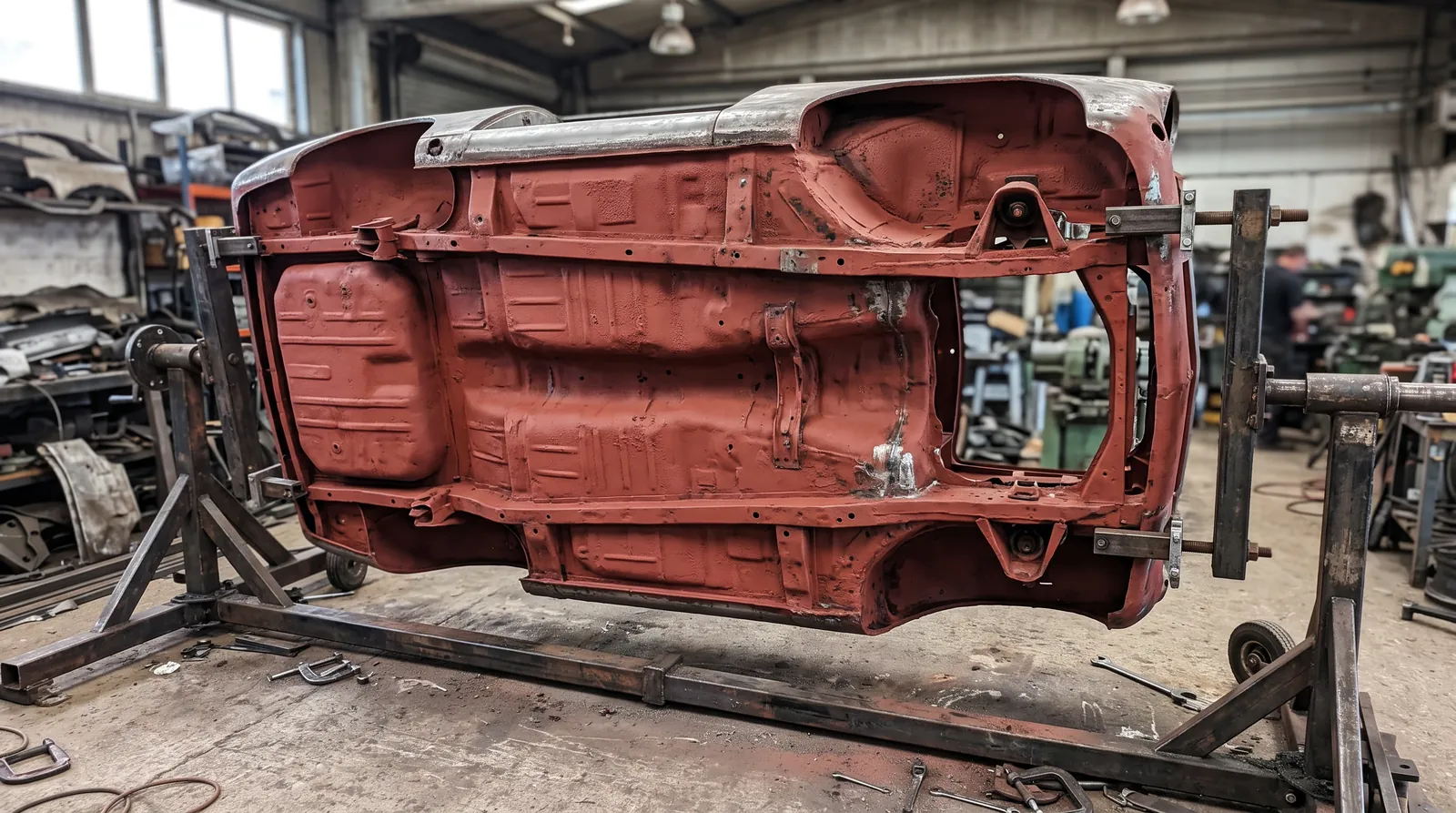
Does the whole car have to go back to bare metal?
No. It can be done panel by panel. A cracked bonnet and a bubbling sill can go back to metal while doors with sound paint are flatted and painted over.
On a full restoration, taking the whole shell back to bare metal puts every old repair and every patch of rust out in the open. See strip-downs for what comes off the car first.
What happens once it's back to bare metal?
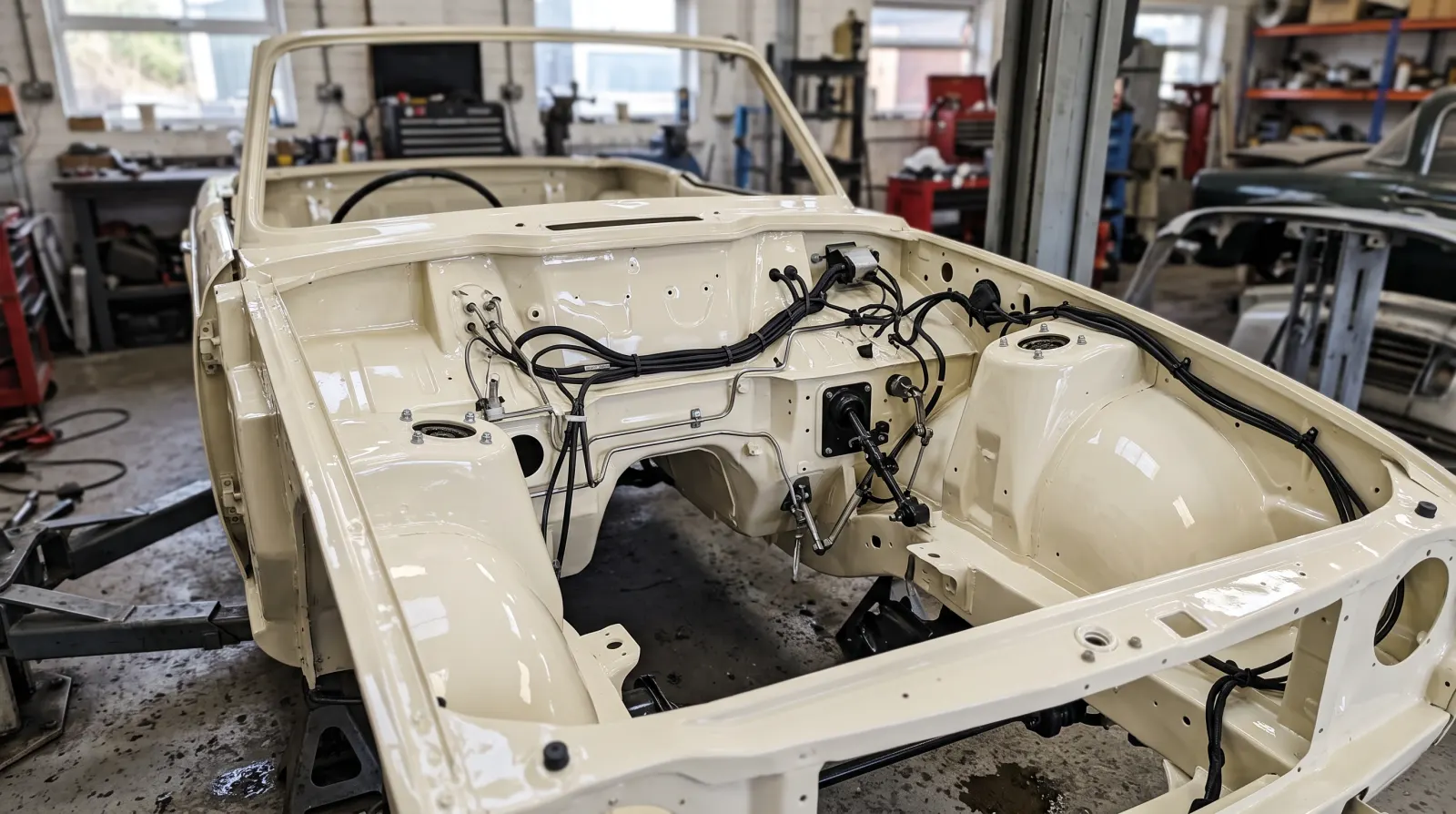
Any rust is ground back to clean steel, or cut out and new metal let in where it has gone too far. Then the metal gets primer straight away, because clean bare steel starts to rust quickly in damp air.
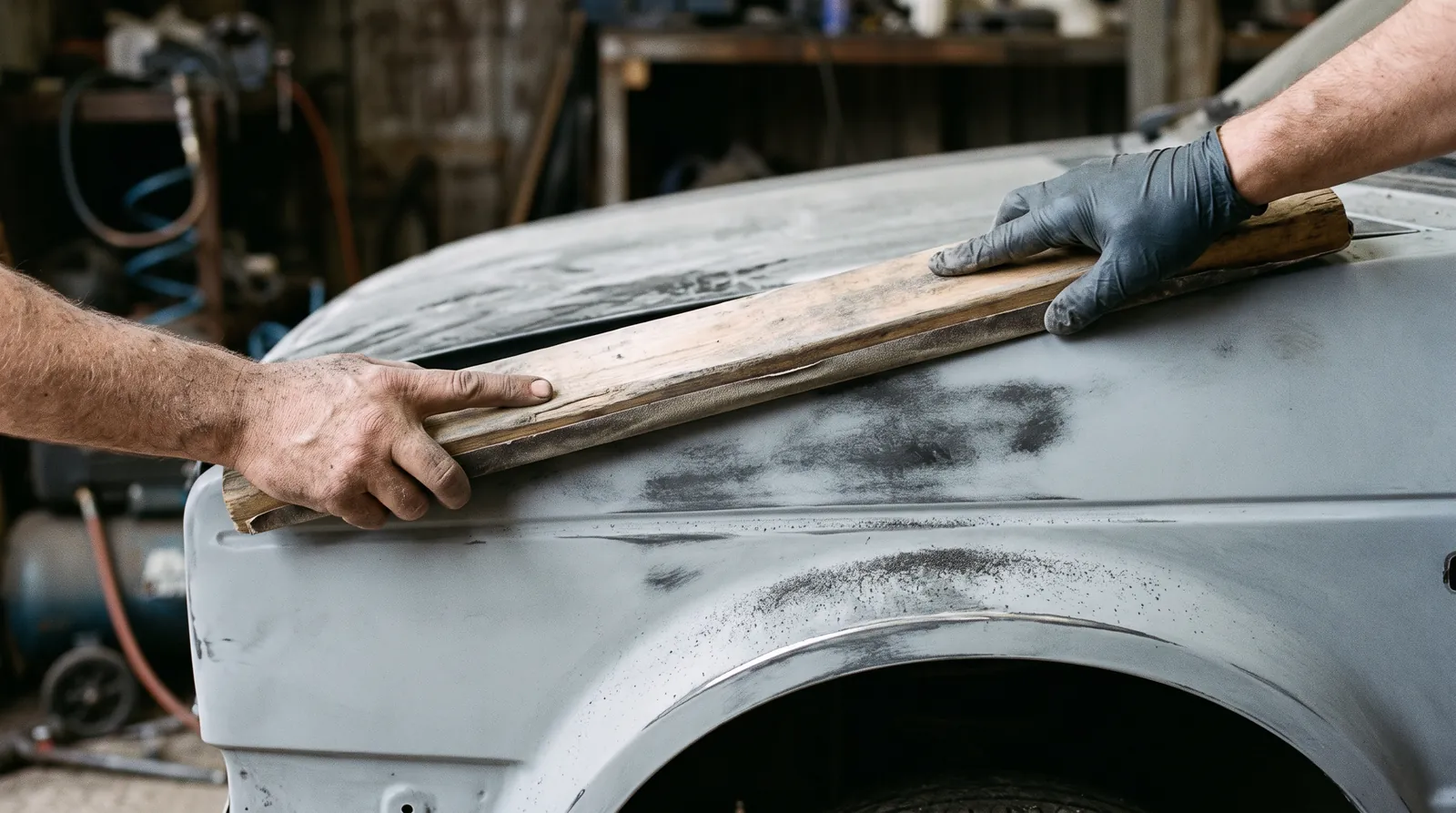
Etch or epoxy primer goes on first. Epoxy grips bare steel and seals it, and etch bites into aluminium and galvanised panels. Then thin filler where it's needed, and high build primer, a thick primer that fills fine scratches. Guide coat, a dusting of dark powder, shows the low spots while the panels are blocked flat with a long sanding block. Only then do colour and lacquer go on.
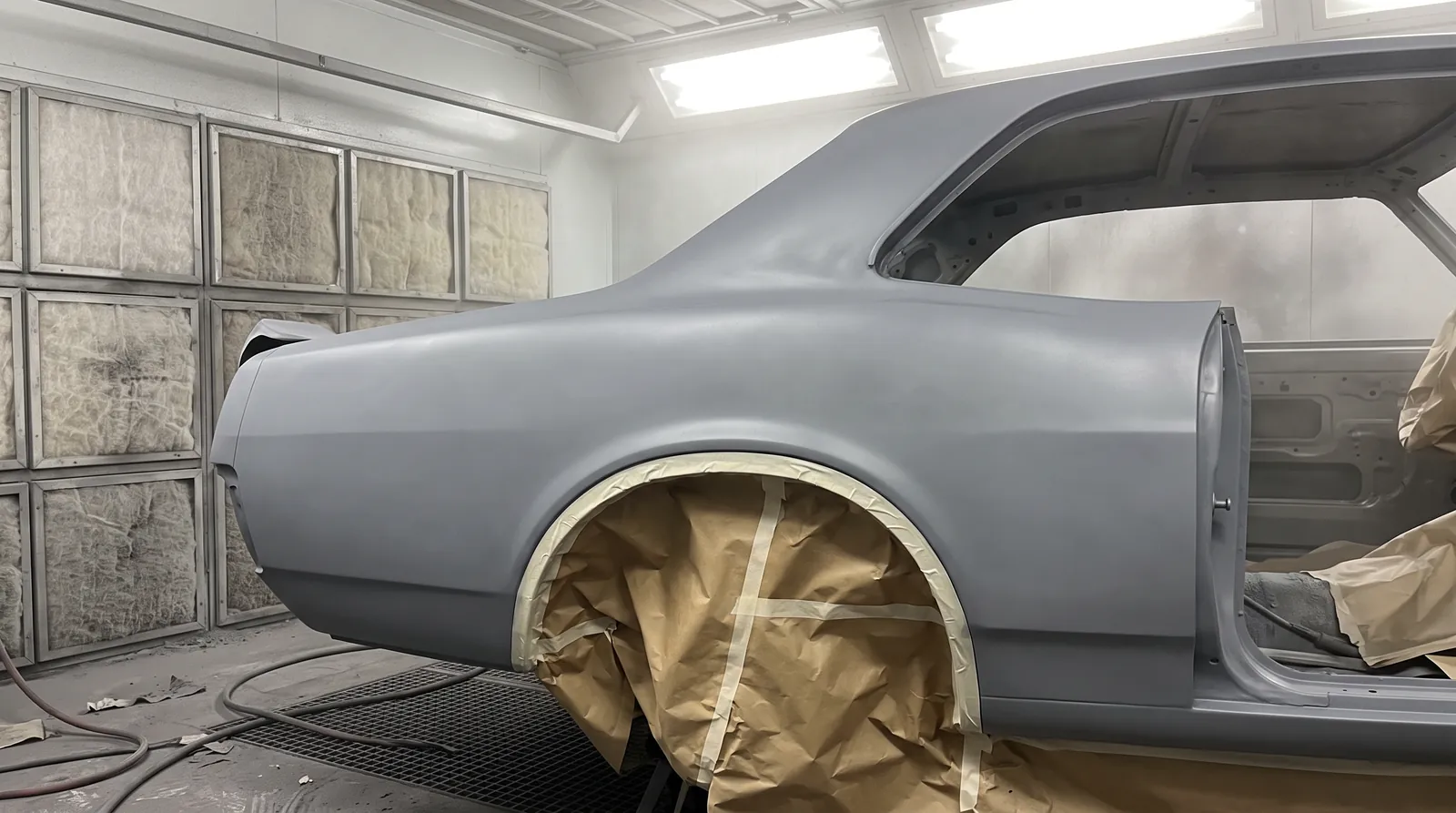
Primer
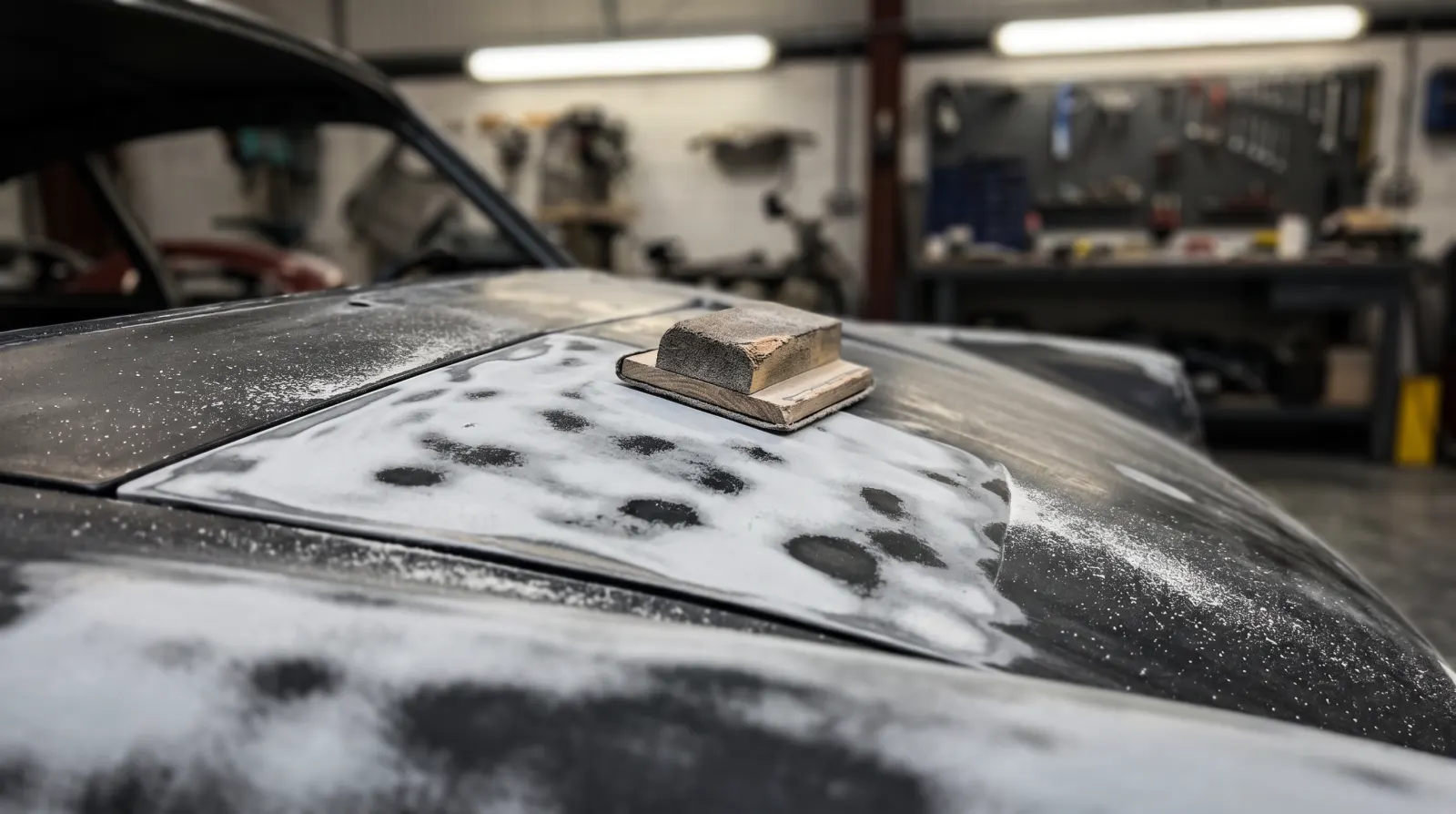
Guide coat
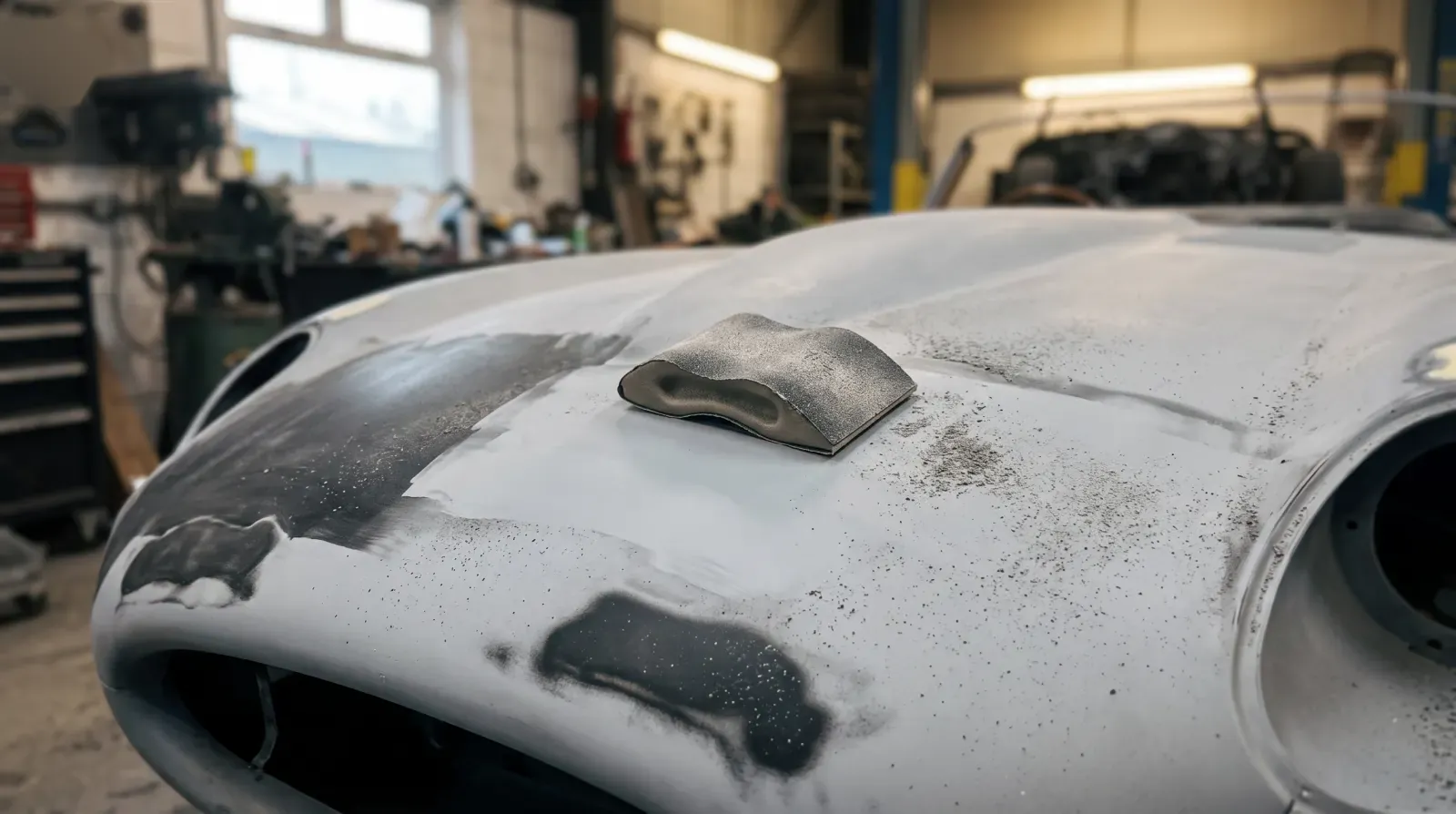
Blocked flat
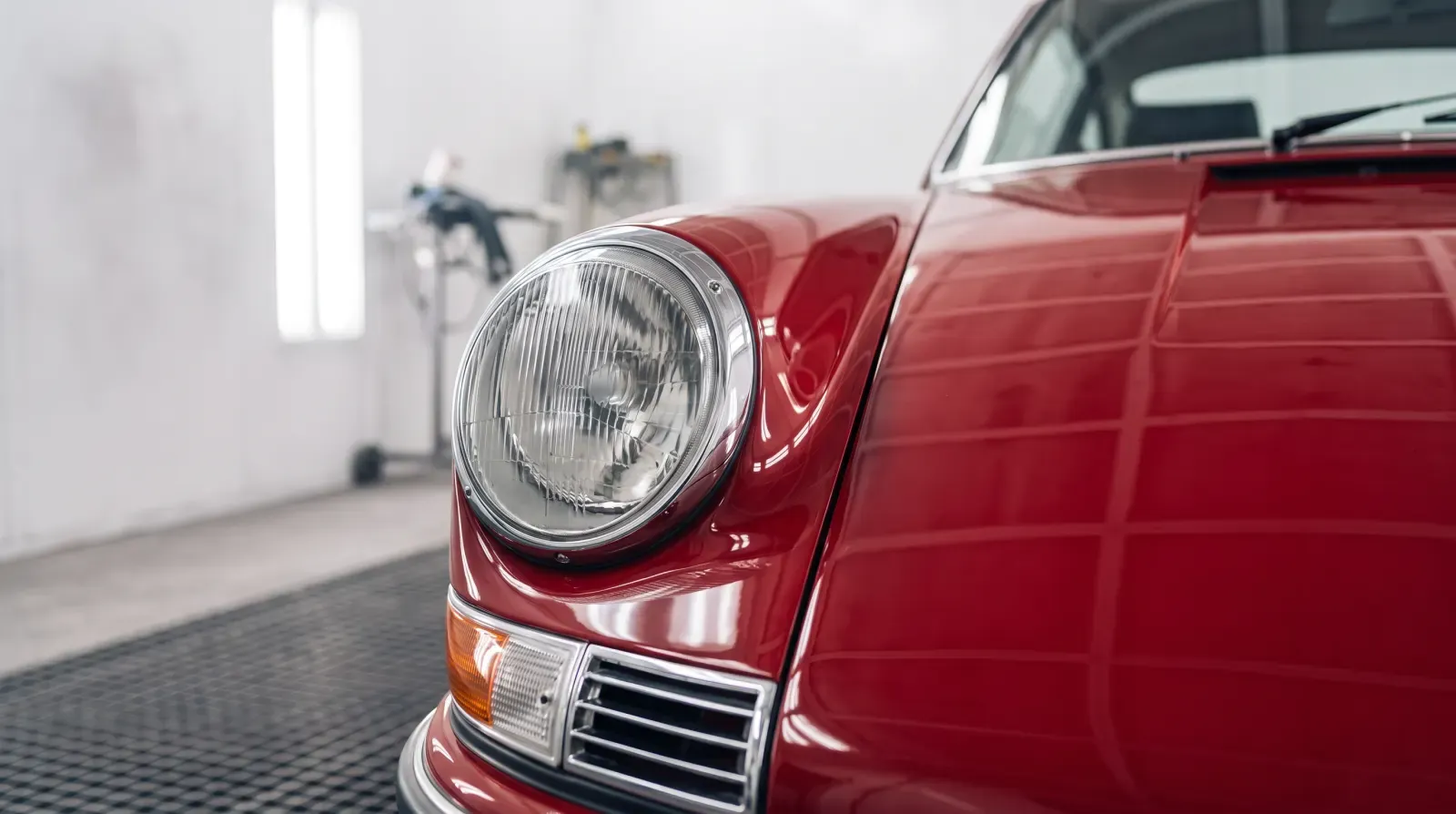
Colour and lacquer
How is the old paint taken off?
Trim, lights, seals and badges come off first, so nothing gets damaged and the paint can be taken off right to the edges.
How much longer does a bare metal respray take?
Longer than flatting and painting, and it costs more, because every panel is built back up from bare metal and whatever the stripping turns up adds time on top.
Once it's stripped, we confirm the price and show you what we've found. See prices for how we quote.
How do I know which my car needs?
Send us close-up photos of the worst areas, the cracks, bubbles and flaking, plus a few of the whole car. We'll tell you what we think from the photos and confirm it once the car is here and we can see under the paint.
Send them over from the quote form.