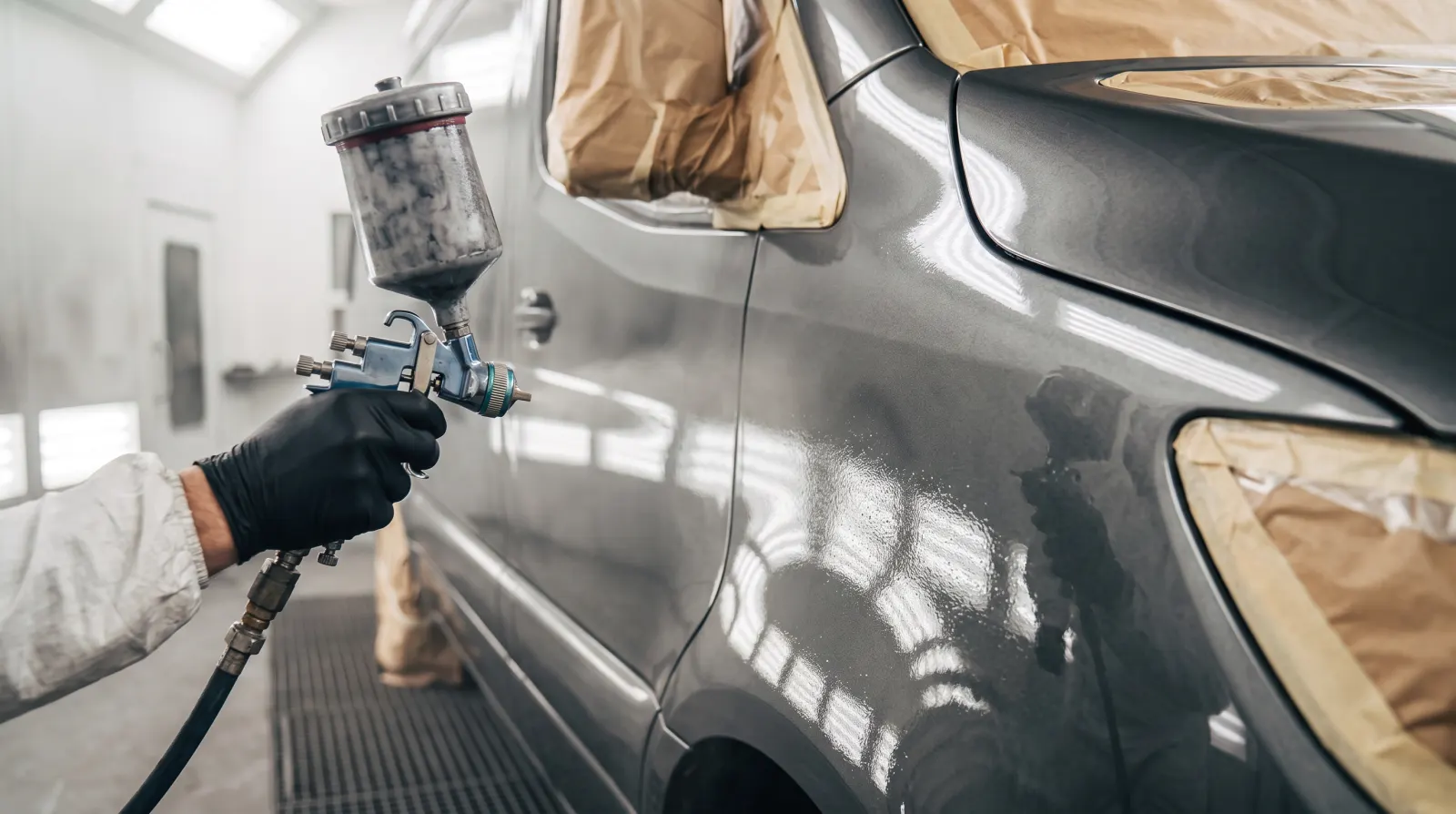
A large van respray is the same job as a car respray, over a lot more metal. A long wheelbase van has more panel to prep, more paint to put on and big flat sides that show every ripple under gloss, so the blocking takes longer. It also has to fit in the booth with room to work all the way round it.
Here's what changes on the big jobs, and what moves the price.
Why is a van respray a bigger job than a car?
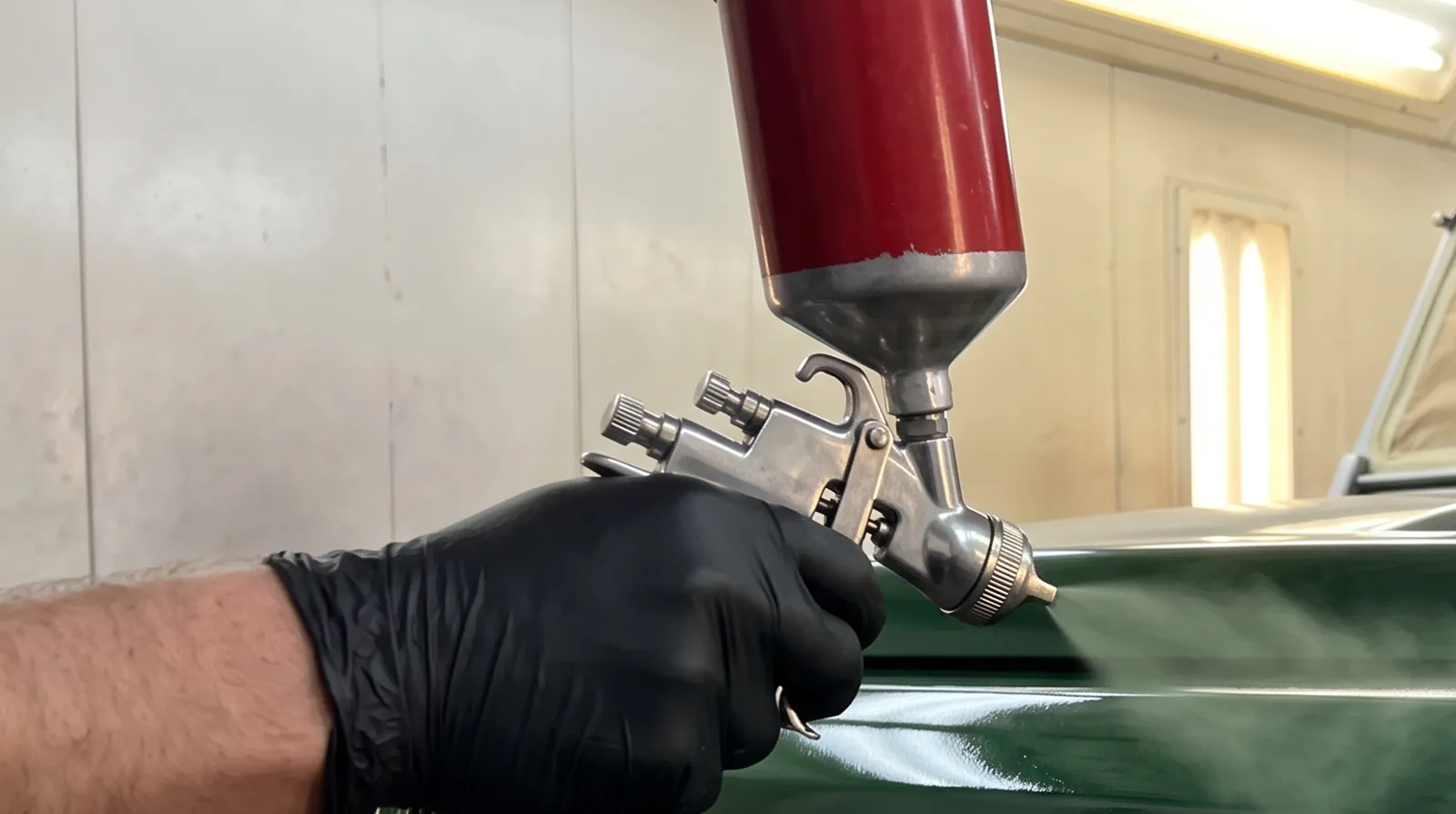
Because there's more of it. The sides, roof and doors of a long wheelbase van add up to far more panel than a car, and all of it gets the same prep: flatted, filled where it needs it, primed, guide coated and blocked before any colour goes on. More panel means more hours and more paint.
The order of work doesn't change. See resprays for how a full respray runs.
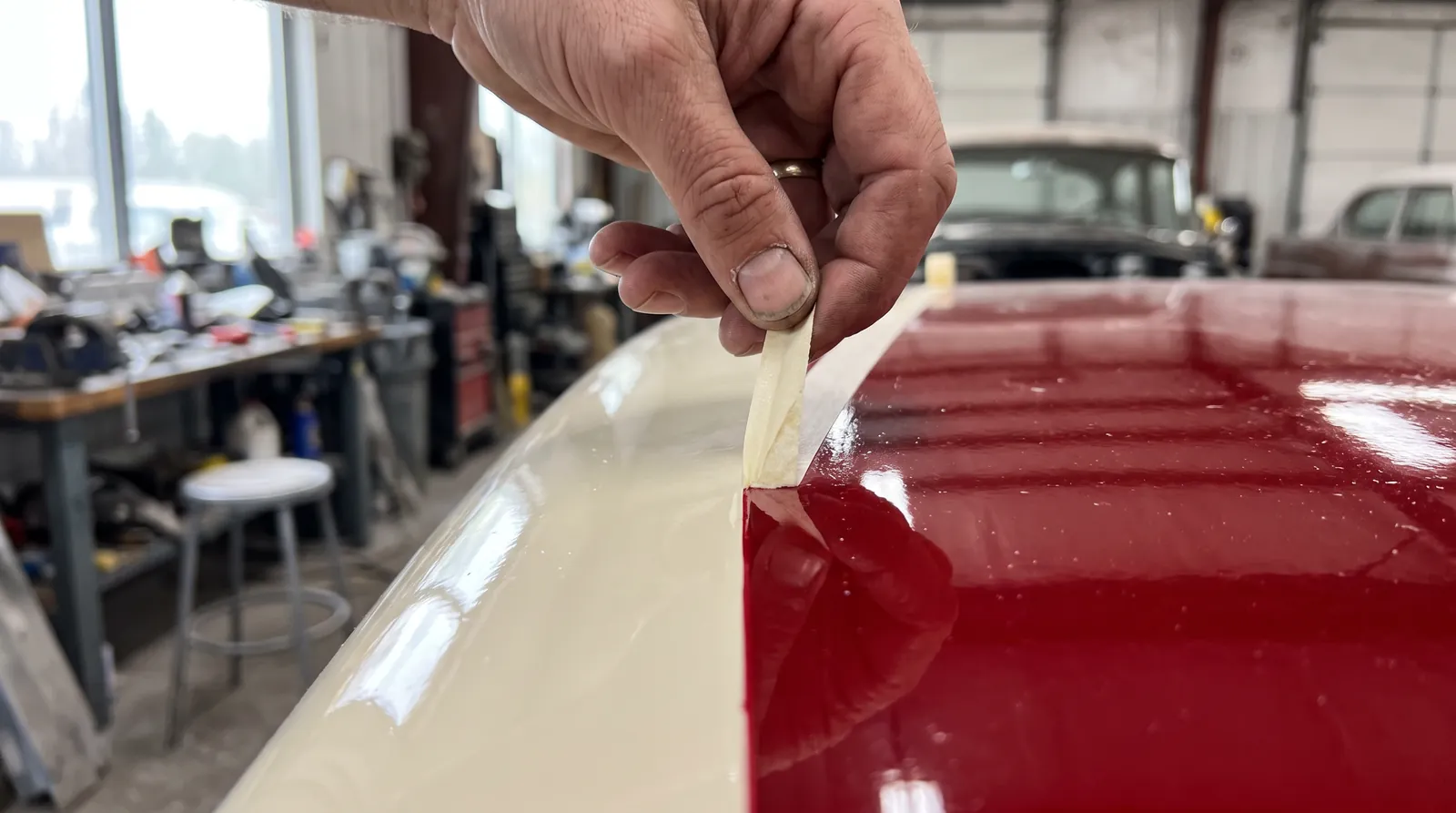
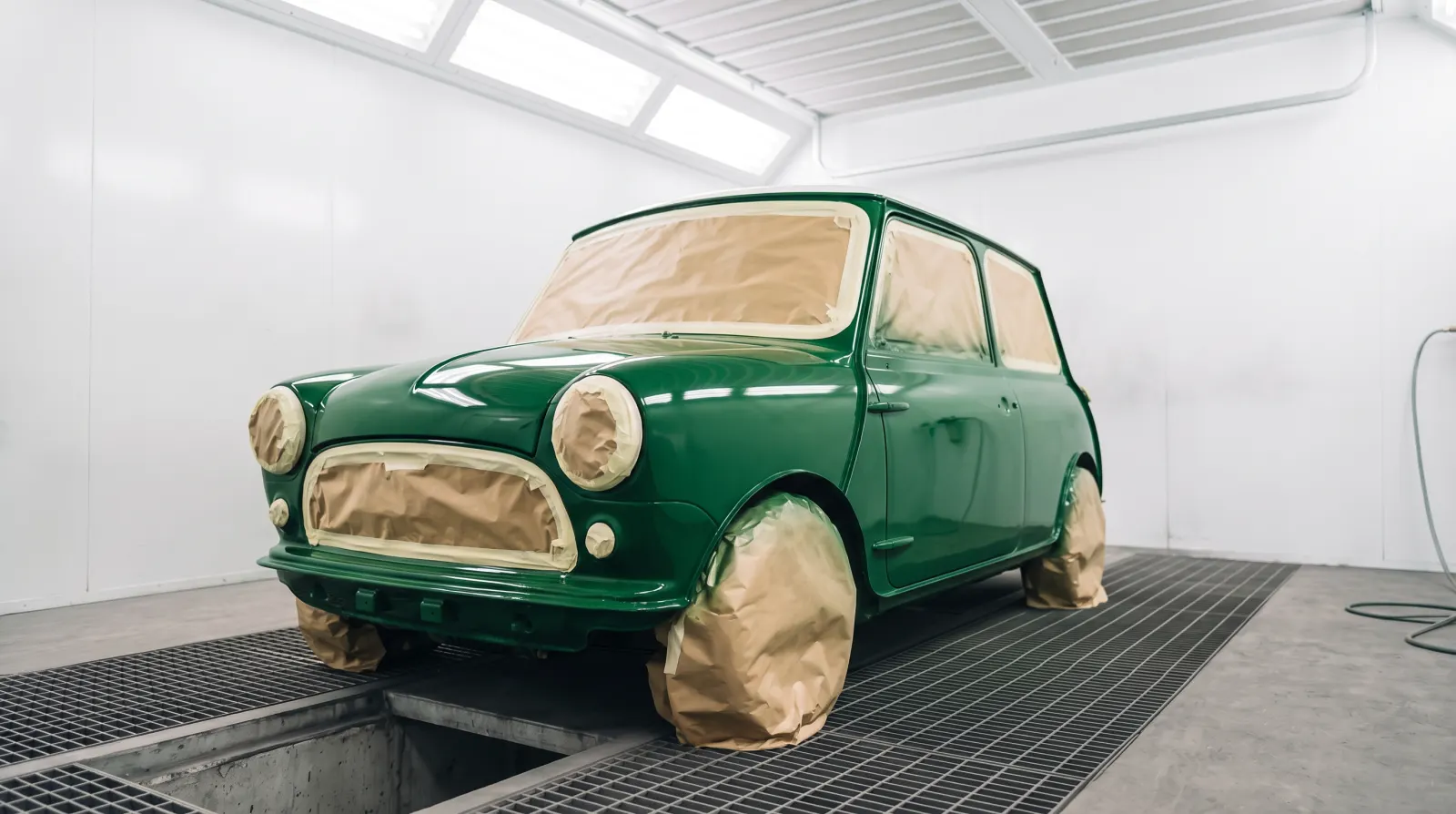
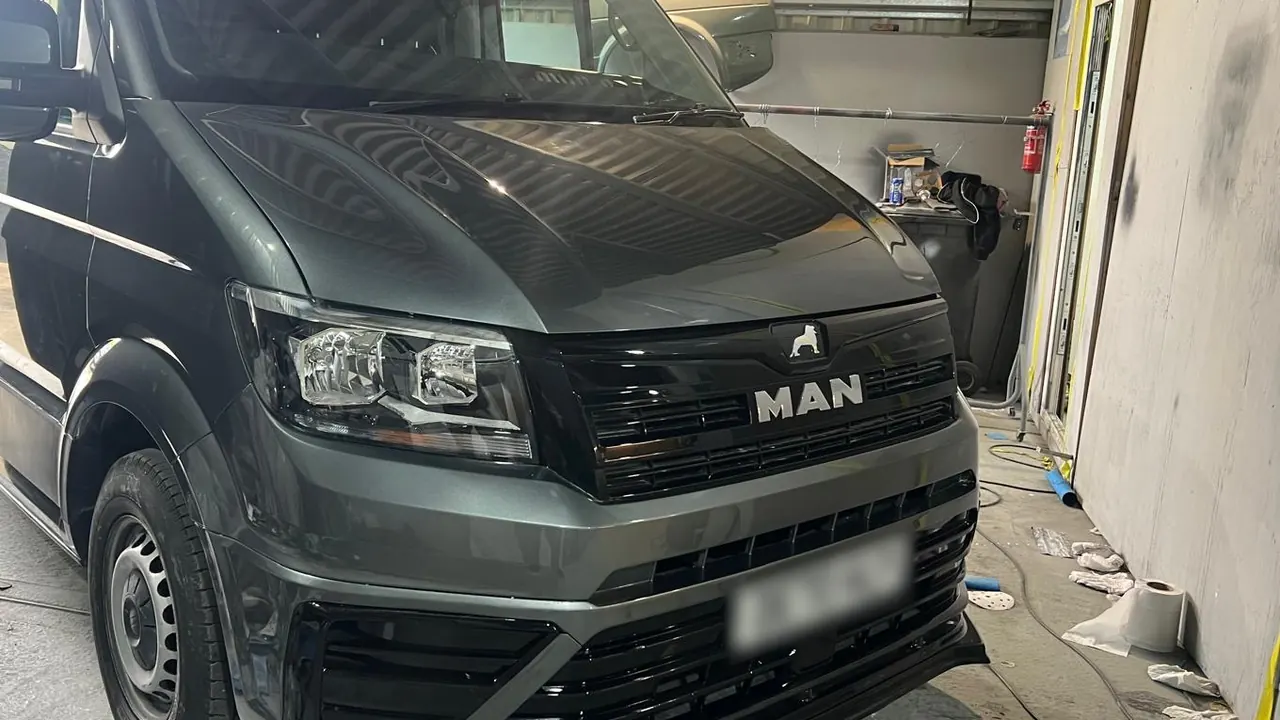
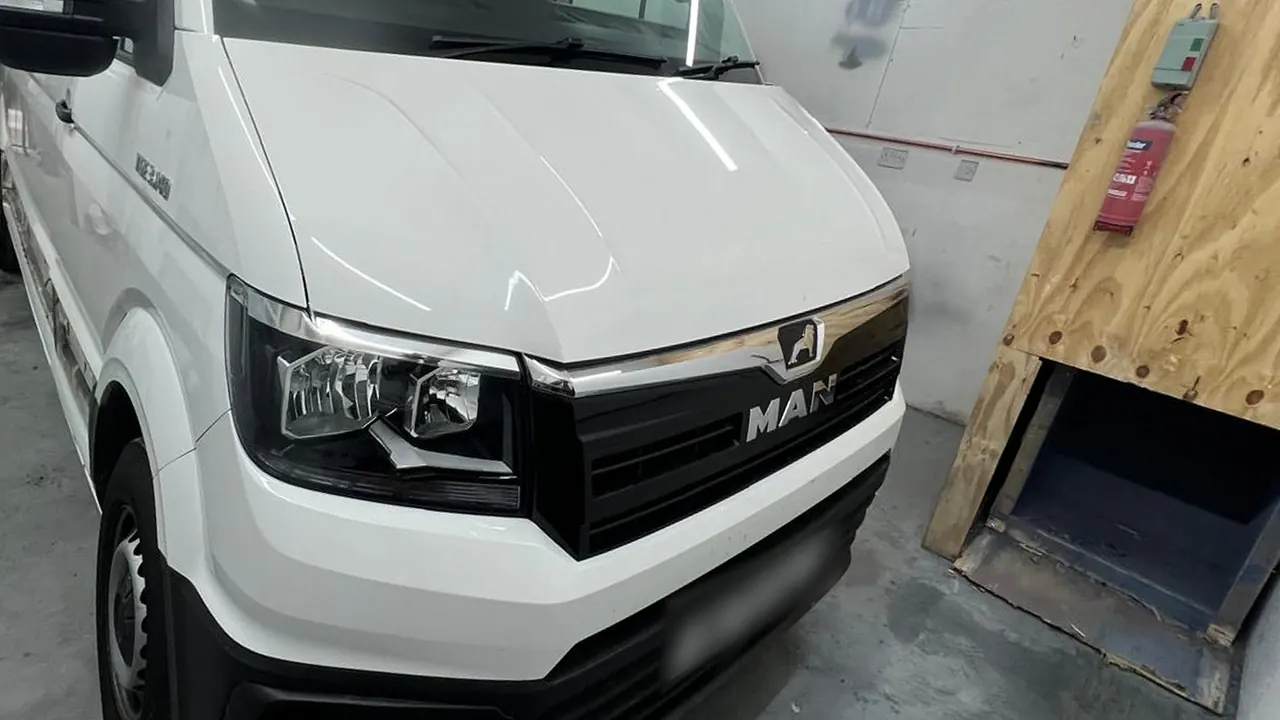
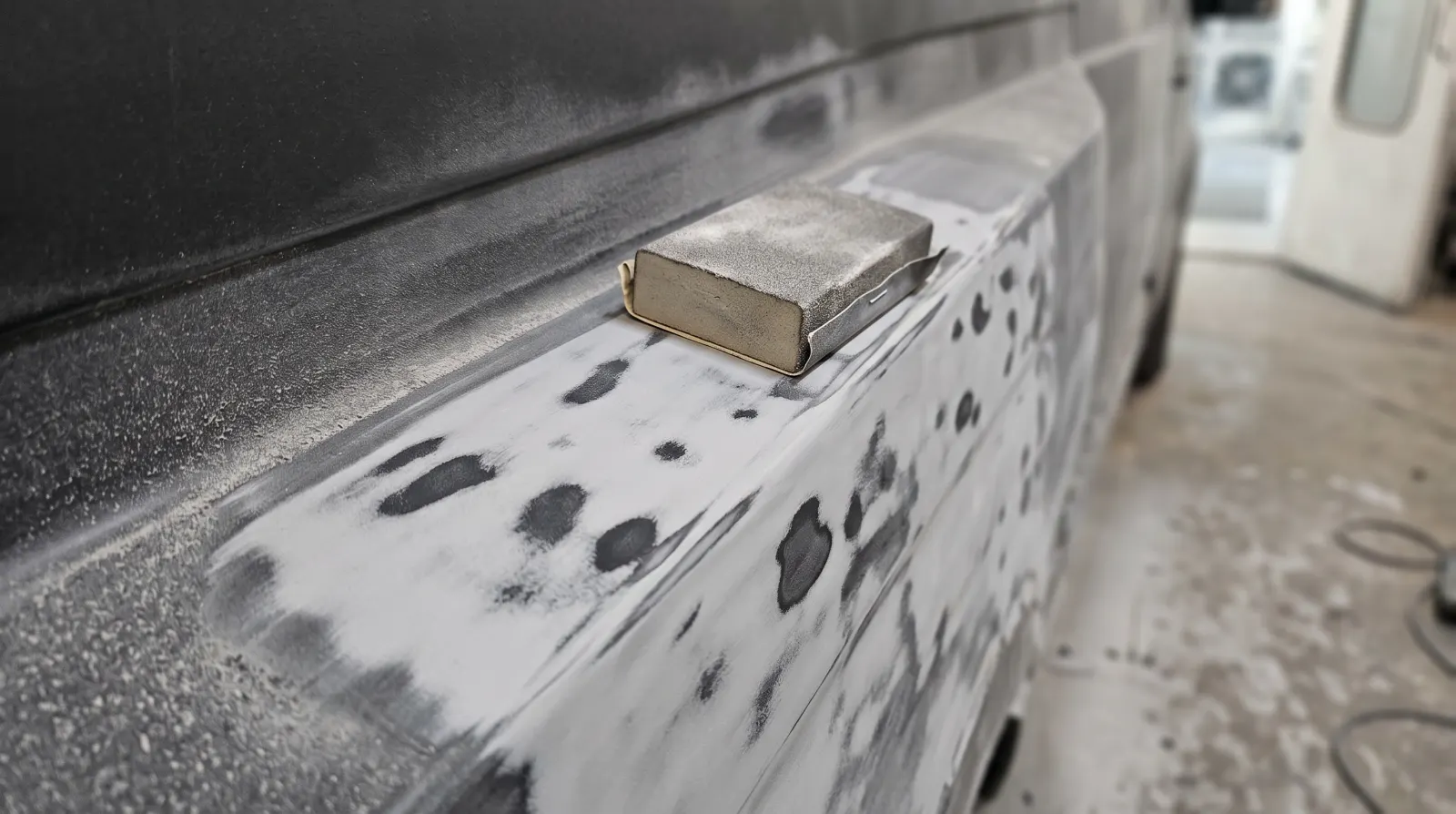
Why do flat van sides show every ripple?
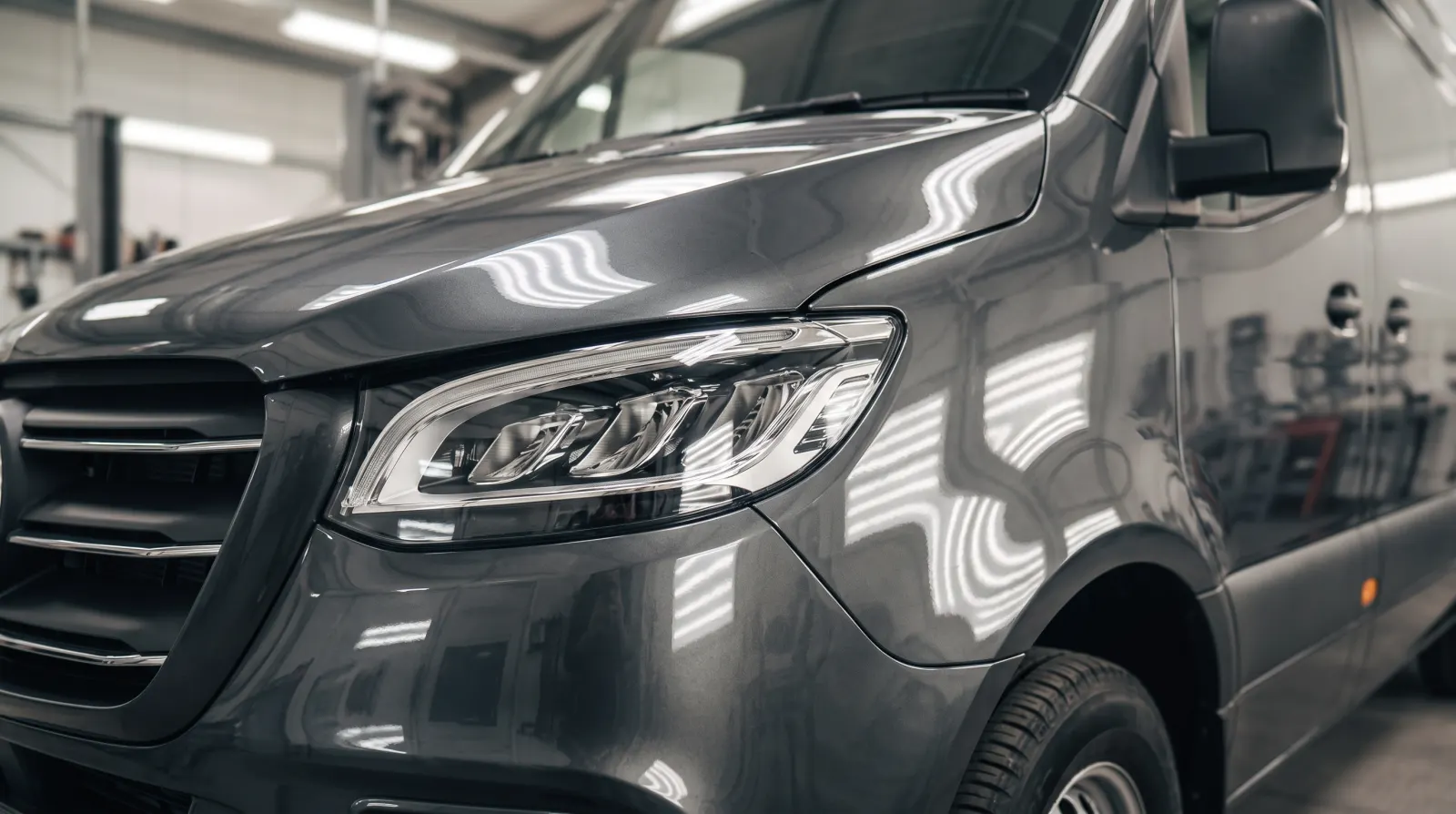
Because a big flat panel has no curves to hide behind. On a curved wing, a small high spot gets lost in the shape. Along the side of a van, reflections run in long straight lines, and any dip, bump or edge of old filler bends them where everyone can see.
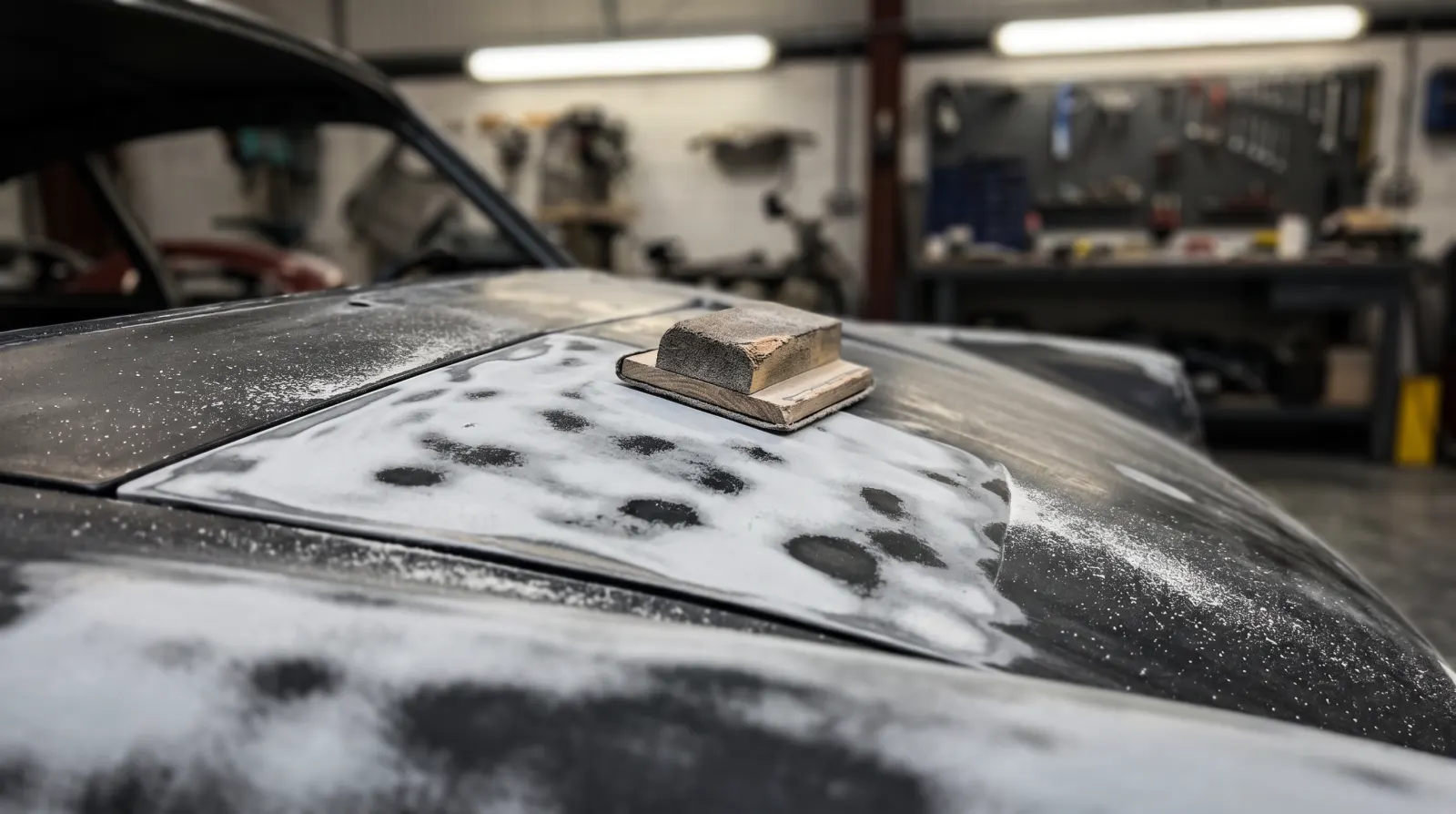
So the blocking matters more on a van than almost anywhere. Guide coat, a thin dusting of dark powder over the primer, stays in the low spots when the panel is sanded with a long flat block, and shows where it needs more work. On a van side, that's a lot of blocking.
What comes off a van before it's painted?
Everything bolted to the outside that the paint has to get behind: lettering and graphics, roof bars and ladder racks, beacons, mirrors, handles, lights and trim. Lettering and graphics come off before any prep starts.
Racks and beacons are often bolted through the body, and every hole is a way in for rust. PPG, one of the big paint makers, lists drilled holes left untreated among the causes of corrosion under paint. So holes that will be used again are treated and primed, and holes that won't are welded up.
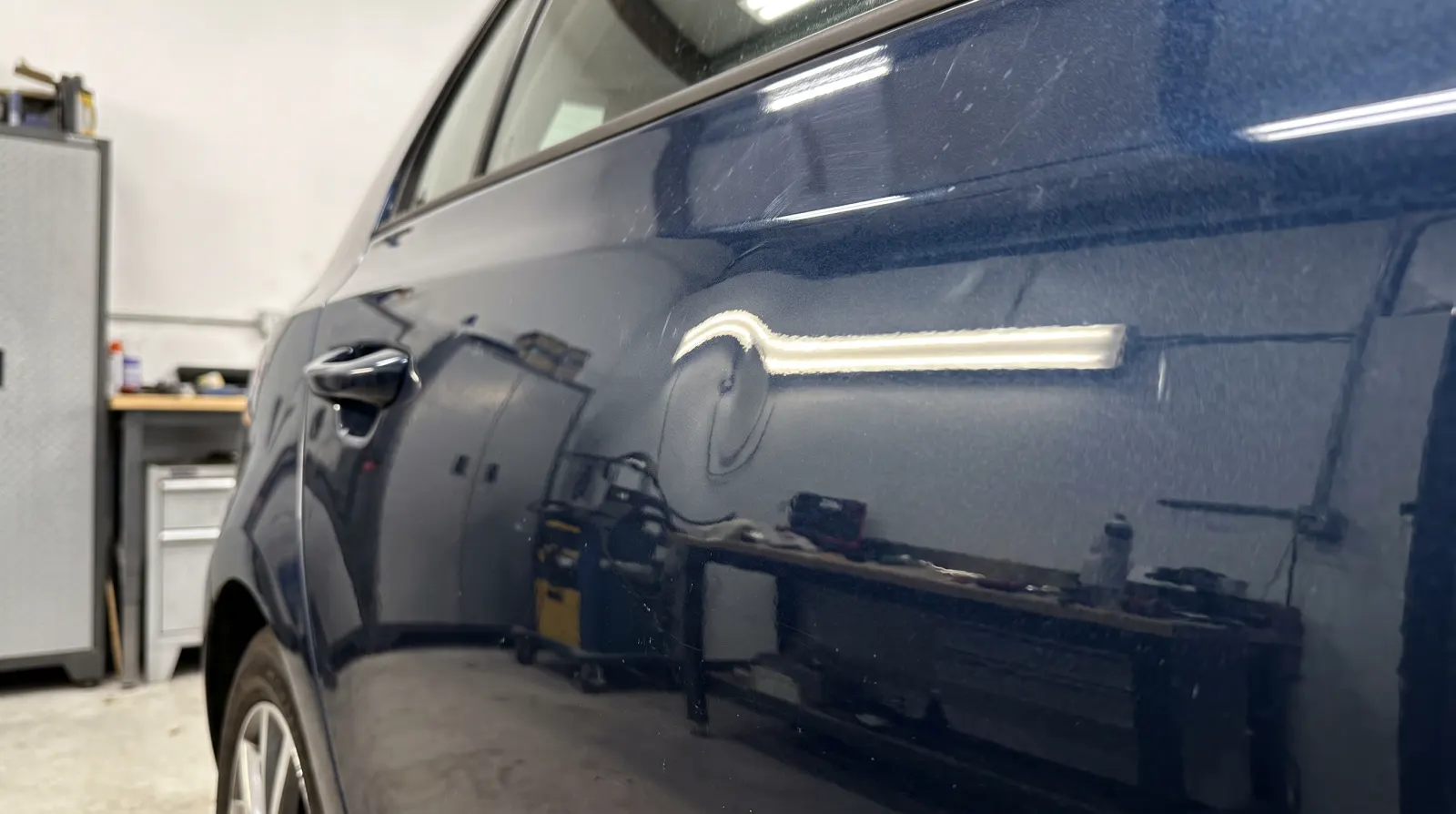
What about dents from a working life?
They're knocked out or pulled before any filler goes on. Vans pick up dents loading and unloading, on site and in tight car parks, and a side that has taken a few knocks over the years can look straight until it's flatted and guide coated. Filler is only a thin skim over metal that has been put back to shape.
Where do vans rust?
Low down, and wherever water sits. Check the bottoms of the doors, the sliding door and its runner, the wheel arches and the sills, and round anything bolted through the roof. Rust is cut back to clean steel, and new metal let in where it has gone through, before the paint starts. Painting over it only hides it for a while.
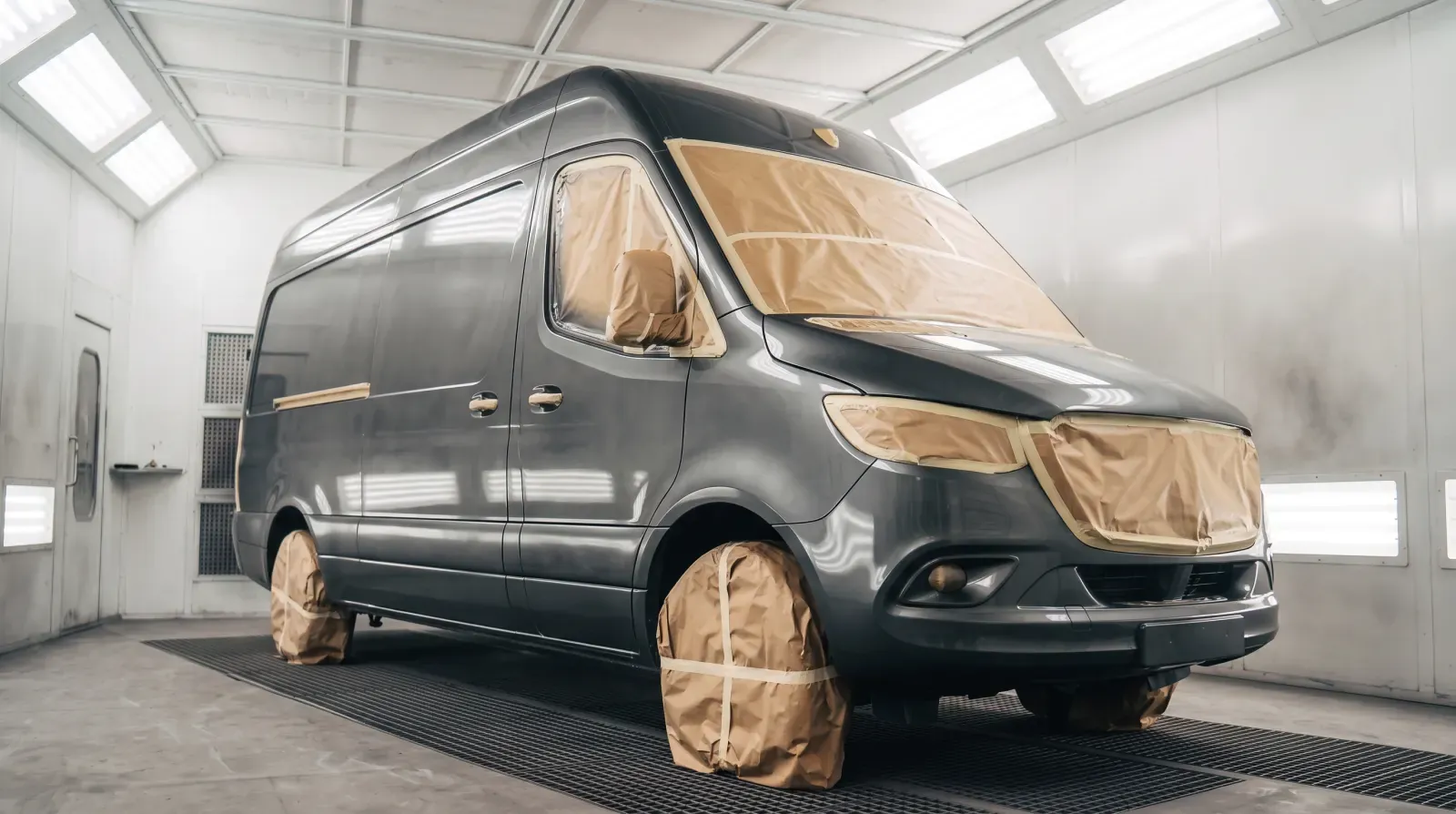
Will a big van fit in the booth?
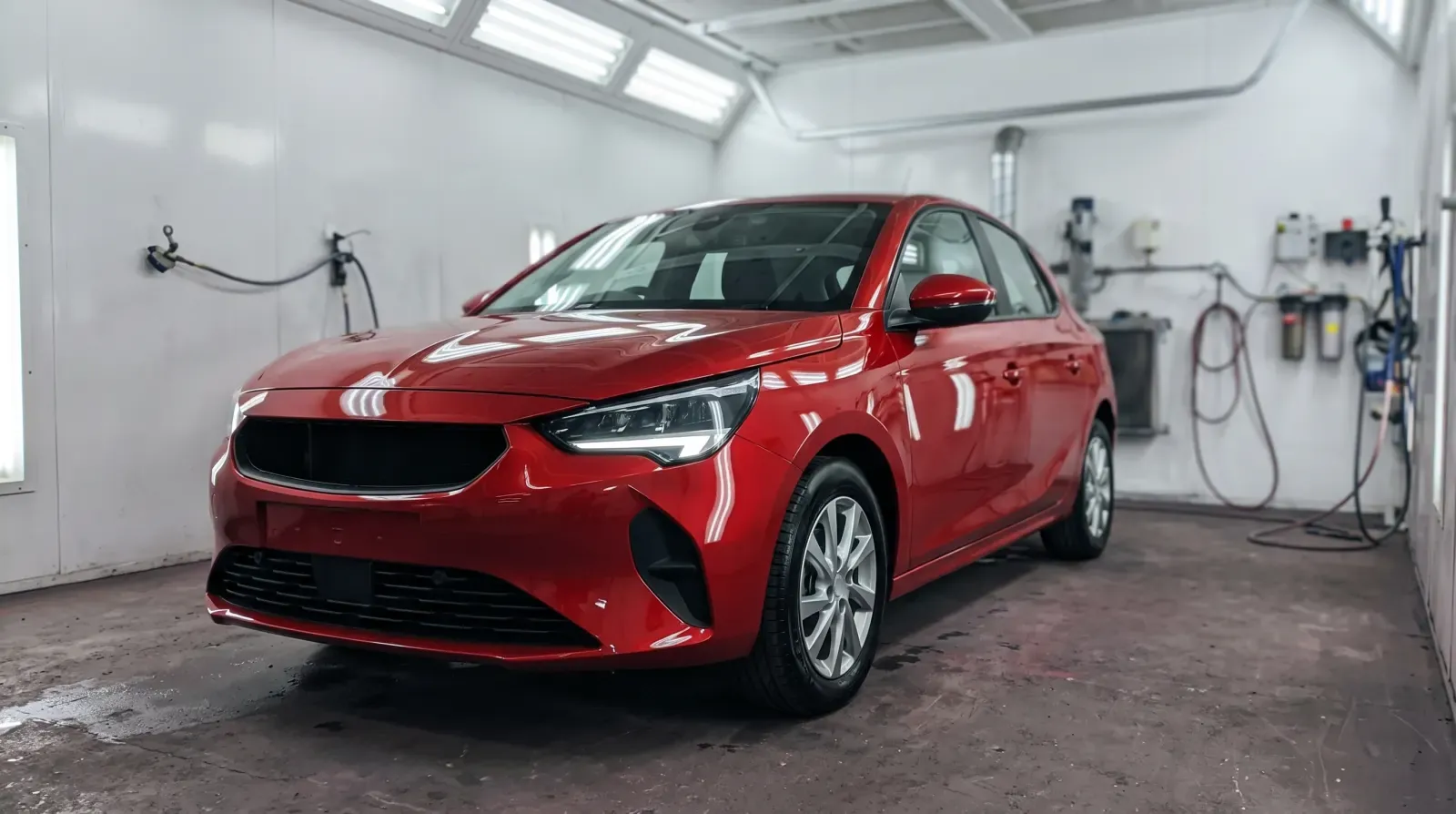
Our booths have room for long wheelbase vans as well as cars. The painter has to reach the whole roof to spray it evenly, so the height matters as well as the length.
When you ask for a price, send the make, model, wheelbase and roof height, so we know what's coming.
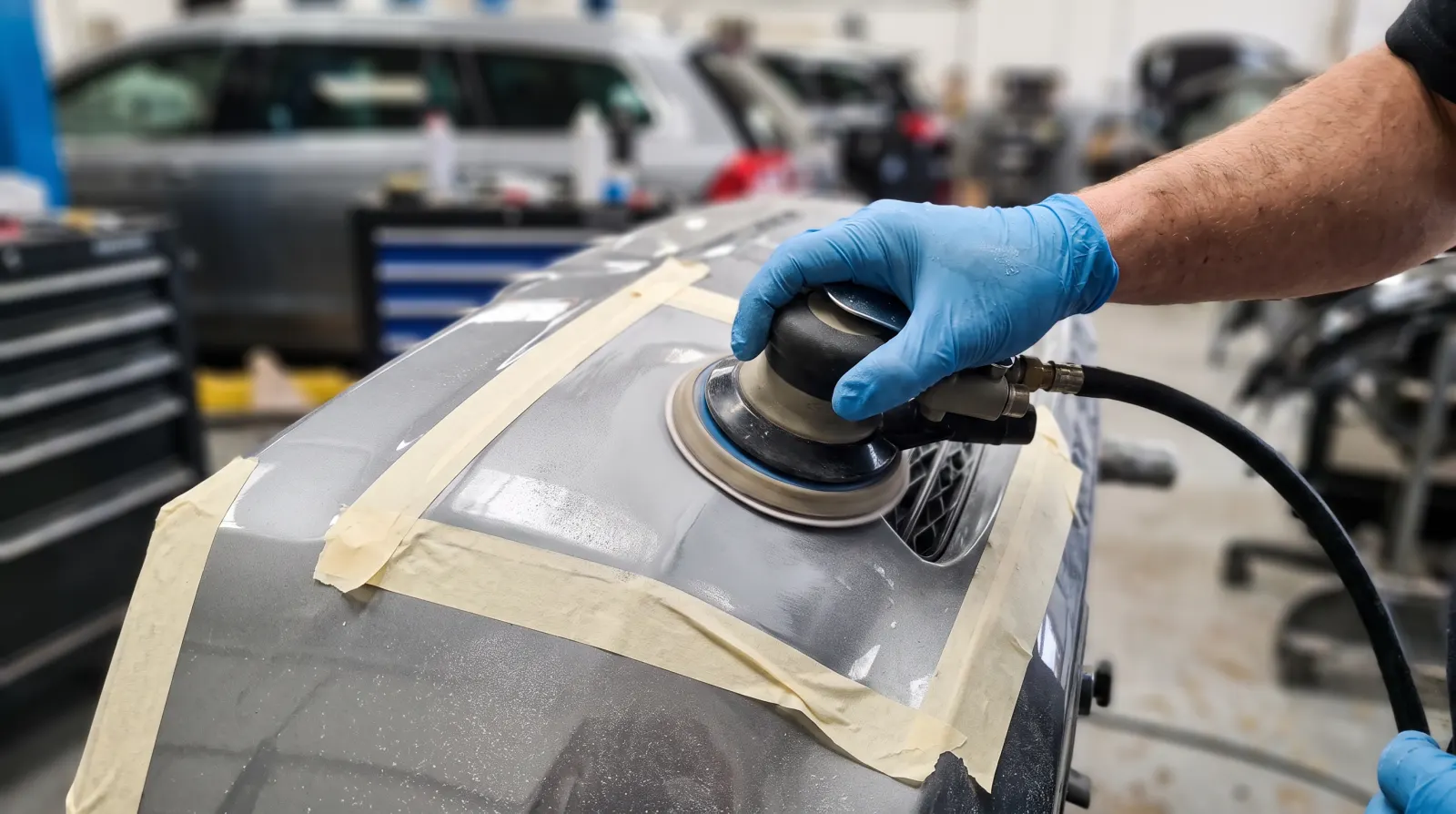
Does the old paint have to come off?
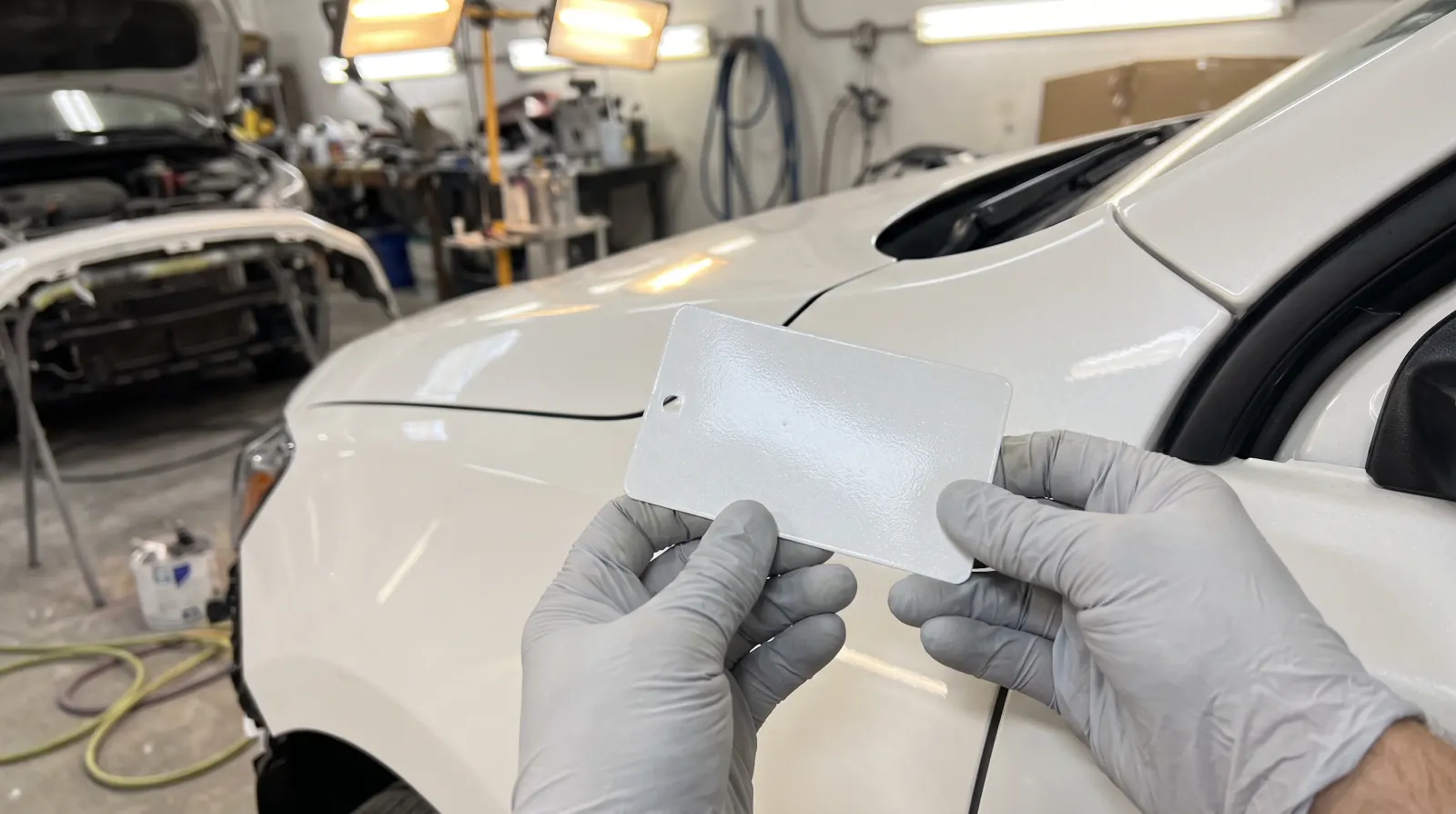
Not if it's sound. Paint that is firmly stuck and even is flatted and keyed, sanded smooth with a fine scratch for the new paint to grip, and painted over. Peeling lacquer, cracking or rust under the paint takes those areas further back, sometimes to bare metal.
A van that has spent years parked outside often has a roof in worse shape than its sides, because the roof takes the most sun.
Same colour or a new one?
Either. A same colour respray can stop at the outside panels. A colour change goes into the shuts of the cab doors, the sliding door and the rear doors as well, so more comes off and there are more hours in prep.
A new colour has to go on the V5C: GOV.UK lists colour among the changes you must make on its change vehicle details page. The same page covers converting a van into a campervan or motor caravan, and says the DVLA will tell you if it needs to inspect the change. Tell your insurer about either, and if the van is leased or on finance, check with the company before any paint goes on.
What moves the price of a van respray?
The size of the van, how much comes off it, what's under the paint and the colour. A long wheelbase high roof van is more panel than a short one, racks and graphics add time before the prep starts, and dents and rust add hours that only show once it's flatted. A colour change adds the shuts.
We give a rough price from photos, confirm it once the van is here and stripped, and show you anything we find. See prices for how we quote.
Send us photos of each side, the roof if you can reach it, and the make and model from the quote form.