Classic cars rust where water gets in and can't dry out. The usual classic car rust spots are the sills, the wheel arches, the bottoms of the doors, the floor pans, the boot floor and anywhere water sits behind trim or a seal.
Here's where to look, how to check, and what to do about what you find.
Why do classic cars rust where they do?
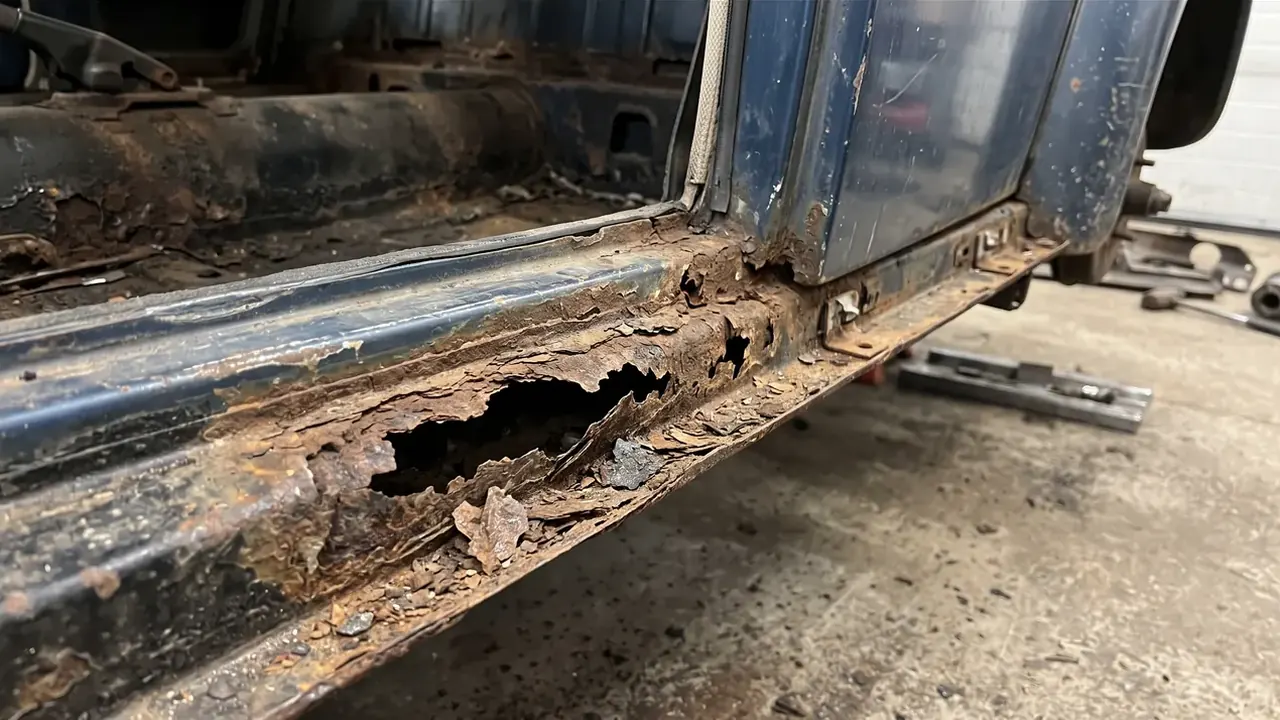
Because steel rusts when it stays wet, and an old car has plenty of places that stay wet. The worst are the ones you can't see into. Seams, where two panels are joined, hold water in the join. Box sections, the hollow parts of the body such as the sills, rust from the inside out.
Where are the main rust spots on a classic car?
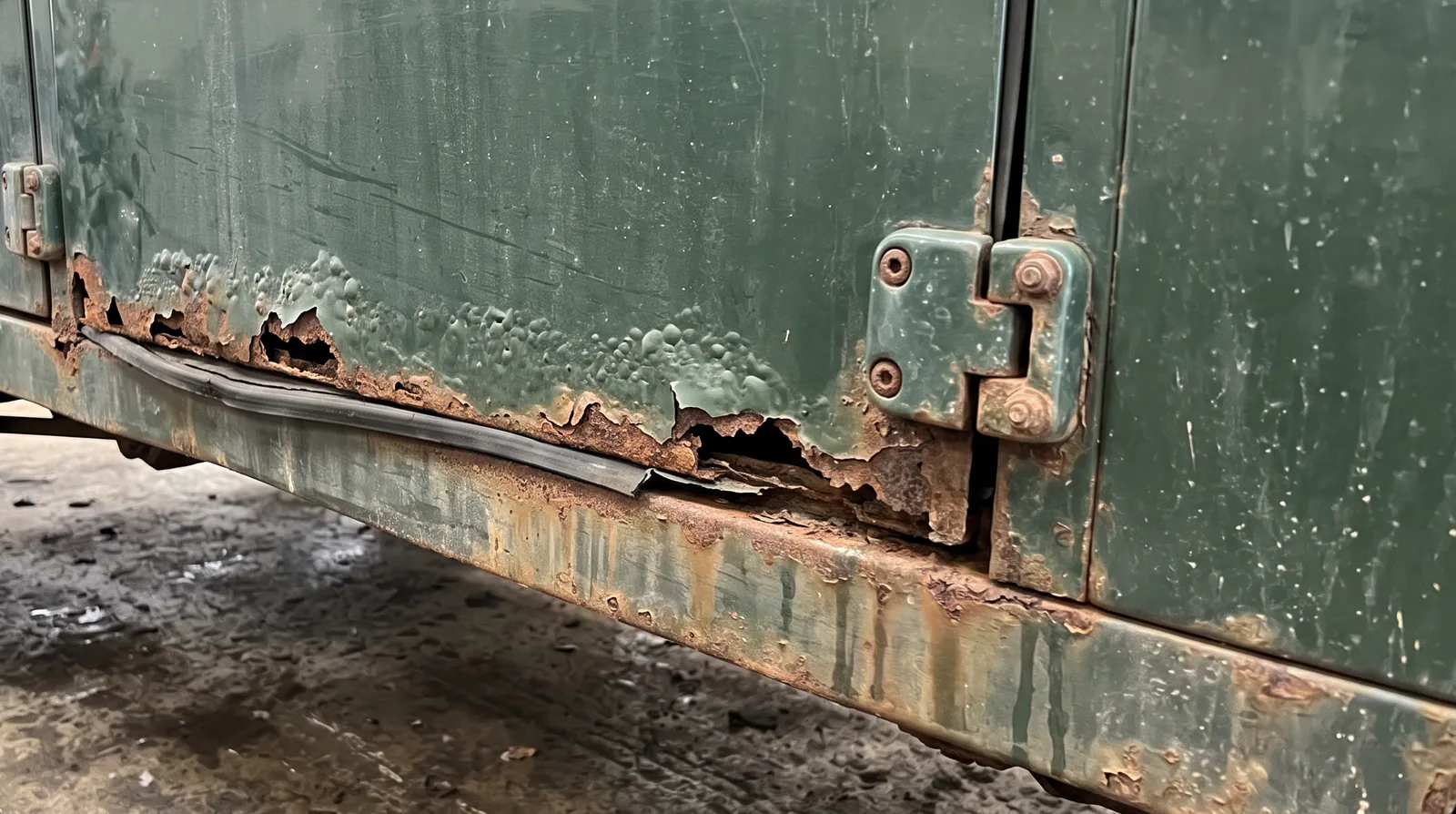
- Sills. The box section that runs along under the doors. On many cars it's part of what keeps the body stiff, so rot here matters more than it looks.
- Wheel arches. Mud thrown up by the tyres packs into the lip and the inner arch, and holds water against the metal.
- Door bottoms. Water runs down inside the door and sits along the bottom seam when the drain holes block.
- Floor pans. The floor under the seats and pedals. Water that gets past the seals soaks into the carpet and stays there.
- Boot floor. Leaking seals and light units let water in, and it pools in the spare wheel well.
- Jacking points and suspension mounts. Where the car is lifted from and where the suspension bolts to the body. They carry load, so rust here is a safety question as well as a looks one.
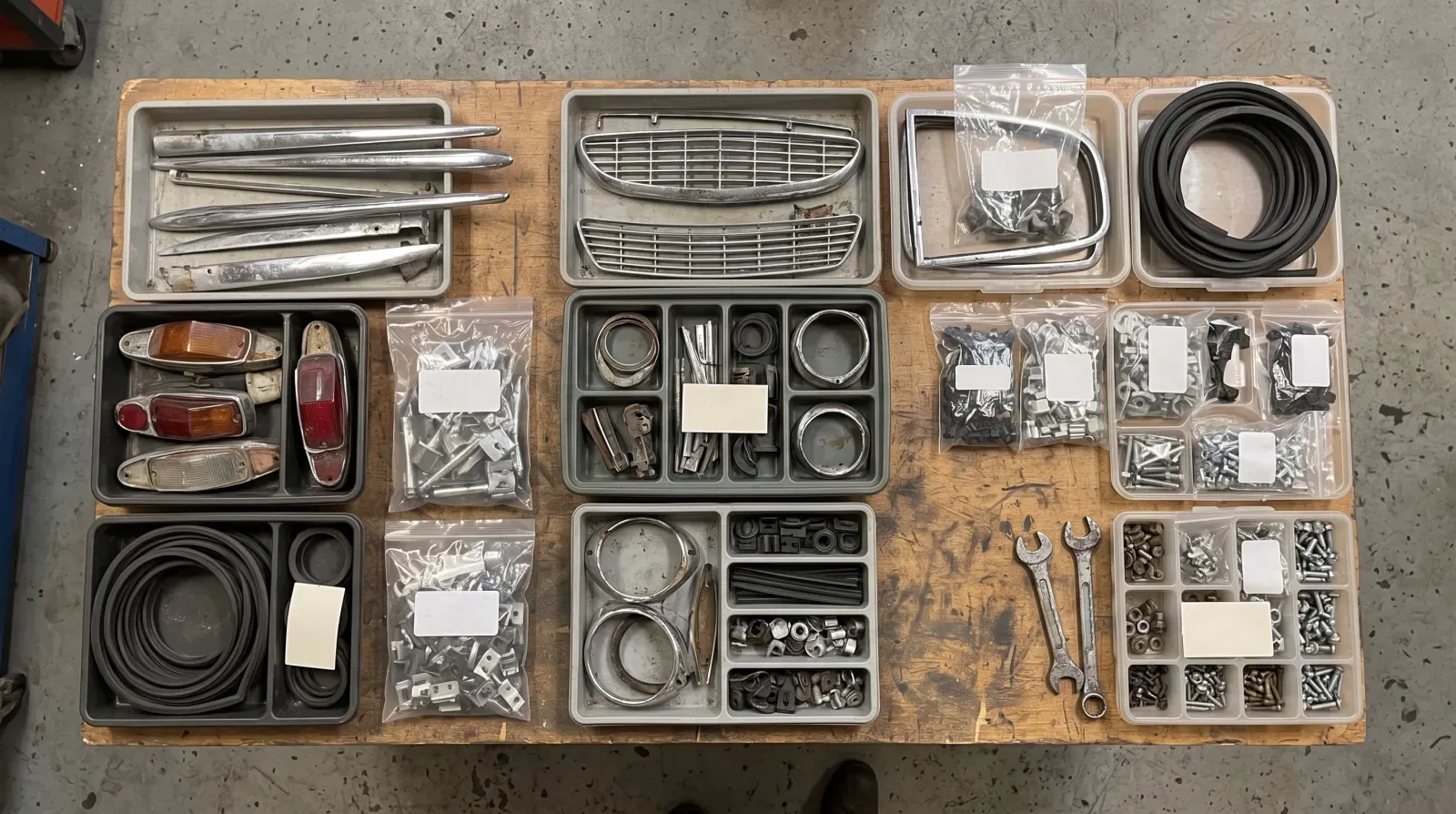
- Behind trim and seals. Window rubbers, chrome strips, badges and the edges of the lights. The paint can look fine until the trim comes off.
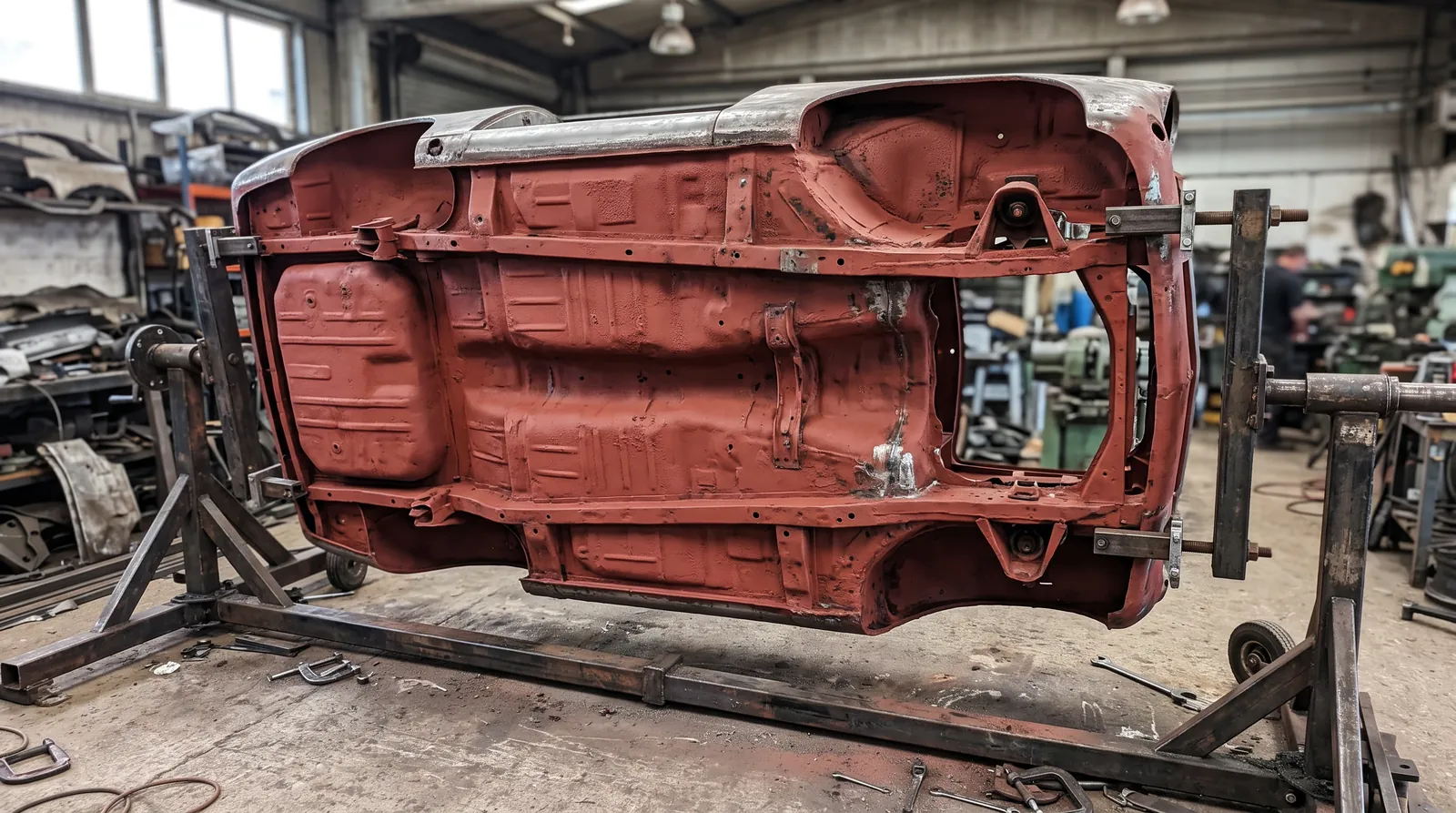
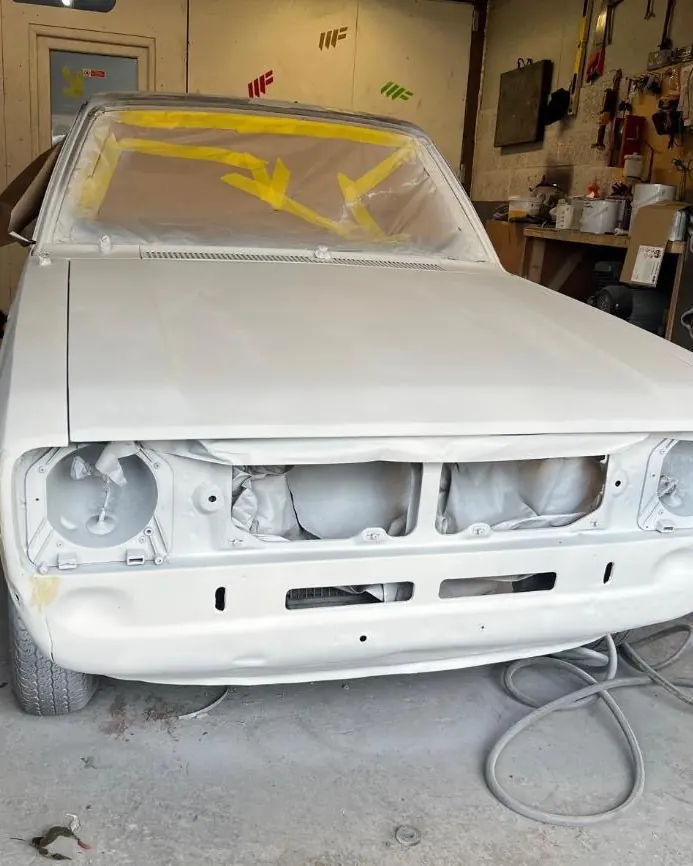
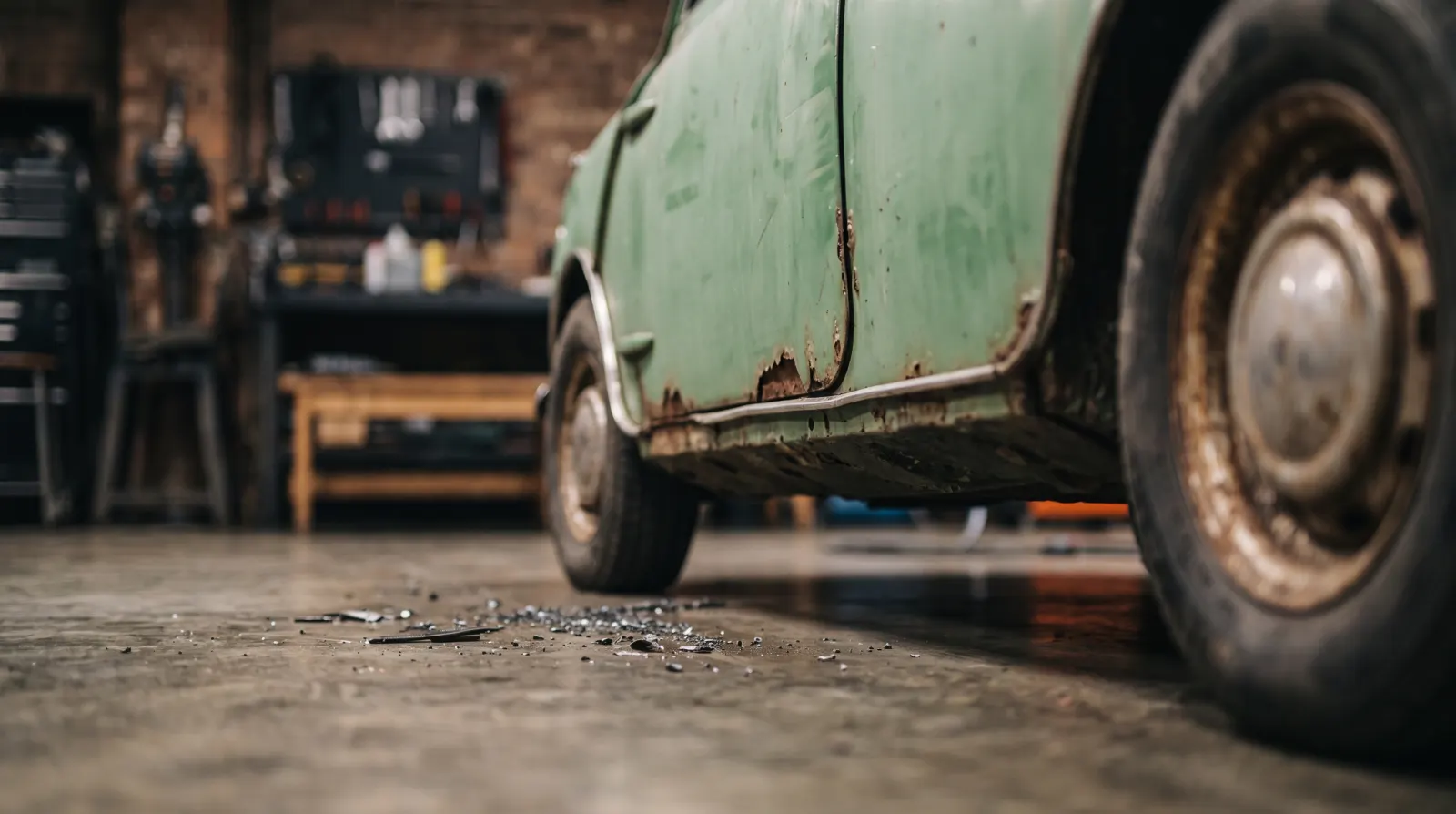
Sills
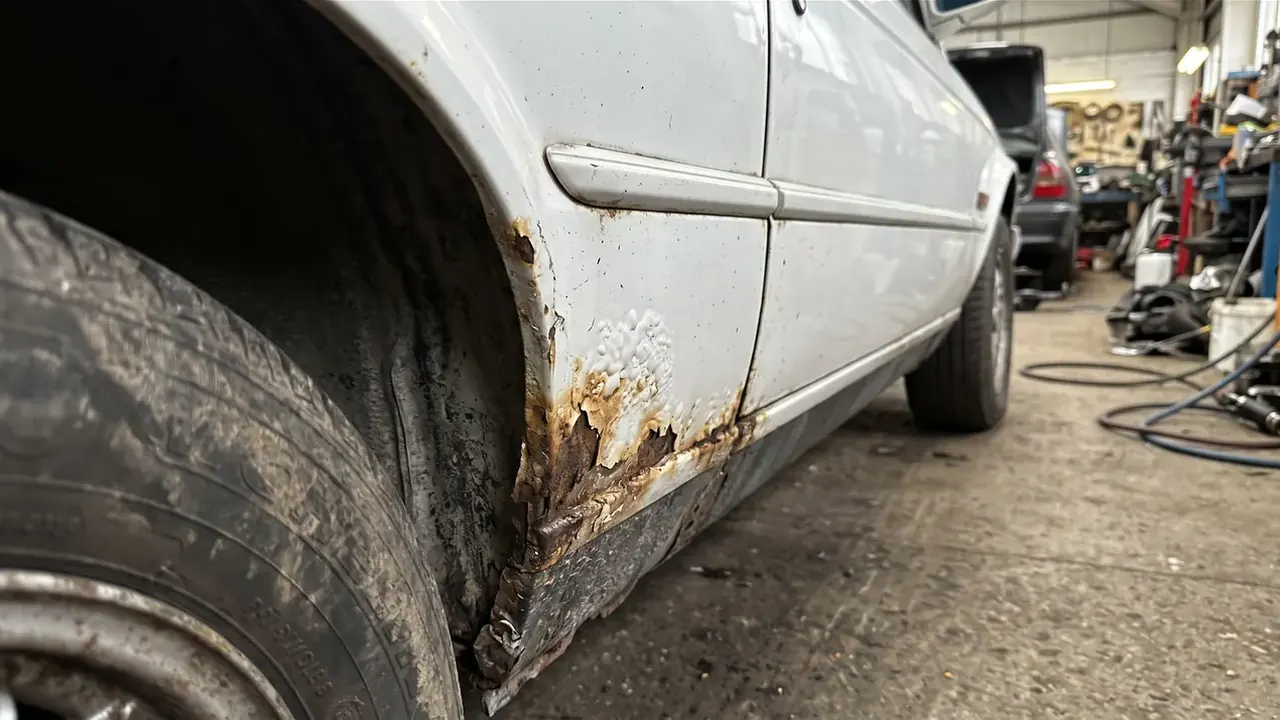
Wheel arches
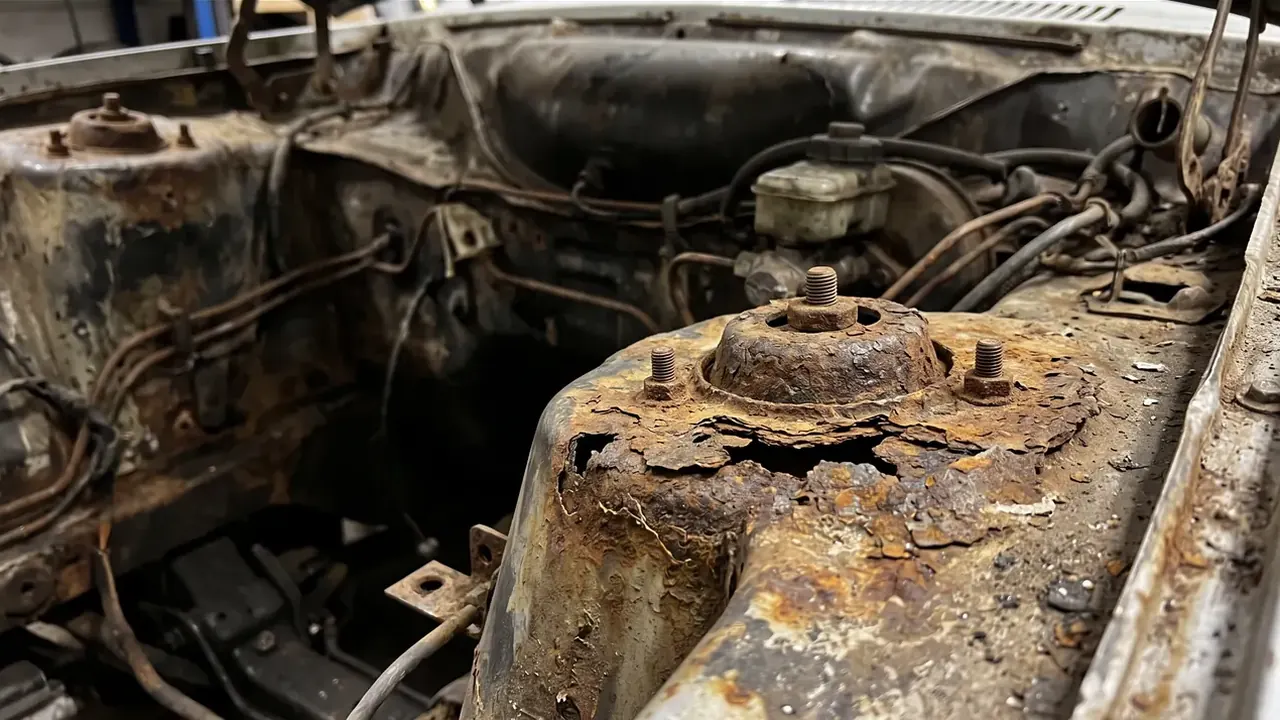
Suspension mounts
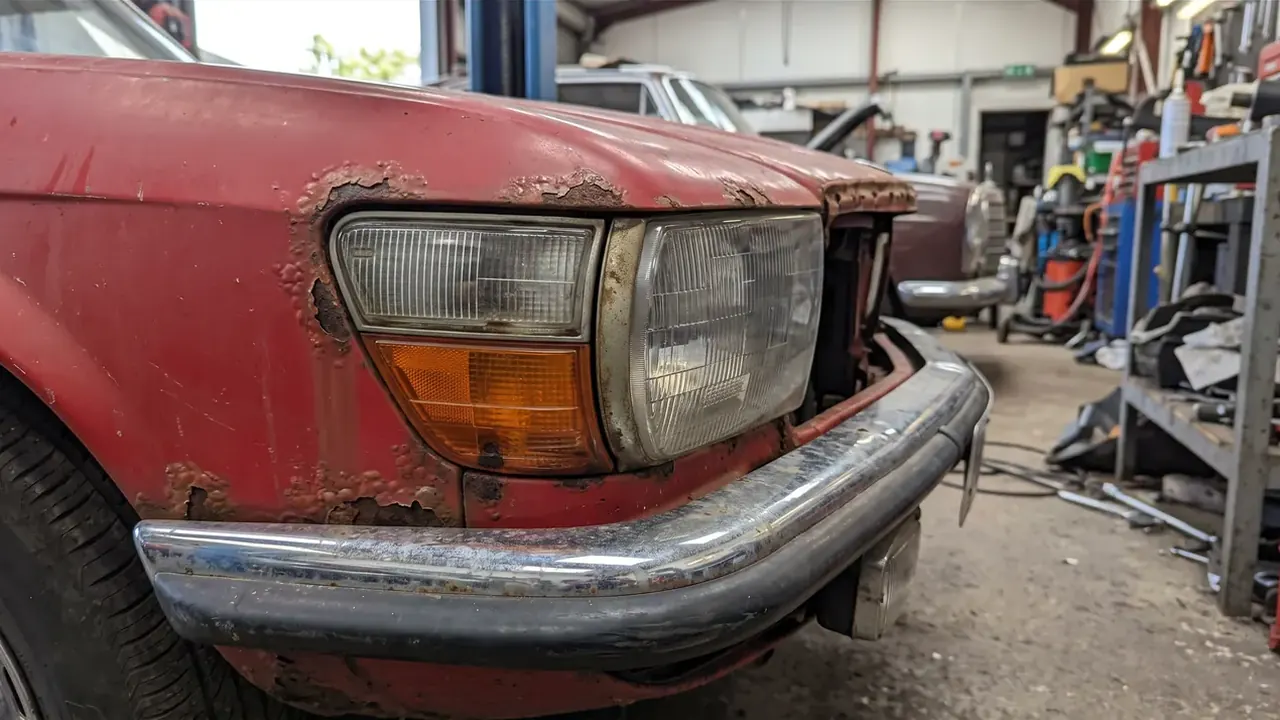
Behind trim and seals
How do I check a classic car for rust?
Look in daylight, on a dry day, with a torch.
- Walk round the car and look low down along every panel for bubbles, blistering, brown stains at the seams and paint lifting at the edges.
- Open every door and look along the bottom edge and the sill under it.
- Lift the carpets and mats in the cabin and the boot, and look at the floor and the spare wheel well. A damp carpet is a warning on its own.
- Look under the car from the front, the back and along both sills. Only go underneath on ramps or a lift, never under a car held up by a jack.
- Press anything suspect with a finger and thumb. Sound metal feels firm. Metal that gives, flakes or crunches has rotted through, or is close to it.
If it's somebody else's car, ask before you press. A thumb through a sill is an awkward way to start a sale.
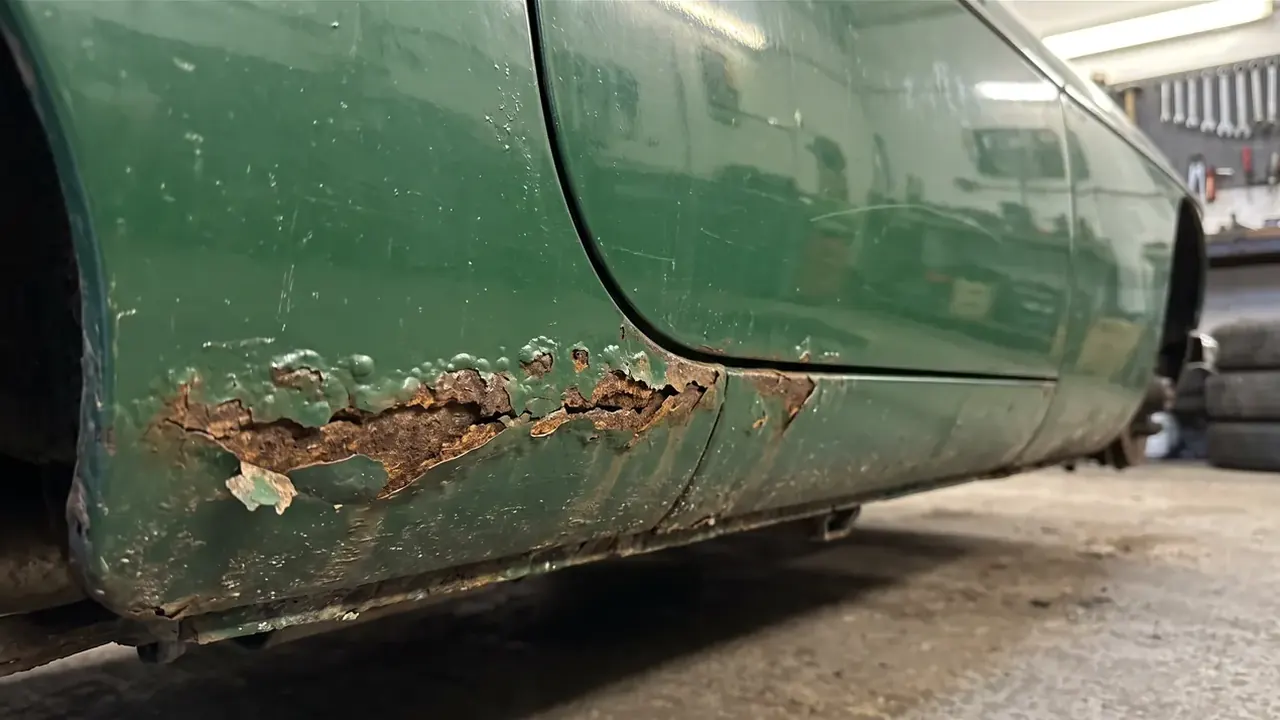
What does bubbling paint mean?
It means rust has already started on the metal under the paint. PPG, one of the big paint makers, describes corrosion under paint as loose paint, bubbling and discolouration, especially round body fittings, panel edges and seams.
The bubble is only the part you can see. The rust started underneath, often from the back of the panel, and pushed the paint up as it grew. How far it has spread only shows once the paint comes off. PPG's remedy is to strip the area to bare metal, remove all the rust, treat the metal, prime it and repaint.
Can rust just be painted over?
No. Rust carries on under fresh paint and comes back through it.
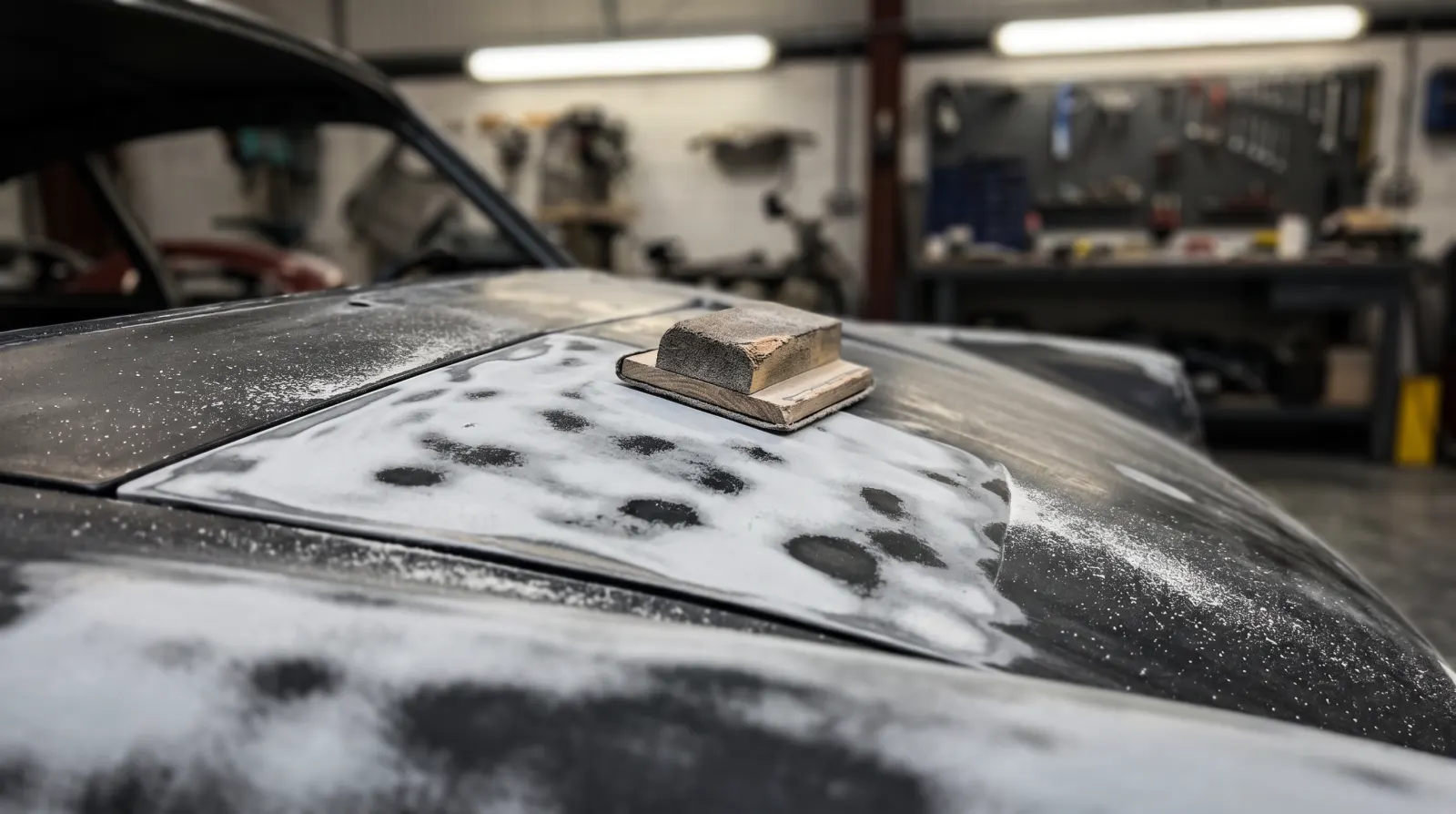
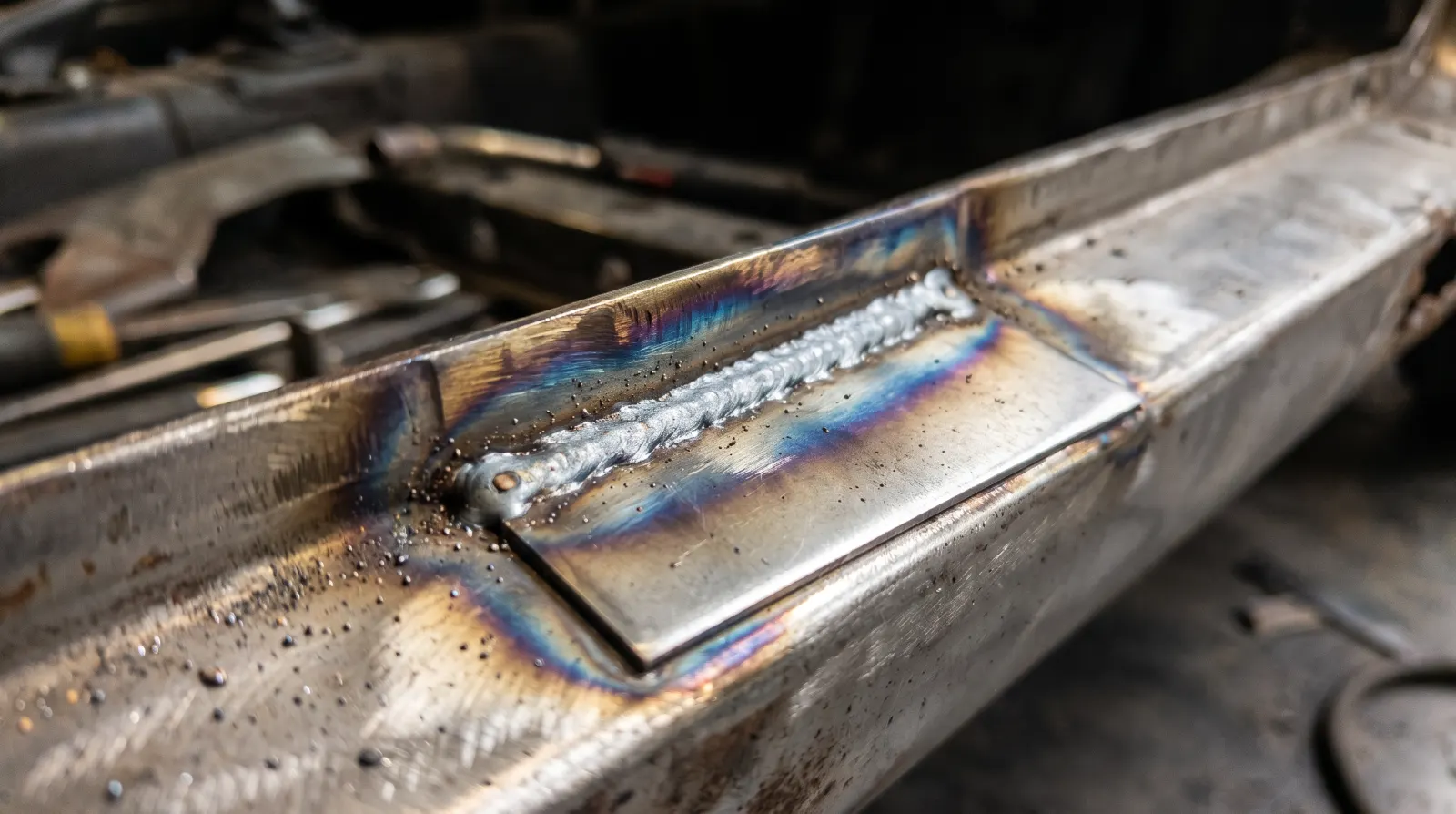
Light rust on sound metal is ground back to clean steel and primed. Where it has eaten into the metal, it's cut out and new metal is let in, which means a new piece is shaped and welded in where the rot was. Where it has spread across a whole panel, or the panel is thin all over, a new panel is the job that lasts. See welding and rust repair for how we decide.
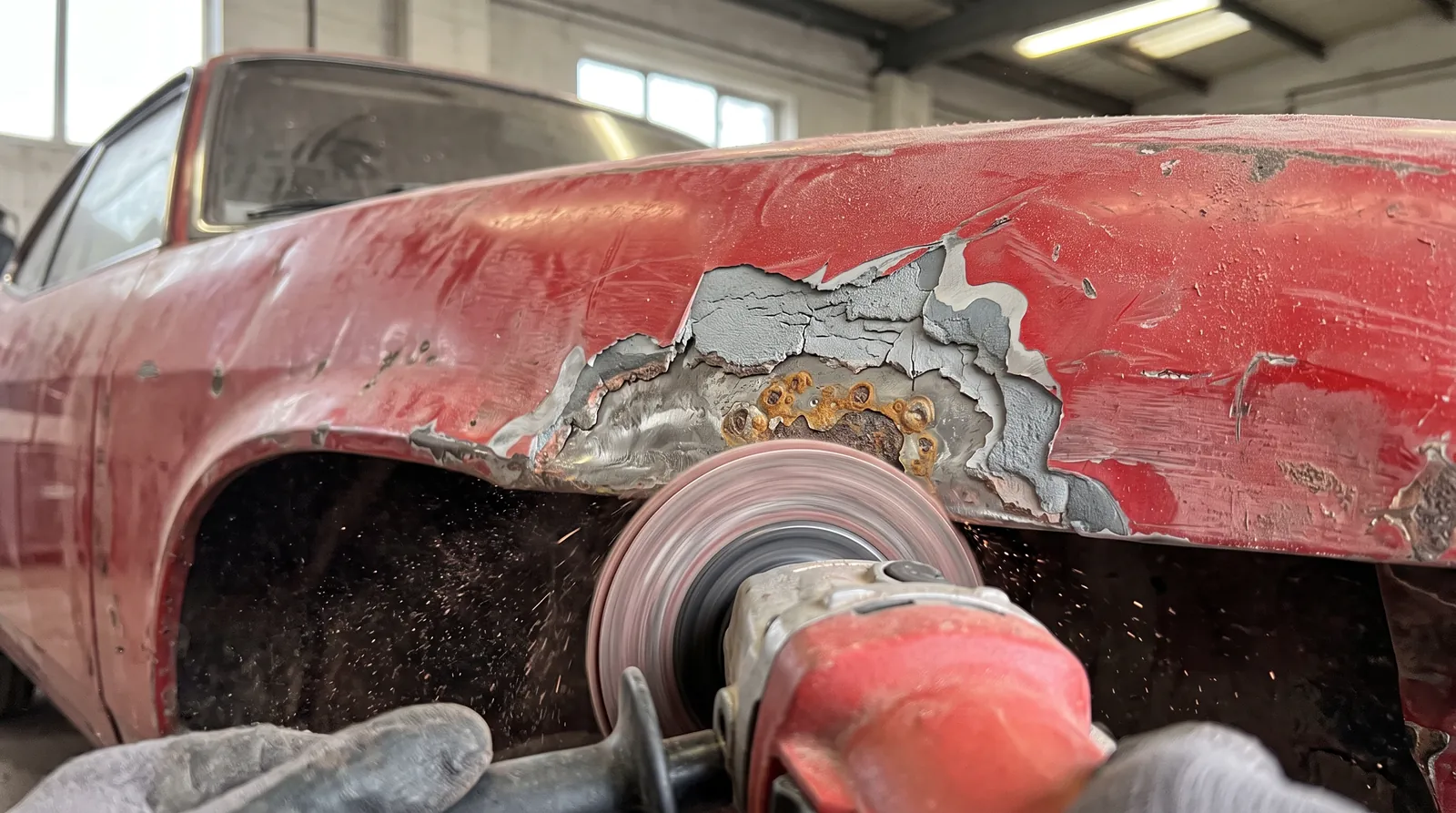
Ground back to clean steel
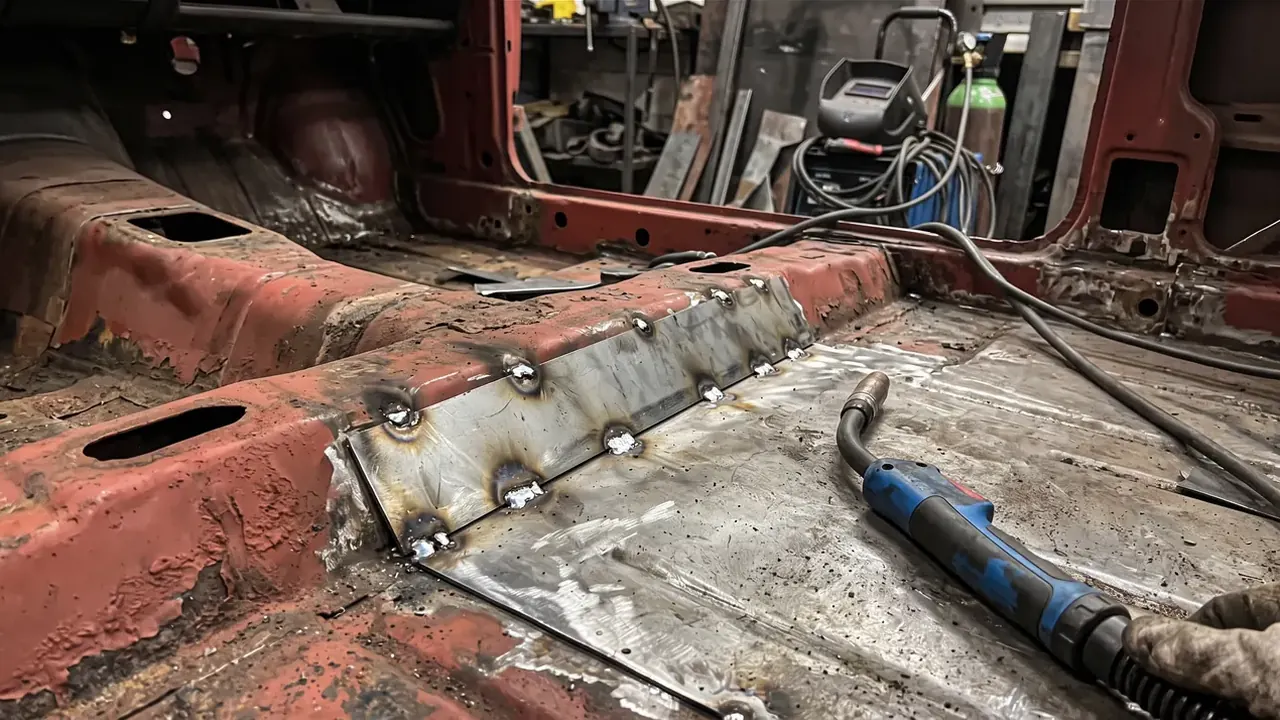
New metal let in
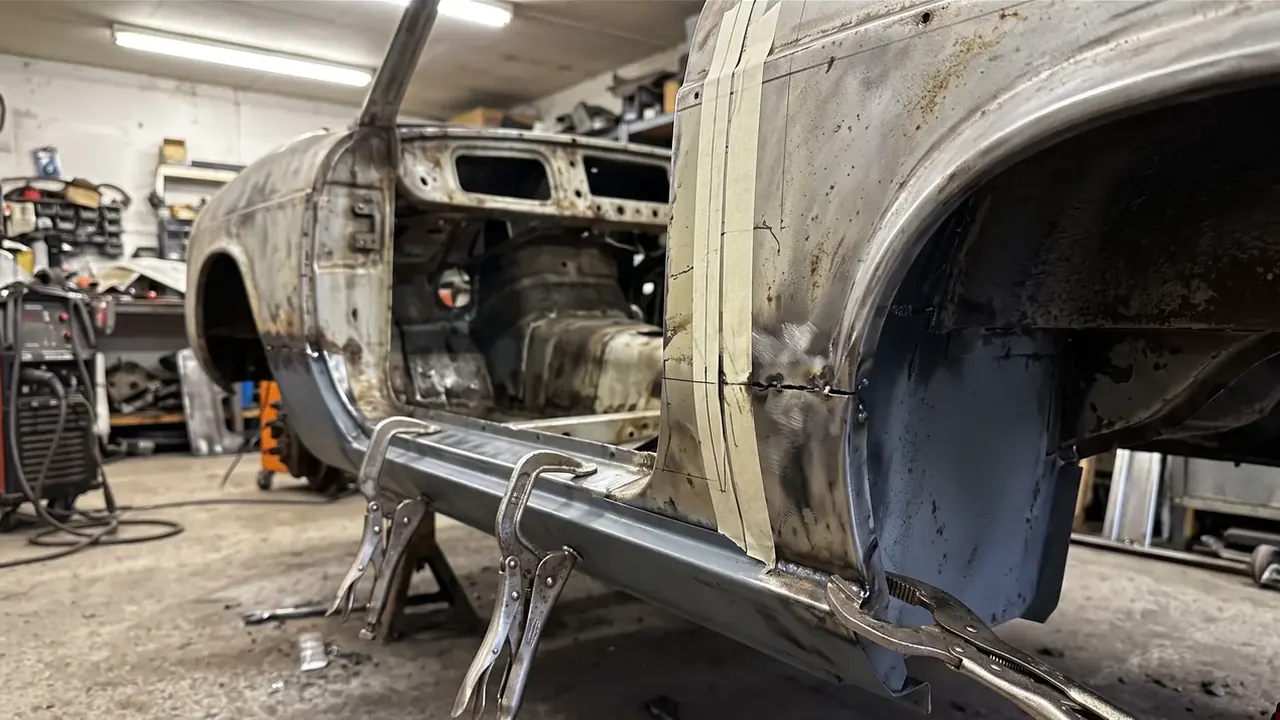
A new panel
Will rust fail an MOT?
Rust in the structure can. GOV.UK's MOT inspection manual tells testers to give extra attention to the load-bearing parts that carry items like the brakes, steering and suspension, and to any supporting structure within 30cm of where those are mounted. Rust there is a fail if it has made a hole, if the metal doesn't feel firm under finger and thumb pressure, or if a finger, thumb or the tester's tool goes through it.
Some classics don't need an MOT at all. GOV.UK says a vehicle built or first registered more than 40 years ago doesn't need one, as long as it hasn't been substantially changed, but you must still keep it roadworthy. No MOT doesn't mean no rust.
Why does rust come back after a repair?
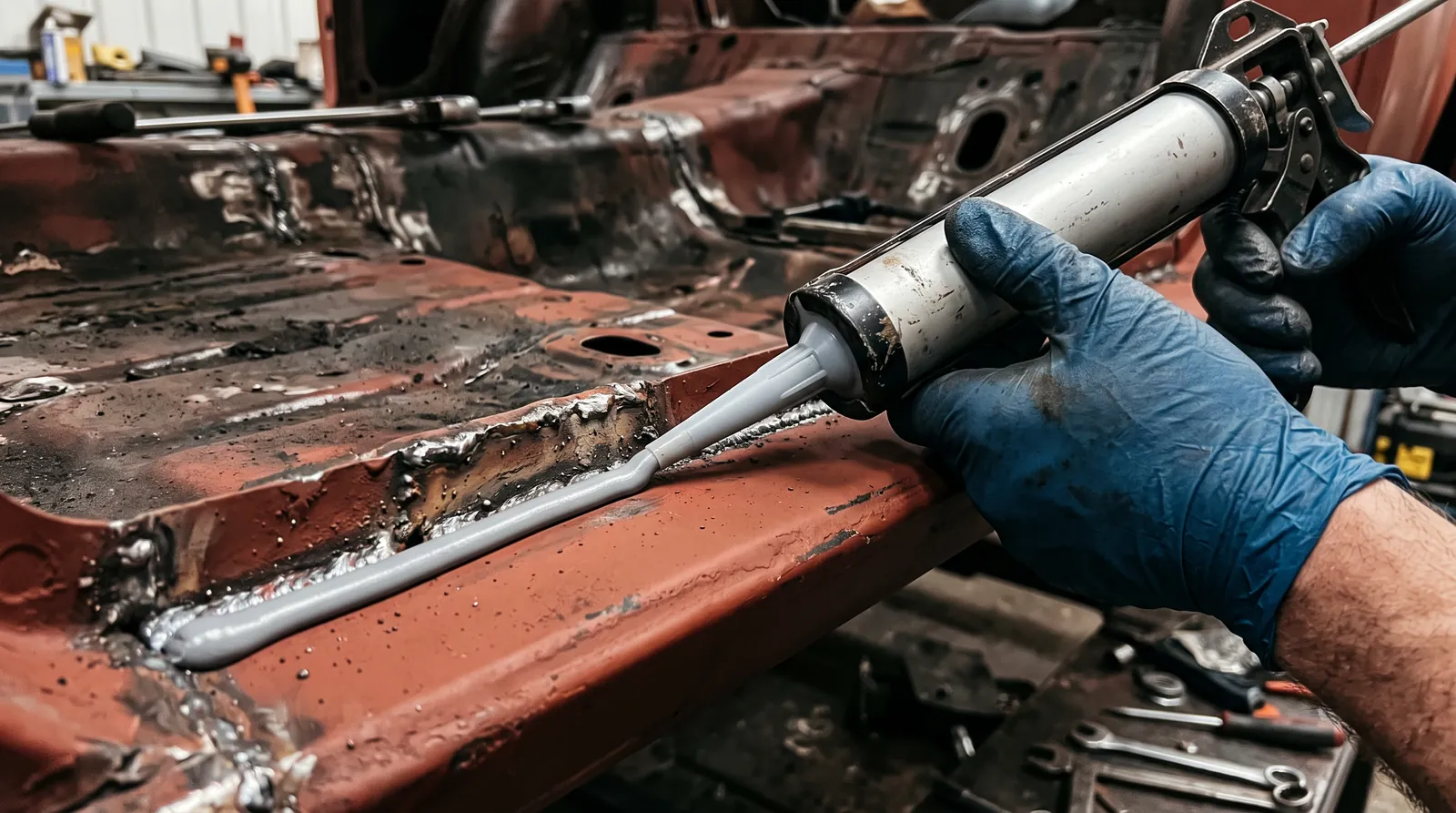
Usually because the inside of the panel was left bare. A repair done only from the outside leaves the inside of the sill or box section open to the same water that rotted it.
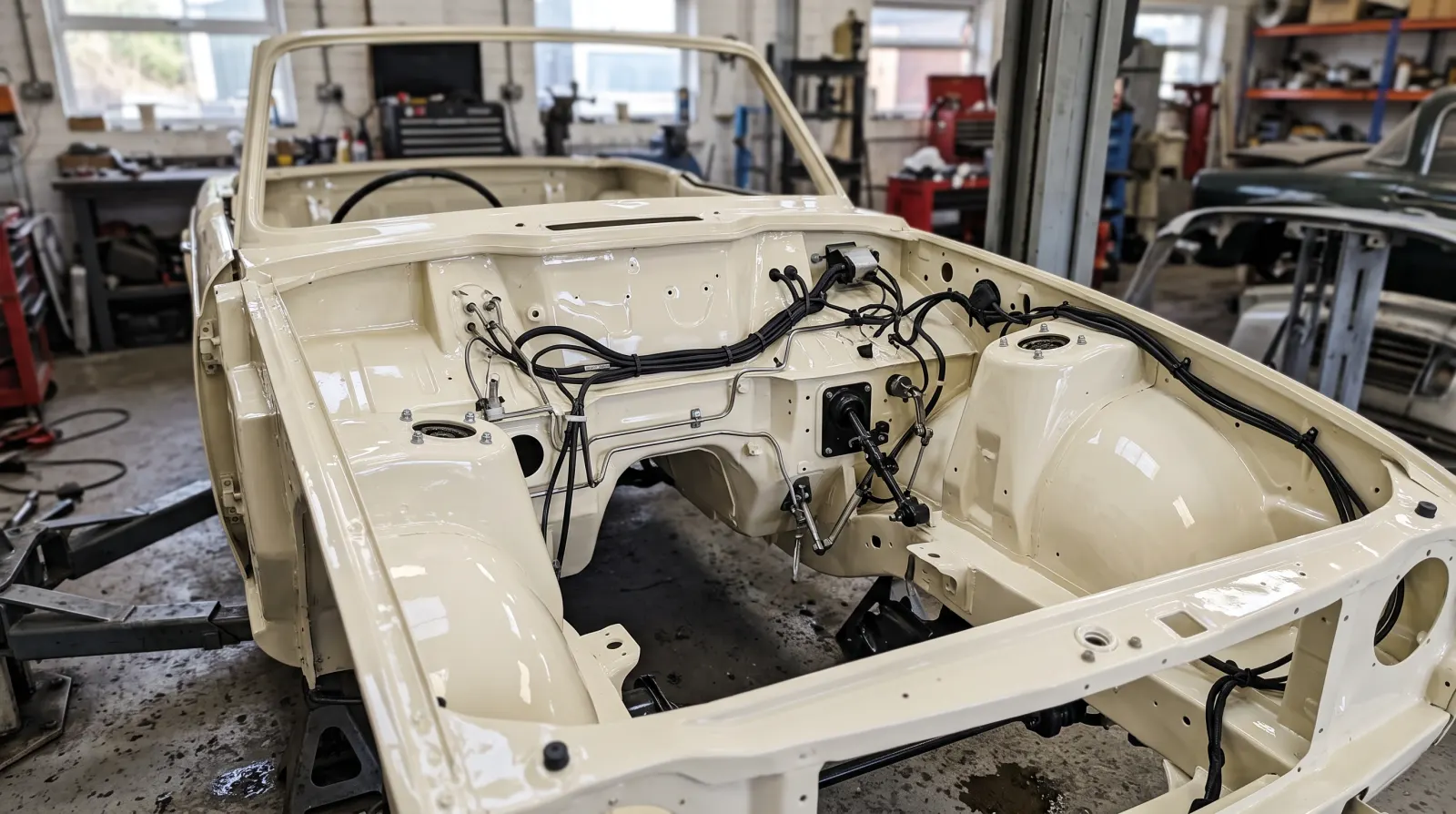
So new metal is primed, and the joints are sealed with seam sealer, which closes the seam so water can't creep in. Once the paint is finished and cured, the box sections get cavity wax, a thin wax sprayed inside the hollow sections that pushes moisture out.
How much does rust repair cost on a classic?
Nobody can say until the paint comes off and the metal underneath can be seen. We give a rough price from photos, then confirm it once the car is here and stripped, and show you what we've found. Bigger jobs are priced in stages so the work keeps moving. See prices for how we quote, and restoration for how a bigger job runs.
Buying a project, or fixing your own? Send us photos of the sills, arches and floor from the quote form.