Before you pay for a project, check the metal, not the shine. Look at the sills, wheel arches, floors, jacking points and seams, look for old filler, read the MOT history, and photograph all of it. Rust and old repairs are where a project's real cost hides, and they're far easier to get priced while the car still belongs to the seller.
Here's what to look at, what to photograph and how to get a price before the money changes hands.
Why check a project for rust before buying it?
Because the rust decides what the project costs, not the asking price. Two cars at the same price can need very different amounts of new metal, and the one with the better paint isn't always the one with the better shell.
Once you've paid, every patch of rot is yours to fix. Before you've paid, it's something to weigh up, walk away from or take into account in what you offer.
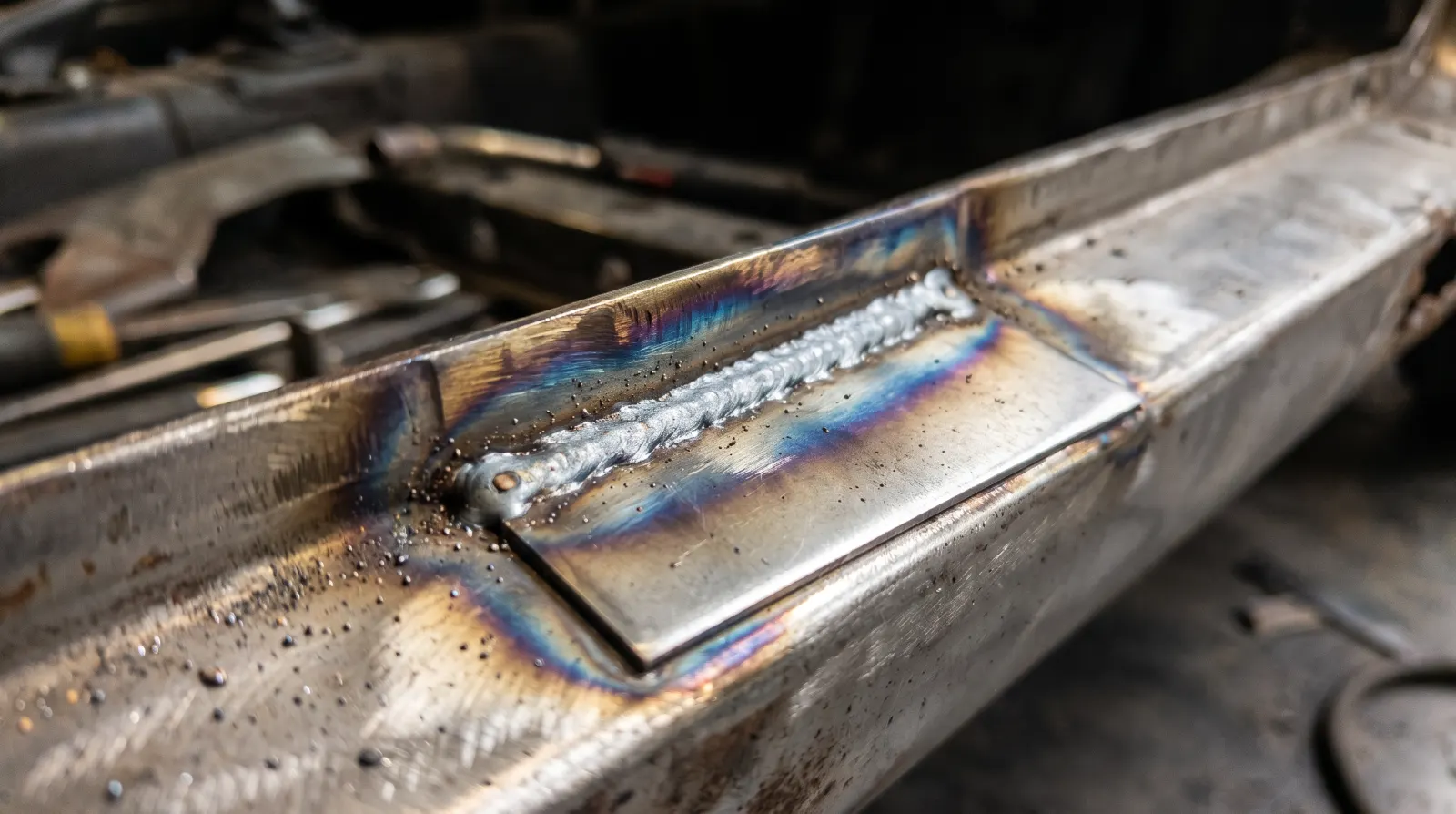
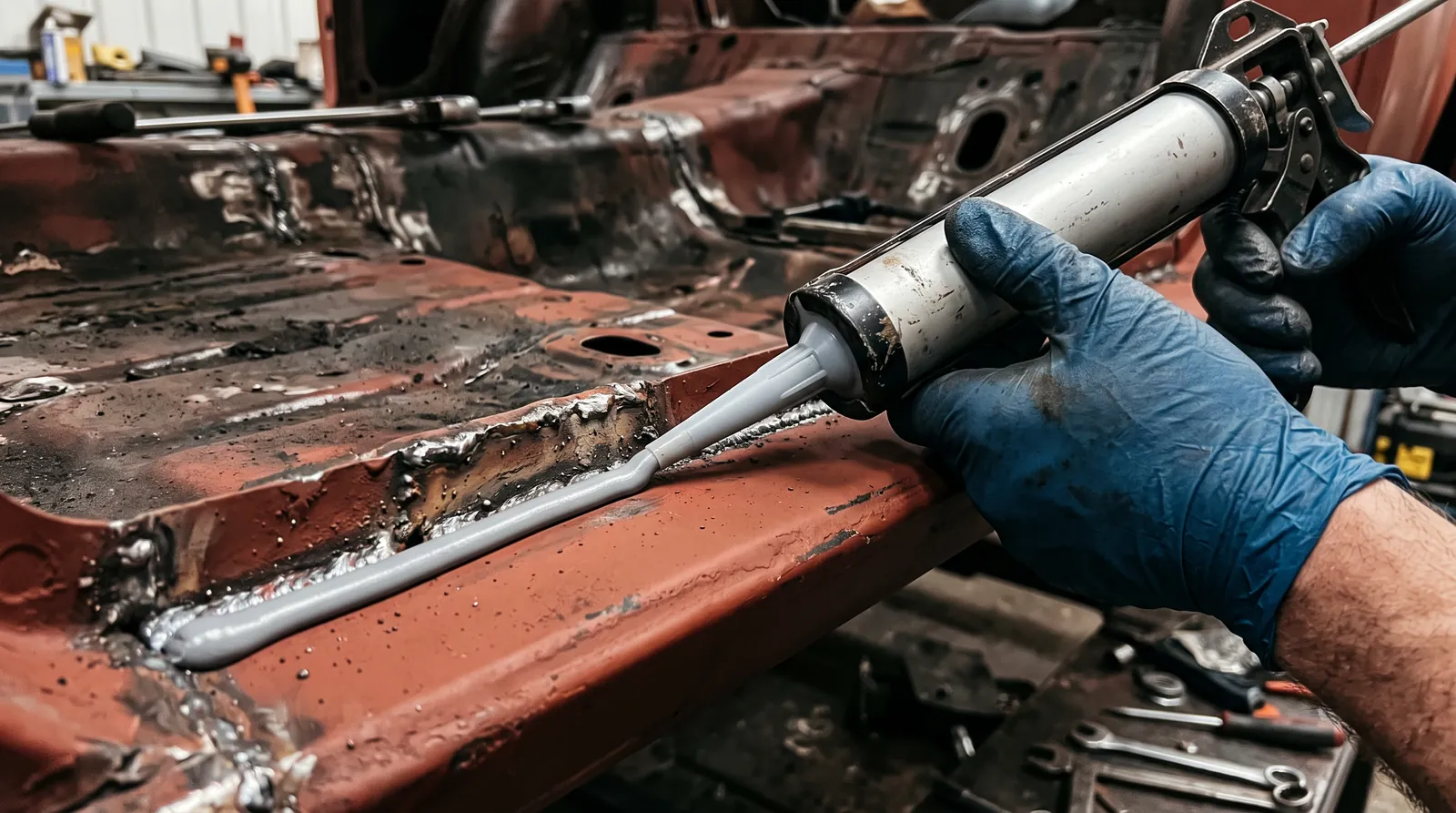
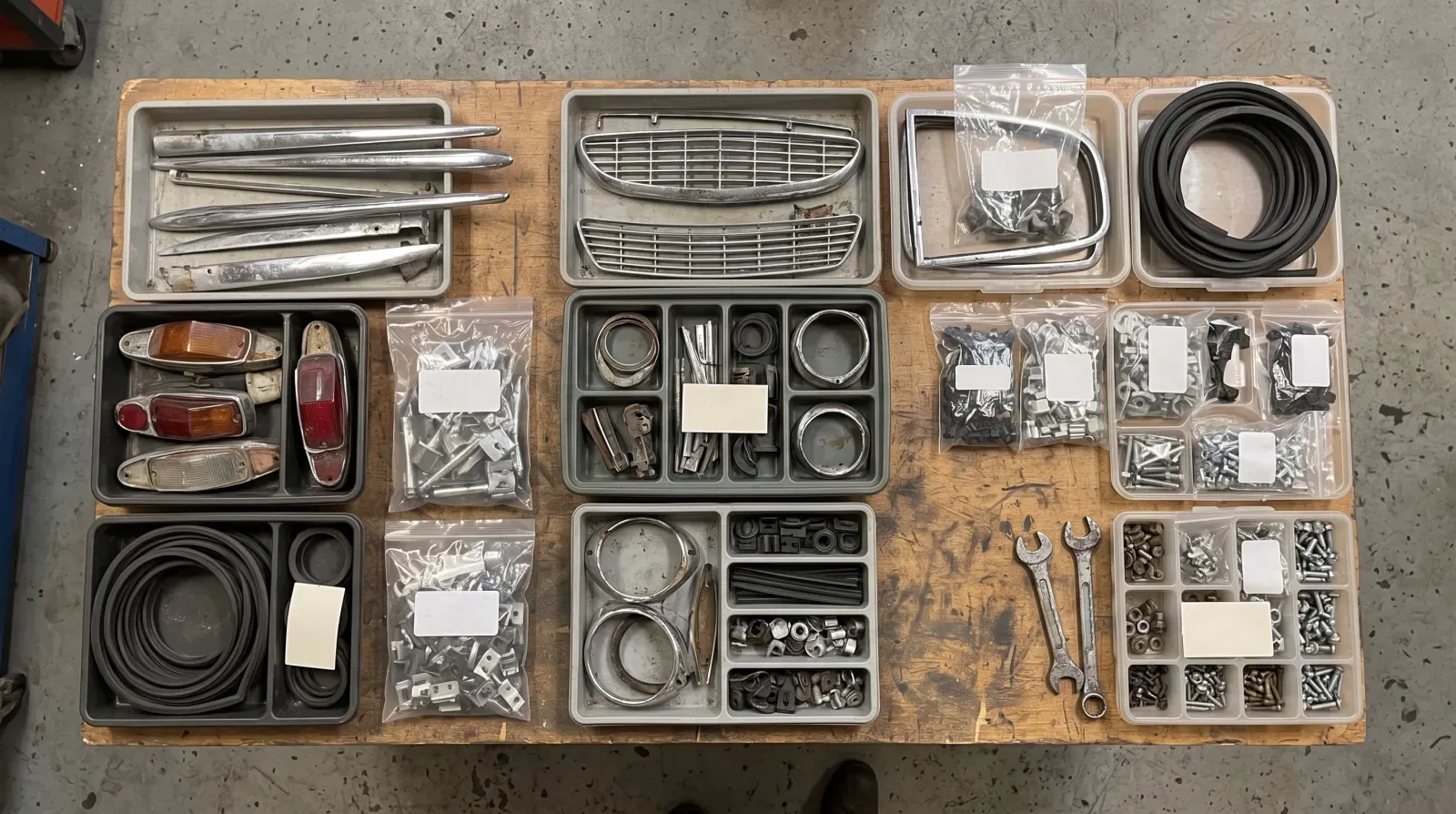
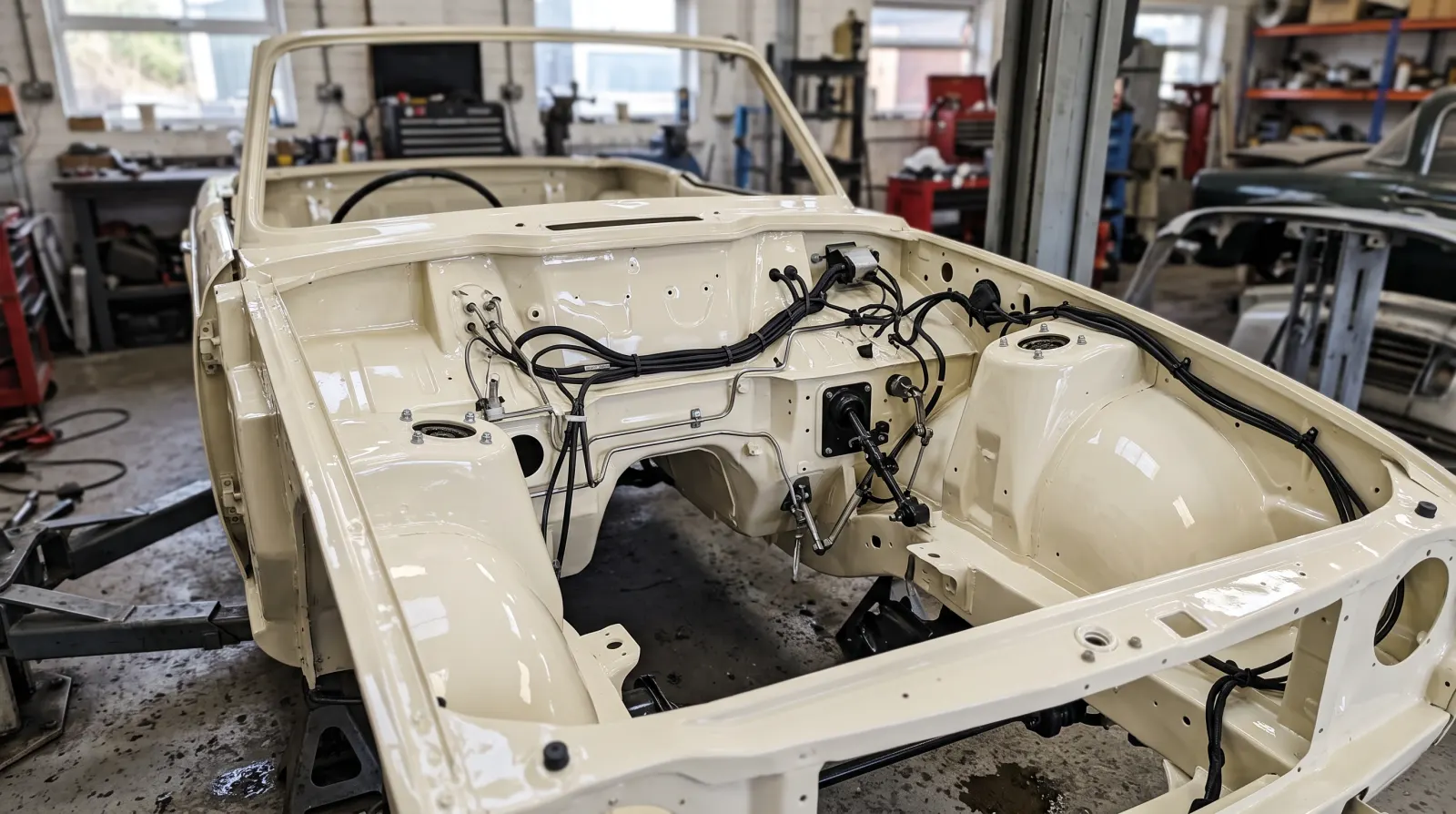
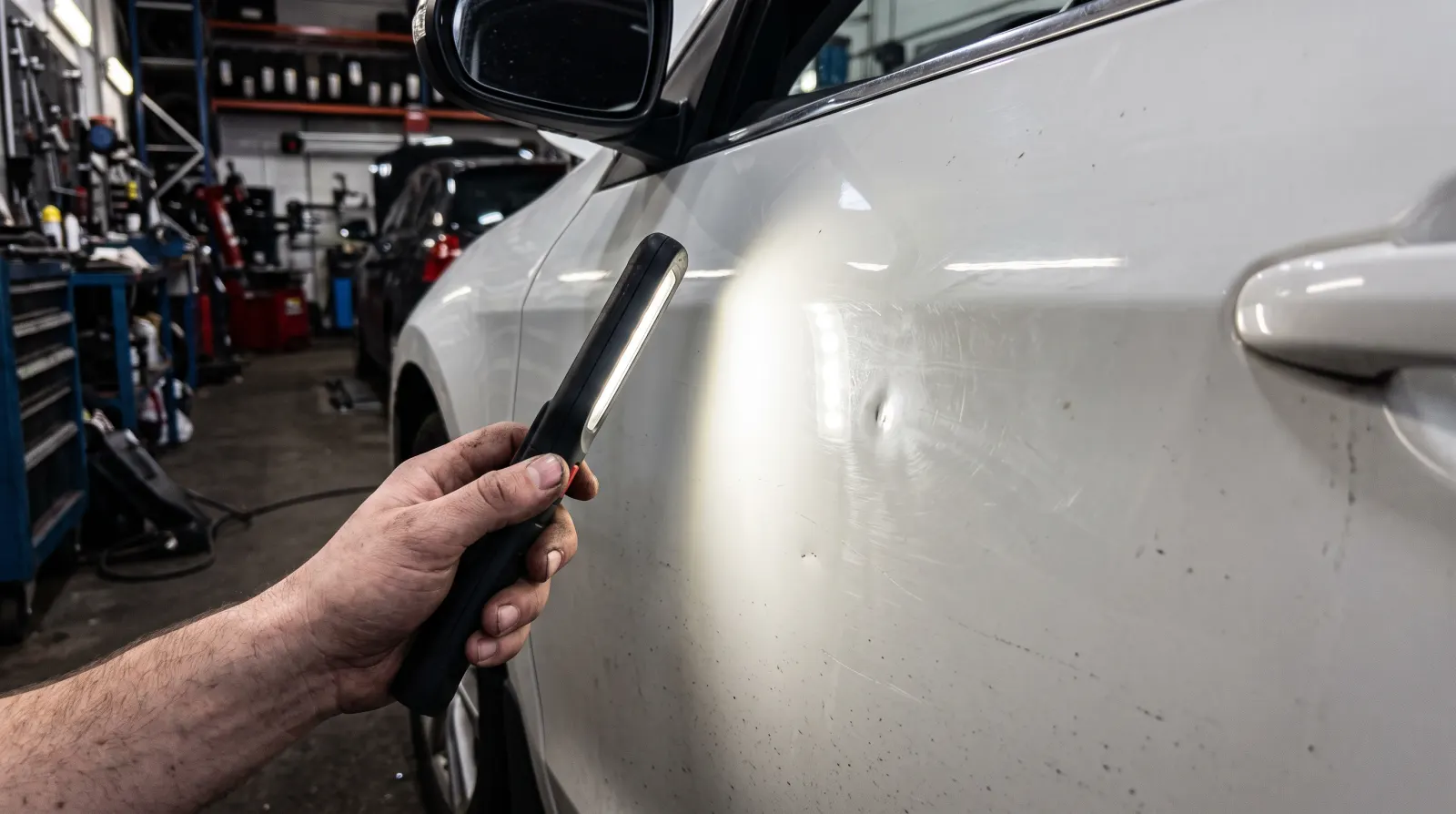
What should I take to a viewing?
A good torch, your phone, gloves, a mat or a sheet of cardboard to kneel on, and a fridge magnet wrapped in a thin cloth so it can't scratch the paint. Go on a dry day, in daylight. Rain and low light make tired paint look glossy and hide the ripples that give filler away.
Which areas should I photograph?
Everything low down and everything structural, close up and again from a step back, so it's clear where each picture was taken:
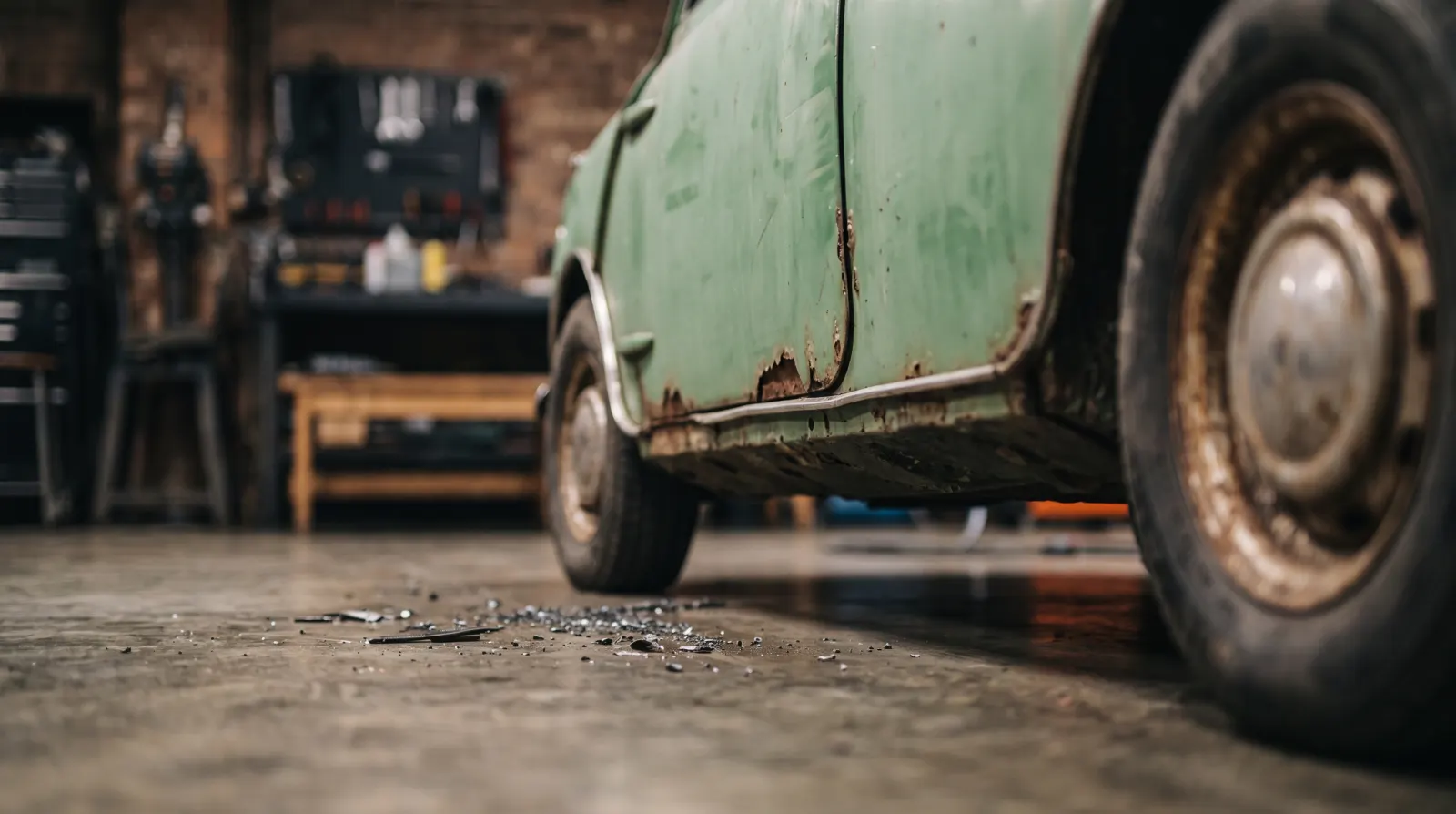
- Sills, the full length of both sides, and under the door seals with the doors open
- Wheel arches, the outer lip and inside the arch
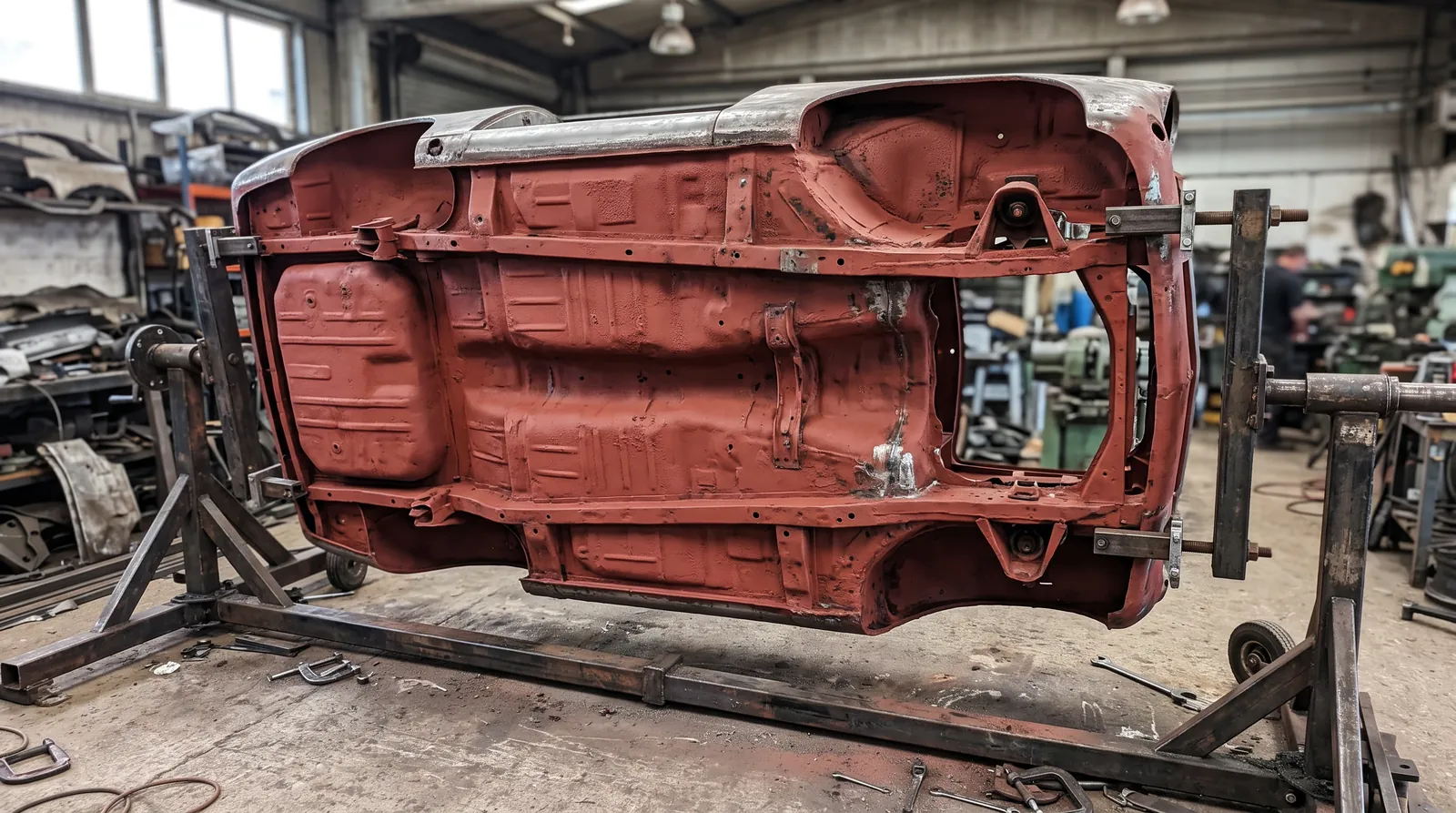
- Floors, with the carpets and mats lifted, plus the boot floor and the spare wheel well
- Jacking points and suspension mounts, where the car is lifted from and where the suspension bolts to the body
- Door bottoms, along the bottom seam
- Seams, where panels are joined, especially round the screen and the lights
On a camper, add the front panel, the cab floor and the window seams. On a Land Rover, add the steel bulkhead and chassis, which can rust while the aluminium panels look fine.
Look underneath from the front, the back and both sides, but never get under a car held up only by a jack.
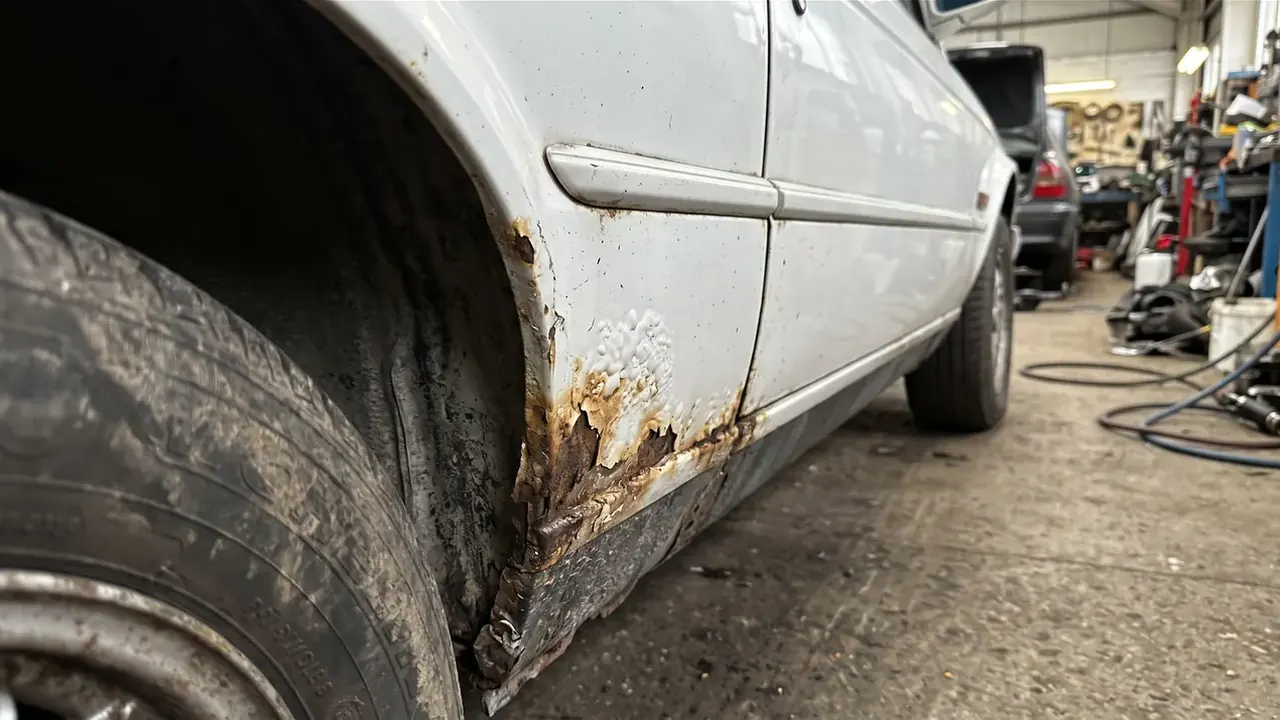
Wheel arches
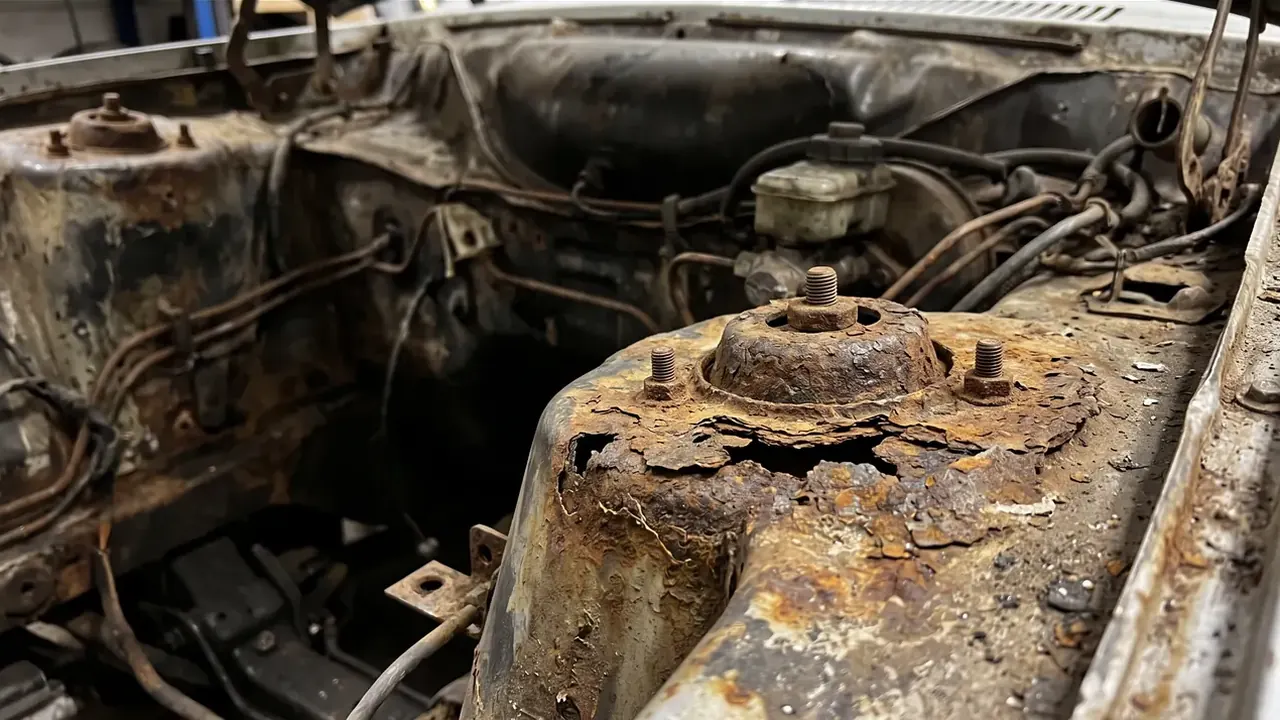
Suspension mounts
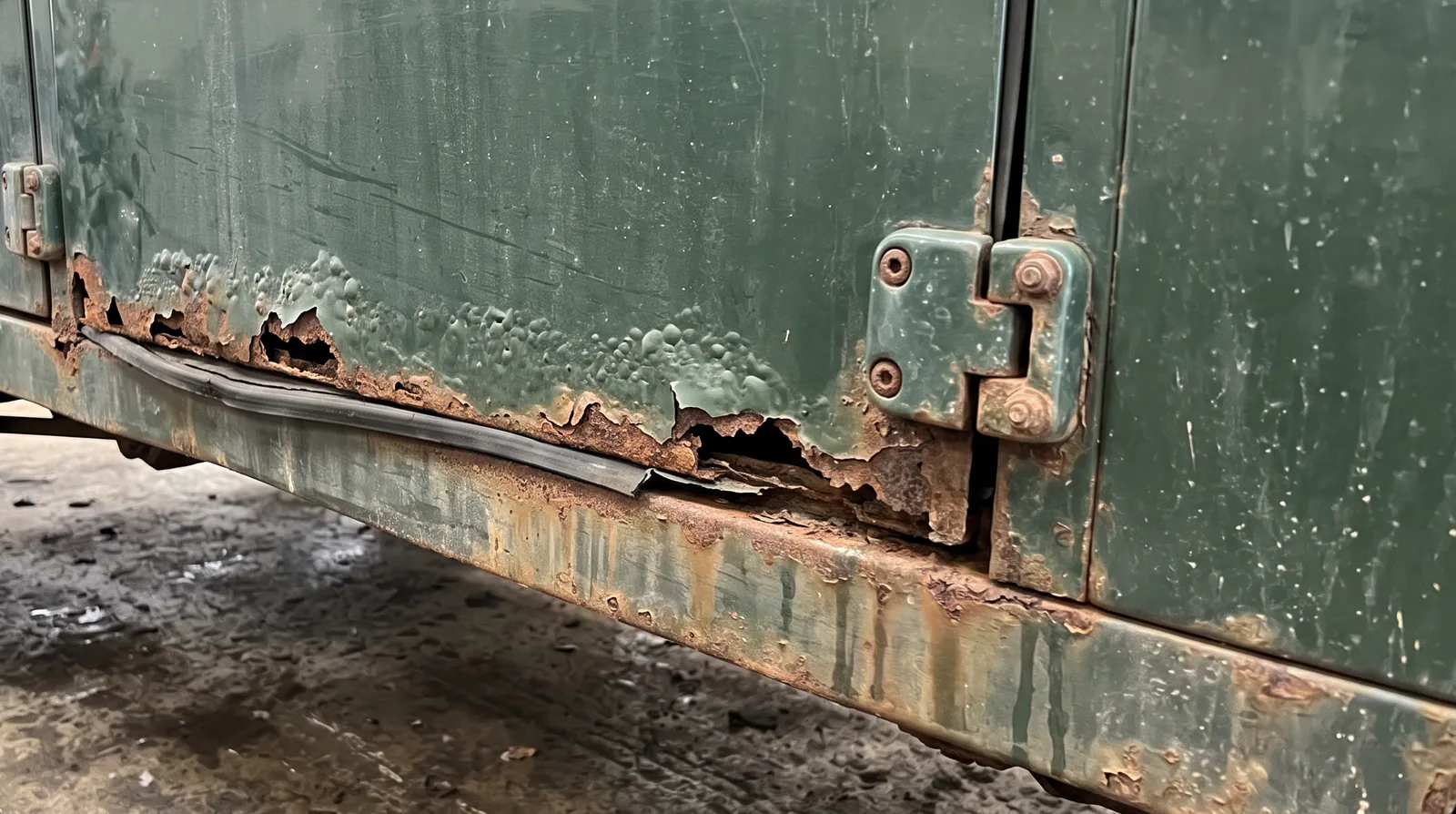
Door bottoms
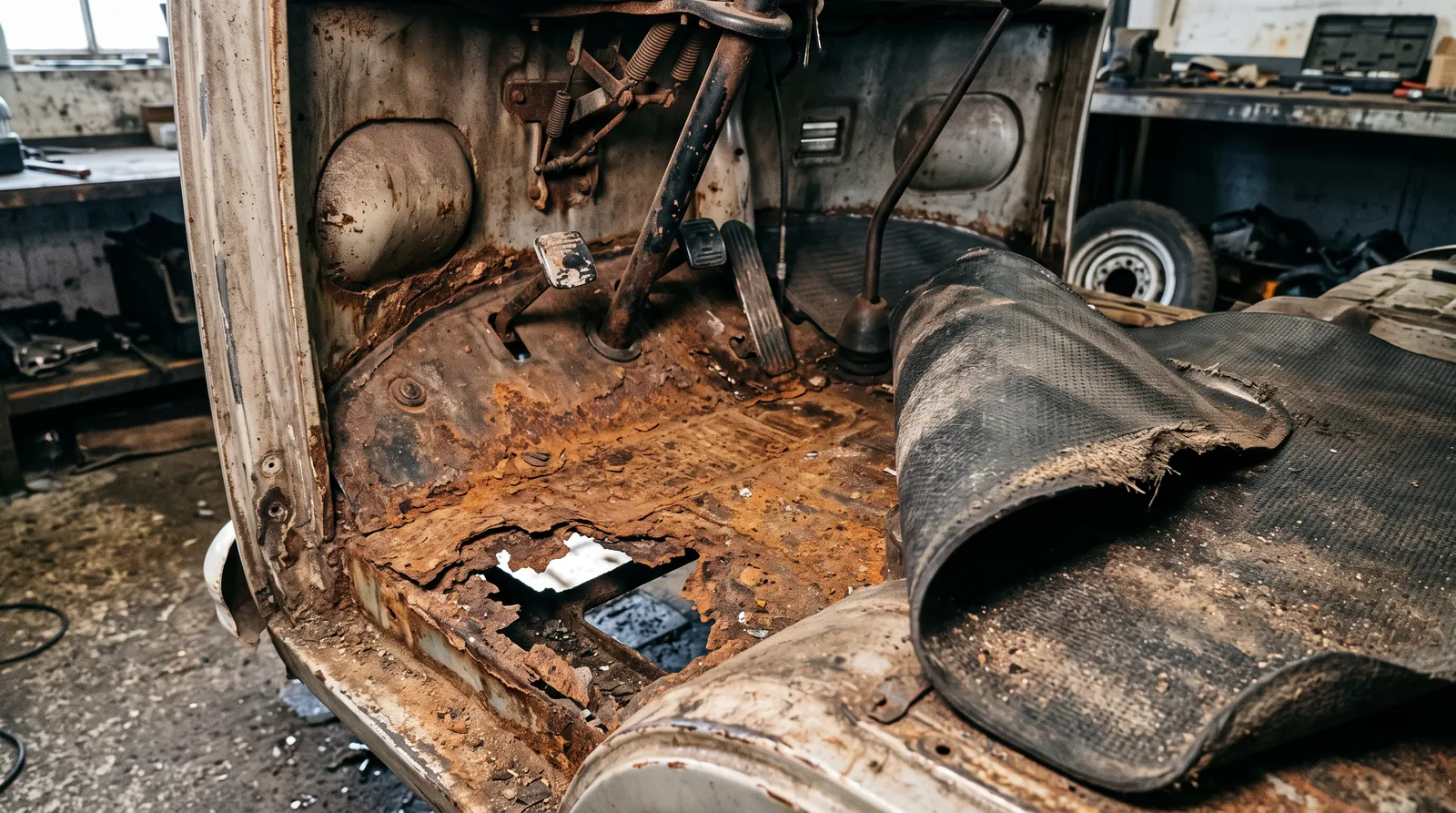
The cab floor
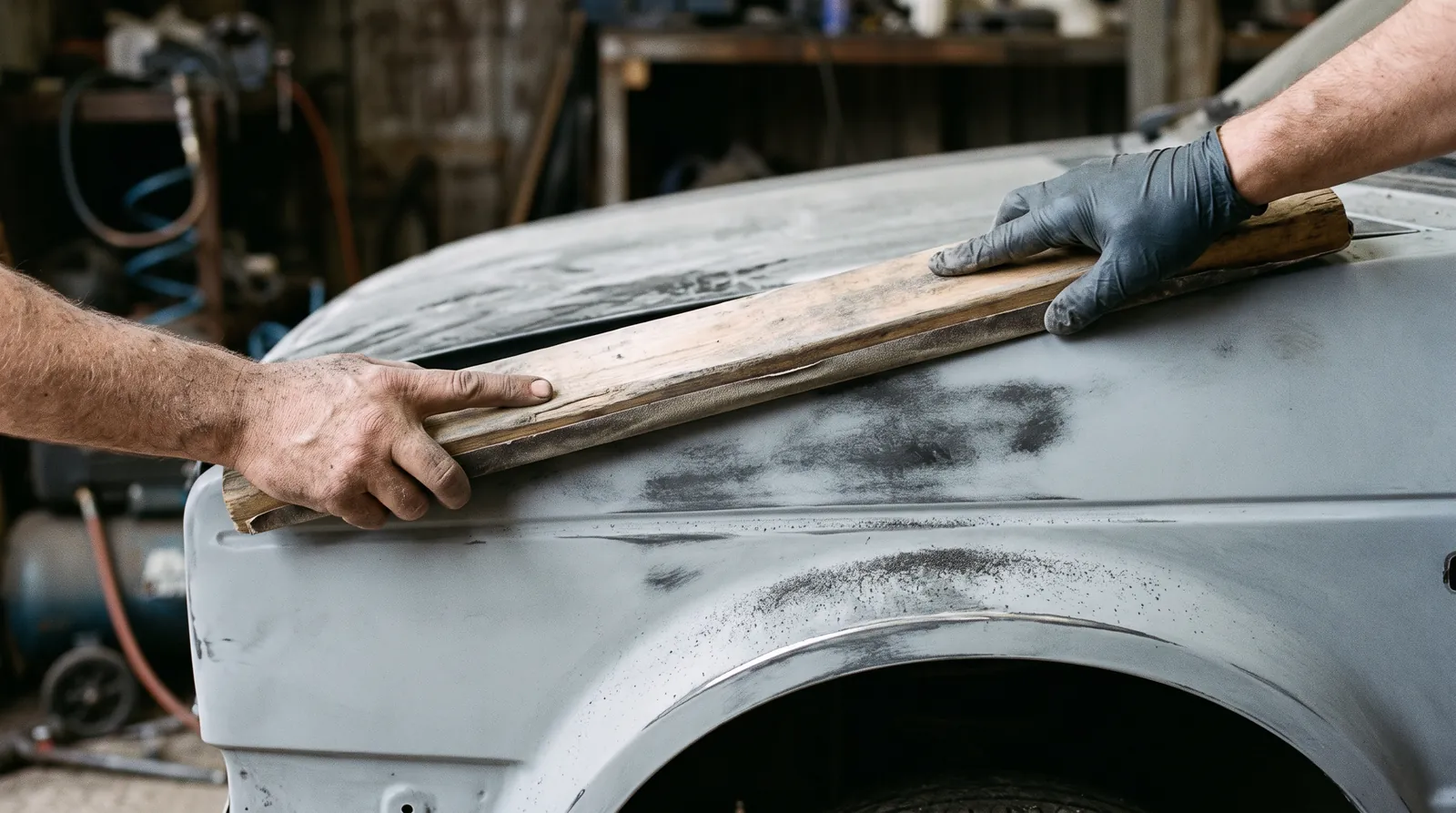
How do I spot old filler?
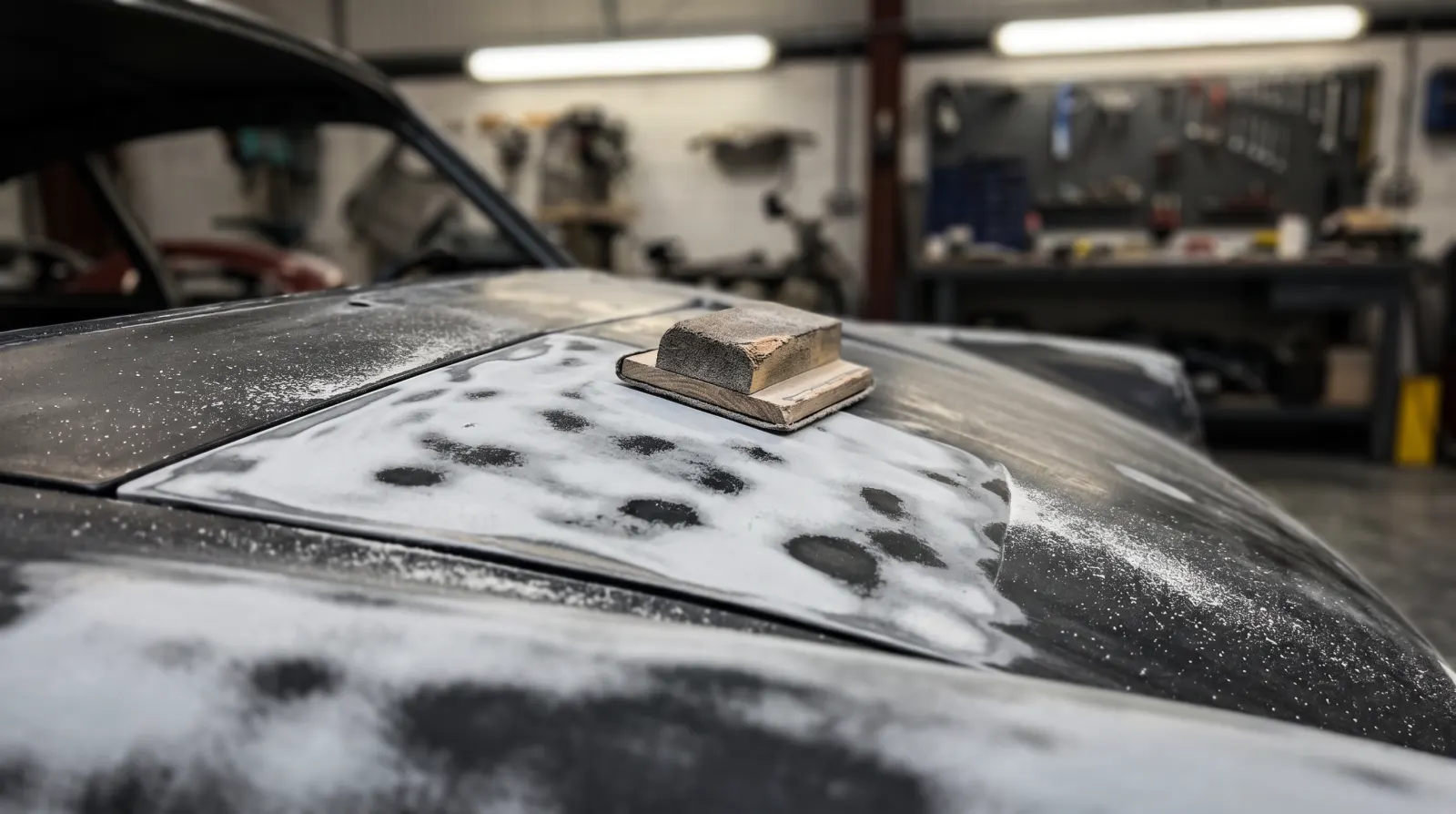
Look along each panel rather than straight at it, with the torch held low. Filler that wasn't blocked flat shows as ripples and waves in the reflection. Other giveaways are a patch where the colour or the shine is slightly different, fine sanding scratches under the paint, and a hairline crack or ring round a repair.
The magnet helps on steel panels. It pulls firmly through paint on steel, and weakly or not at all over a thick layer of filler. Slide it slowly along the bottom of each door, the arches and the sills. It won't stick to aluminium or plastic panels, so it tells you nothing there.
A thin skim of filler over metal that has been put right is normal. A thick layer is a sign of a dent or a rust hole that was filled rather than fixed. GOV.UK's MOT inspection manual lists body filler among the unacceptable methods of repair for a load-bearing part.
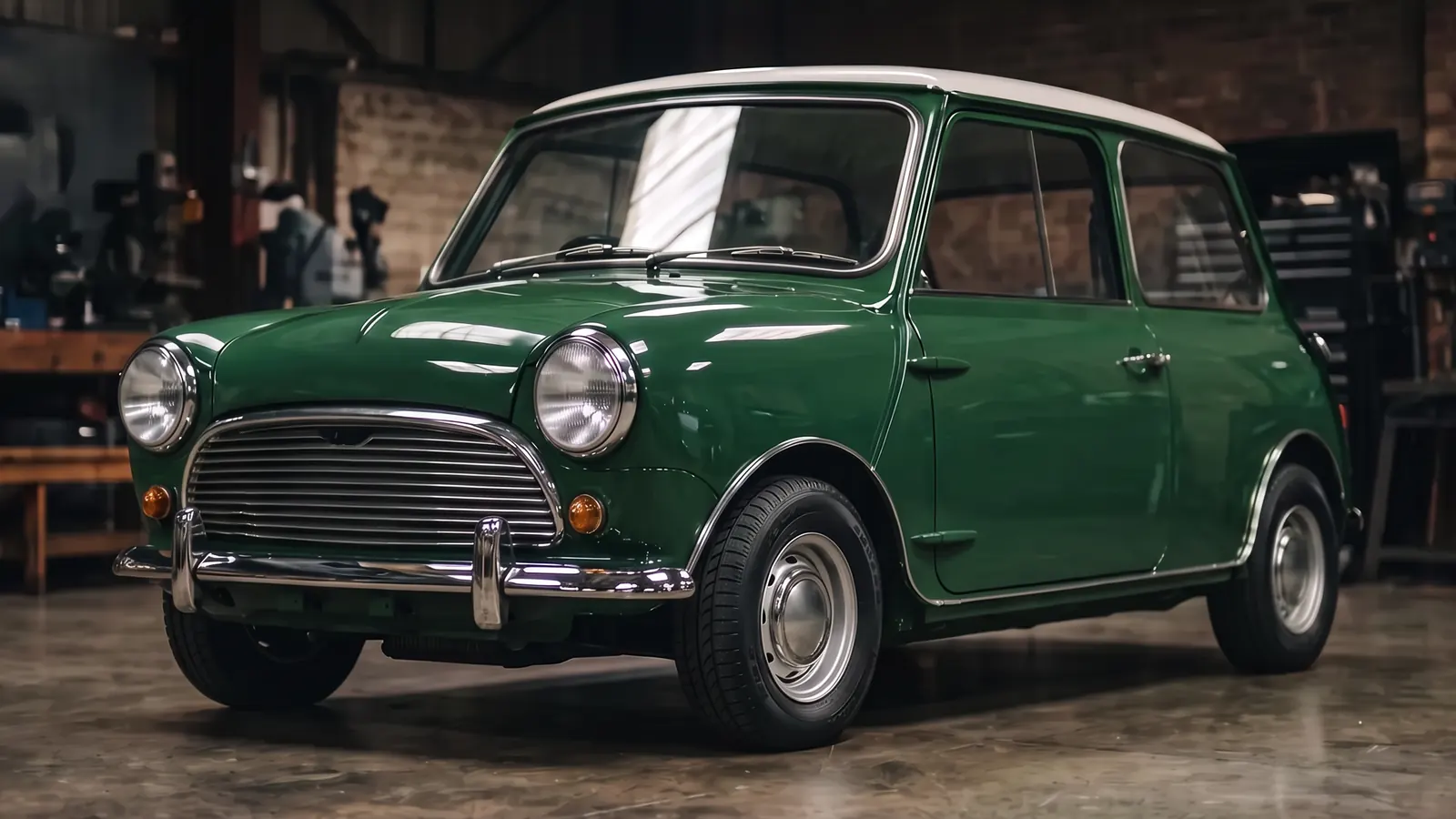
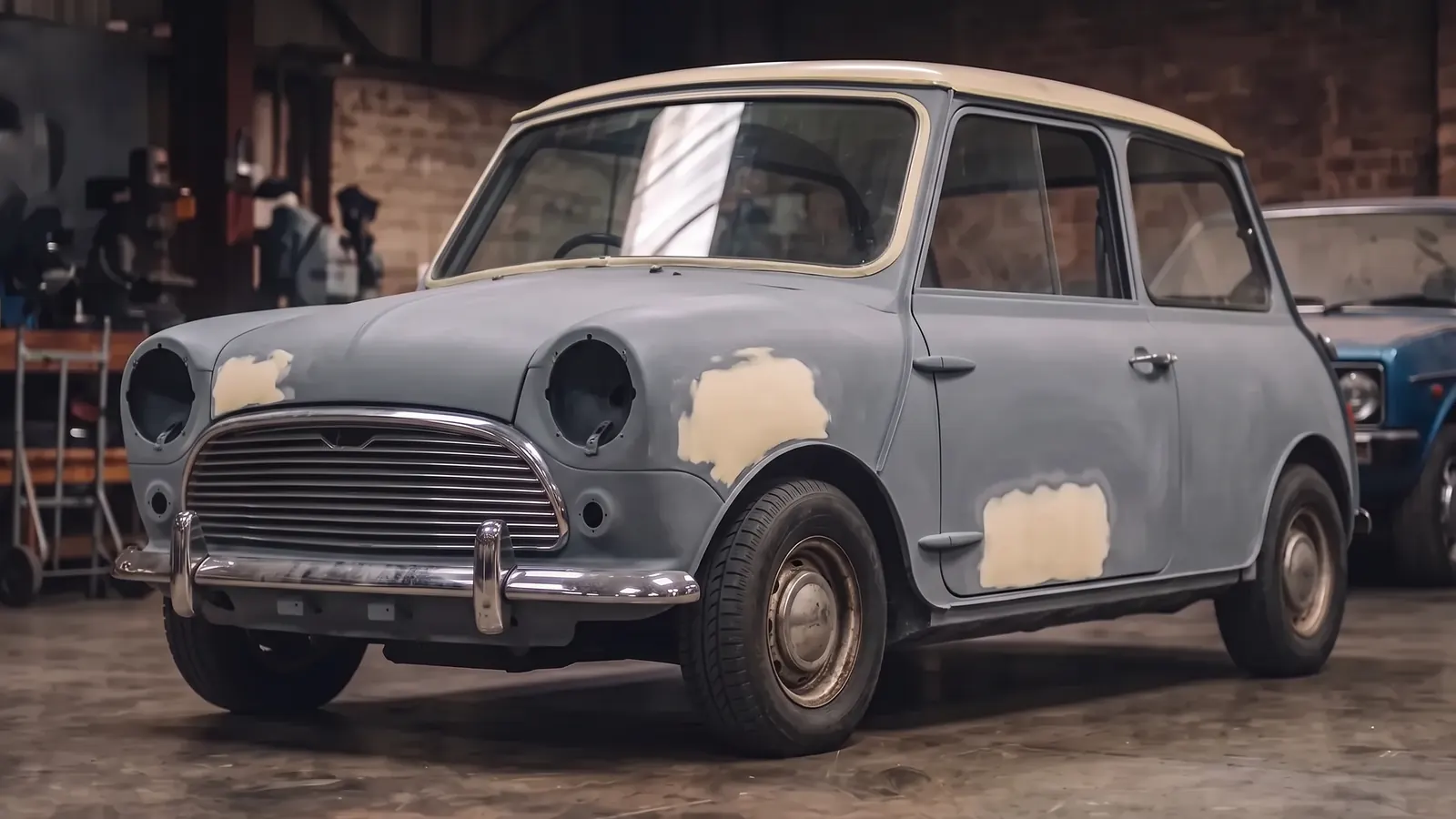
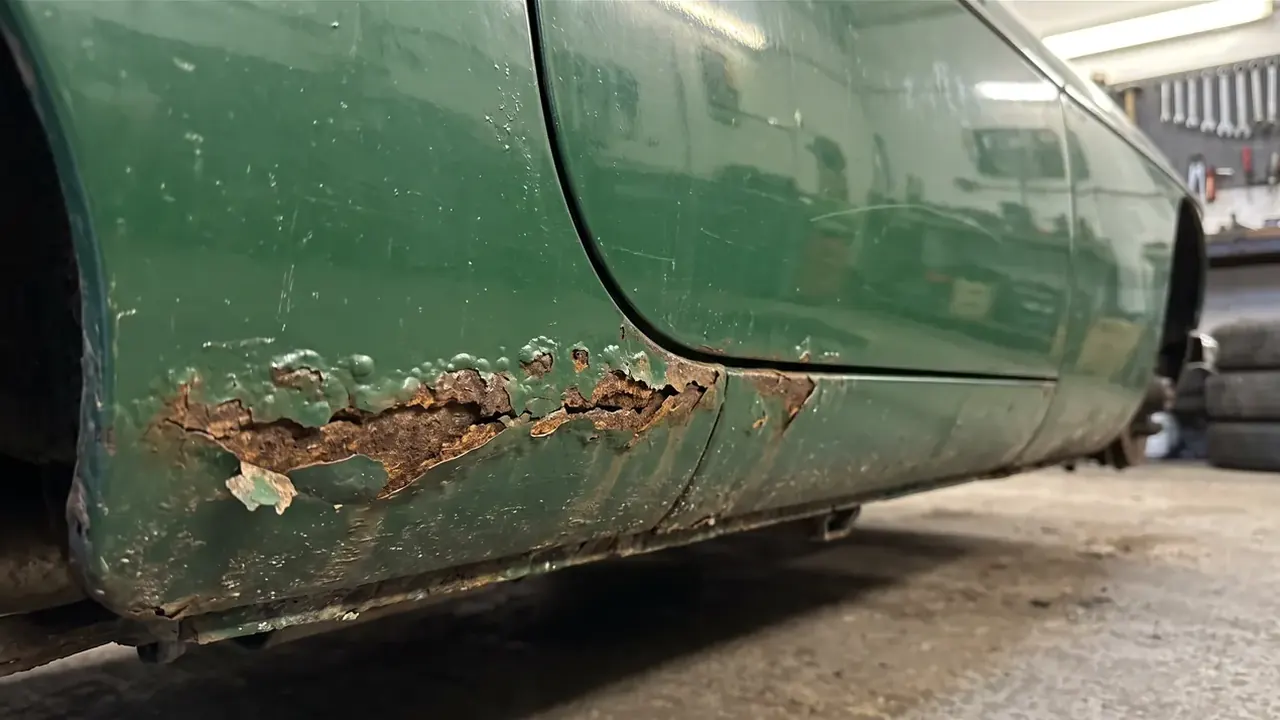
What can fresh paint or underseal hide?
Rust and old repairs. A car painted shortly before it's sold, or given a fresh coat of thick underseal, can have rot under it that was never fixed. The same MOT manual tells testers that a repair method can be hard to identify once it's covered in paint or underseal.
New paint isn't a bad sign on its own. Ask what was done, when and by whom, and whether there are photos of the metal before it was painted. Overspray on rubbers, wiring or chrome tells you a car has been painted, and how careful the job was.
How do I check a project's MOT history?
Online, with the number plate. GOV.UK's MOT history check shows past results for cars and vans tested since 2005: whether it passed or failed and the mileage, and for tests in England, Scotland and Wales, what failed and which parts had minor problems. If corrosion is mentioned test after test, it has been there a while.
GOV.UK's checklist for checking a used vehicle also covers matching the seller's details to the DVLA's, seeing the V5C log book, and checking the vehicle identification number against it.
Some classics have no recent test to read. GOV.UK says a vehicle built or first registered more than 40 years ago doesn't need an MOT, as long as no substantial changes have been made to it. On a car like that, your own look underneath counts for more.
Can I press on the metal at a viewing?
Ask the seller first. Pressing with a finger and thumb tells you a lot: sound metal feels firm, while rotten metal gives, flakes or crunches. Never take a screwdriver to someone else's car without their say so.
Can I get a price before I buy?
Yes. Send us the photos before you buy, with the make and model and what you'd like done, and we'll come back with a rough price. It's easier to price the rust before it's yours.
The price is confirmed once the car is here and stripped, because nobody can see under the paint from a photo. Bigger projects are priced in stages so the work keeps moving. See prices for how we quote, restoration for how a bigger job runs, and welding and rust repair for how the rust is put right.
Found a project you like? Send us photos of the sills, arches, floors and underneath from the quote form.