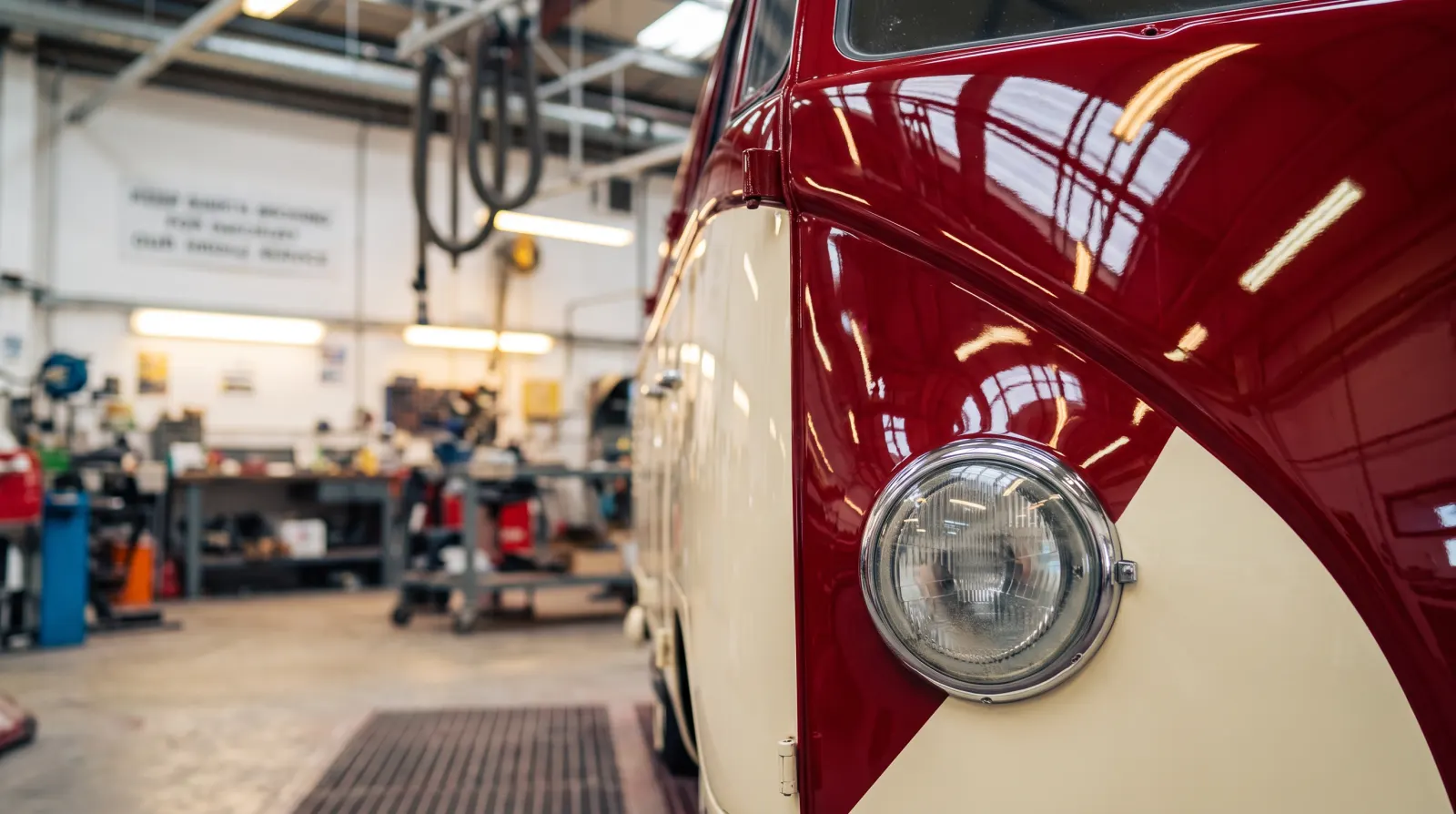
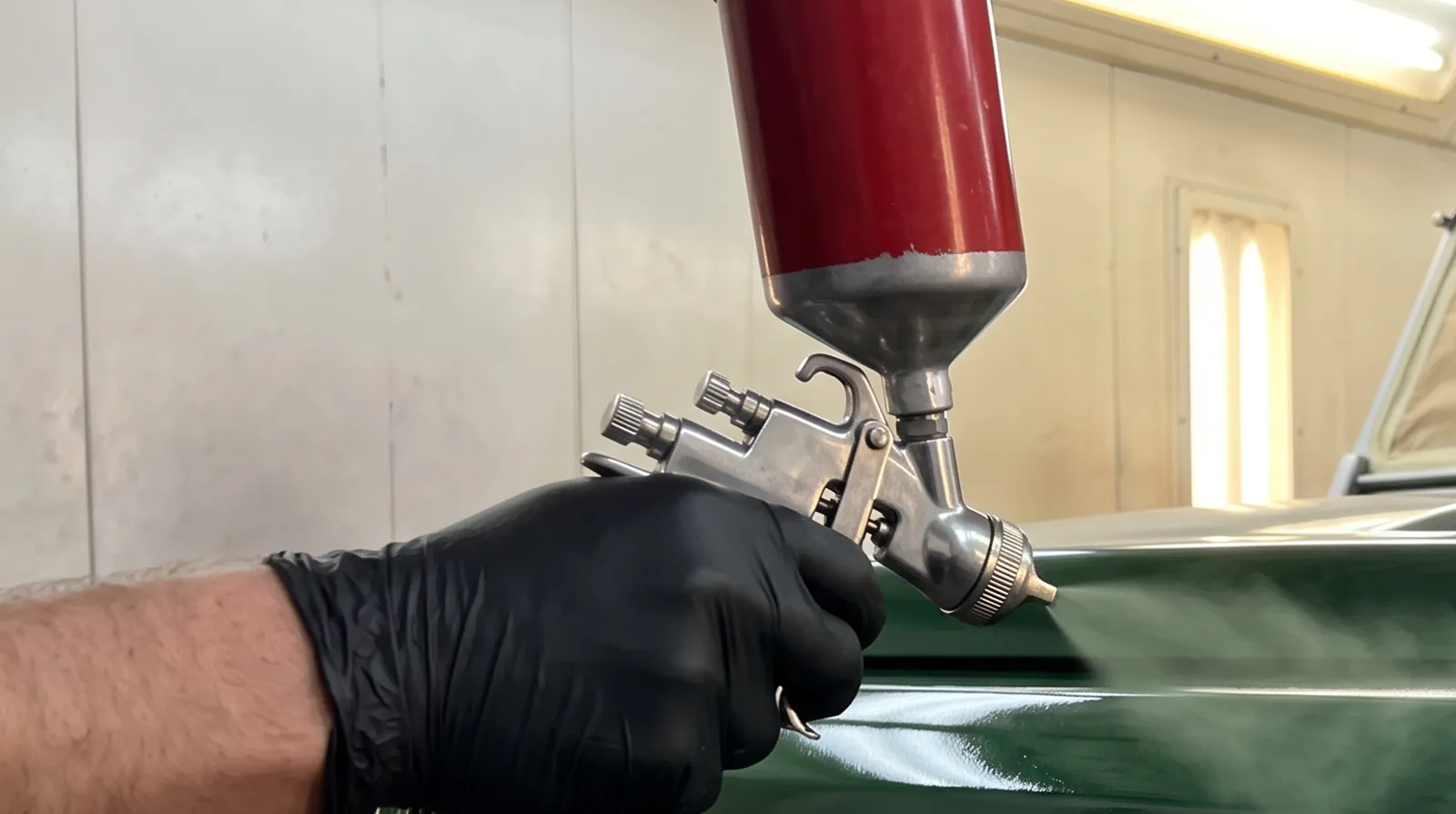
A two-tone camper is planned before any paint goes on. The split line, where the two colours meet, is worked out first: where it runs along the sides, how it gets round the trim and how it comes to a point on the front. Then the first colour goes on, the line is laid out by hand in fine line tape, and the second colour is sprayed against it. The tape only follows the plan. If the plan is wrong, careful taping just gives you a crisp line in the wrong place.
Here's how the line is worked out, which colour goes first and what happens in the booth.
Where does the split line go on a camper?
Along a line the body already gives you. Volkswagen's own history of the Samba says those buses came in two colours as standard, most often with the upper part white, and the two sections divided by a decorative strip.
A crease pressed along the side, a trim strip or the edge of a panel gives the line a fixed place to sit, so it runs true from one end of the van to the other. A line floating across a flat panel has nothing to hold it, and any wobble shows.
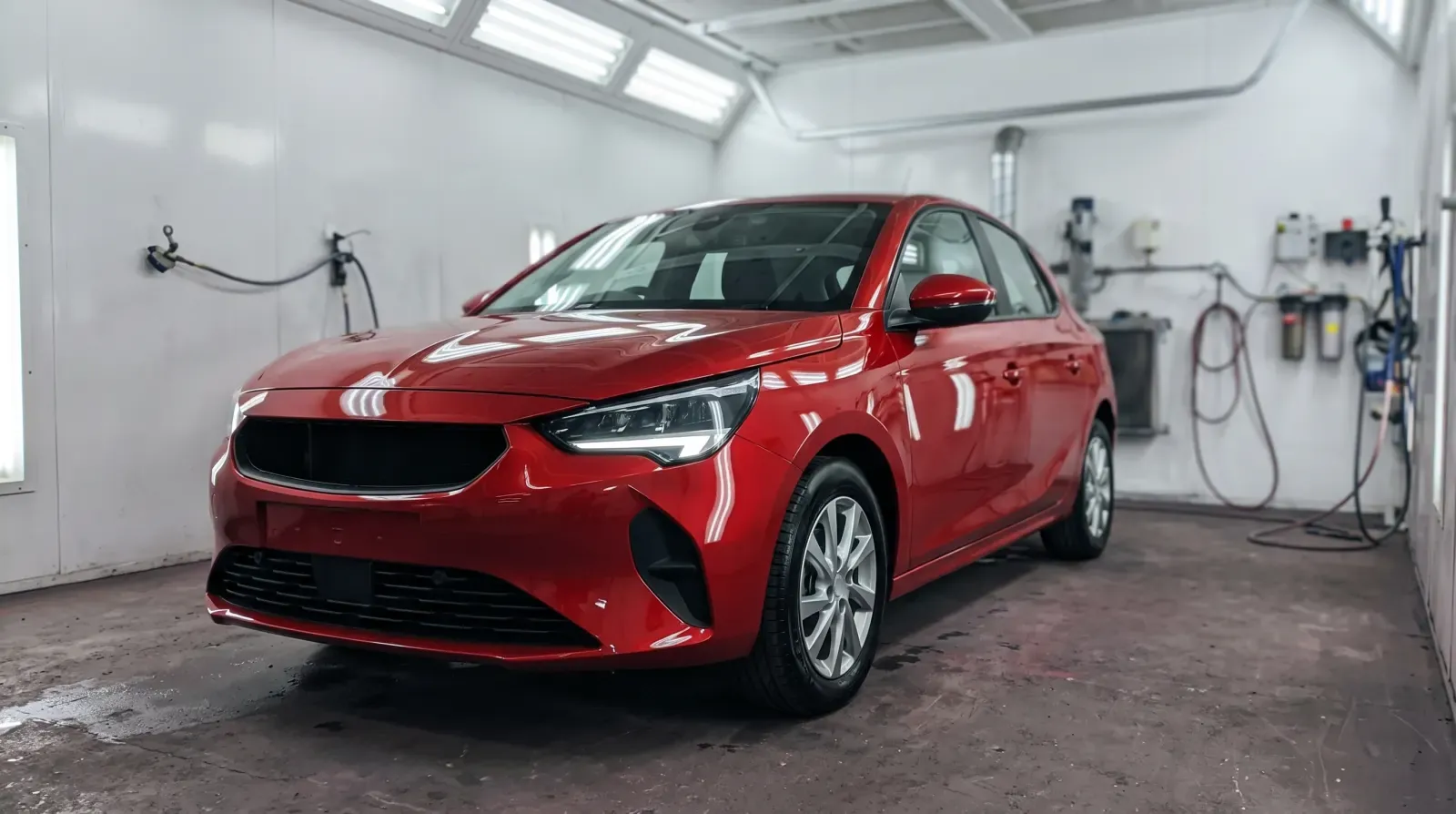
Why does the front need the most planning?
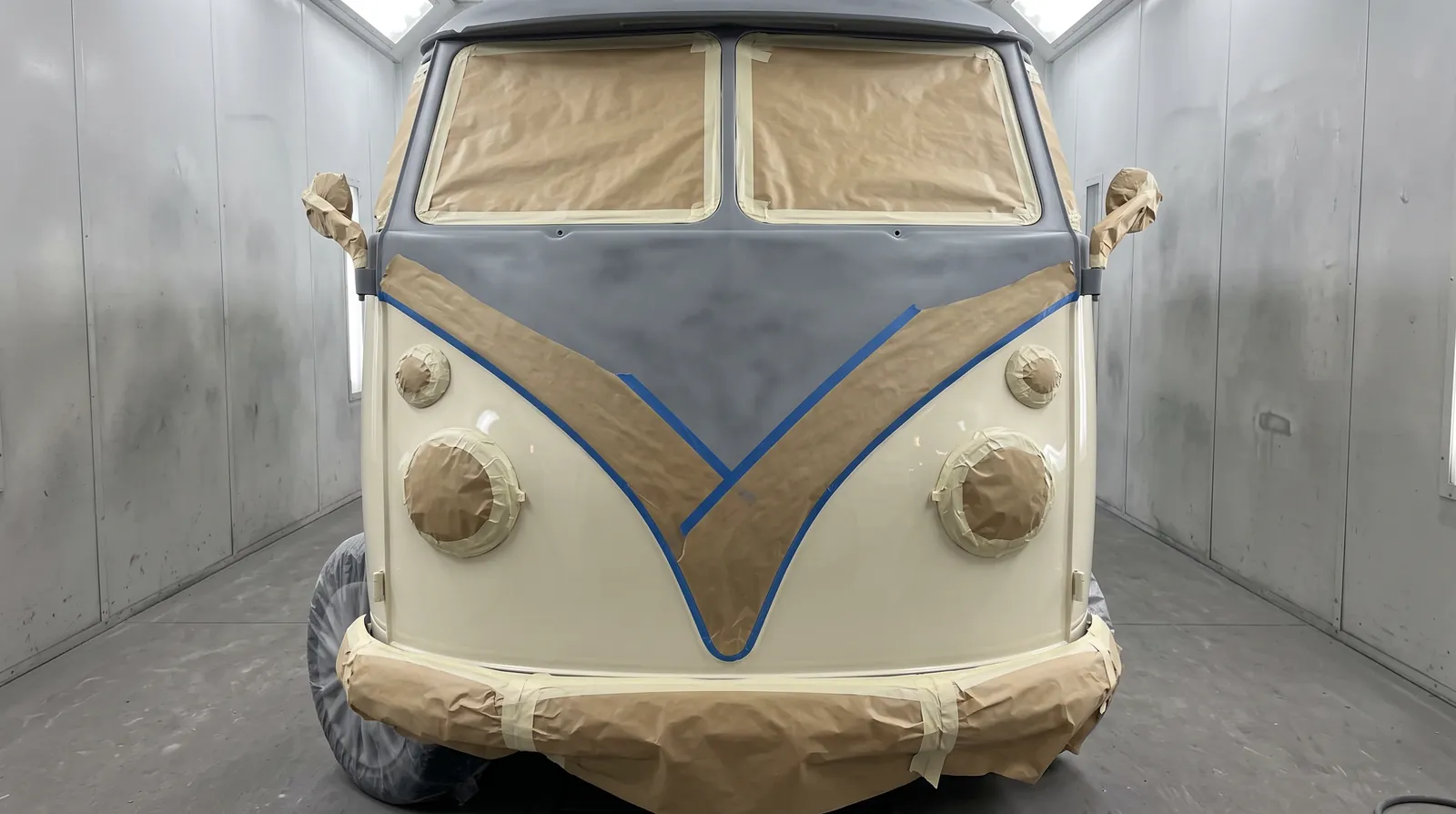
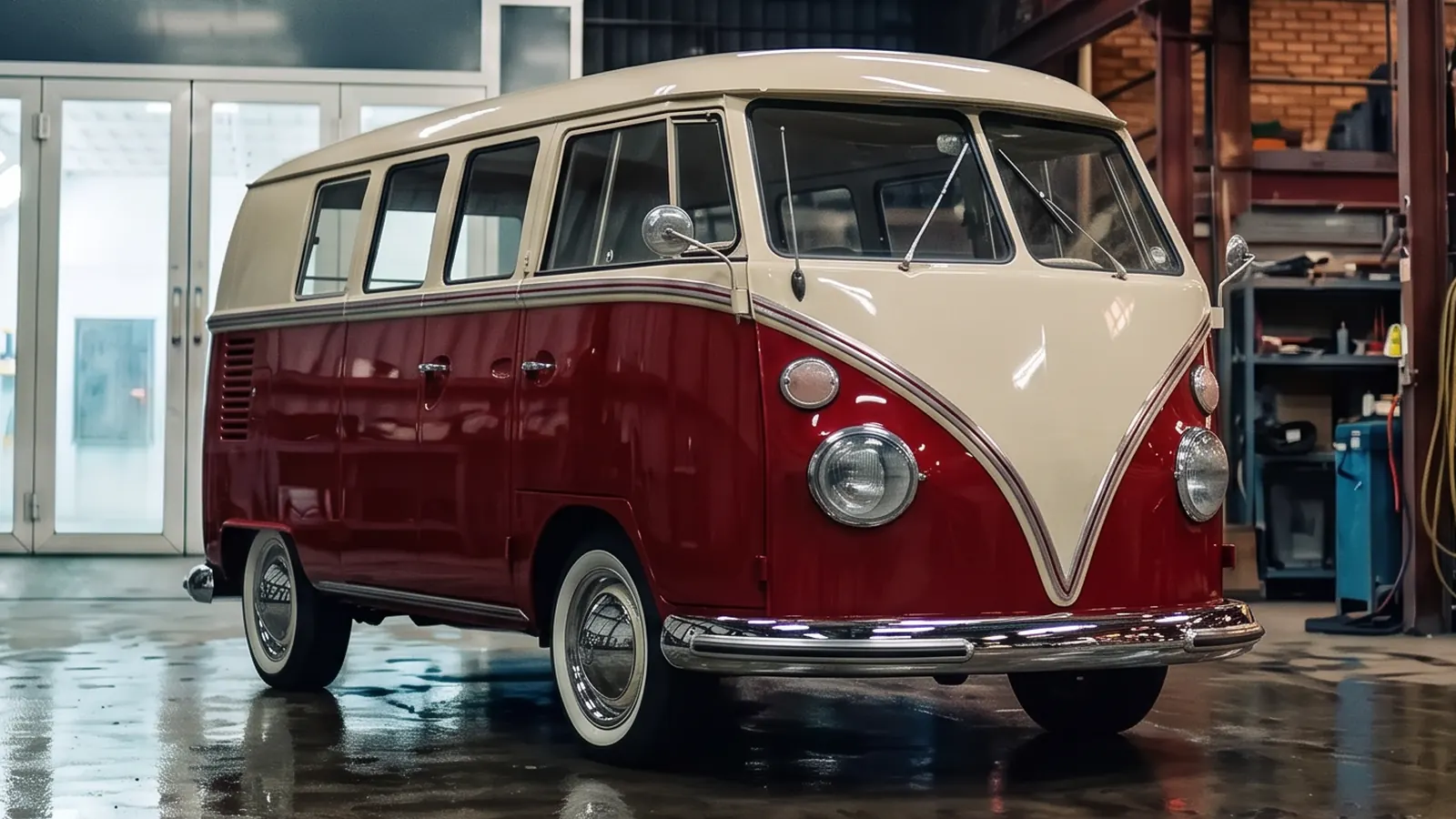
Because it's where the two sides of the line meet. The split-screen bus has a V shaped into its front panel, and a two-tone line can follow it down between the headlights. Volkswagen still gives its electric ID. Buzz a V-shaped front, and calls its optional two-tone reminiscent of the historic T1.
Both arms of the V have to start at the same height, run at the same angle and meet dead centre, or the whole van looks lopsided from the front. So the V is measured and marked from the centre of the front panel before any tape goes down. Later vans have different fronts, and the line is worked out for each one.
How does the line get round the trim?
By going under it. Trim, badges, lights and handles come off before the paint goes on, so each colour runs right to its edge instead of stopping at a tape line round a part. Where a trim strip goes back on along the split, it sits over the join.
Anything left on has to be masked, and paint stops short wherever tape is in the way. See custom paint for how a job comes apart before the colour goes on.
Which colour goes on first?
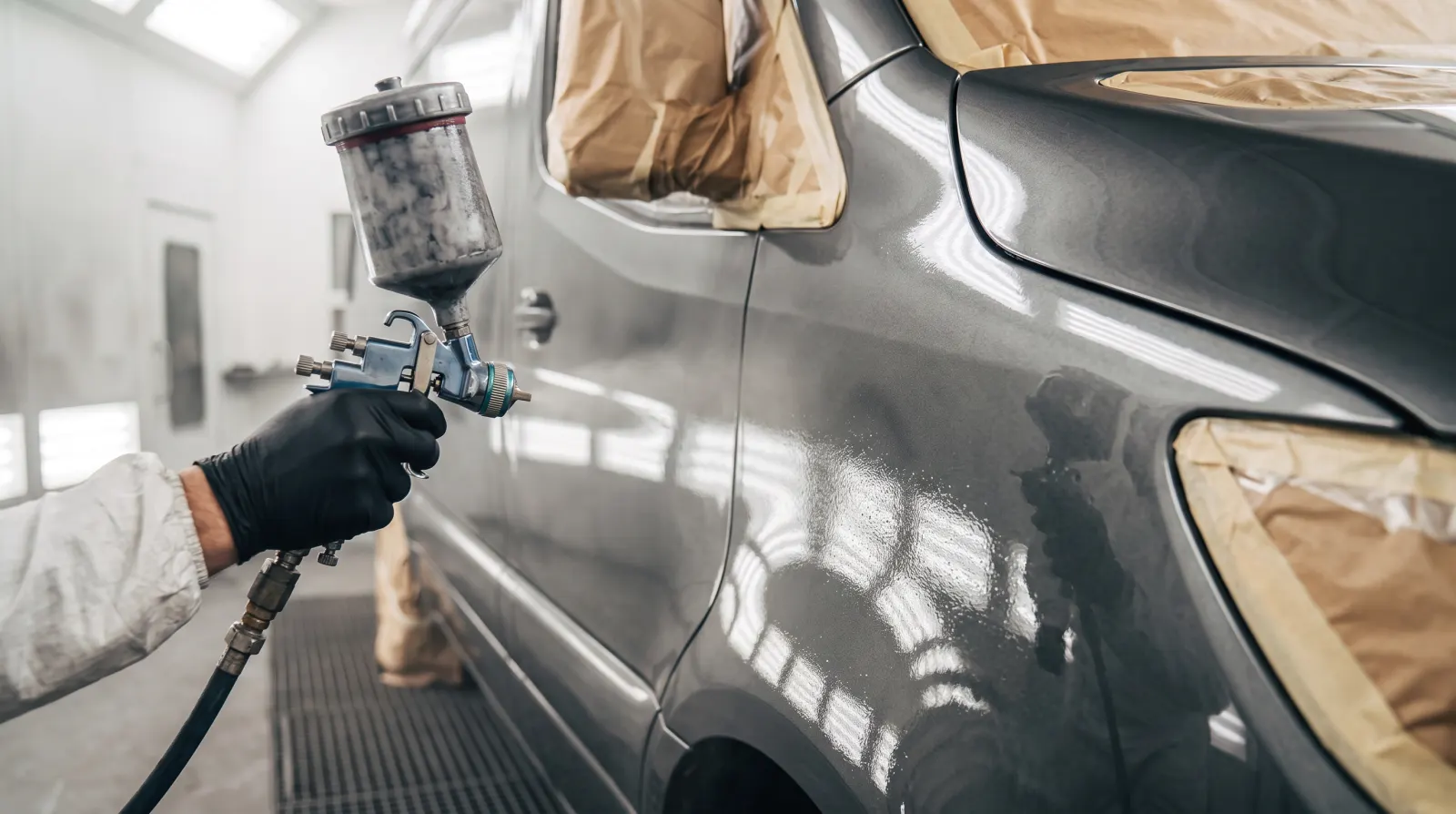
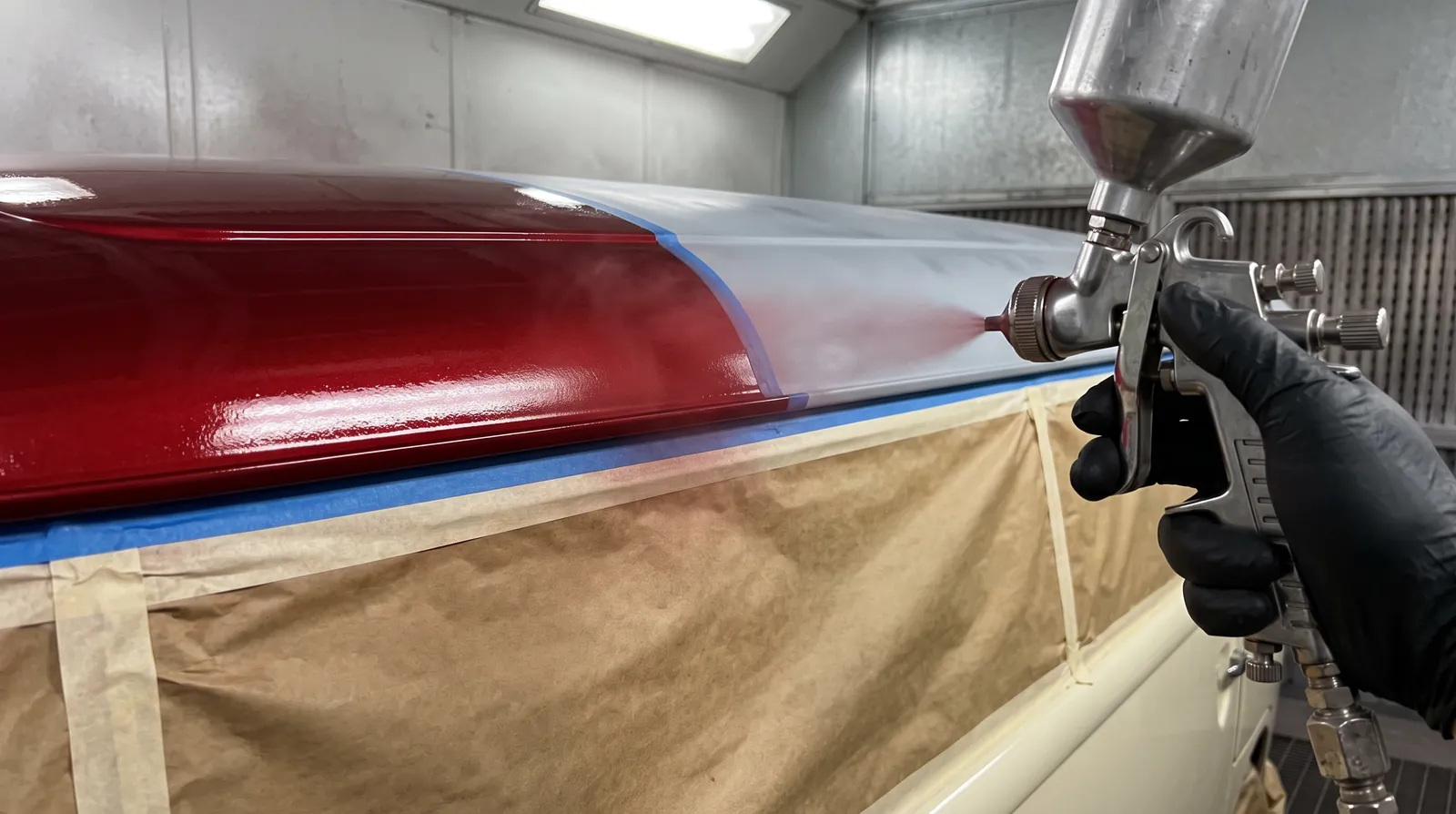
The one the plan picks, for a reason. The first colour goes on over its whole area and a little past the line, and it's left to set. The line is masked on top of it, then the second colour is sprayed against the tape. A patent filed by DuPont, whose car paint business is now Axalta, describes this conventional two-tone process: the first colour masked, the second colour applied to the part left uncovered, then the mask taken off.
So wherever the first colour went past the line, the second has to hide it. PPG, one of the big paint makers, lists poor covering power of the colour coat among the causes of the surface underneath showing through. That's why the order is worked out from the two colours you've picked.
How is a two-tone masked?
By hand, with fine line tape along the line. Fine line tape is a thin, flexible plastic tape that gives a crisp edge and bends round curves without creasing. It goes down on the line without being stretched. Masking tape and paper go on behind it to cover the rest of the first colour, and every edge is rubbed down so paint can't creep underneath.
On a long side, the line is checked from both ends before anything is sprayed. A line that looks right up close can drift over the length of a van.
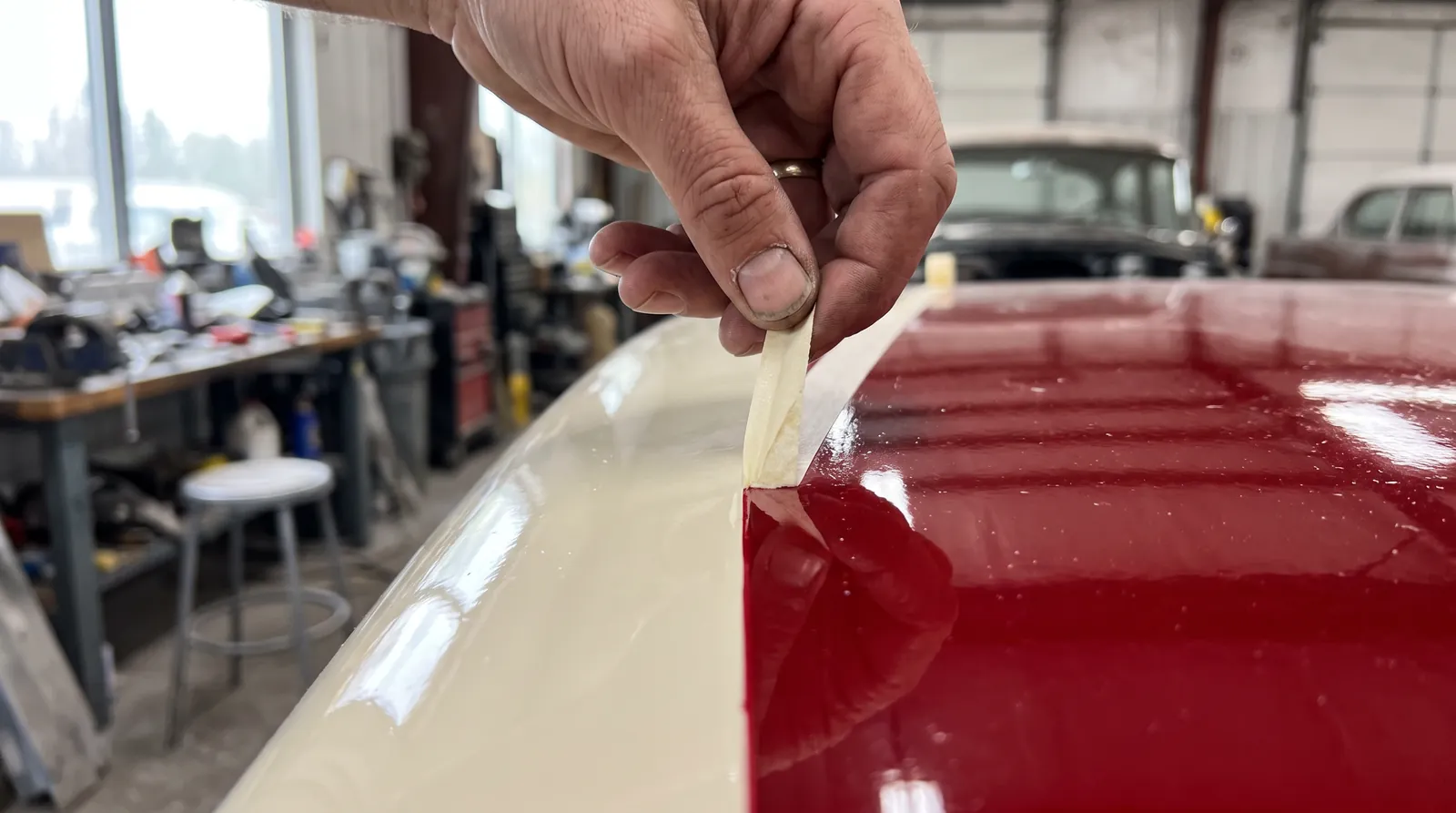
When does the tape come off?
Once the second colour has set enough not to move, and before it's hard enough to tear along the edge. It's pulled off slowly, back on itself at a low angle, so the line stays clean. Tape pulled late, fast or straight up can chip the edge.
Does a two-tone leave a ridge along the line?
It can. The same patent names the snag with the conventional method: an unwanted edge forms along the masking. On basecoat and clear, the way round it set out in that patent is to take the mask off after the second colour and before any clear goes on, then lay the clear over the whole van in one go, so the lacquer runs straight across the join.
How do I choose the two colours?
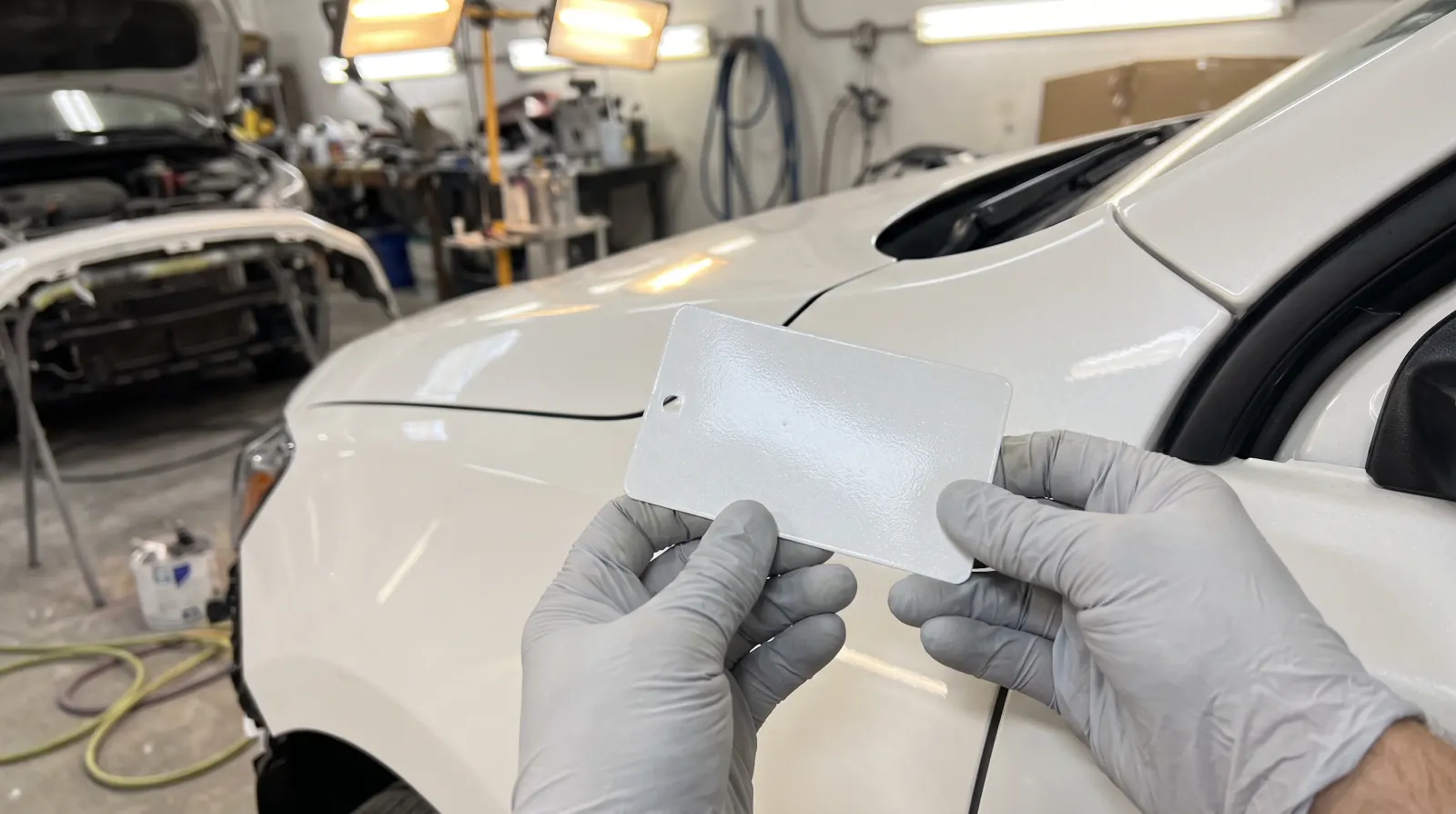
Look at them together, on real paint, in daylight. Bring a paint chip, a photo or the colours off a van you saw at a show, but a physical sample beats a photo, because screens and cameras change colours. The two have to sit side by side all the way round the van, so judge them as a pair.
Does a two-tone need more prep than one colour?
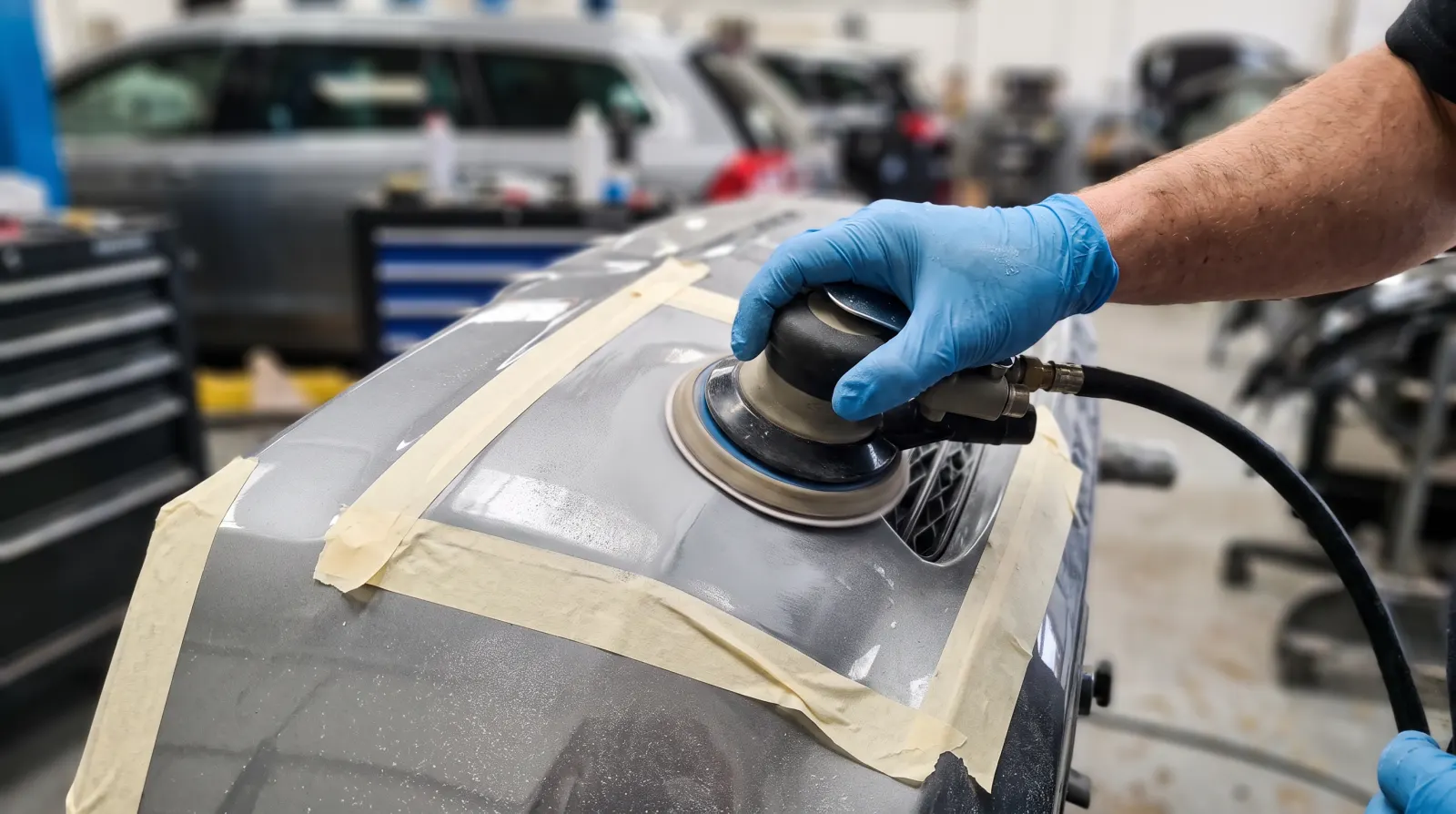
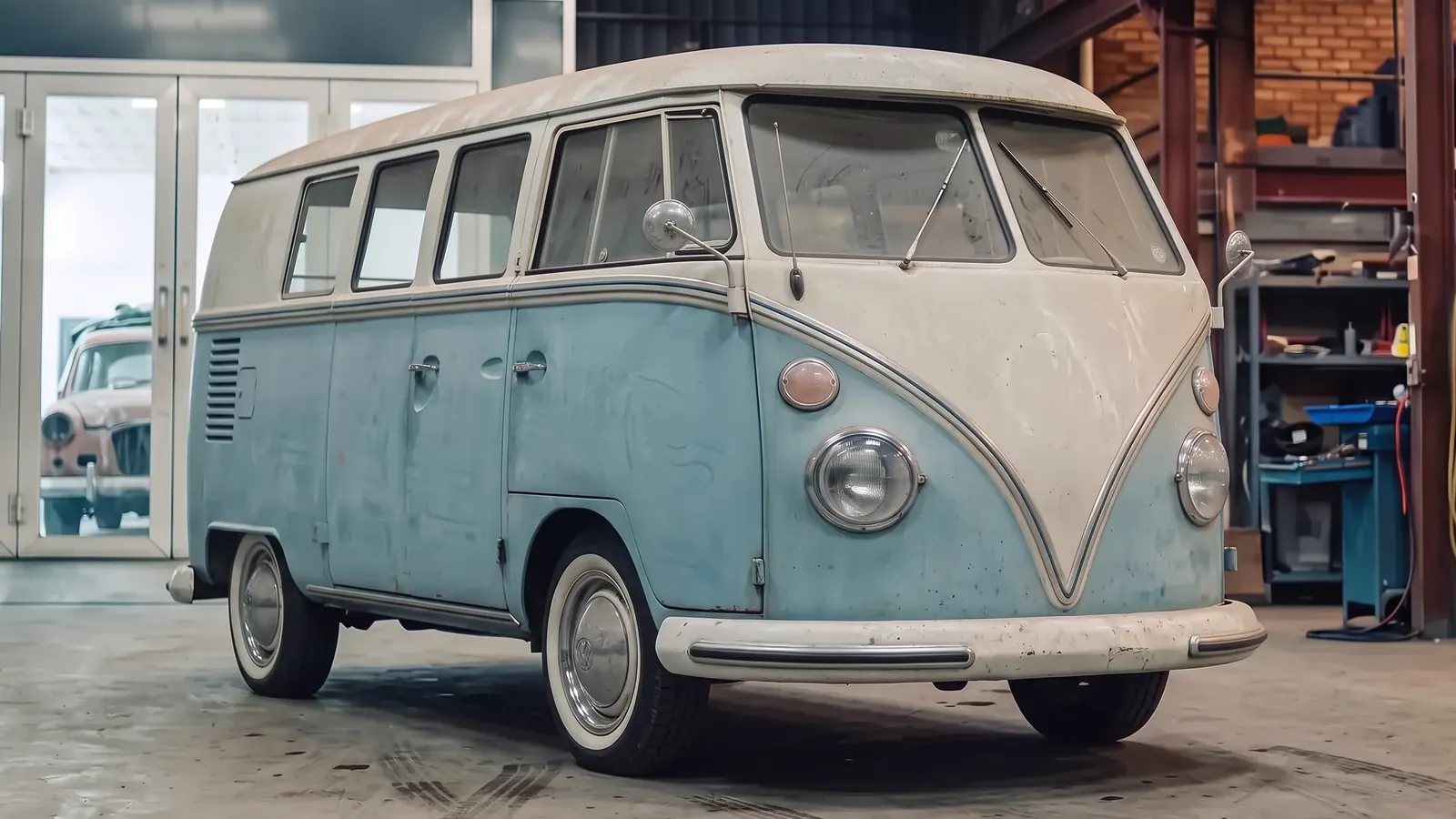
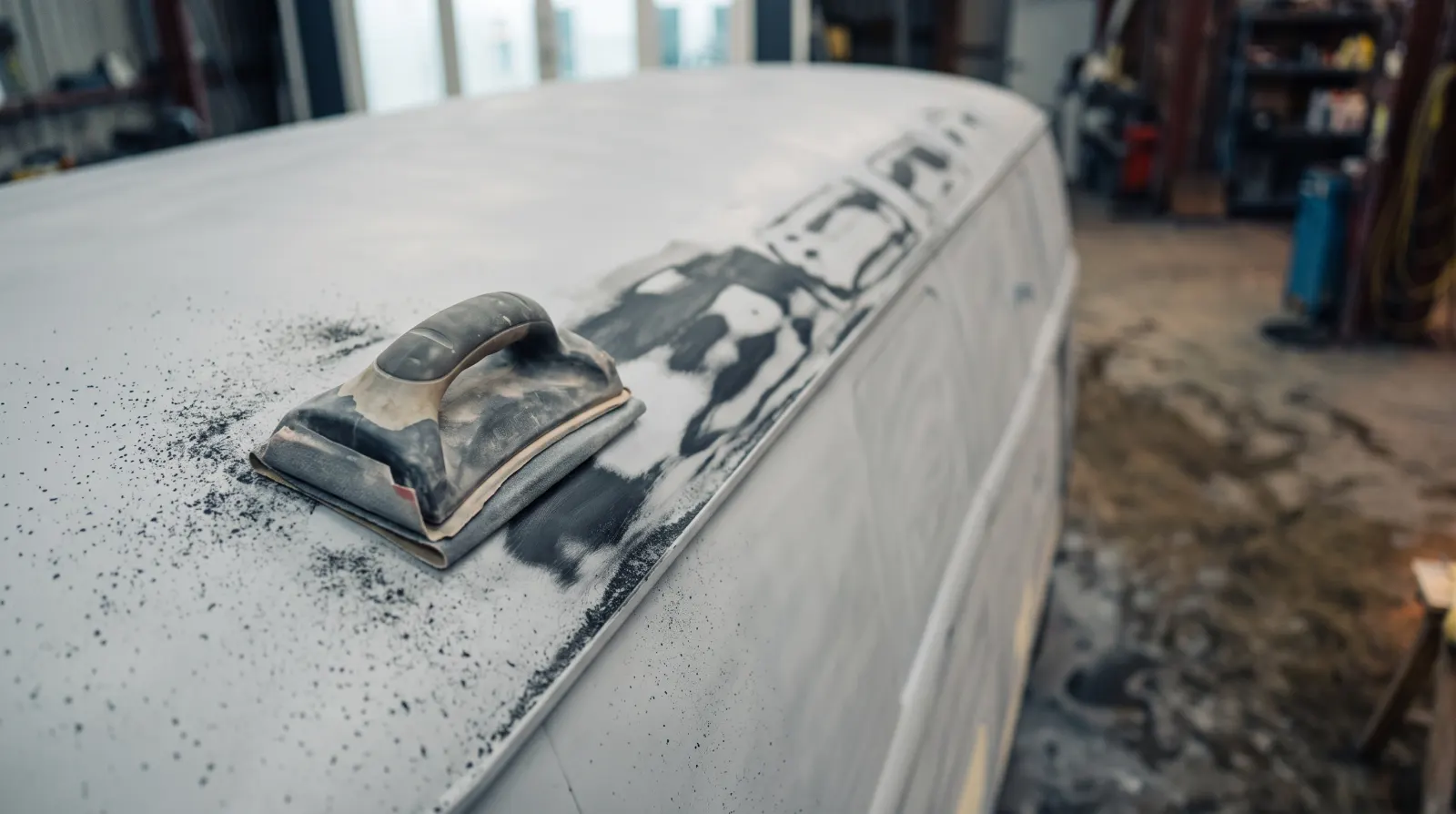
No, the prep under the paint is the same: rust cut out, metal put right, primer blocked flat. See campers for where they rust.
The extra time is in the painting. Two colours means two rounds of spraying with a full masking stage between them, and the line itself takes time to lay out.
How much does a two-tone camper cost?
It's priced from photos and a look at the van, because what's under the paint moves the price more than the colours do. A two-tone adds the planning, the masking and the second colour to a full respray. See prices for how we quote.
Send us a few photos of the van and the two colours you're after from the quote form.