If the rust is in one patch and the metal round it is sound, the rot is cut out and a new piece of steel is welded in where it was. If it has spread across the panel, or the panel has gone thin all over, a new panel is the repair that lasts. How far the rust has spread decides it, and that only shows once it's cut back.
Here's how the choice is made, and what has to happen after either repair so the rust stays gone.

What is a patch repair?
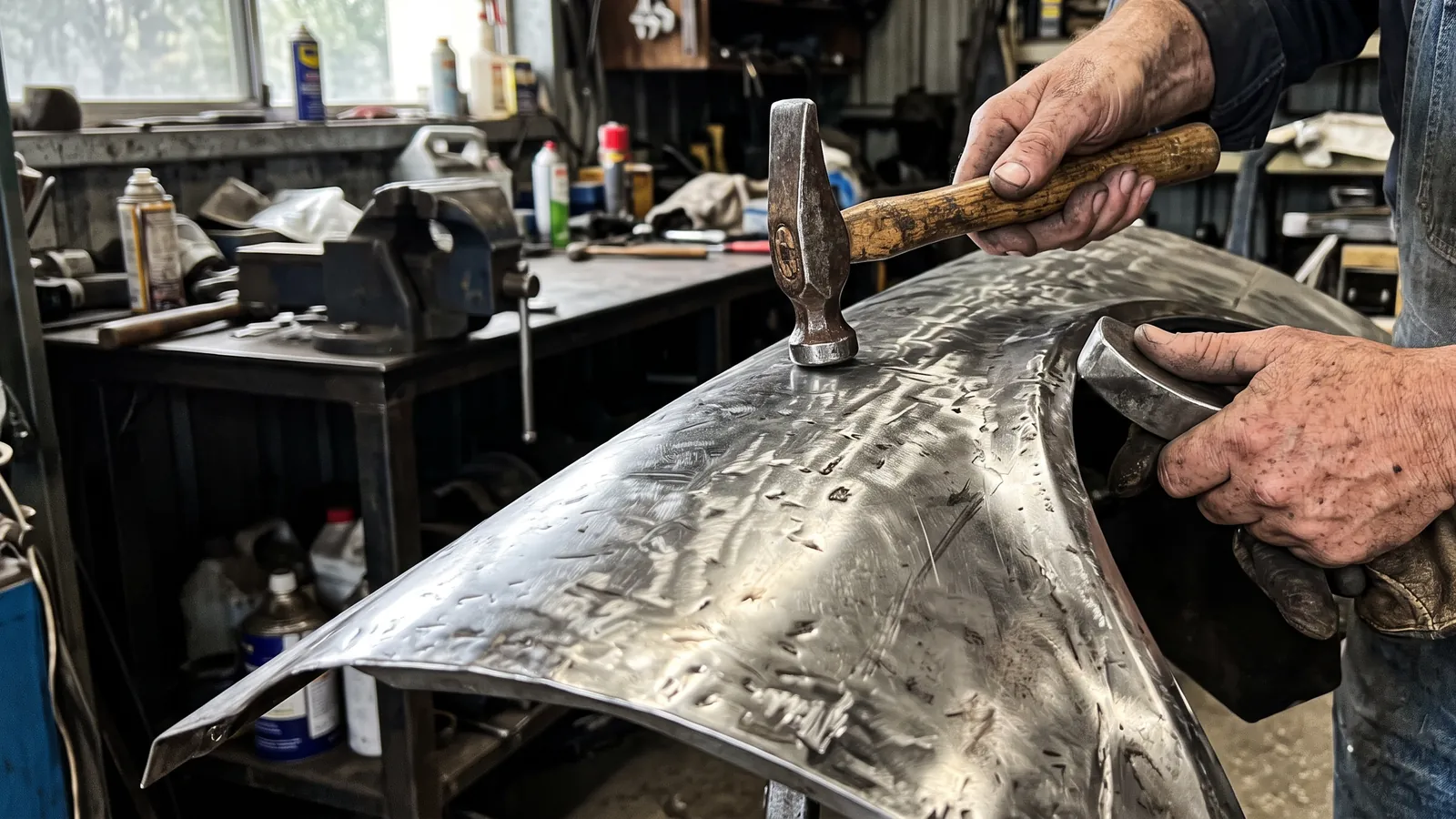
It's cutting out the rusty metal and welding a new piece of steel in its place. The trade calls it letting in new metal.
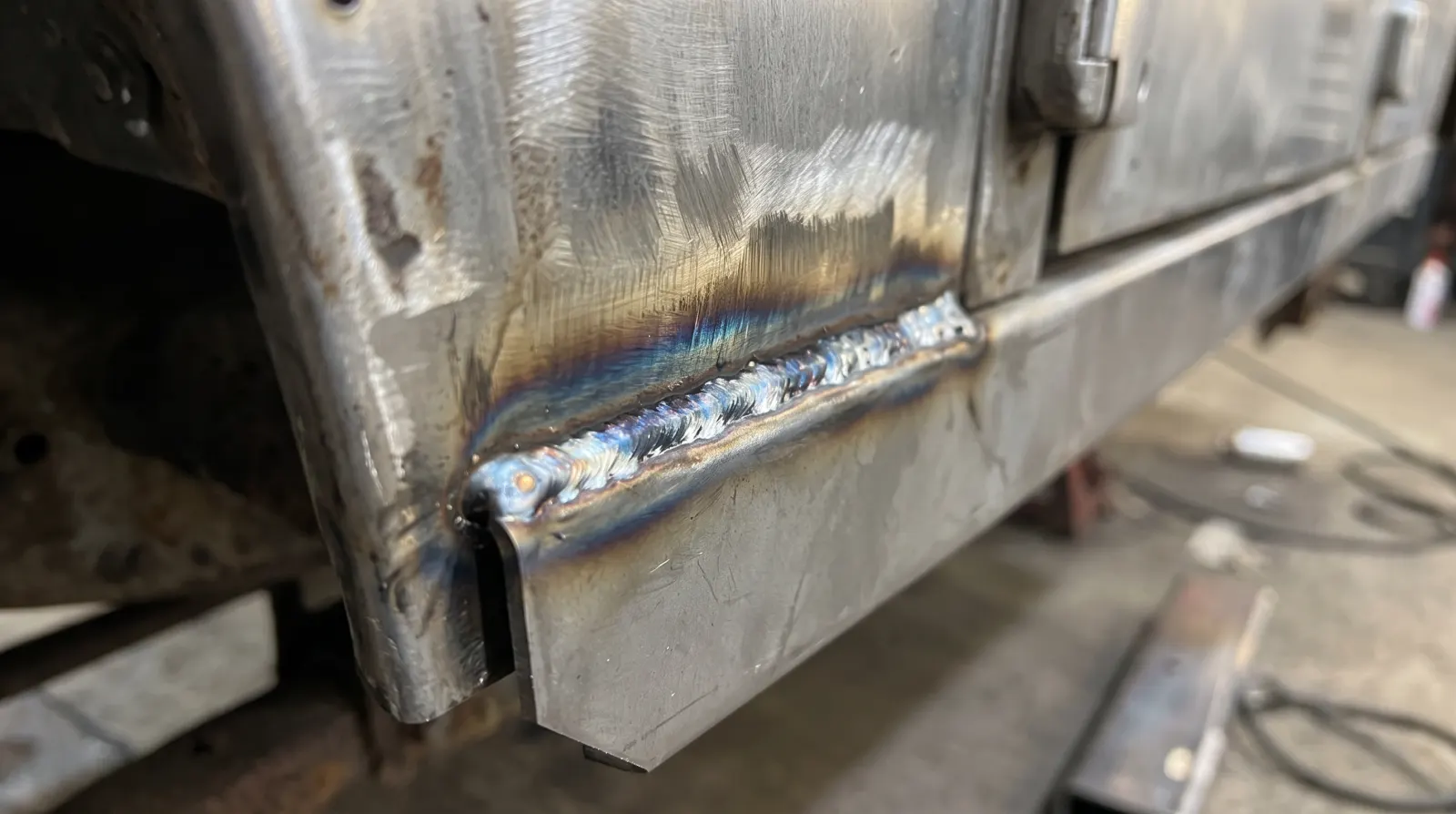
The rot is cut back until the edges are clean, solid steel. A new piece is cut and shaped to fit the hole, then welded to the sound metal round it. Once the weld is ground flush, primed and painted, the patch is part of the panel.
It isn't a plate laid over the top. A plate over rust leaves the rust where it was, still working away under it.
When is a patch repair enough?
When the rot is in one place and the metal round it is still full strength. A bubble at the bottom of a door, a hole in the lip of a wheel arch or a rusty corner of a floor pan are typical patch jobs.
Shape matters too. A flat or gently curved area is easier to let new metal into than a deep pressing or a swage line, the crease pressed along a panel. Many older cars have repair sections made for the common rot spots, part panels that cover the bottom of a door or the lip of an arch, and they sit between a hand-made patch and a whole new panel. See welding and rust repair for how we decide.
When does a panel need replacing?
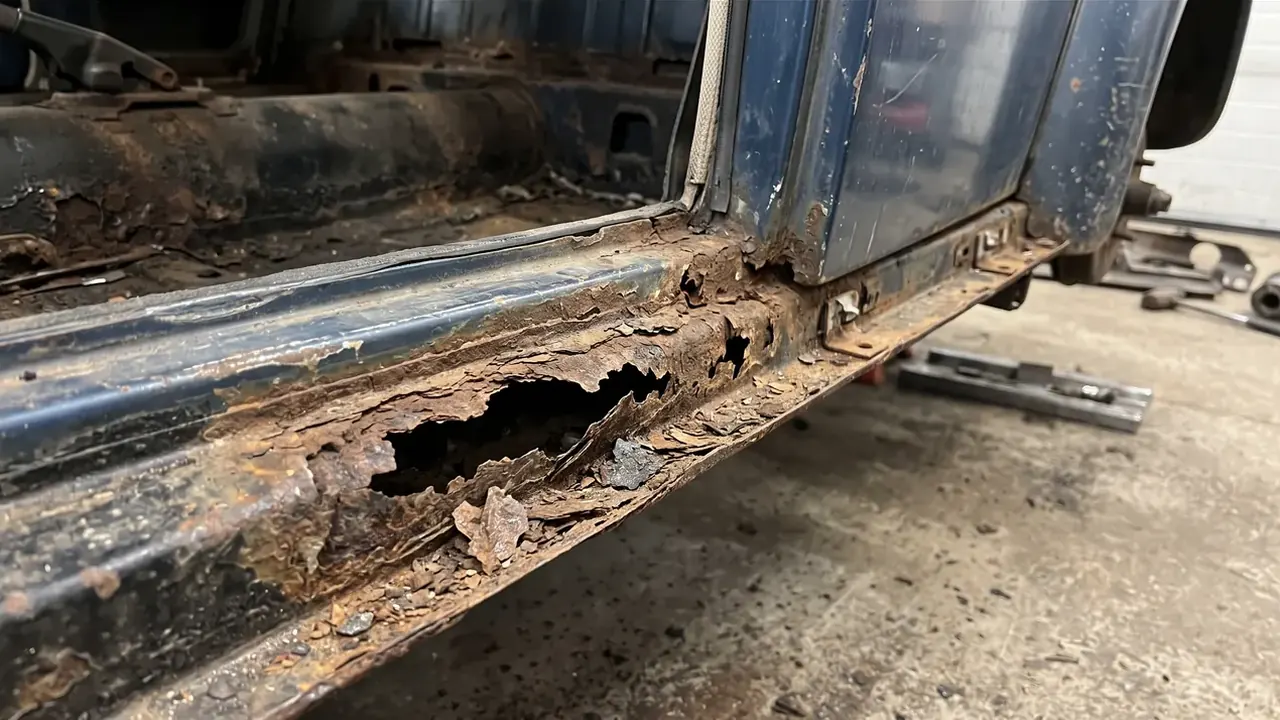
When the rust has gone further than one patch. The signs:
- Rust breaking through in several places across the panel
- Metal that's thin and pitted all over once the paint comes off
- Old patches with rust coming through round their edges
- Rot in the inner panel or box section behind it, as well as the outer skin
By then, patch after patch takes longer than a new panel and leaves more joins to fail. A new panel goes on in one piece, lined up so the gaps are even and the swage lines run through.
Is a patch as strong as the original metal?
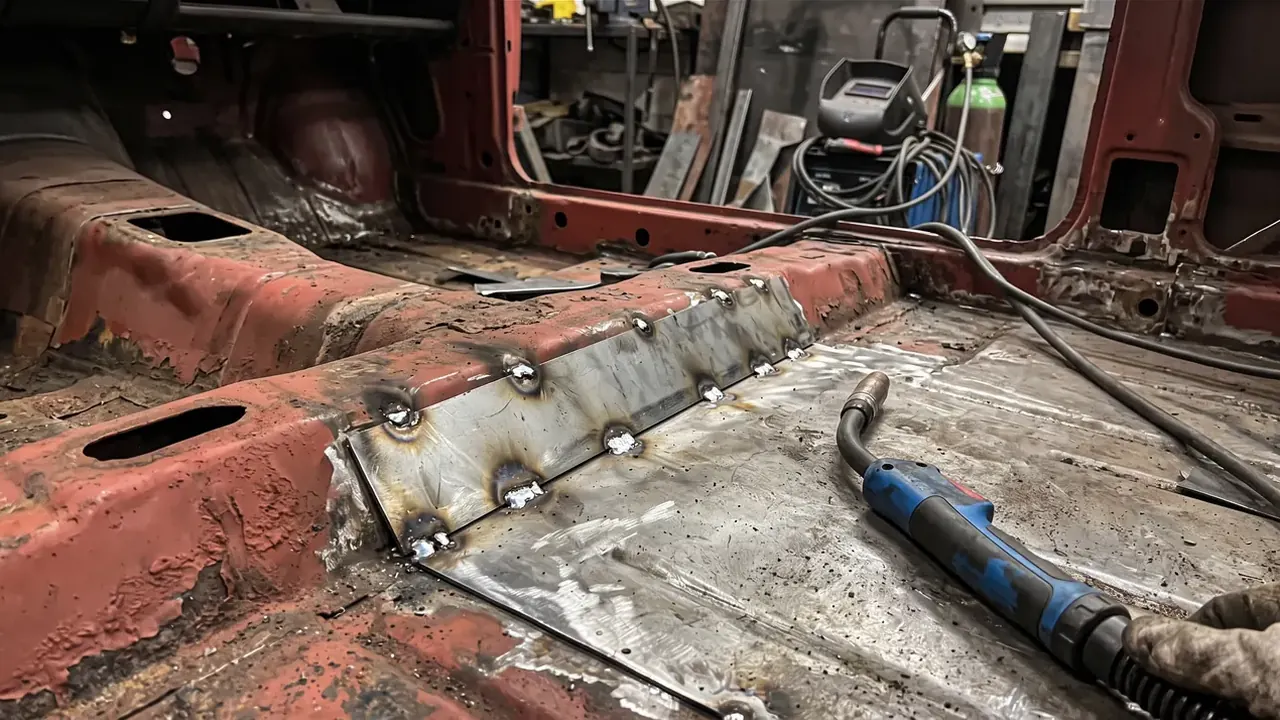
It should be, if it's welded properly. GOV.UK's MOT inspection manual sets out the acceptable methods of repair for the structure of a car. A repair must appear to be as strong as the original, and any plating or welding has to reach a sound part of the load-bearing member.
The same manual says spot welded repairs only pass where the original panel was spot welded and that panel or section has been taken off, and that stitch or plug welding can be used in place of spot welds. Anywhere else, a patch repair must be continuously seam welded, which means one unbroken weld along the join. Body filler is on its list of methods that aren't acceptable for repairing a load-bearing part.
How do you know how far the rust has spread?
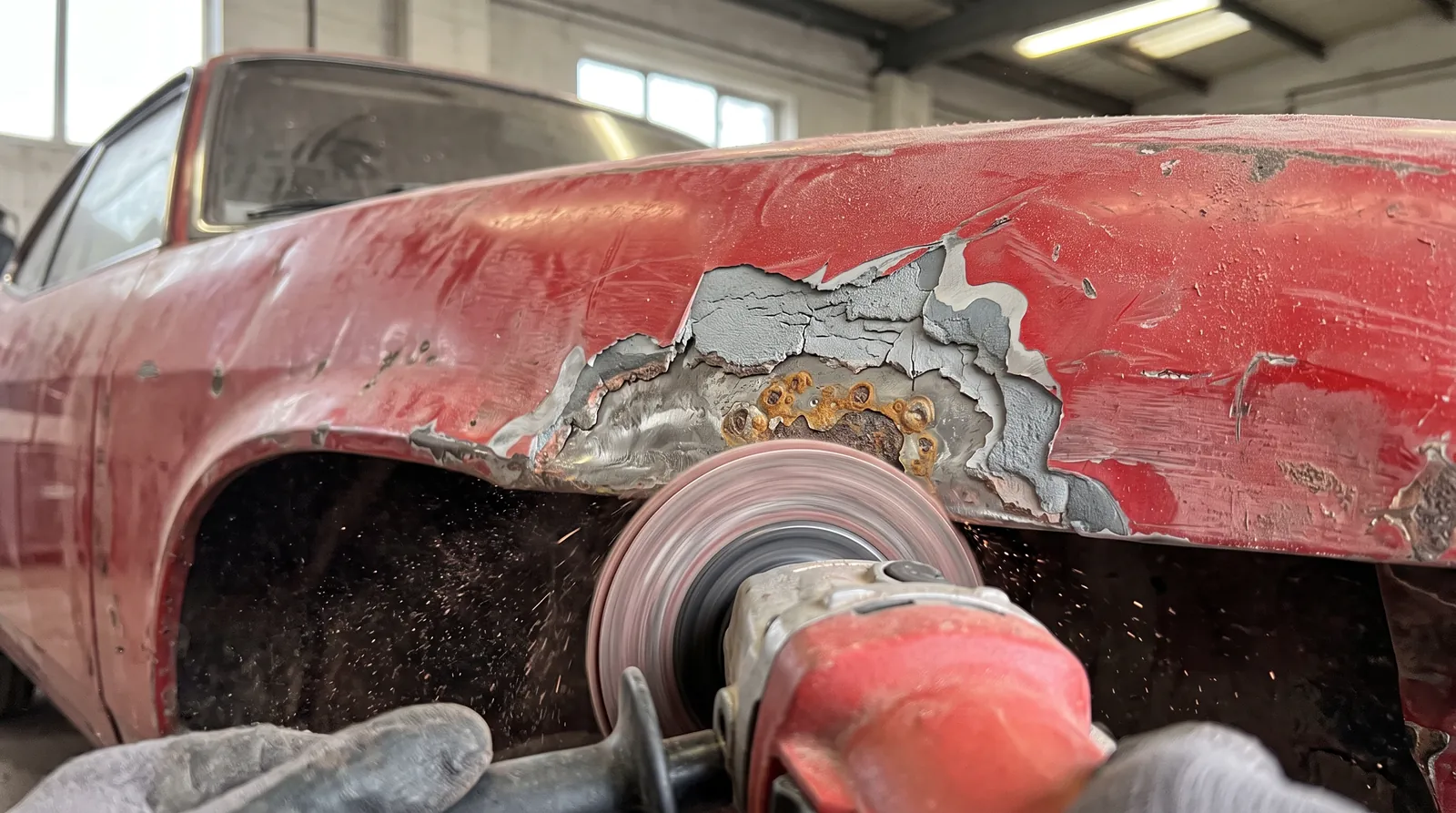
By cutting it back. The bubble you can see is only the part that has reached the paint. Rust often starts on the back of the panel or inside a seam, so the hole left once it's ground out is usually bigger than the bubble was.
So the choice is made with the paint off. We take the area back to clean steel, find where the sound metal starts, and show you what we've found and which repair we'd do before any welding starts.
Is a new panel always the better job?
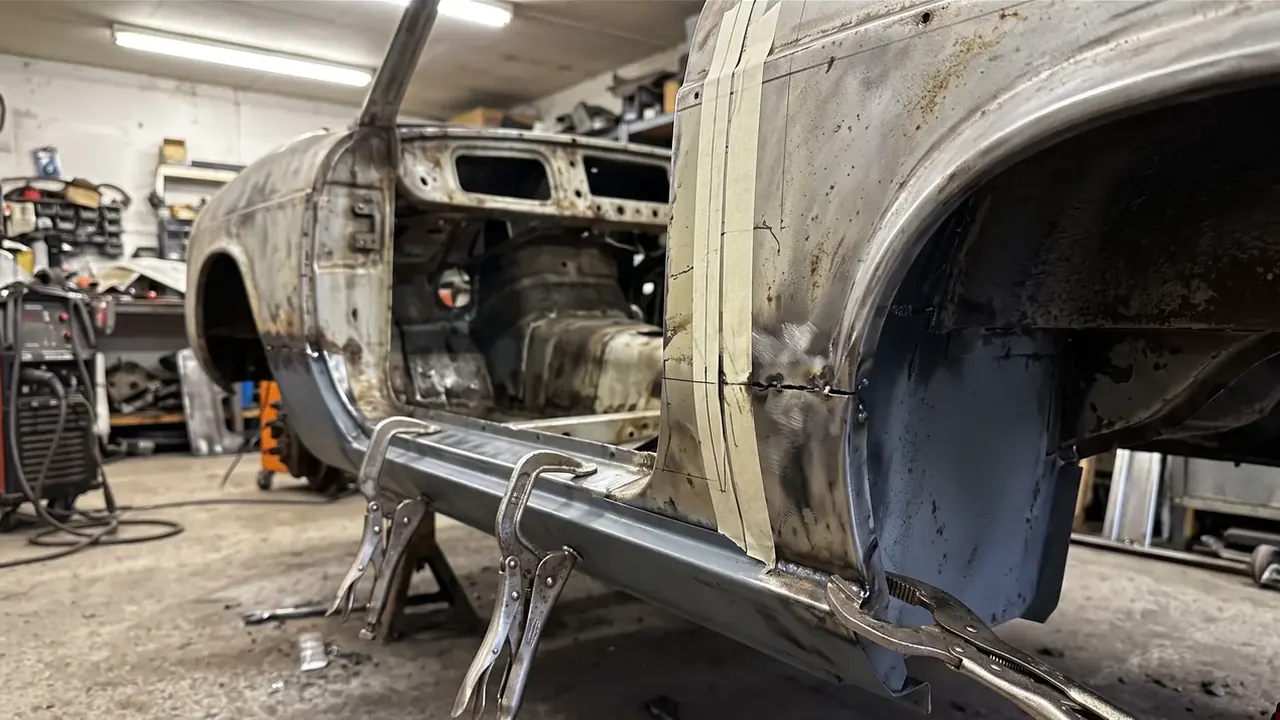
No. On a classic judged on originality, keeping the factory metal matters, and a sound panel with one patch let in keeps more of it than a new panel does.
A new panel also means more work round it. A factory panel is usually held on with spot welds, which are drilled out to take the old one off, and the new one has to be lined up before it's welded in. Where only a corner has gone, that's a lot of work to replace metal that's still good.
What stops the rust coming back after a repair?
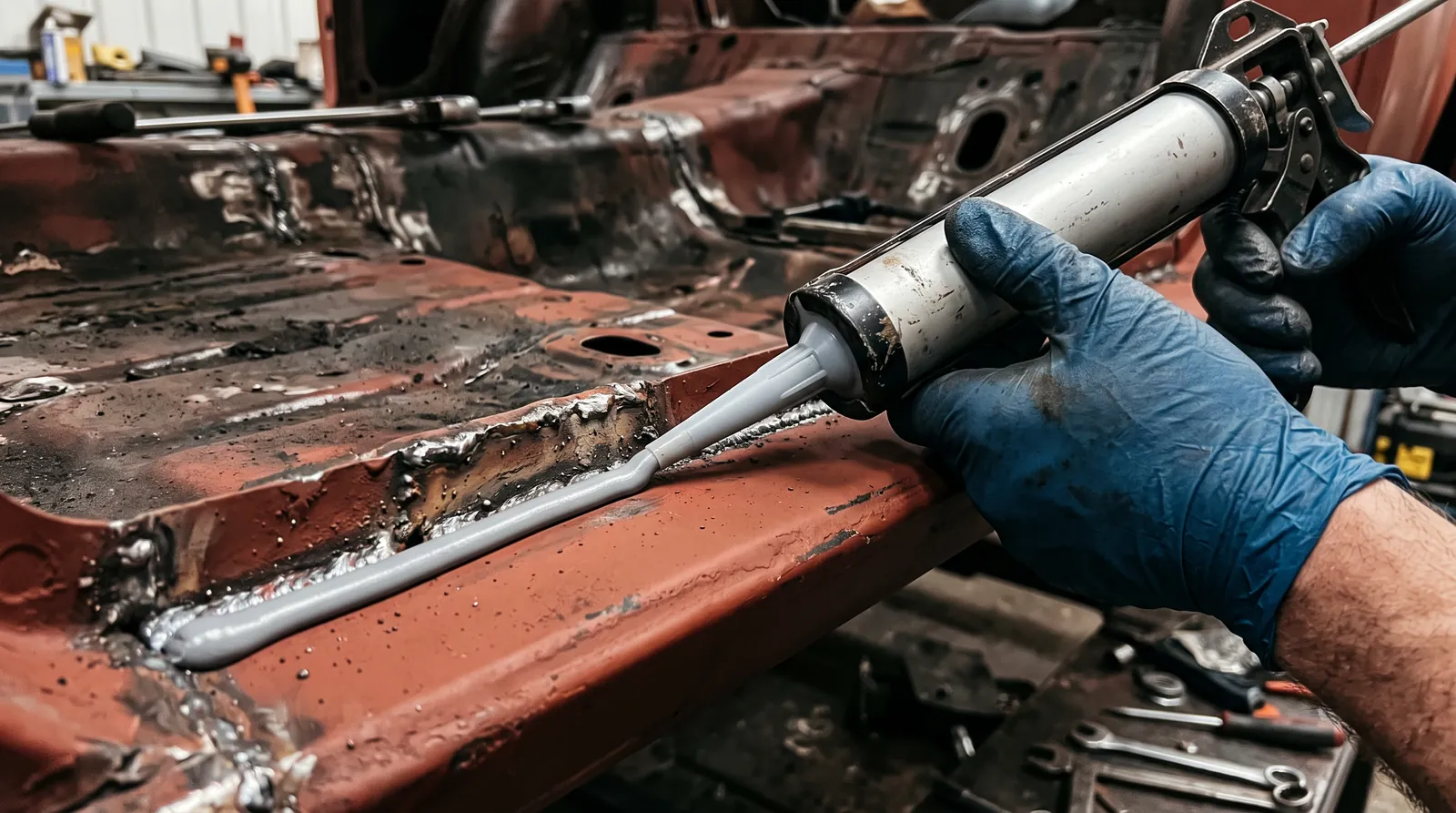
Treating the back of the new metal as well as the front, and sealing the joins. A repair done only from the outside leaves the inside of the panel bare, open to the same water that rotted it.
So the new metal is primed, the joints get seam sealer, a flexible sealer that closes the seam so water can't creep in, and once the paint is finished the box sections get cavity wax, a thin wax sprayed inside hollow sections that keeps moisture off the metal. That goes for a patch and a new panel alike.
What does each repair cost?
It depends on how far the rust has spread, where it is and what has to come off to reach it. A patch in an open panel is a smaller job than one that means taking out the interior or the fuel tank first. Several patches on one panel can add up to more than a new panel would.
We give a rough price from photos, then confirm it once the rust is cut back and we can see the sound metal. See prices for how we quote.
Got rust you're not sure about? Send us close-up photos of it, and a few of the whole car, from the quote form.