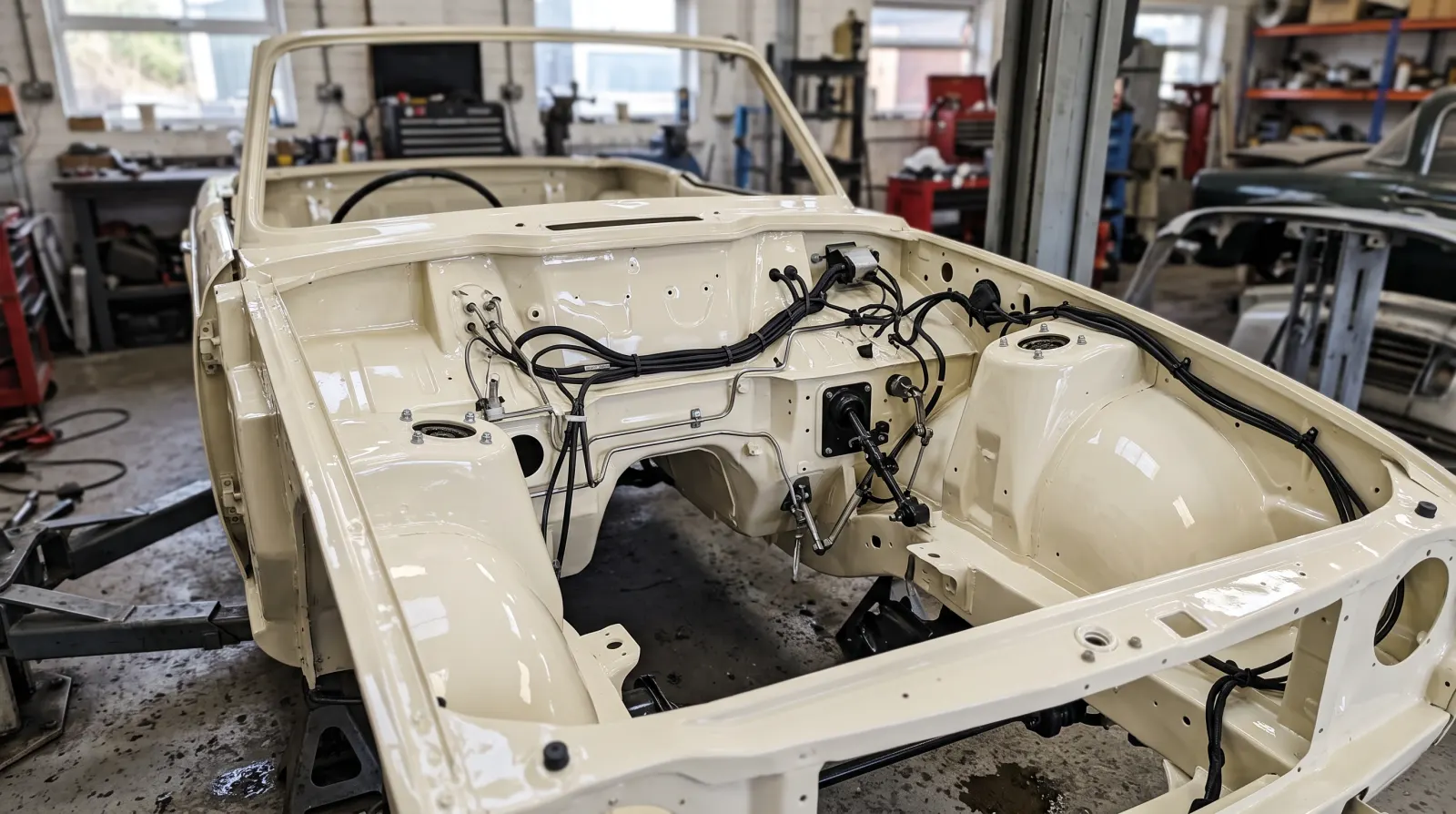
Most dents in a modern car are repaired, not replaced. The metal is knocked or pulled back as close to its shape as it will go, a thin skim of filler smooths what's left, and the panel is primed and painted to match. A new panel is the honest answer when a crease has stretched the metal too far to come back, or when the carmaker says the part can't be straightened.
Here's how the choice is made, and how the paint is matched afterwards.
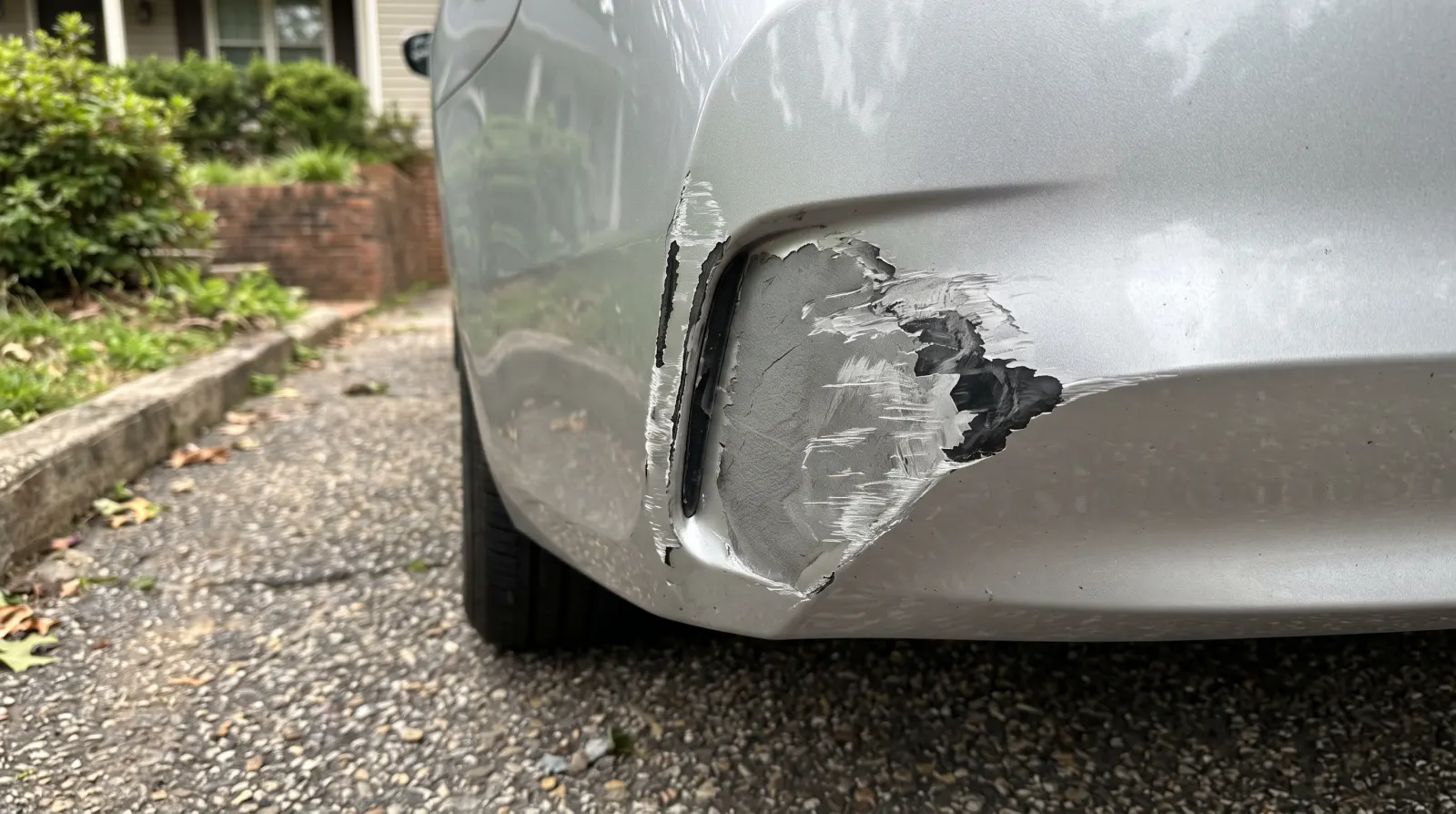
Can a dent be knocked back out?
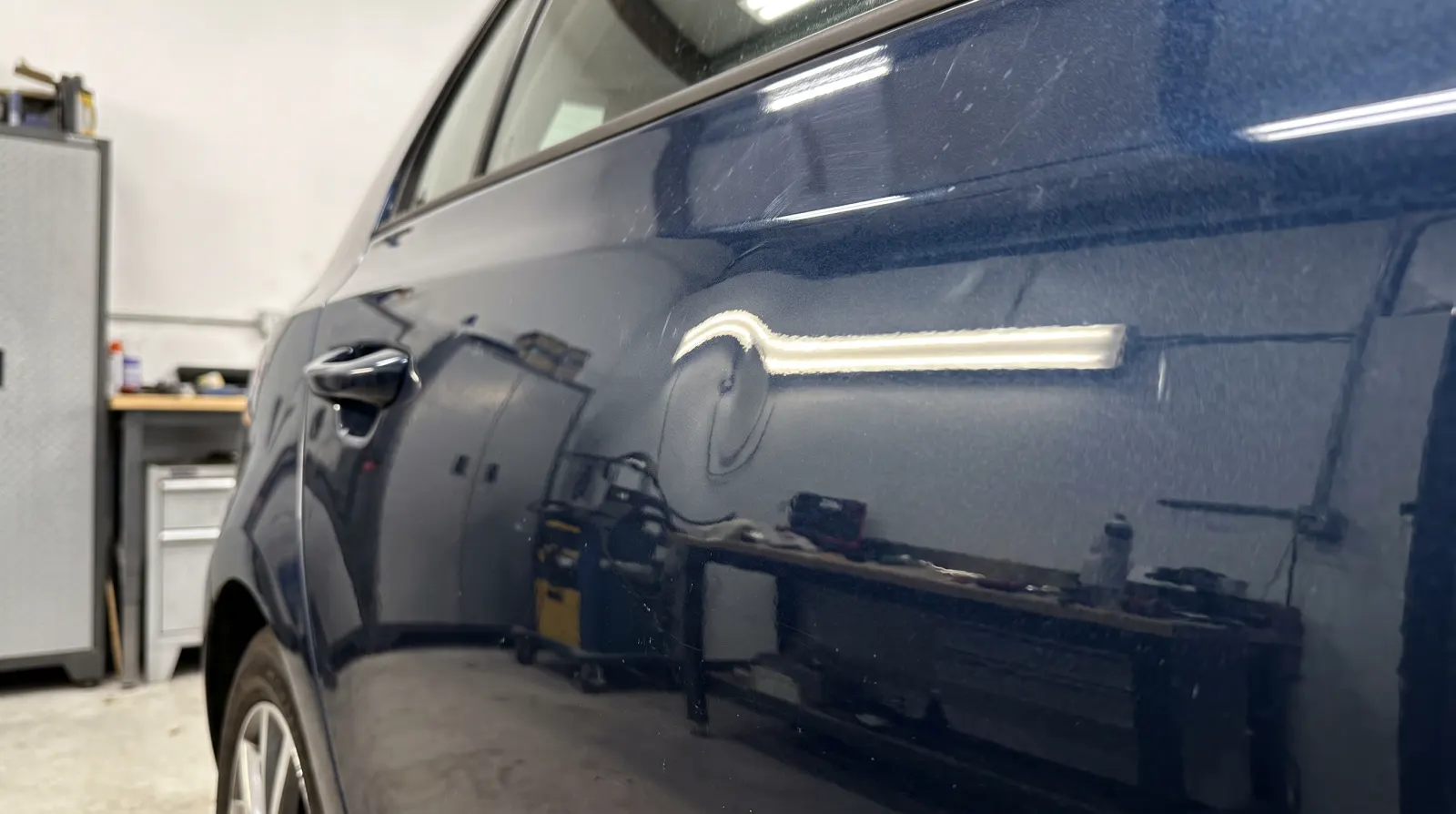
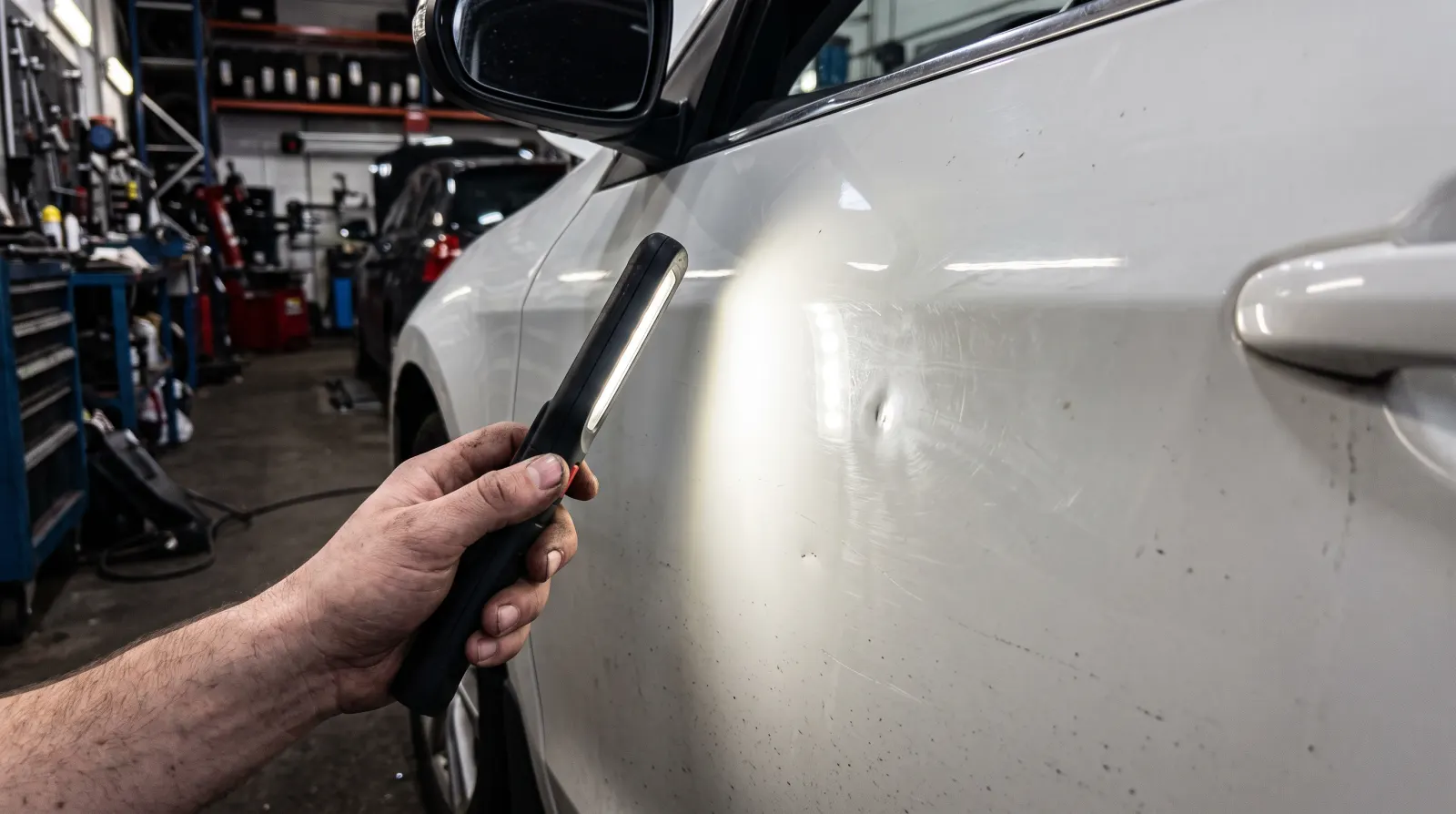
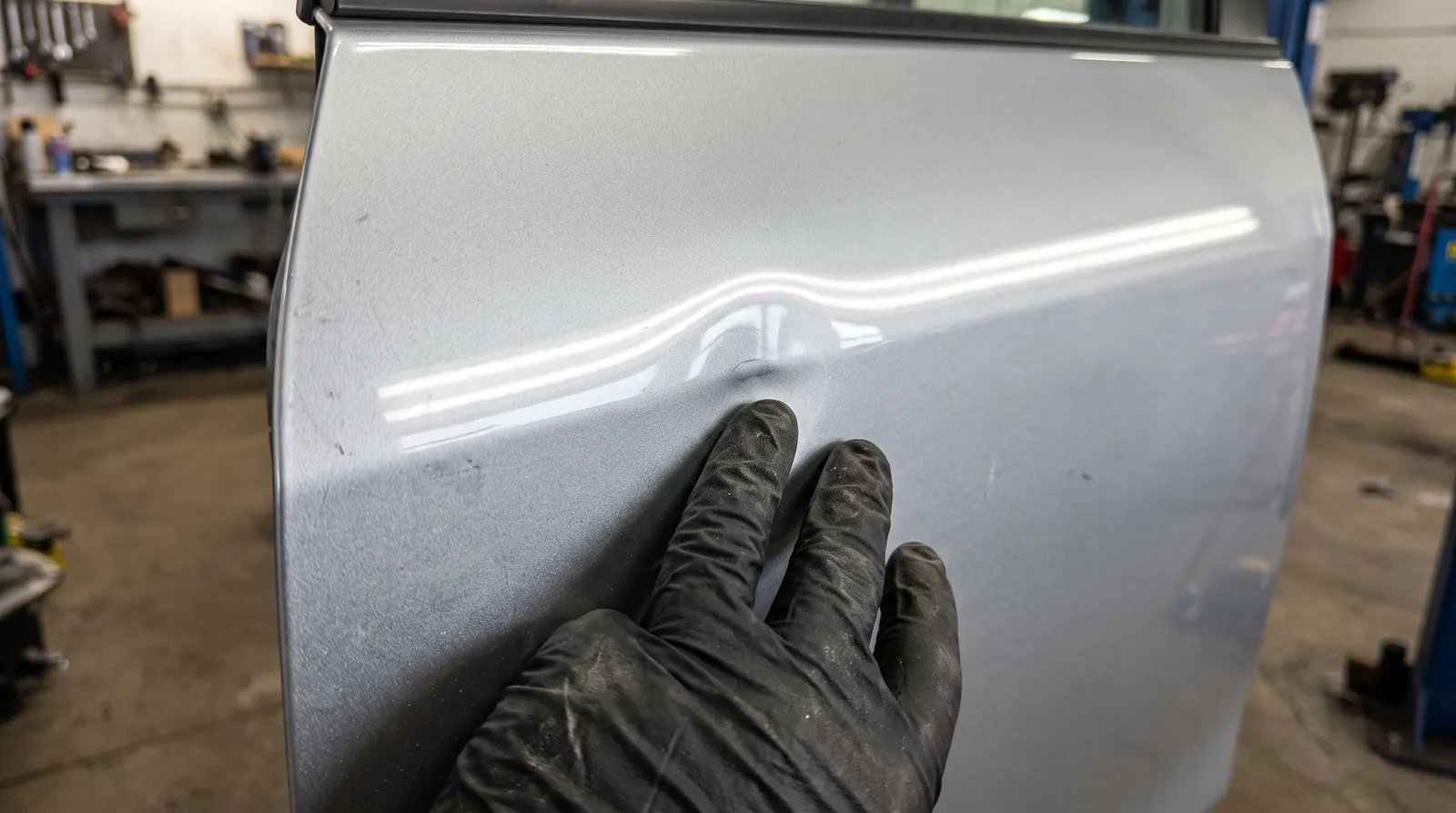
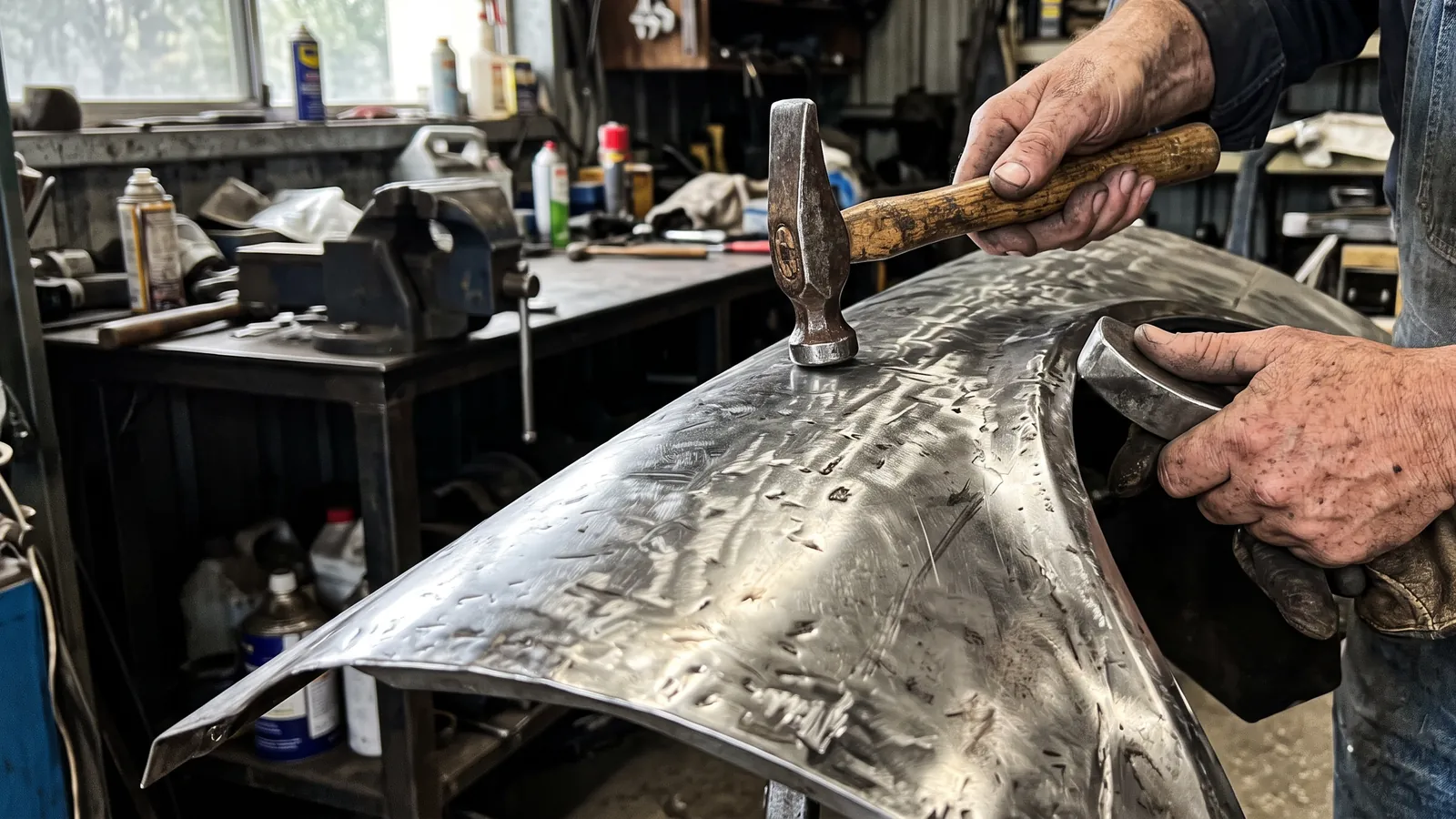
Usually, if the metal hasn't been stretched. A dent is metal pushed out of shape, and most of it can be put back. It's worked from behind with a hammer and a dolly, a shaped steel block held against the other side, or pulled from the front where the back can't be reached.
The closer the metal gets to its old shape, the less filler goes on and the longer the repair lasts. See body repair for how we put dents right.
Why not just fill the dent?
Because filler is there to smooth the last of a repair, not to build the shape. Metal that has been put back holds its own shape. A thick layer of filler laid into a dent that was never pushed out is the kind of old repair that turns up years later as a ripple or a crack.
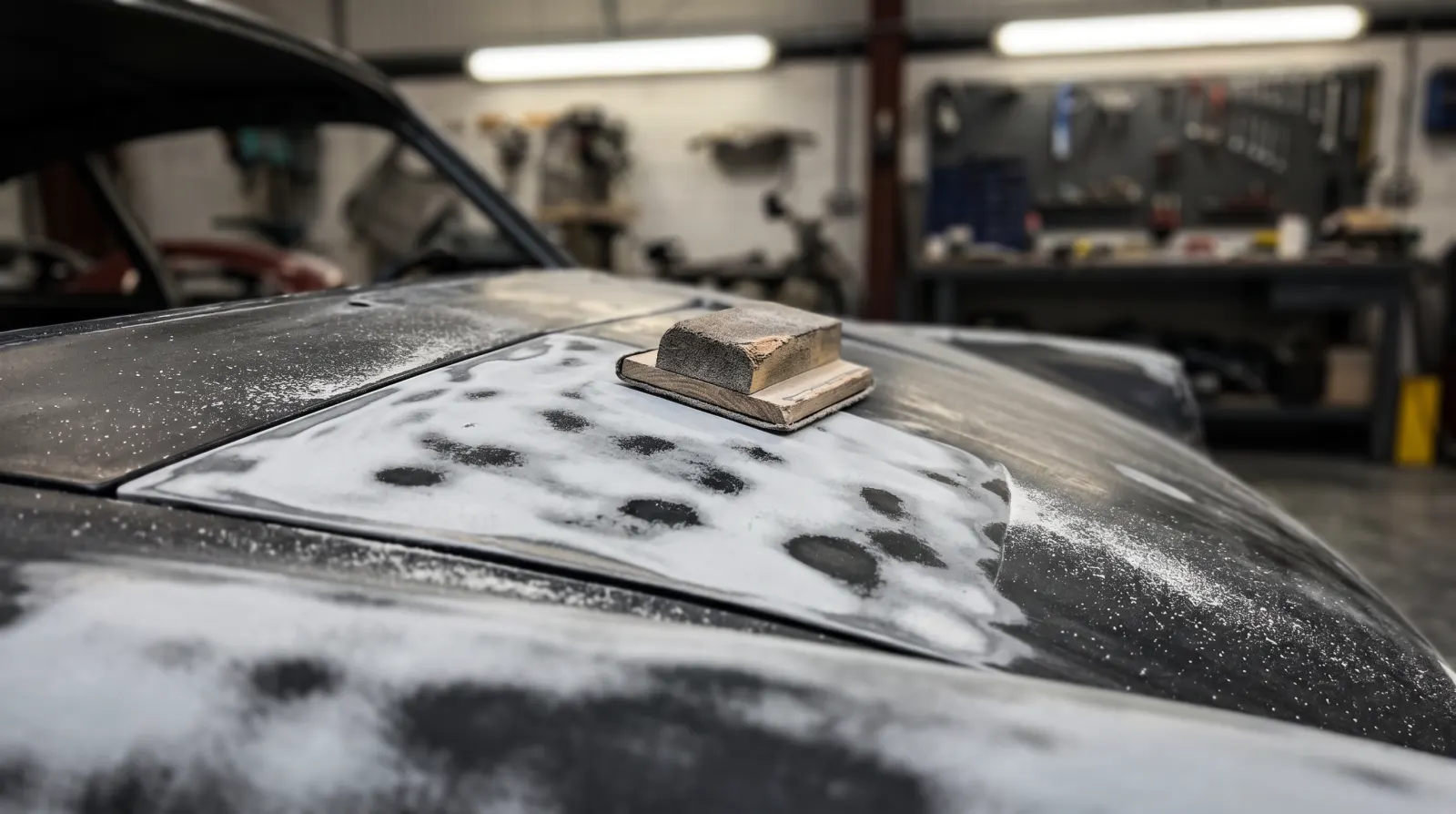
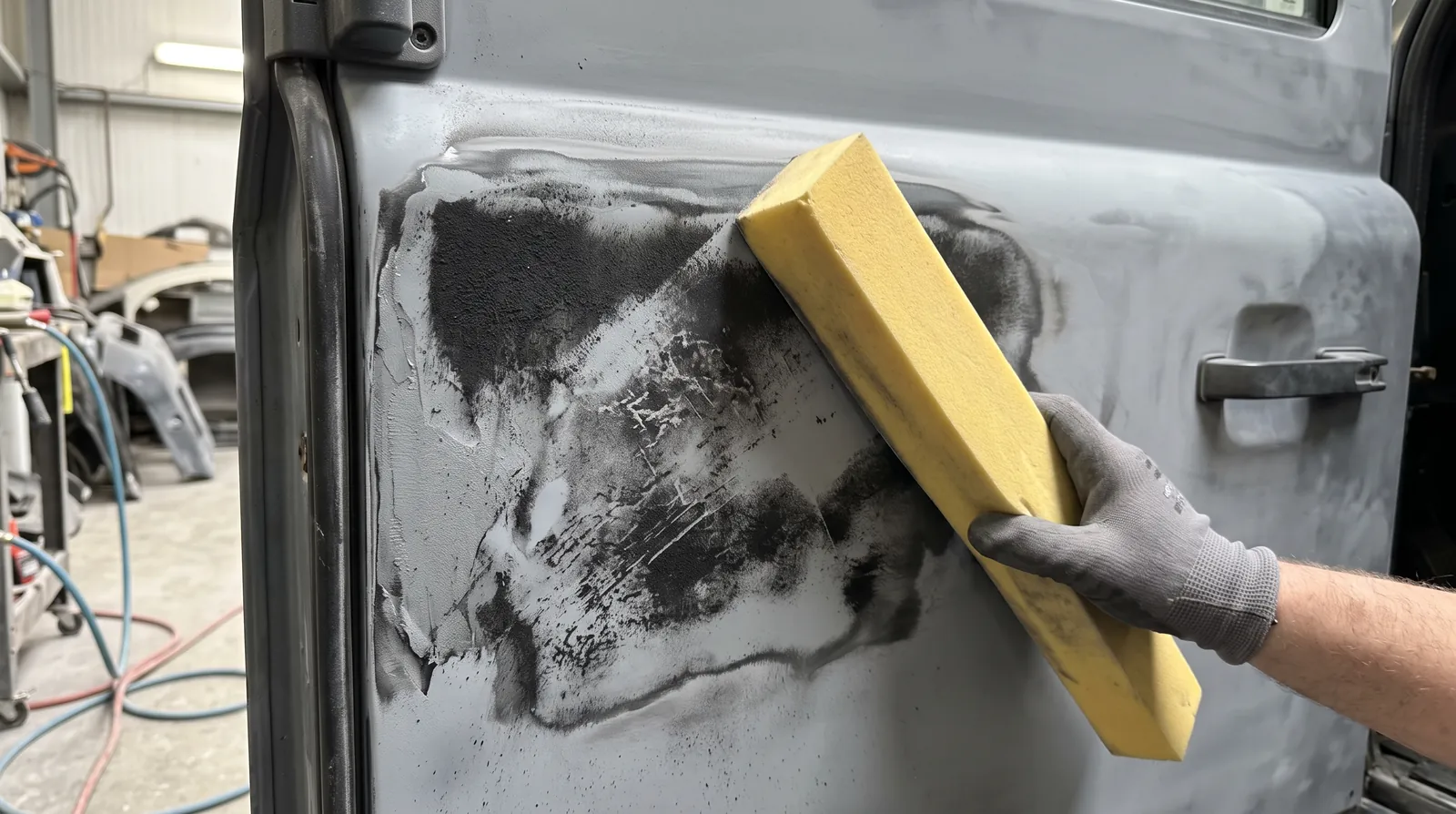
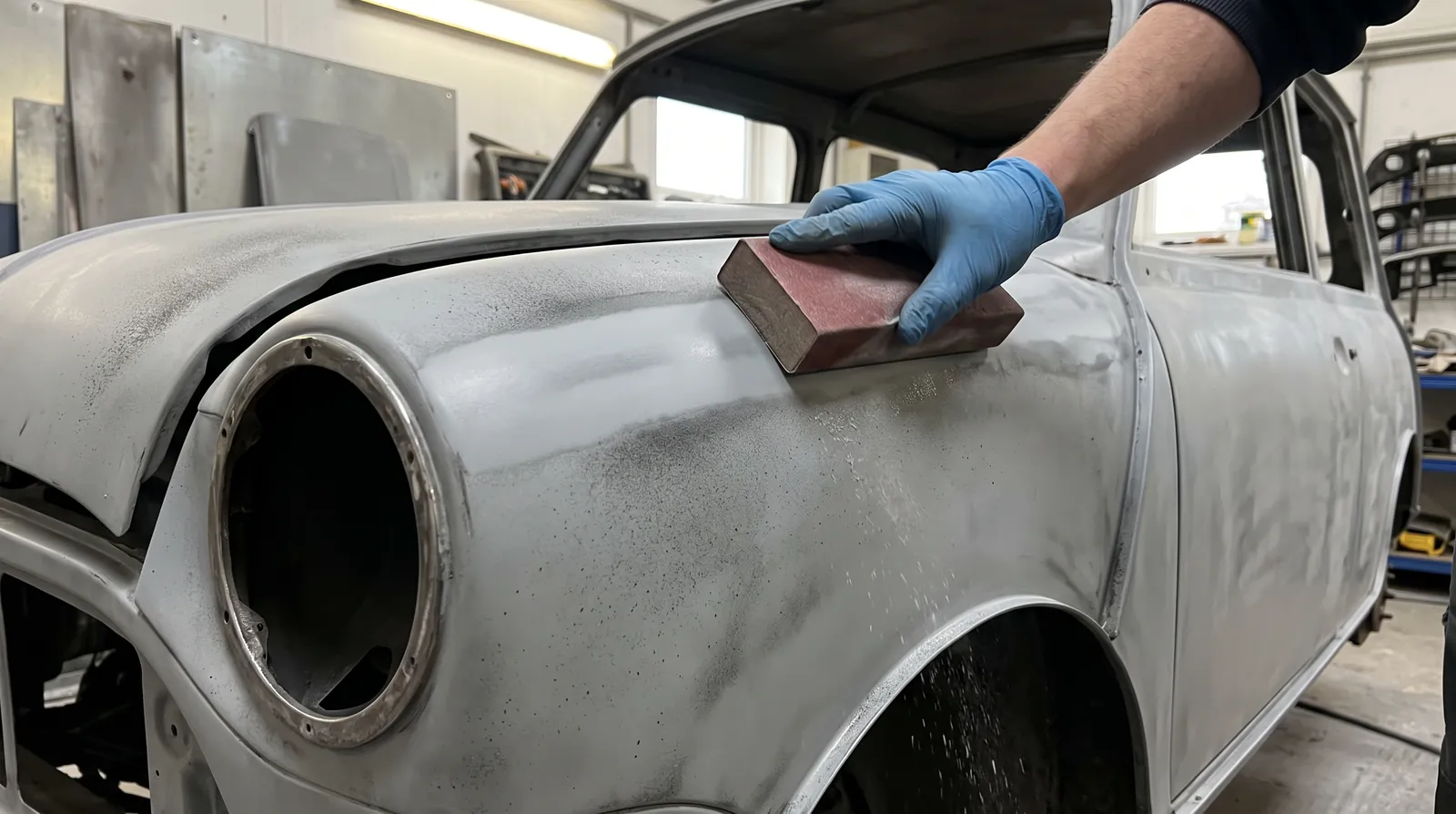
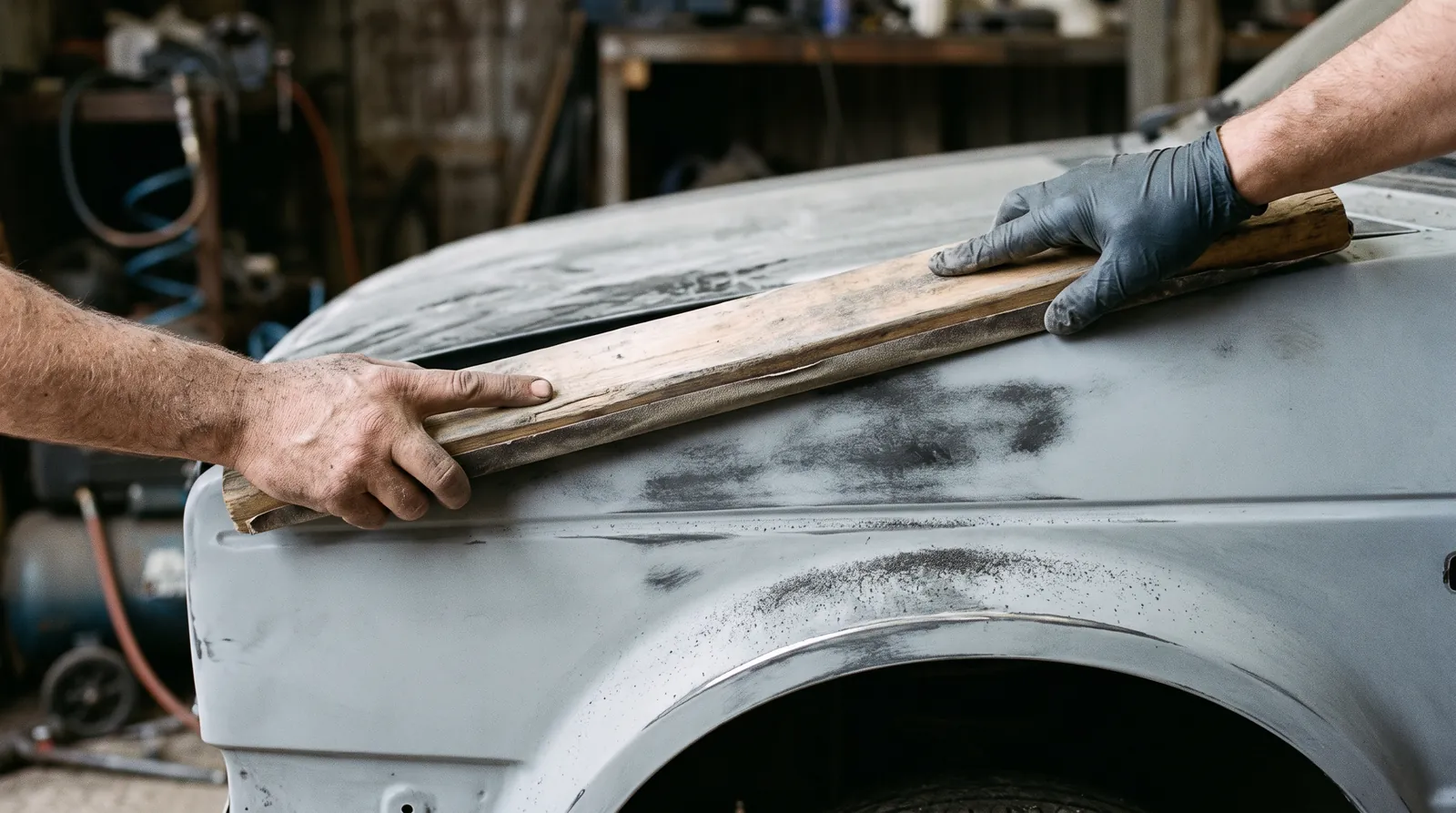
Once the metal is right, the thin skim of filler is shaped with a long sanding block, so the panel comes out straight rather than following the hand. Then it's primed, guide coated and blocked again. Guide coat is a thin dusting of dark powder that stays in any low spots when the panel is sanded, so nothing is left that will show under gloss.
When has a dent stretched the metal too far?
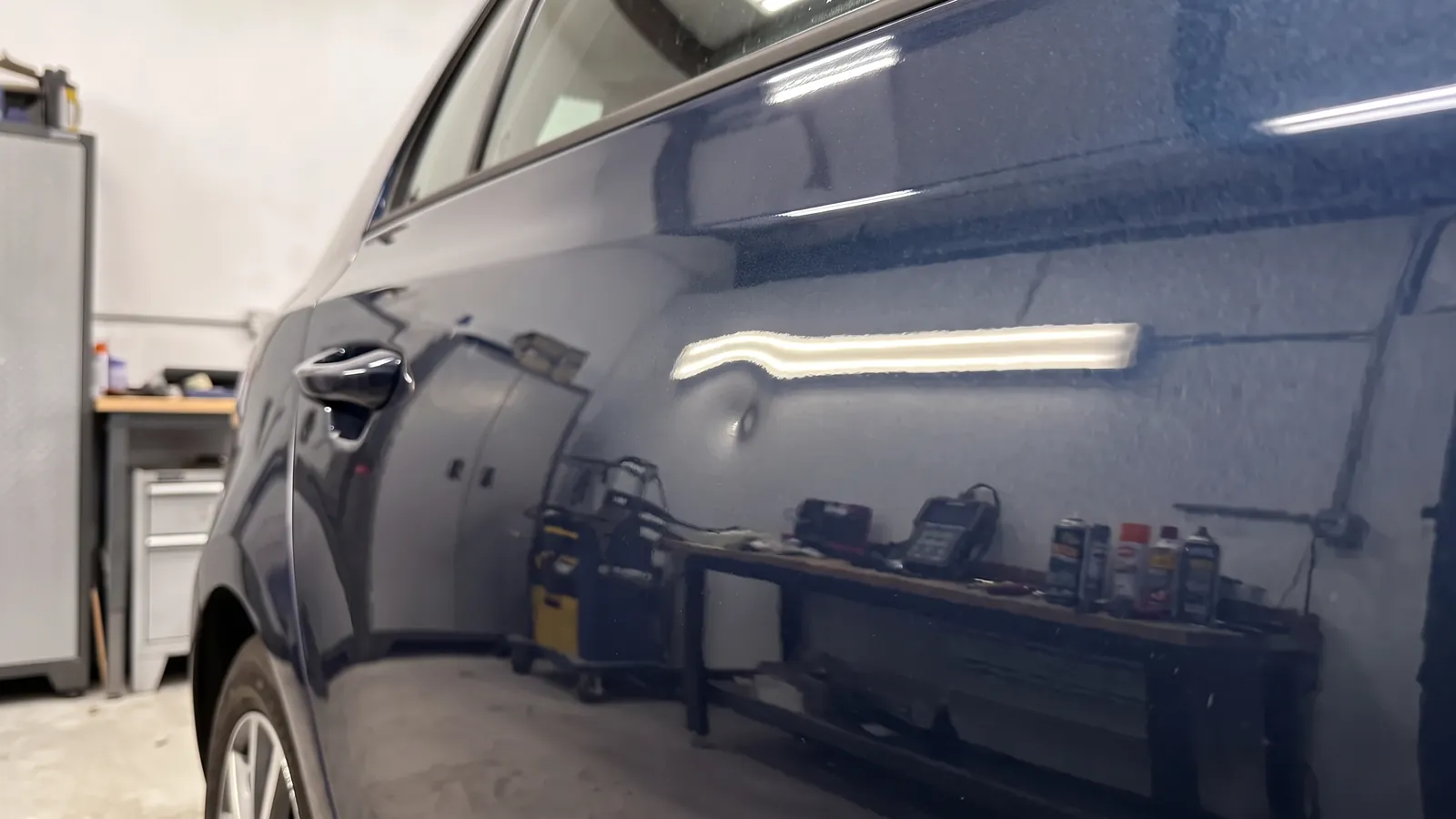
When it's a sharp crease rather than a soft dent. A soft, round dent has mostly been pushed in. A sharp crease, or a dent with a hard point in the middle, has usually stretched the metal, so there's more of it than there was. Stretched metal won't sit flat again on its own: push it back in one place and it bulges in another.
Dents on a swage line, the crease pressed along the side of a panel, and dents right on an edge are harder too, because the line has to come back sharp and straight.
When is a new panel the honest answer?
When a repair would take longer than fitting a new one, or wouldn't last. A door creased from end to end, a panel that has been badly repaired before, or a dent with rust starting in it can all be better replaced.
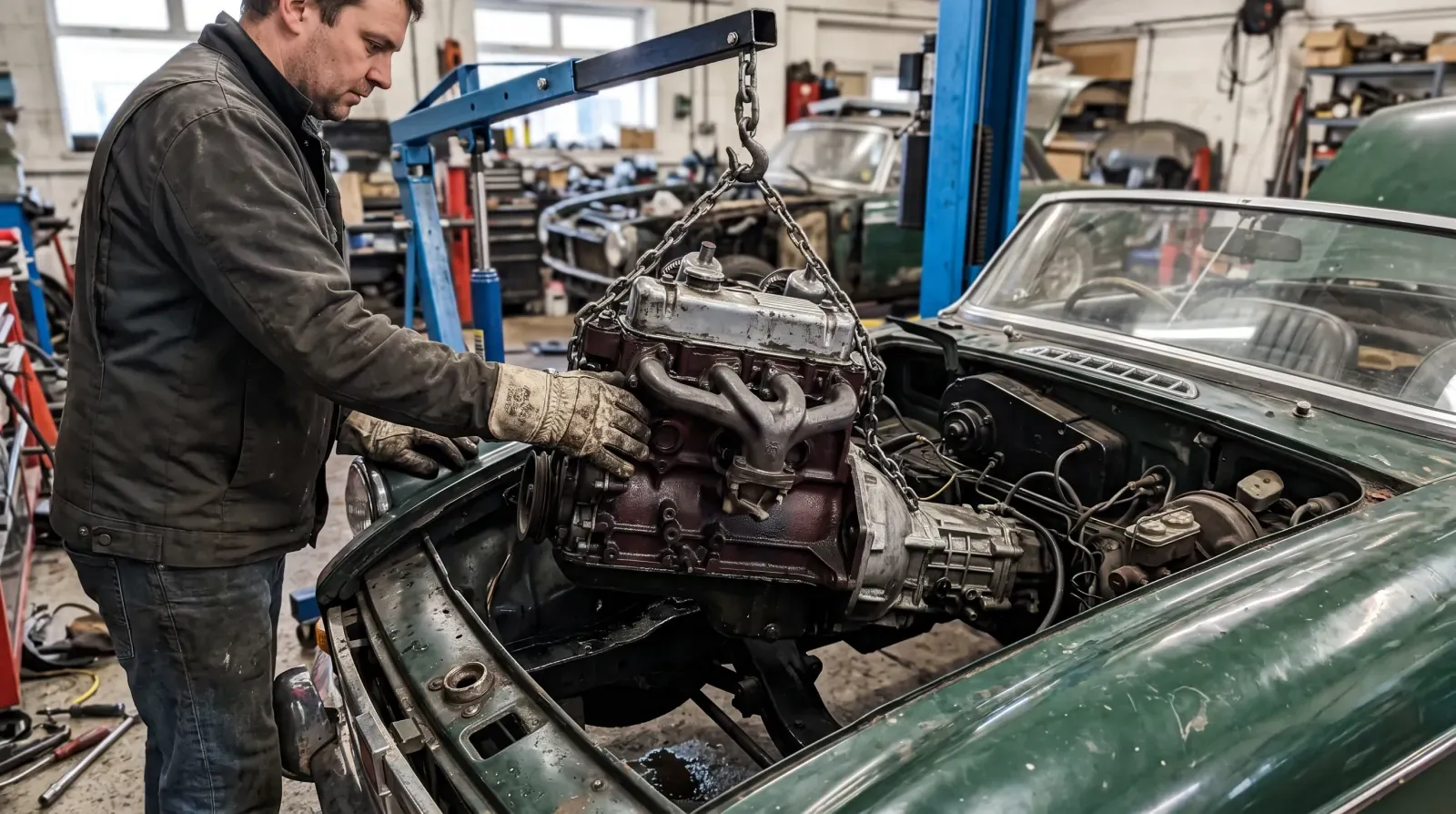
Carmakers have a say as well. Their body repair manuals set out which parts can be straightened and which must be replaced. Hyundai's position statement on heat in repairs, for example, says damaged ultra-high strength steel structural parts must be replaced at the factory seams, not straightened. Most dents in doors and wings are a long way from the structure, but a knock that has reached it is a different job.
Can a dent come out without painting?
Sometimes. Where the paint hasn't cracked, some small, shallow dents can be pushed out from behind without any painting. The trade calls it paintless dent repair.
Once the paint is chipped or cracked, the panel needs painting whatever happens to the metal.
How is the paint matched afterwards?
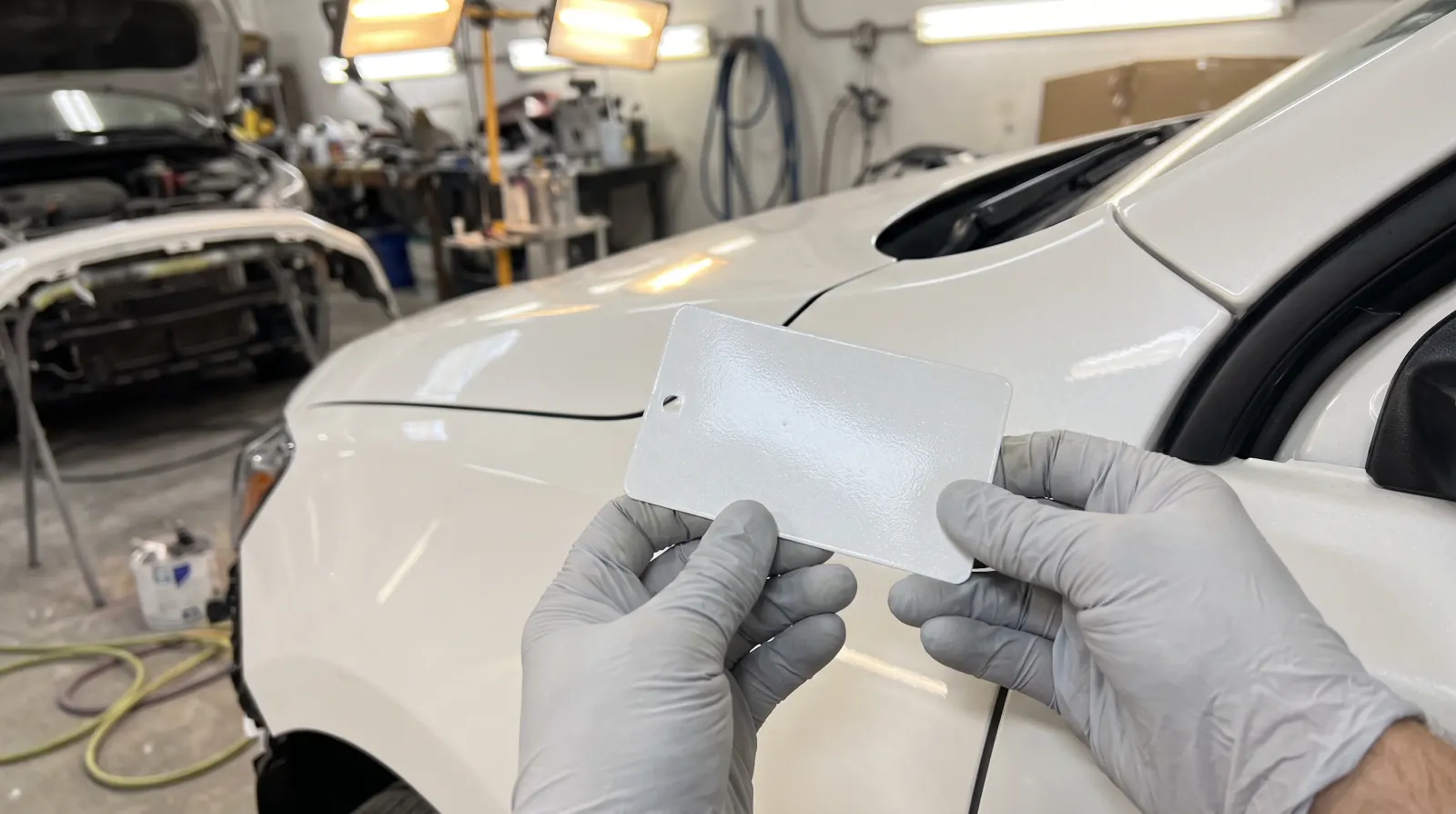
To the car's paint code, then checked against the car itself. The code is on a label, usually in a door shut, under the bonnet or in the boot. The colour is mixed to it and blended into the panels either side, so the repair doesn't show as a patch.
The code alone isn't always enough. PPG, one of the big paint makers, lists fading from weathering and the wrong variant of a colour among the causes of a poor colour match. Its advice is to spray a test panel first and compare it with the original from different angles and in different light.

Will the repair show?
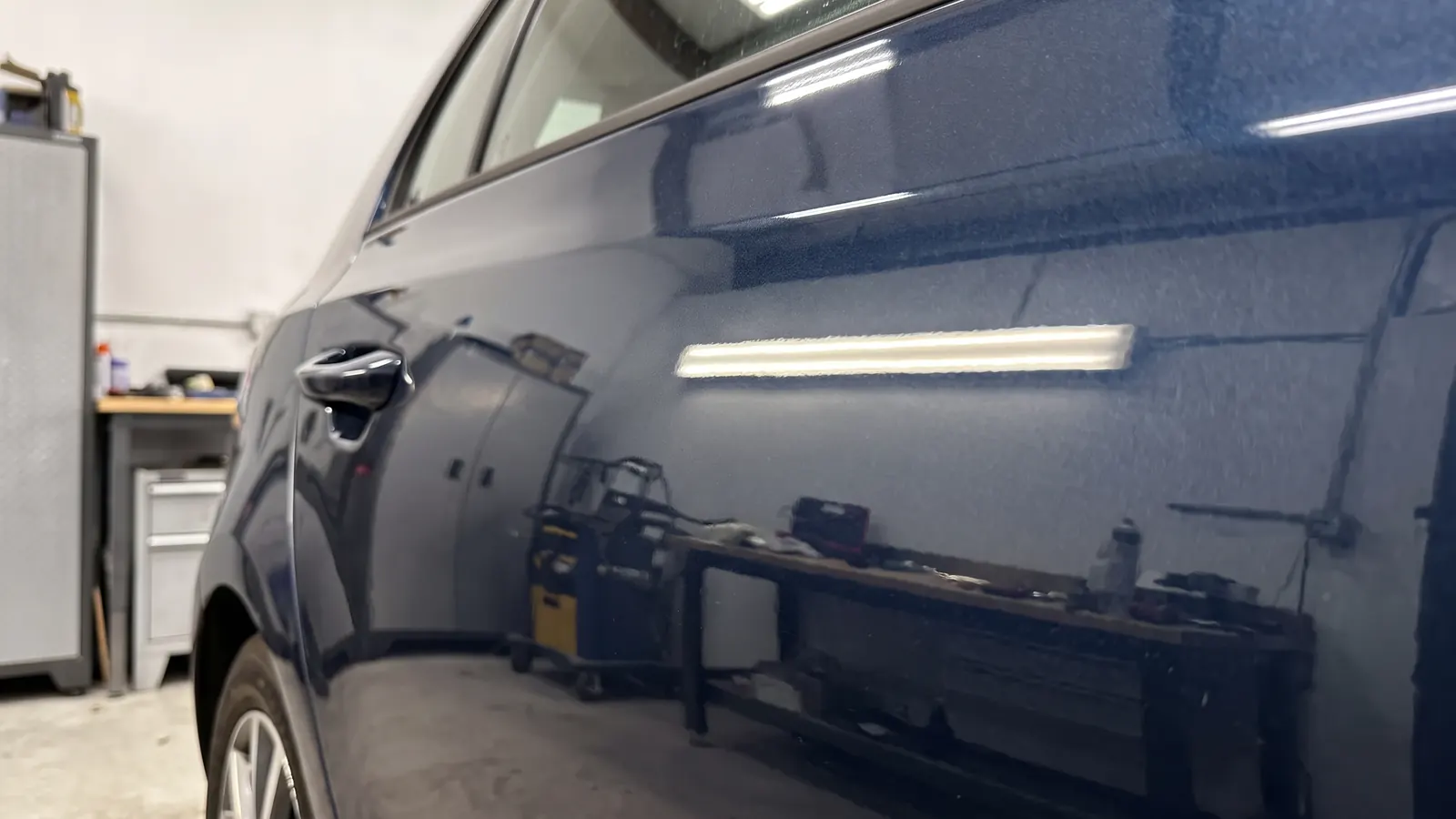
A good one shouldn't. With the metal straight, the filler blocked flat and the colour blended, the repaired panel reads the same as the ones beside it.
What gives a cheap repair away is a ripple in the reflection, a colour that looks off in daylight, or overspray on the rubbers and trim. If the car is leased, the AA's summary of the return standard lists evidence of poor repair as unacceptable, so a repair that shows can still be charged when it goes back.
What moves the cost of a dent repair?
Where the dent is, how deep it goes and what's in the way. A soft dent in the middle of a door is a smaller job than a crease along a swage line. Handles, mirrors, trim or the door card may have to come off to reach behind it, and the blend into the next panel adds paint and time.
We give a rough price from photos and confirm it once the car is here. See prices for how we quote.
Got a dent? Send us photos from a couple of angles, the make and model, and the paint code if you have it, from the quote form.