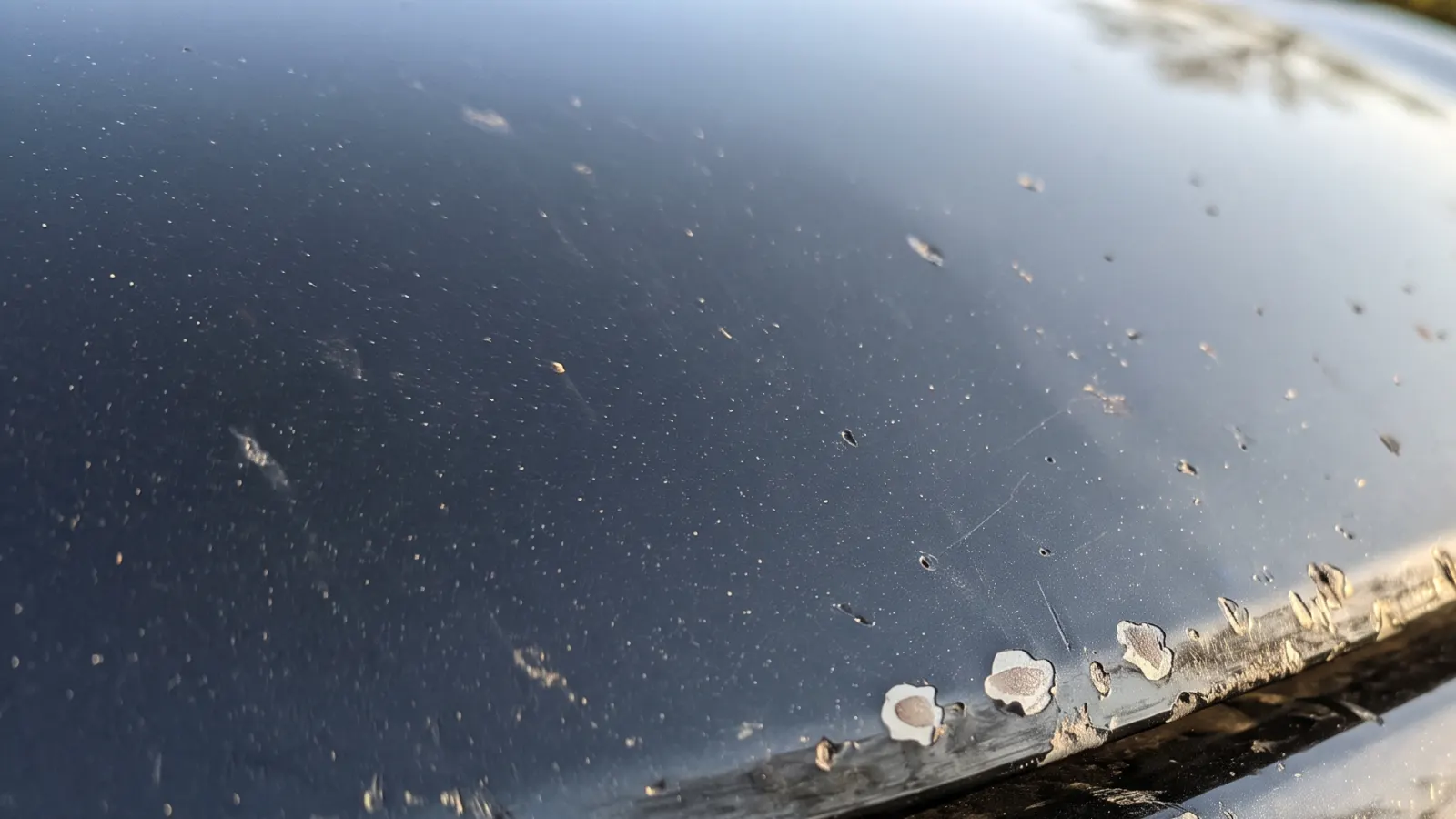
Bubbles along the front edge of an aluminium bonnet are the aluminium itself corroding under the paint. It's called filiform corrosion, and it usually starts where the paint has a break in it, a stone chip or the folded edge of the panel.
It won't polish out, and painting over it isn't the repair. The corrosion has to come off, back to clean metal, before the panel is primed and painted again.
What is filiform corrosion?
Corrosion that creeps along under the paint in thin threads. Research at Swansea University, sponsored by the paint maker BASF, describes it as corrosion under the coating that makes hair-like threads, each with an active head and a tail of dry corrosion behind it. On a bonnet you see it as thin raised lines and bubbles lifting the paint, running in from an edge.
The same research calls it largely a surface problem, an ugly one, more than one that weakens the panel. But once the threads have started, they keep growing away from where they began.
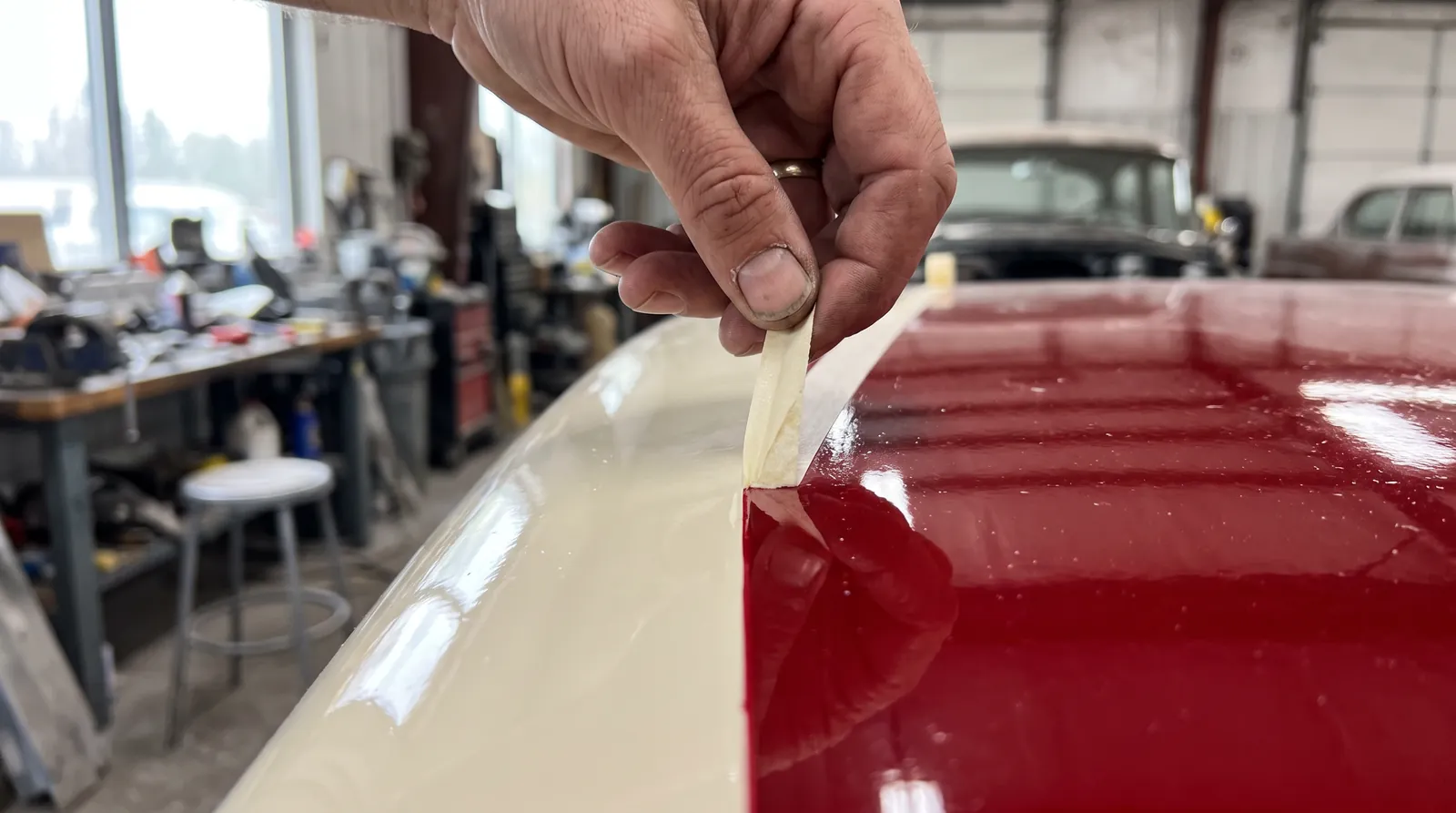
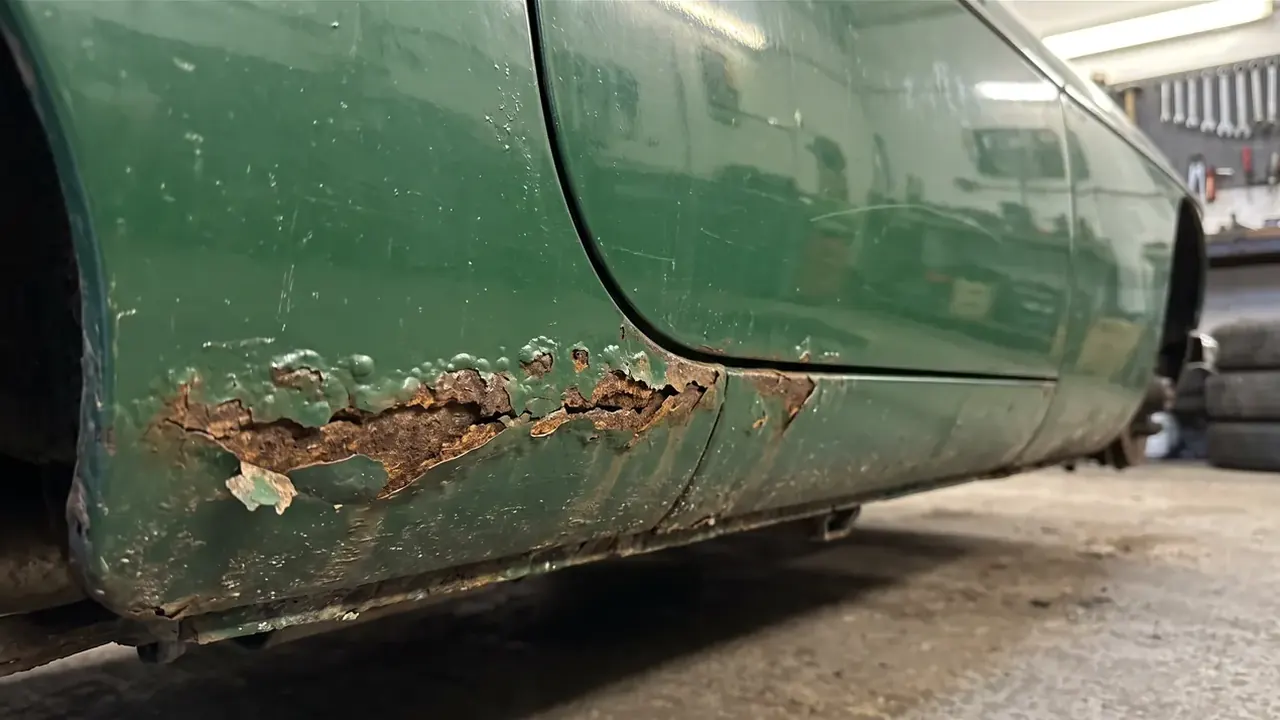
Why is the powder under it white, not brown?
Because it isn't rust. Rust is what iron and steel make when they corrode, and it's brown. Aluminium doesn't rust. The Swansea research describes the threads as generally white with a grey head, and where aluminium pits, the first sign is a white or grey powder.
So brown under a bubble means steel. White powder under a bubble on an aluminium bonnet is the aluminium being eaten.
Why does it start at the edge or a chip?
Because that's where the paint has a gap. The Swansea research says filiform corrosion on aluminium starts at defects in the coating: cut edges, scratches, rivet heads, anywhere the paint isn't continuous. Salt collects there, and the threads grow away from the gap, under the paint.
The front edge of a bonnet takes the stone chips. It's also where the outer skin is folded over the inner frame to make a hem. Stellantis, the group behind Jeep, Fiat and Alfa Romeo, has a repair bulletin for aluminium panels on its own cars that names exactly this: corrosion or bubbling along the leading edge of the bonnet, at the hinges, and on doors, wings and tailgates.
How can I tell if my bonnet is aluminium?
A magnet won't stick to it. Try a fridge magnet in a few places away from the edges. If it falls off, the panel isn't steel. Thick filler on a steel panel can stop a magnet too, so one spot proves nothing. The maker's own information for your car says for certain what each panel is made of.
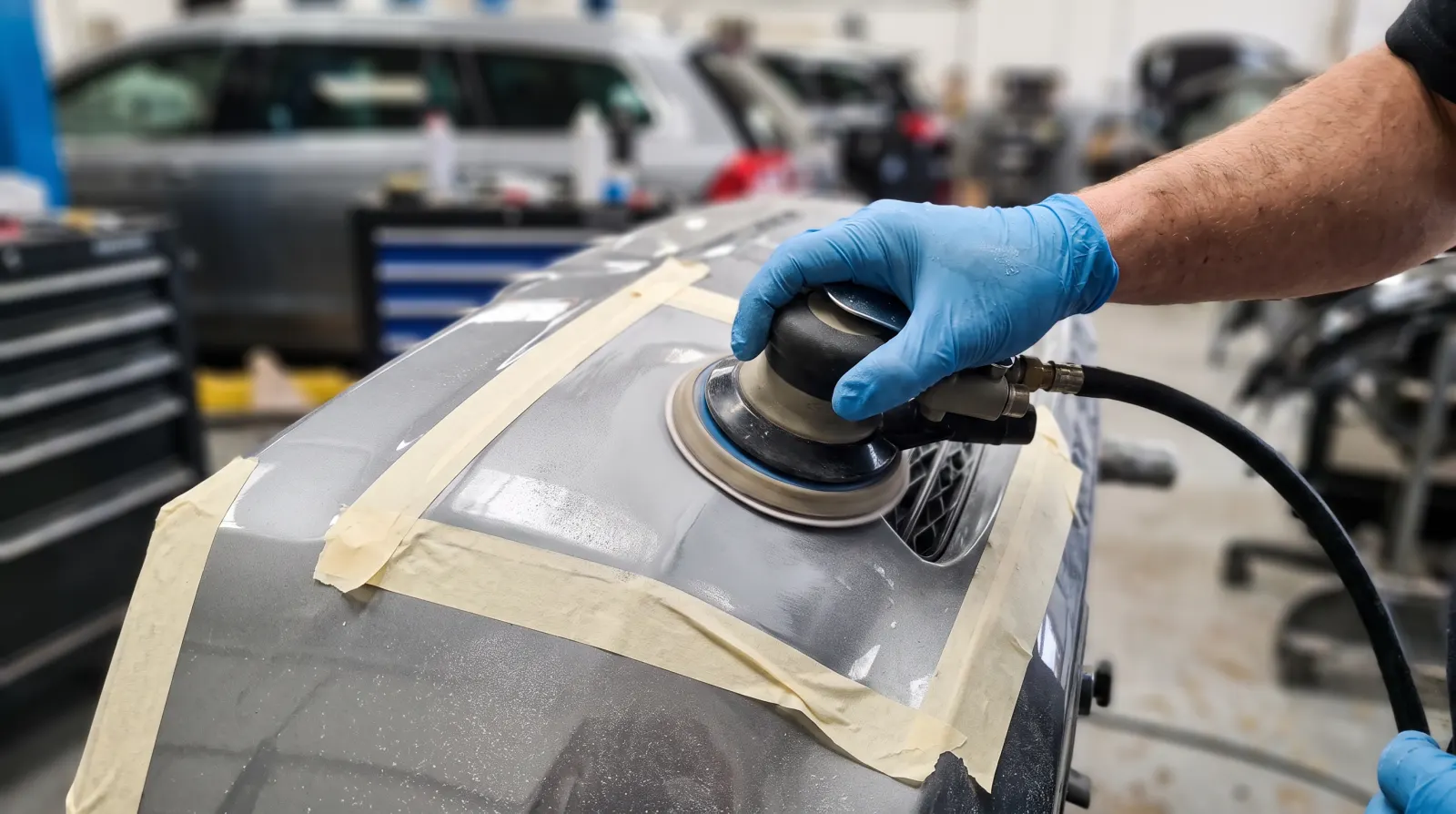
Can it be sanded back and painted over?
Not while any of it is left. The head of each thread is where the corrosion is still active, according to the Swansea research. So the Stellantis bulletin has the blistered paint ground off and the corrosion taken out before anything else happens.
A fresh chip is a different job, because the metal under it is still clean. The same bulletin has a chip cleaned, the bare metal treated with an anti-corrosion product, then touched in. Once the bubbles have started, it's past that.
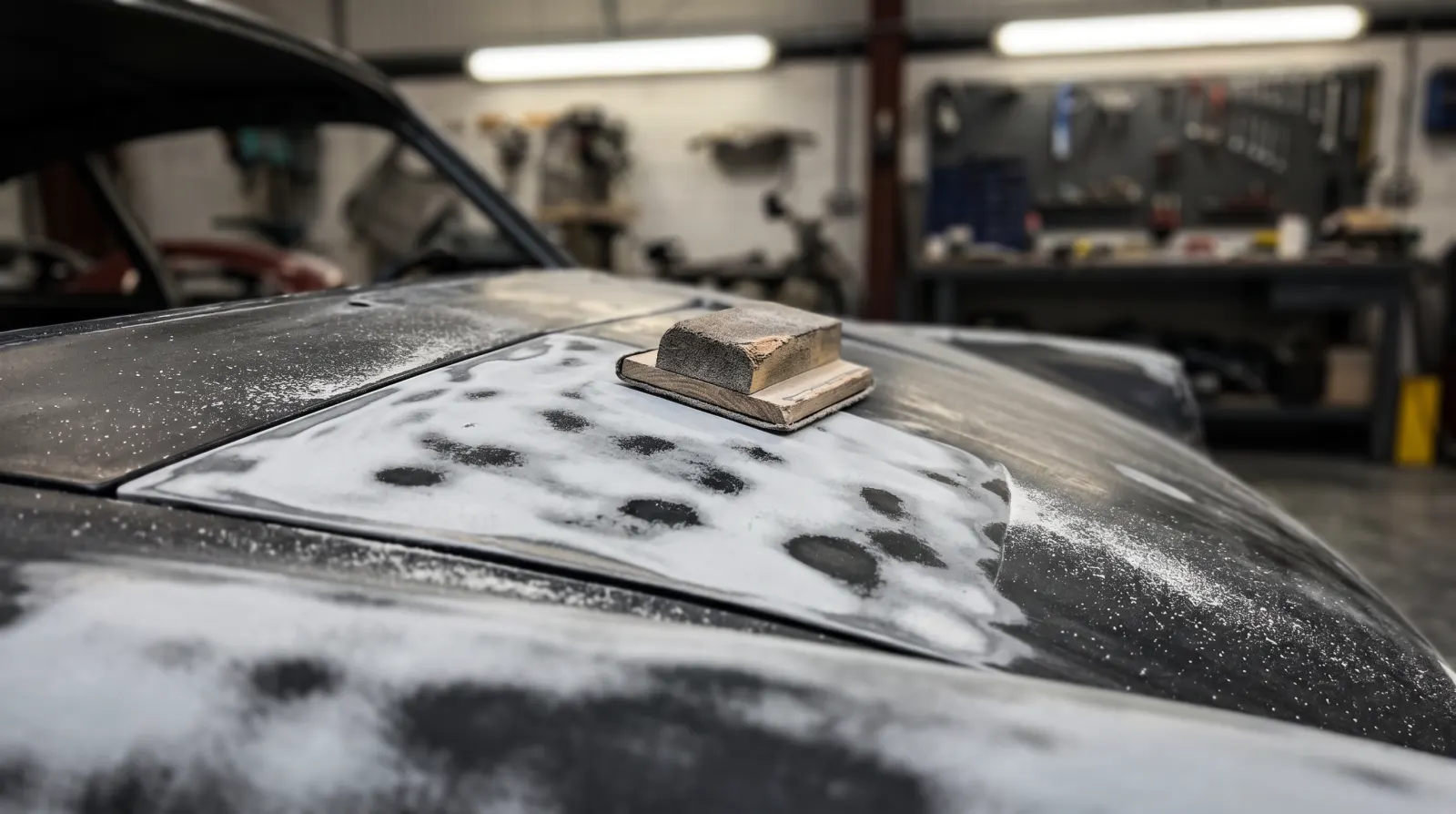
How is aluminium corrosion repaired properly?
Back to clean metal, then primed for aluminium. In the Stellantis bulletin it runs like this:
- The panel comes off the car, with any trim, and is washed and degreased.
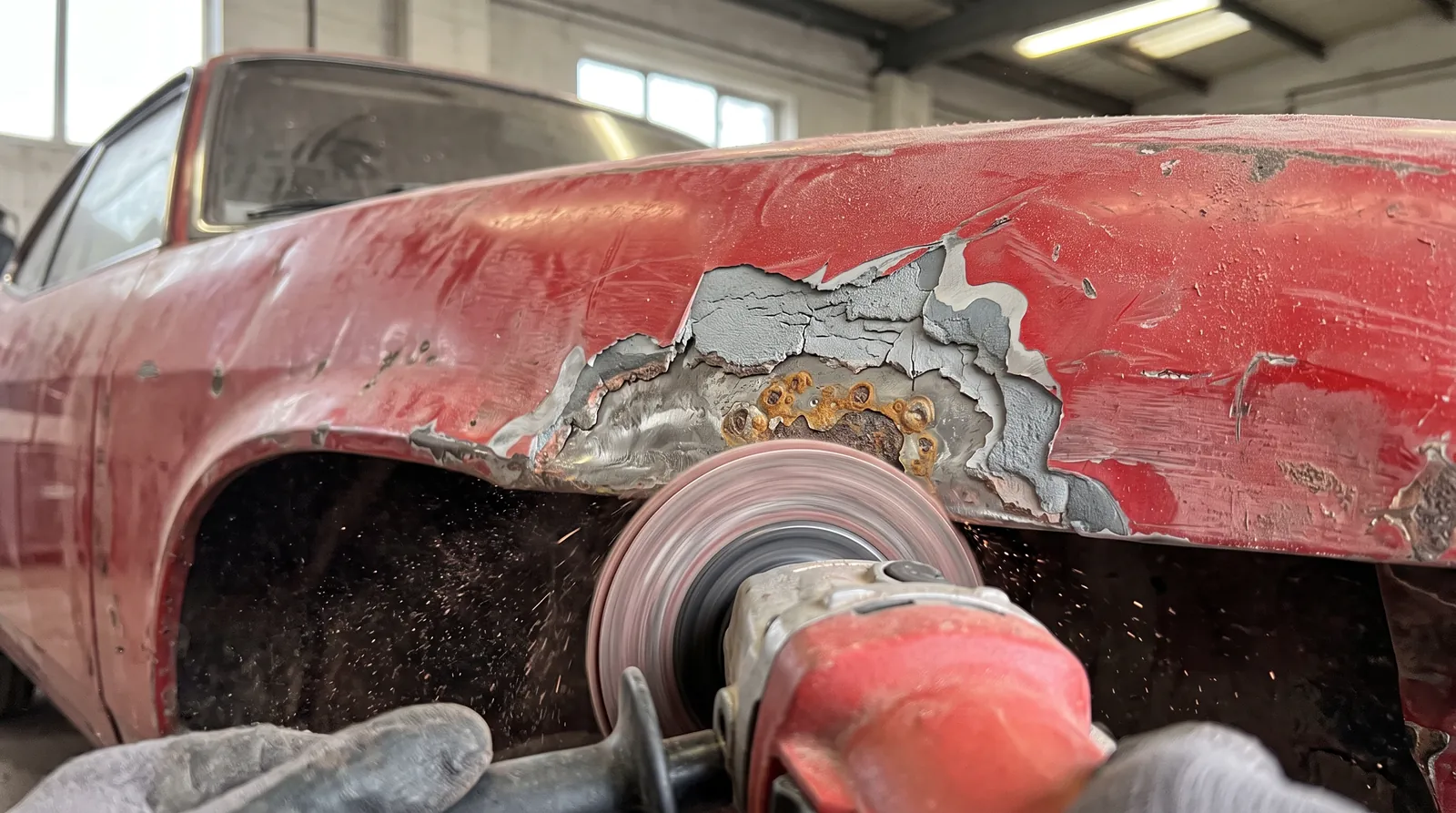
- The blistered paint and the corrosion are ground off, and the bare metal is sanded.
- The old paint round the repair is feathered, sanded down to a gentle slope so there's no step at the edge.
- The bare aluminium is cleaned with a metal cleaner and wiped with a metal treatment, then primed.
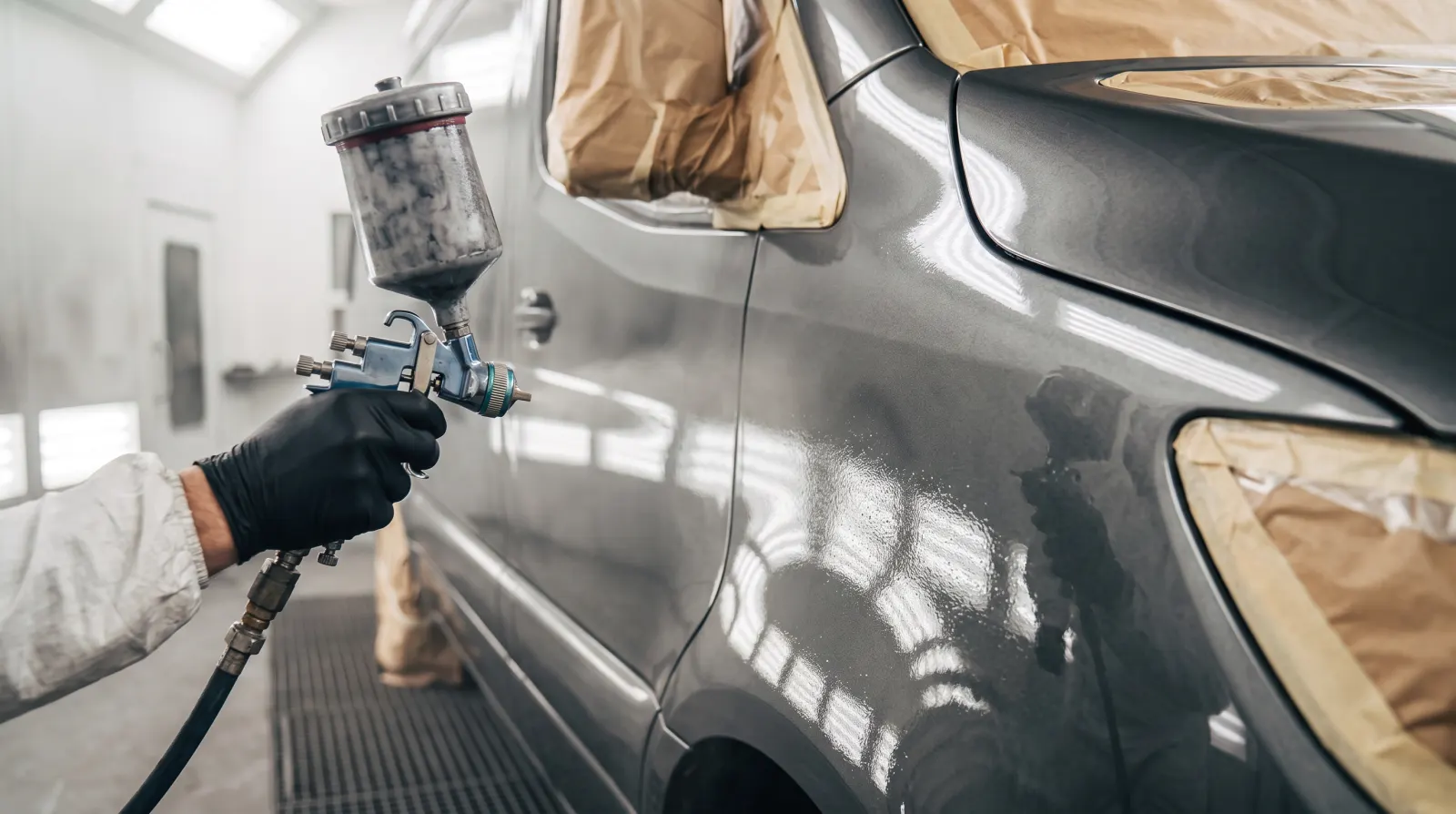
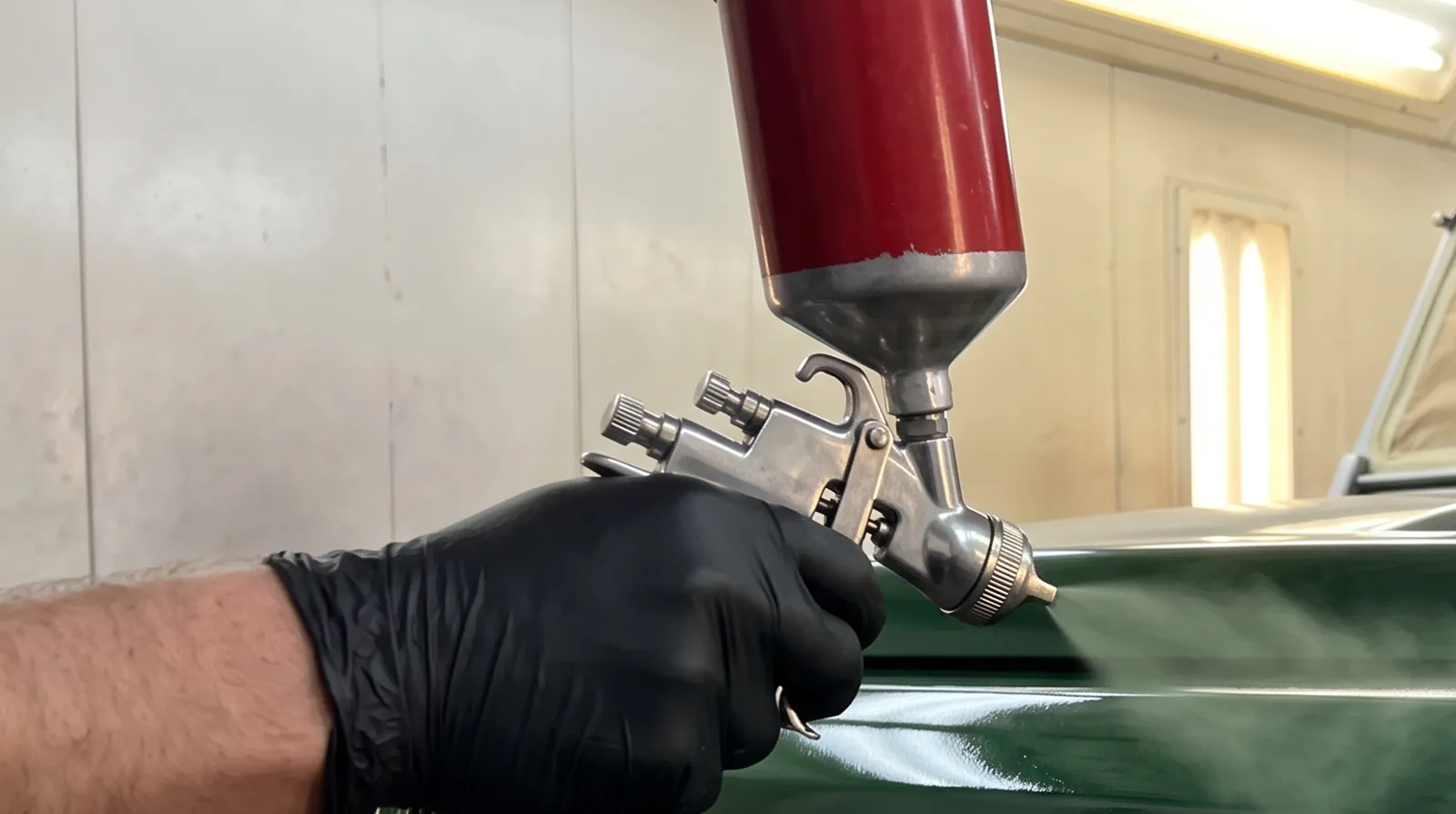
- The primer is blocked flat with a sanding block, then the sealer, colour and clear go on.
Grinding leaves a thin disturbed layer on the surface of the metal, and the Swansea research names that layer as one of the things that drives filiform corrosion. So the bare metal is cleaned and treated before primer, never primed straight off the grinder. Each paint maker sets out its own steps for bare aluminium, and the bulletin says to follow them.
Why does aluminium have to be kept away from steel?
Because steel dust on aluminium starts corrosion of its own. The Stellantis bulletin says grinding, sanding and prep on aluminium must be done in a separate room away from steel, with clean abrasives. Otherwise cross-contamination leads to galvanic corrosion, where one metal corrodes faster because it's in contact with another.
The bulletin also says tools and abrasives aren't to be swapped between steel and aluminium. A disc that has been on a rusty steel arch doesn't go near an aluminium bonnet.
When does the panel need replacing?
When the corrosion has eaten pits into the metal that won't come out. The Stellantis bulletin says that if severe pitting is left once the blistered paint is off, and it can't be removed, the panel is replaced. Nobody can tell which it is until the paint is off.
Will the repair show?
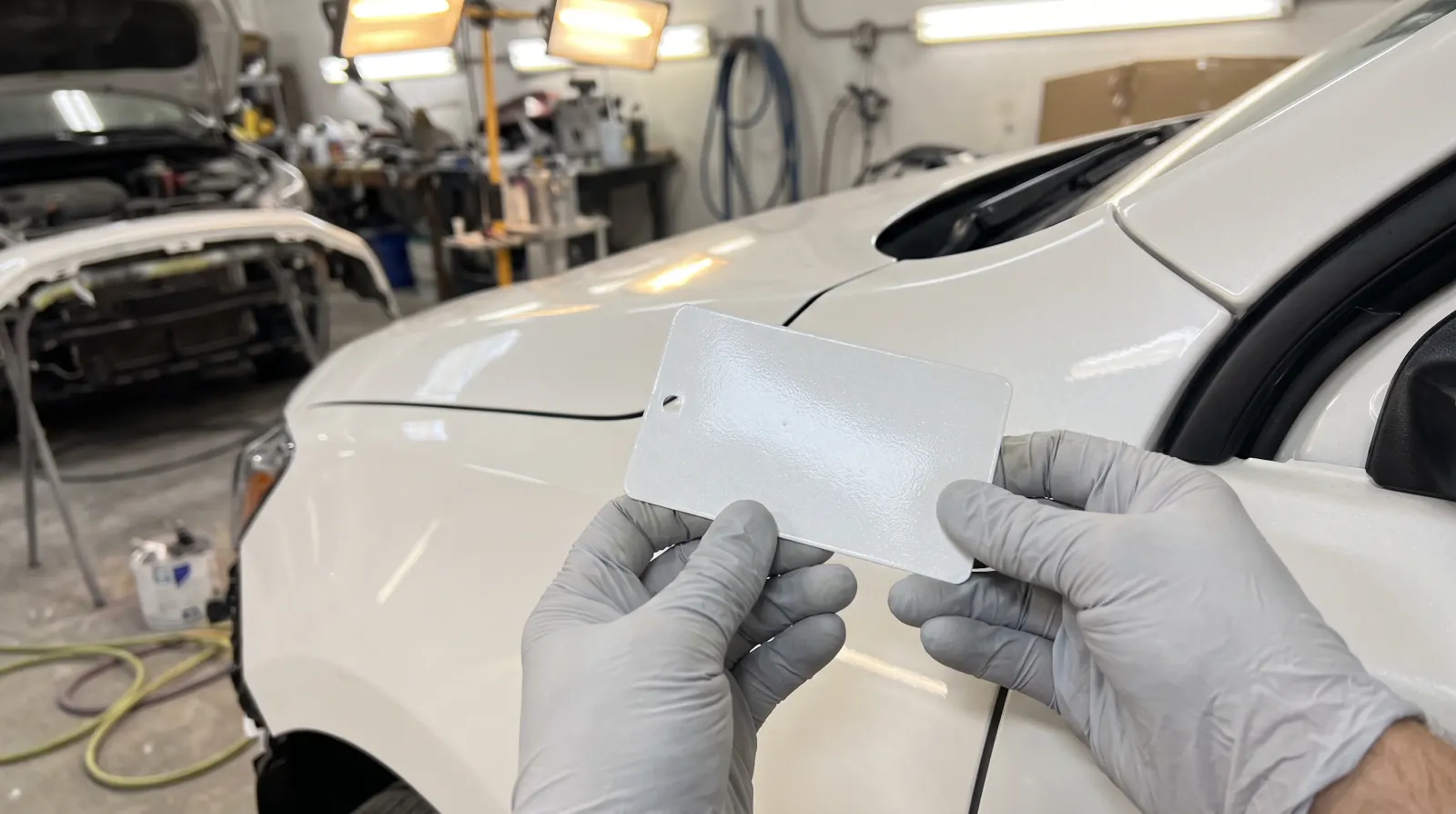
It's blended in so it doesn't show as a patch. The new paint is mixed to the car's paint code and taken into the panels next to it, as with any body repair. If the corrosion has spread along several panels, painting them all can make more sense than patching each one. See resprays.
What moves the cost?
How far the corrosion has spread under the paint, whether the panel can be saved, what has to come off to reach it, and how many panels need colour to blend in. See prices for how we quote.
Paint bubbling on an aluminium panel? Send us a few close-up photos and the make and model from the quote form.