An advisory for corrosion means the tester found rust that isn't bad enough to fail the car yet. The car passes. But rust doesn't stop when the test does, and on the parts that hold the car together it can be next year's fail.
So treat it as notice. Get it looked at well before the next MOT, while it's still a repair and not a rescue.
What does an advisory mean on an MOT?
It's the lowest level of warning on the result. GOV.UK sets out the MOT defect categories like this:
- Dangerous: a direct and immediate risk to road safety. A fail, and the car shouldn't be driven until it's repaired.
- Major: it may affect the car's safety or put other road users at risk. A fail, to be repaired immediately.
- Minor: no significant effect on the car's safety. A pass, to be repaired as soon as possible.
- Advisory: it could become more serious in the future. A pass, with the advice to monitor it and repair it if necessary.
So an advisory is a pass. It's also the tester telling you what they think is coming.
Why does a tester mention rust that hasn't failed?
Because the MOT manual asks them to. GOV.UK's inspection manual on structure and corrosion says testers should tell the person presenting the car about any corrosion that is not bad enough to fail. DVSA's own MOT blog describes advisories as advice on items near to, but not yet at, the point of failure.
The same blog says advisories are up to the tester. One garage may note rust that another lets go without a word, so no advisory doesn't mean no rust.
Which rust can fail an MOT?
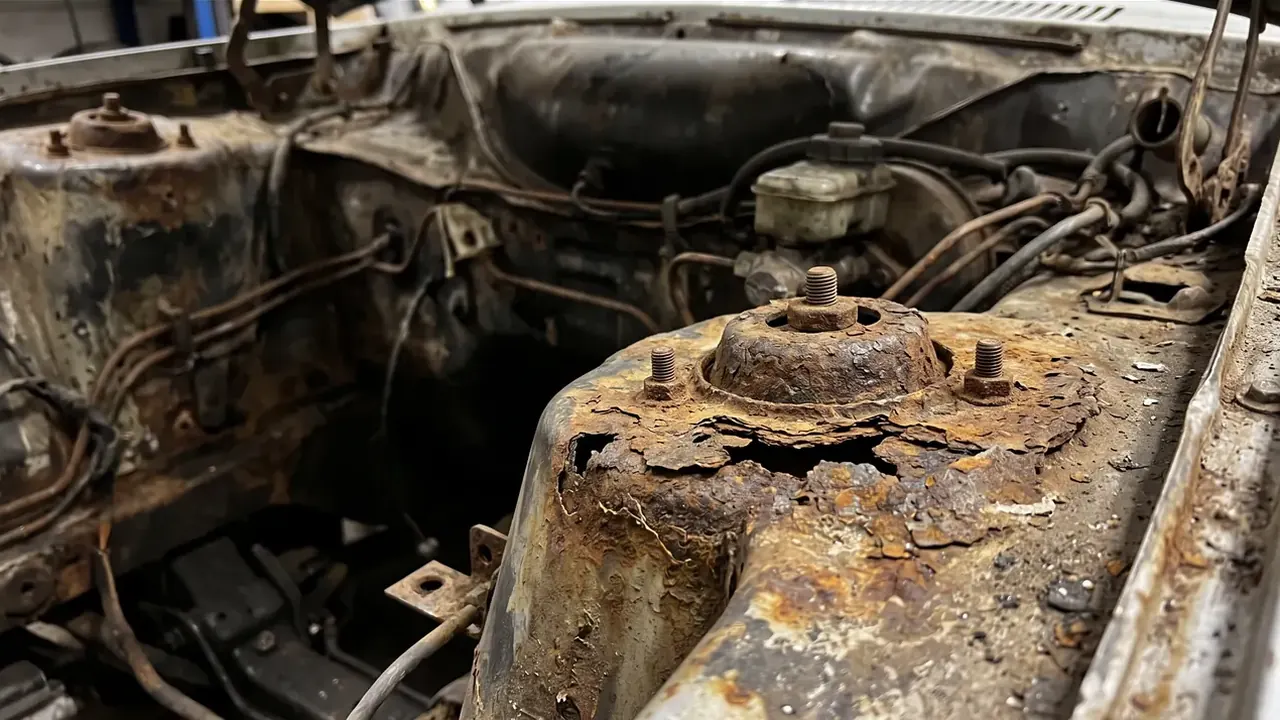
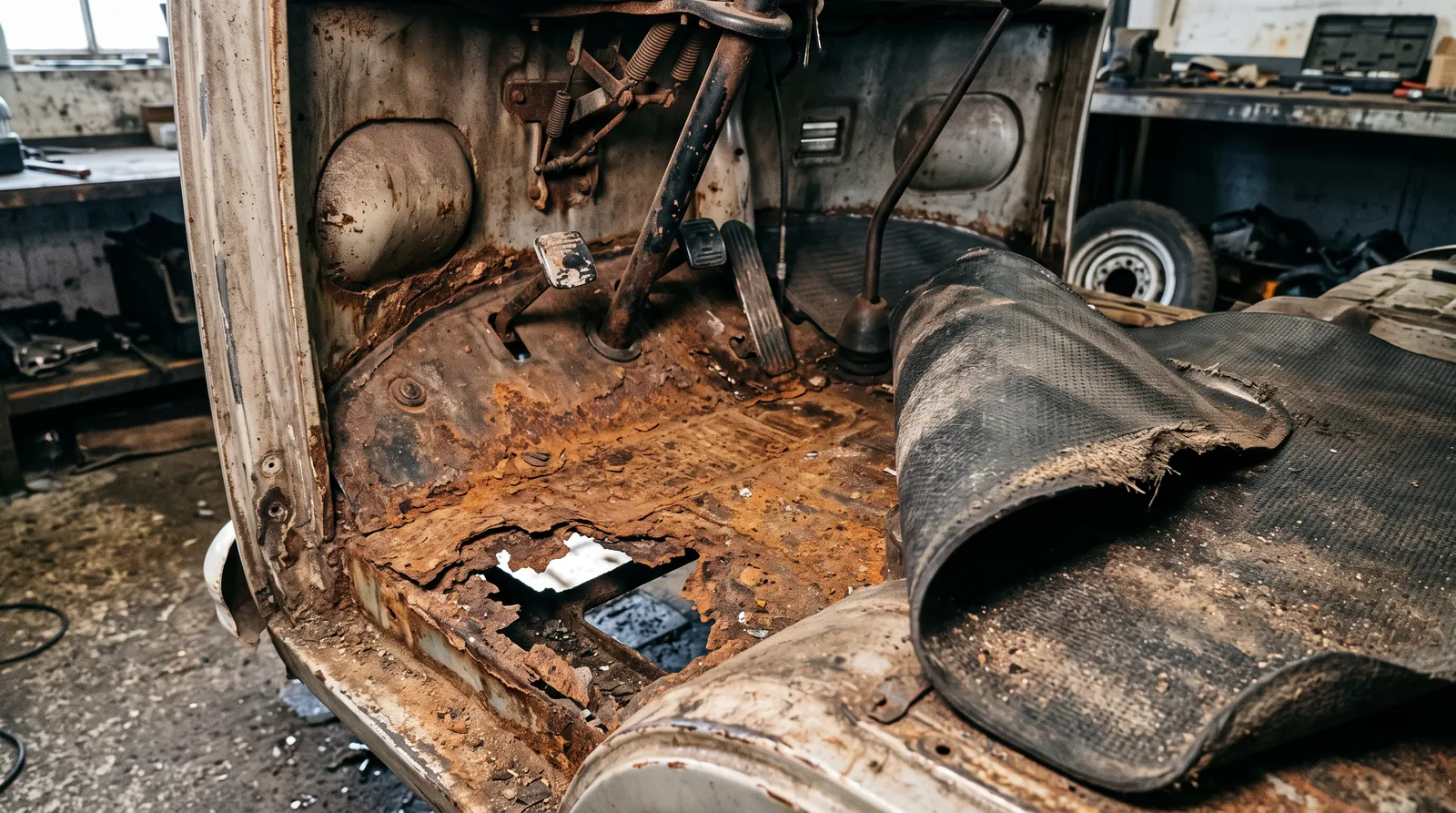
Rust in the parts that hold the car together. The manual calls them prescribed areas: the load-bearing parts that carry the brakes, steering and suspension, plus any supporting structure or panelling within 30cm of where those are mounted. A seat belt mounted on an inner sill brings the outer sill in too.
There, the tester looks first, then presses with finger and thumb, and may scrape or tap lightly with a corrosion assessment tool. It's a fail if the rust has made a hole, if the metal doesn't feel firm, or if a finger, thumb or the tool goes through it.
Rust on parts that aren't structural may have little or no effect on safety, the manual says. It still spreads, and it's still worth putting right.
Why does rust get worse between tests?
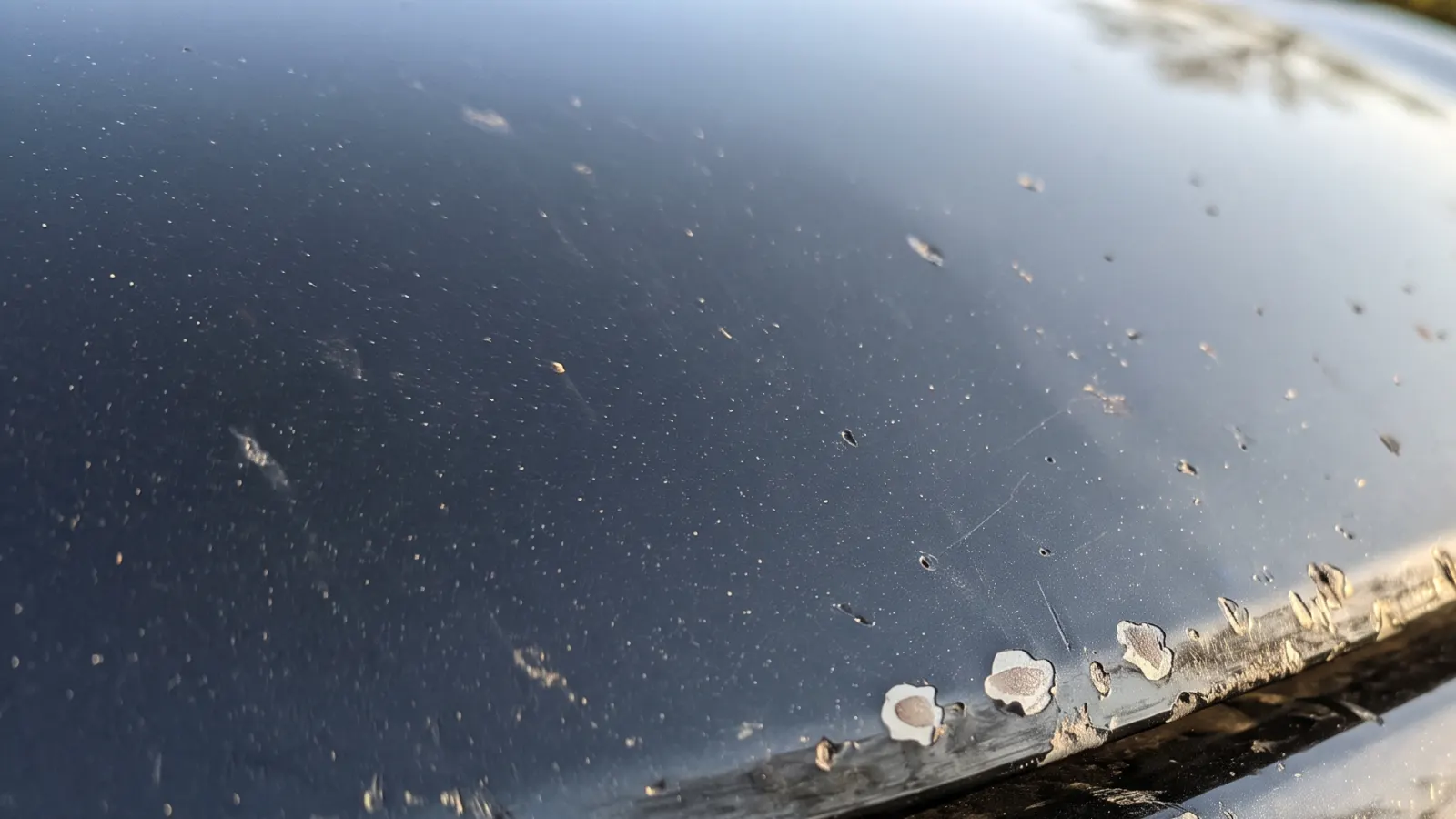
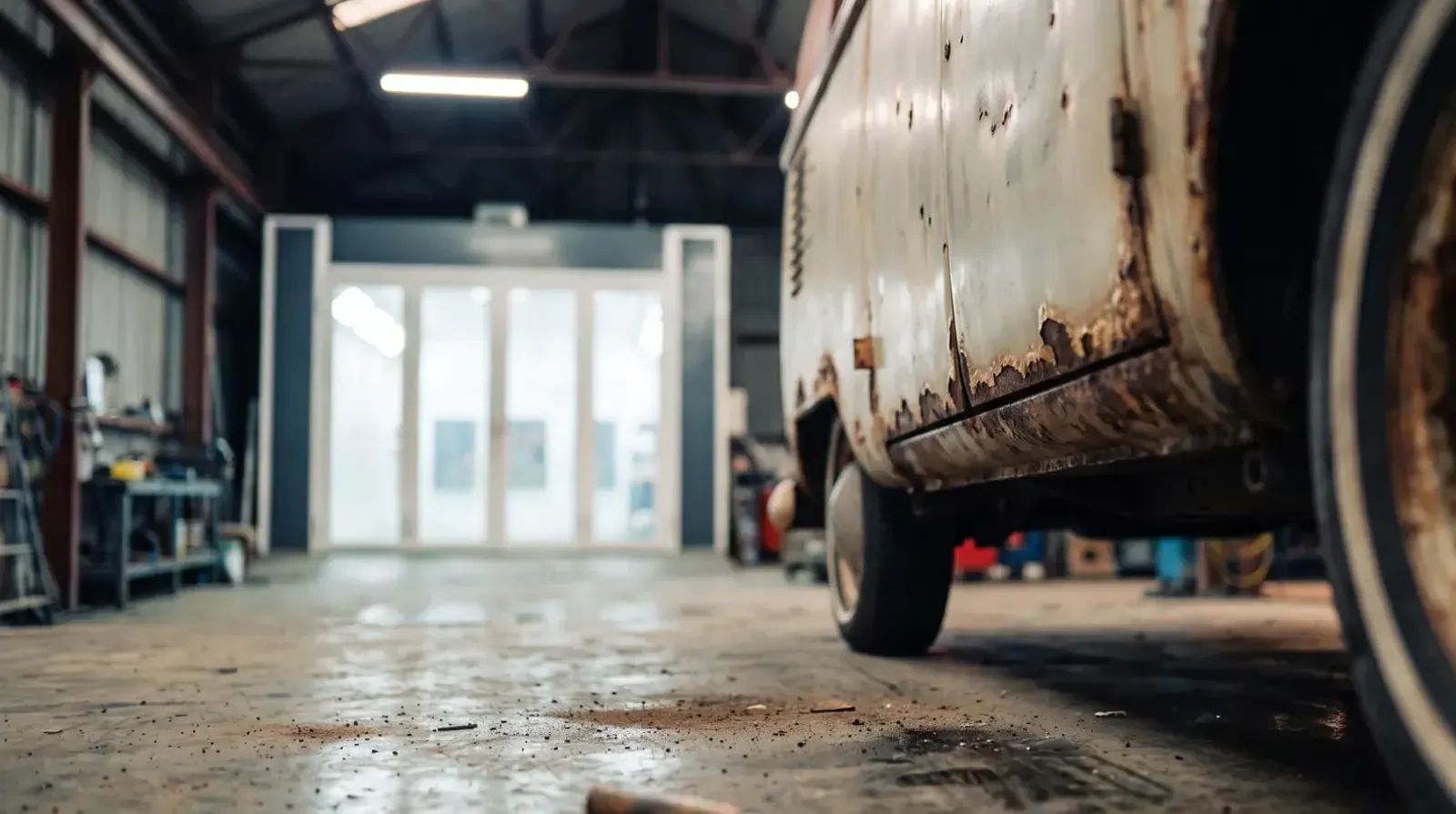
Because nothing has stopped it. Rust carries on under the paint and comes back through it. Water sits in seams, box sections and behind trim, out of sight from one test to the next.
A year is a long time for a sill or a floor that's already thin. Light rust at one test can be soft metal at the next, and on a load-bearing part, soft metal is a fail.
How do I see what the tester wrote?
Online, with the number plate. GOV.UK's MOT history check shows past results for cars and vans tested since 2005, and for tests in England, Scotland and Wales, which parts failed and which had minor problems. DVSA's MOT results toolkit for garages says advisories can be looked at there too, and that your garage should talk you through them when you collect the car.
Read back through the years. The same corner coming up test after test has been there a while and is still going. Note the exact wording, because it says where the tester was looking.
What should I do about a corrosion advisory?
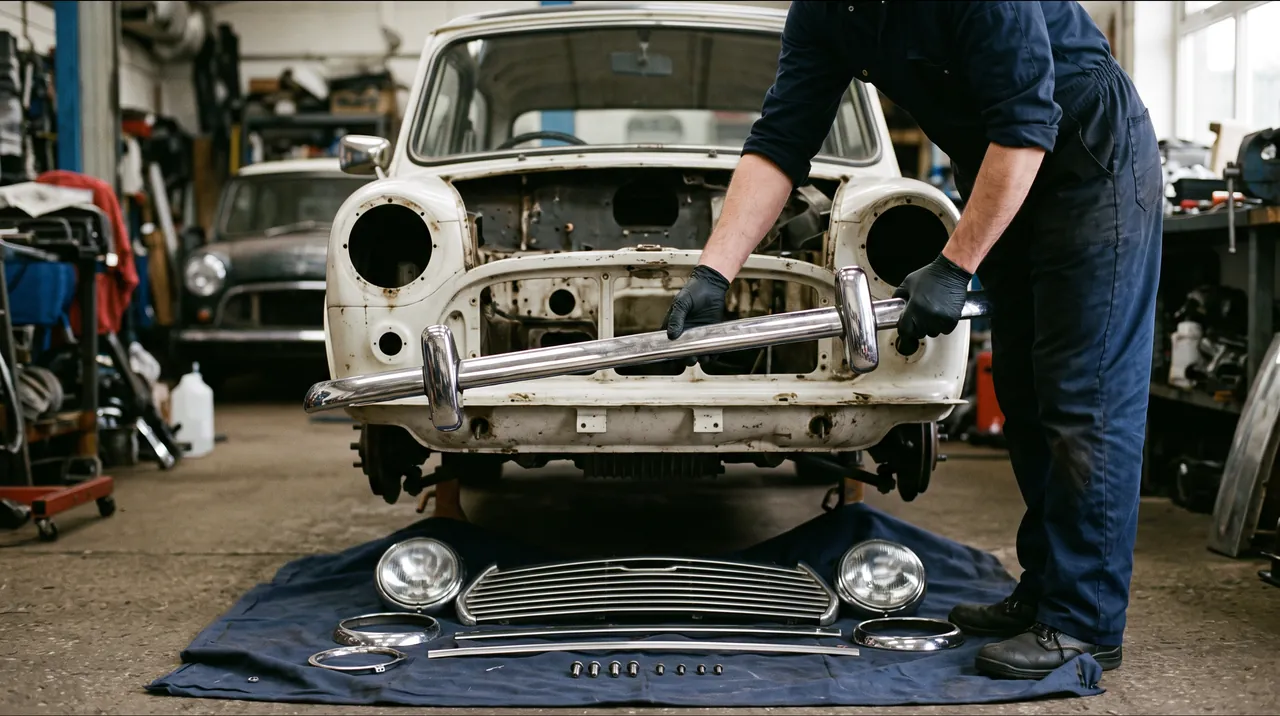
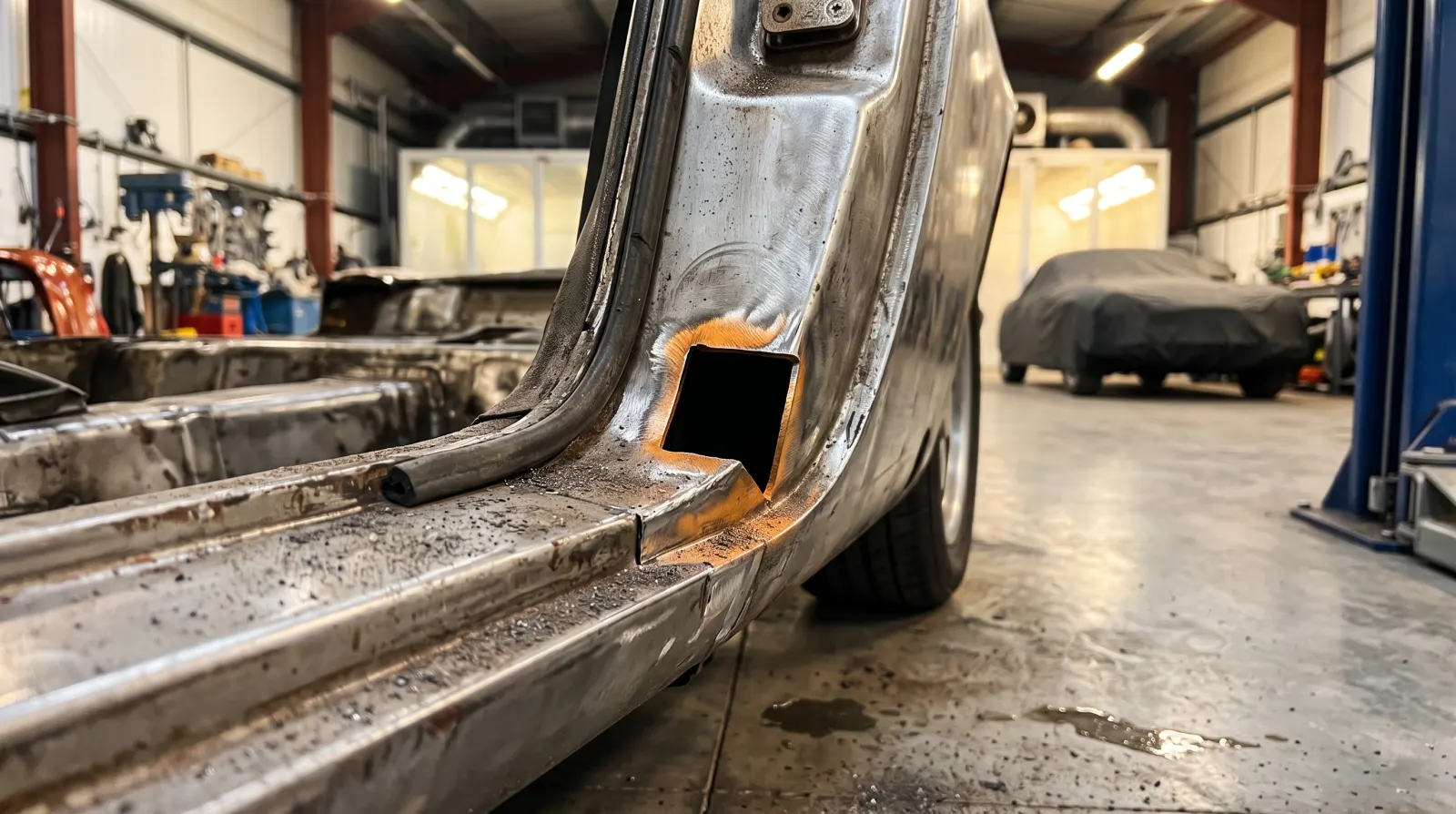
Get it looked at properly, and soon. That means the car up on a lift and the spot the tester named cleaned back, so the metal round it can be checked too. Rust often runs further than it shows.
Then you know which job it is:
- Rot in one patch: cut out and new steel welded in. The rest of the panel stays.
- Rot that has spread, or metal thin all over: a new panel or section goes on.
We'll show you what we find and which we'd do before any work starts. See welding and rust repair.
Can I paint over it or cover it in underseal?
No. Paint or underseal over rust hides it from you, and the rust carries on underneath. A tester presses the metal with finger and thumb, and a coat on top doesn't make soft metal firm again.
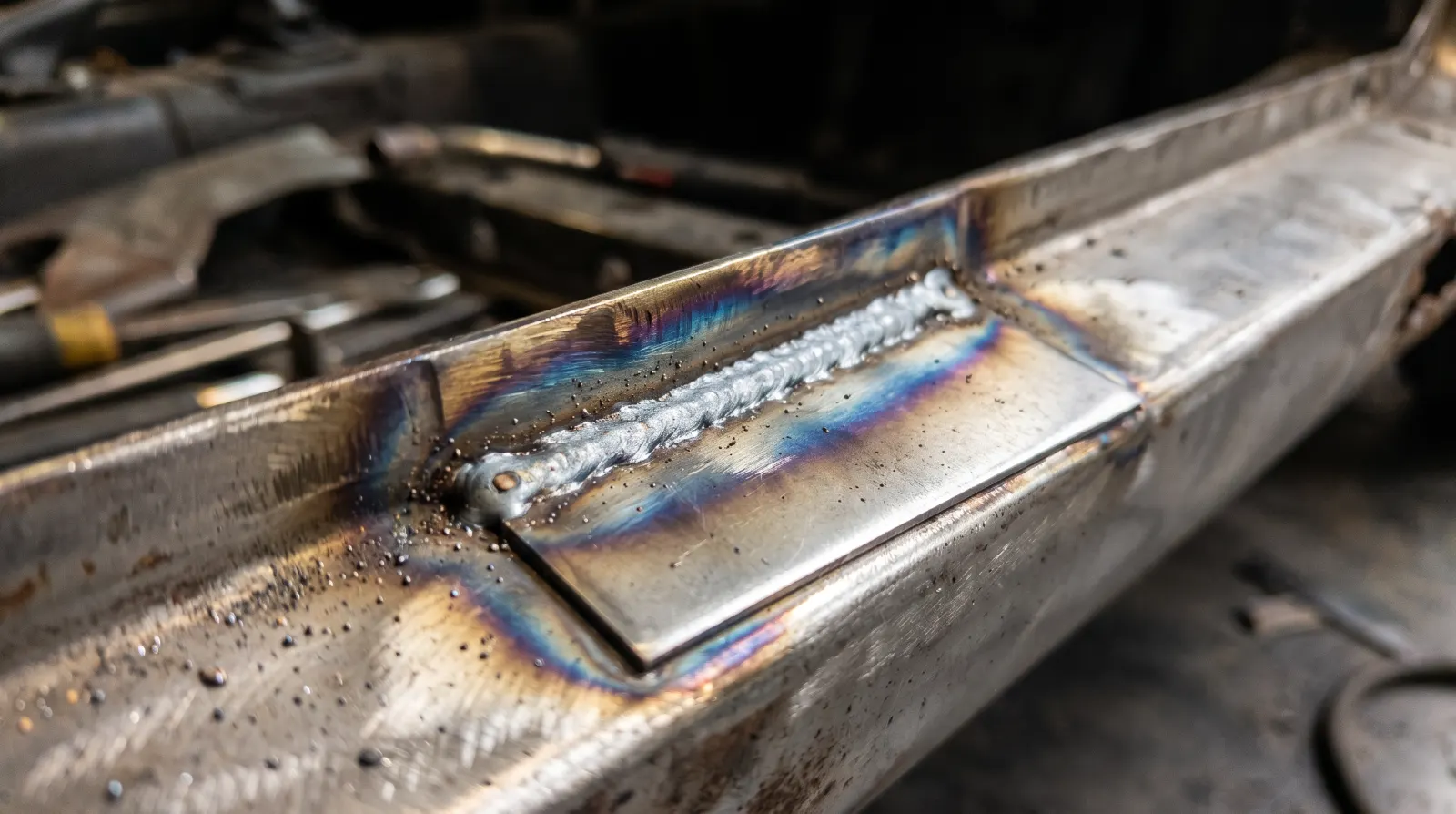
How is the rust put right so it lasts?
The rotten metal comes out back to clean steel, and new metal is welded in. Then the new metal is primed and seam sealed, which means a flexible sealer run along the joins to keep water out. Box sections get cavity wax, a waxy coating sprayed inside them, after the paint, or the rust comes back from inside.
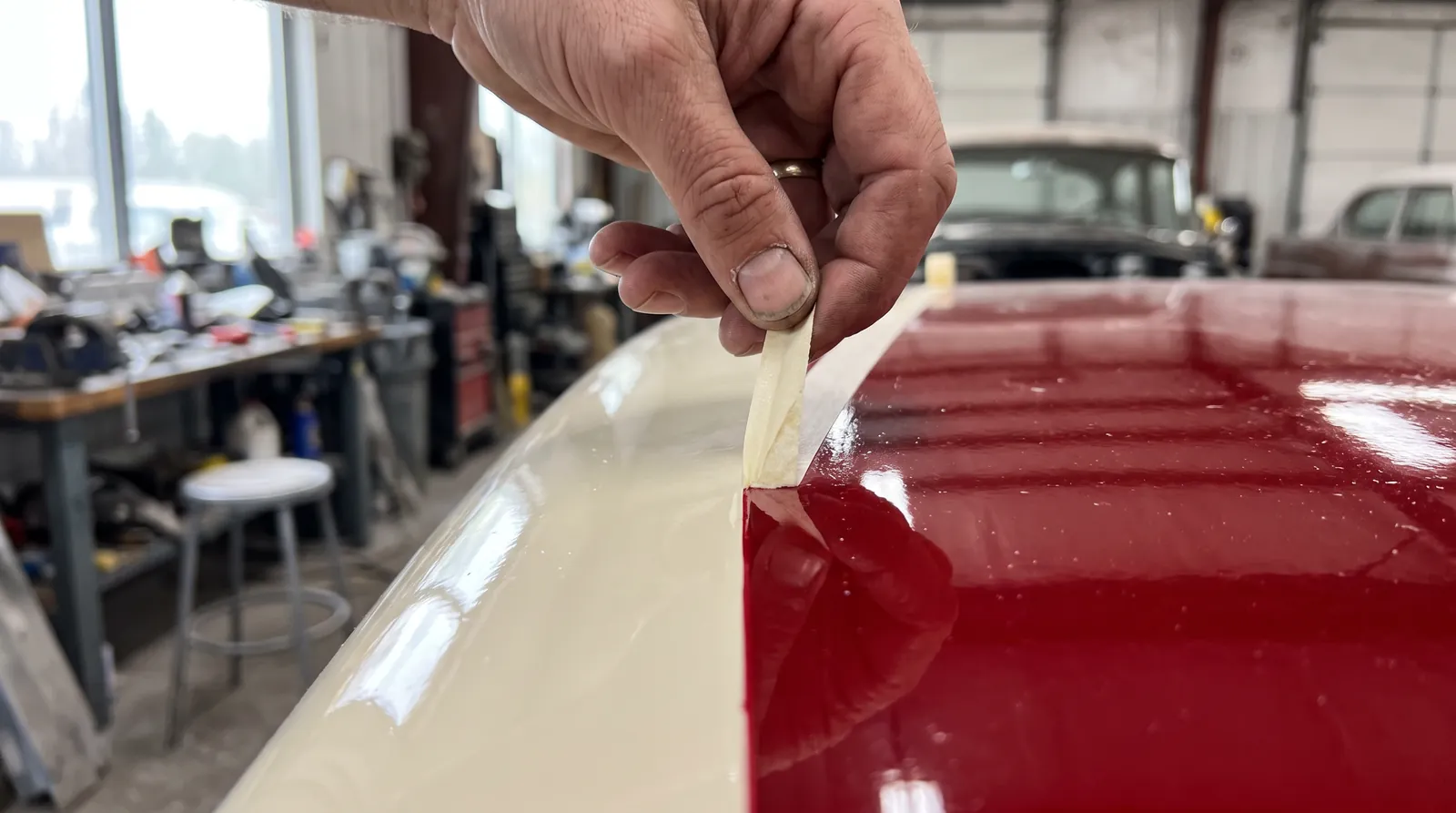
Rust bubbling through on a door or wing, away from the structure, is cut back to clean metal, primed and painted, and the colour is blended in like any other body repair.
When should I book it in?
Well before the MOT is due. Leave it until the test and the advisory can turn into a fail. GOV.UK says you can't drive or park a car on the road once its MOT has run out, other than to a pre-arranged test or to or from somewhere to be repaired.
What moves the cost?
How far the rust has gone once it's cleaned back, how much metal comes out, whether a repair panel is made for the car or has to be shaped, and what has to come off to reach it. See prices for how we quote.
Got a corrosion advisory? Send us a few photos of the spot and the advisory wording from the quote form.