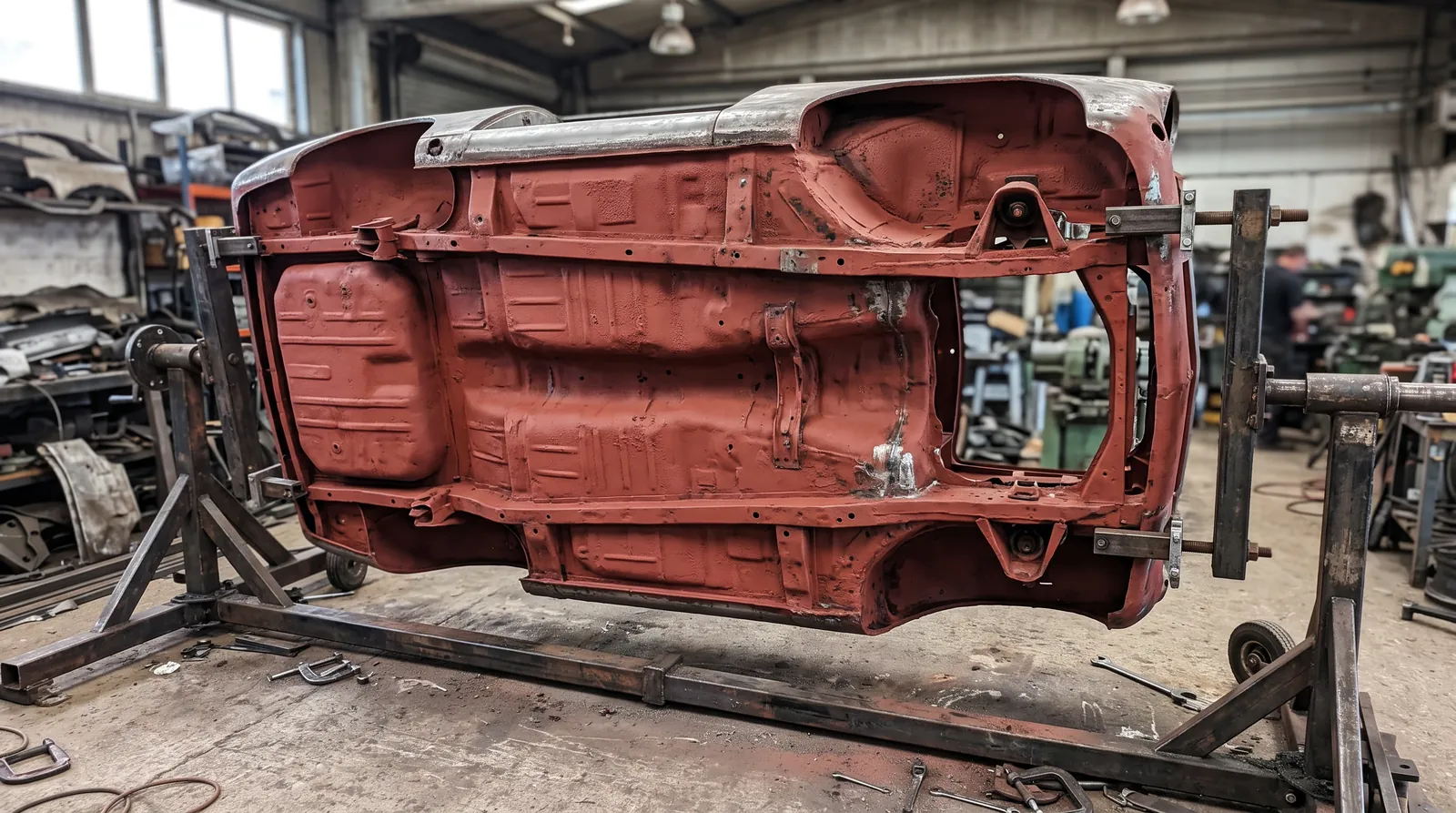
Nobody can honestly tell you how long a full restoration will take until the car has been stripped. The hours are in the metal, and nobody sees the metal until the paint, trim and old sealer come off.
What we can tell you is what decides it, and how the work is planned so you know where it stands at every stage.
Why can't anyone give a finish date before the car is stripped?
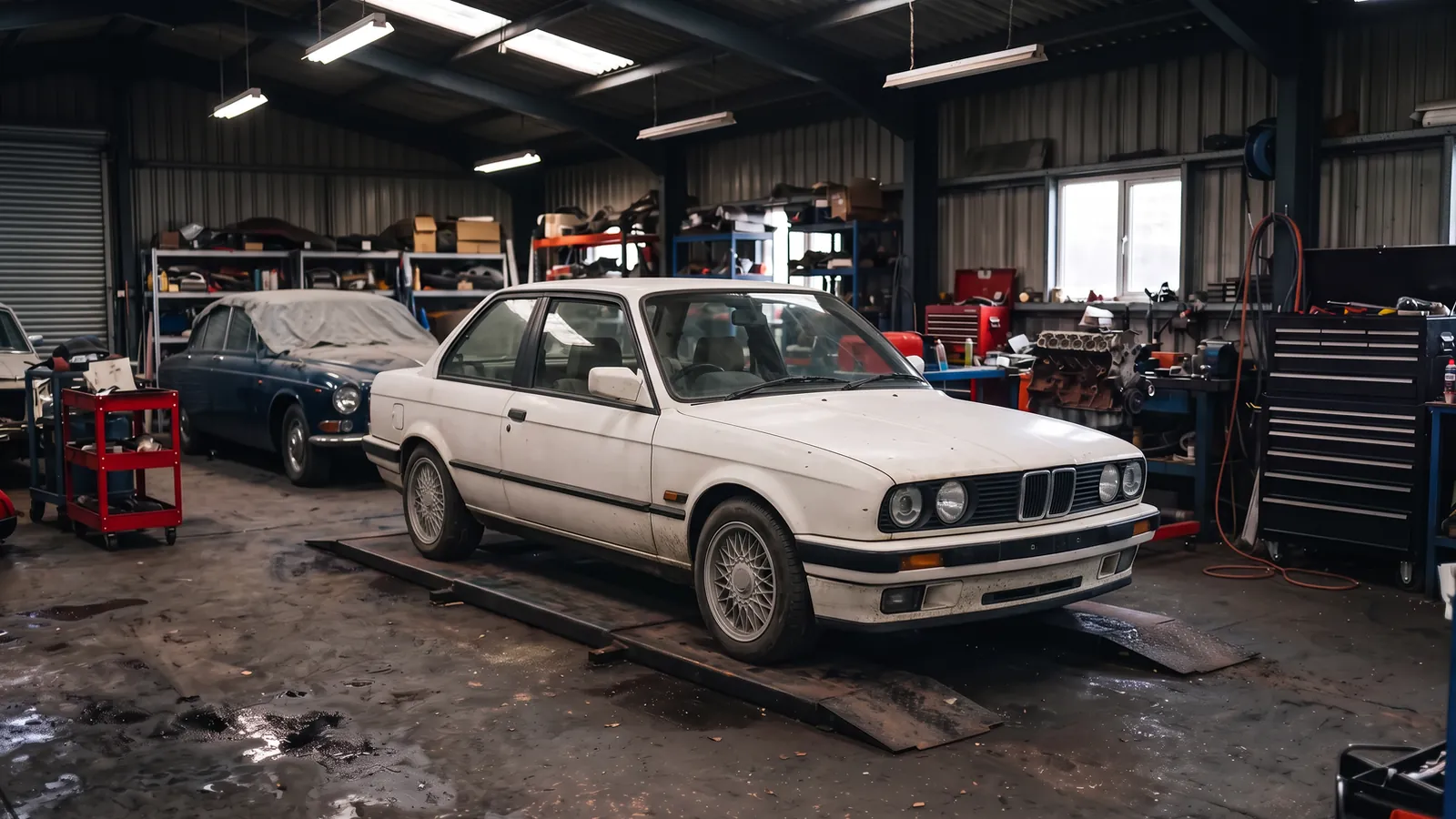
Because most of the work is hidden when the car arrives. Paint, underseal, trim and old repairs cover the metal, and the metal is where the time goes.
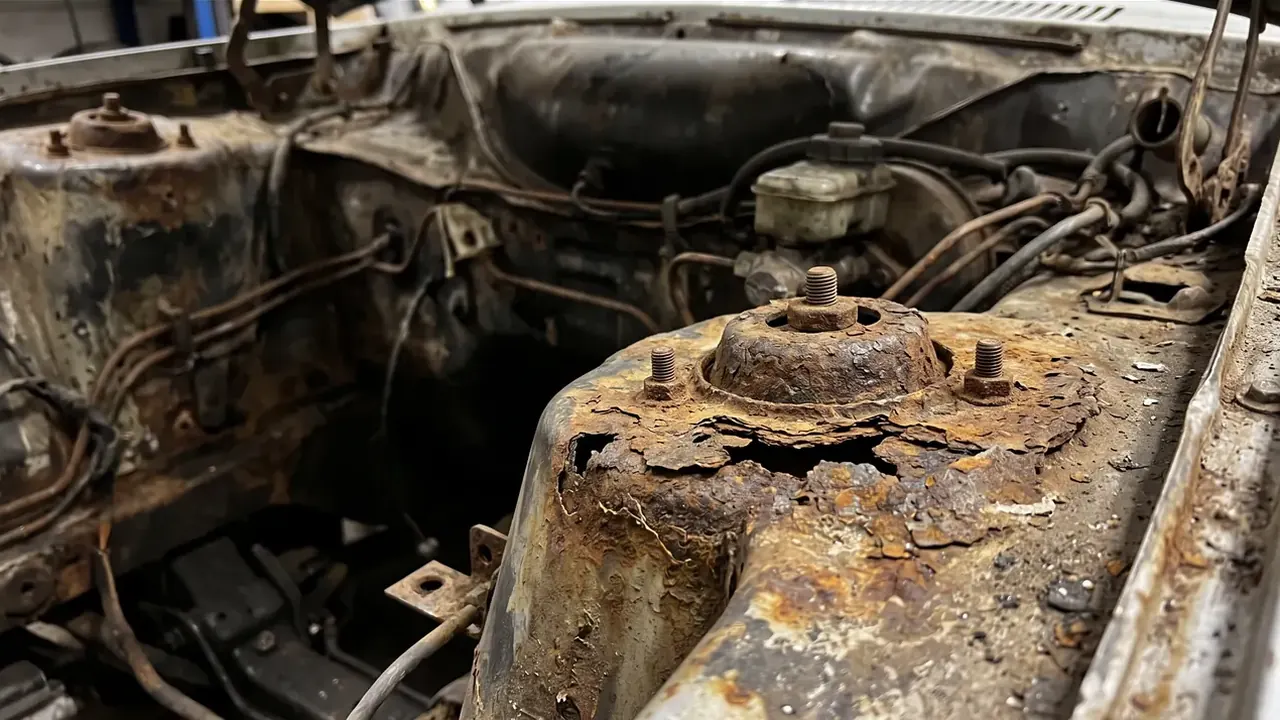
A car that looks tidy can have filler over rot in the sills. One that looks rough can turn out sound under its surface rust. Until it's stripped, a finish date is a guess, and we'd rather not give you one.
What happens first?
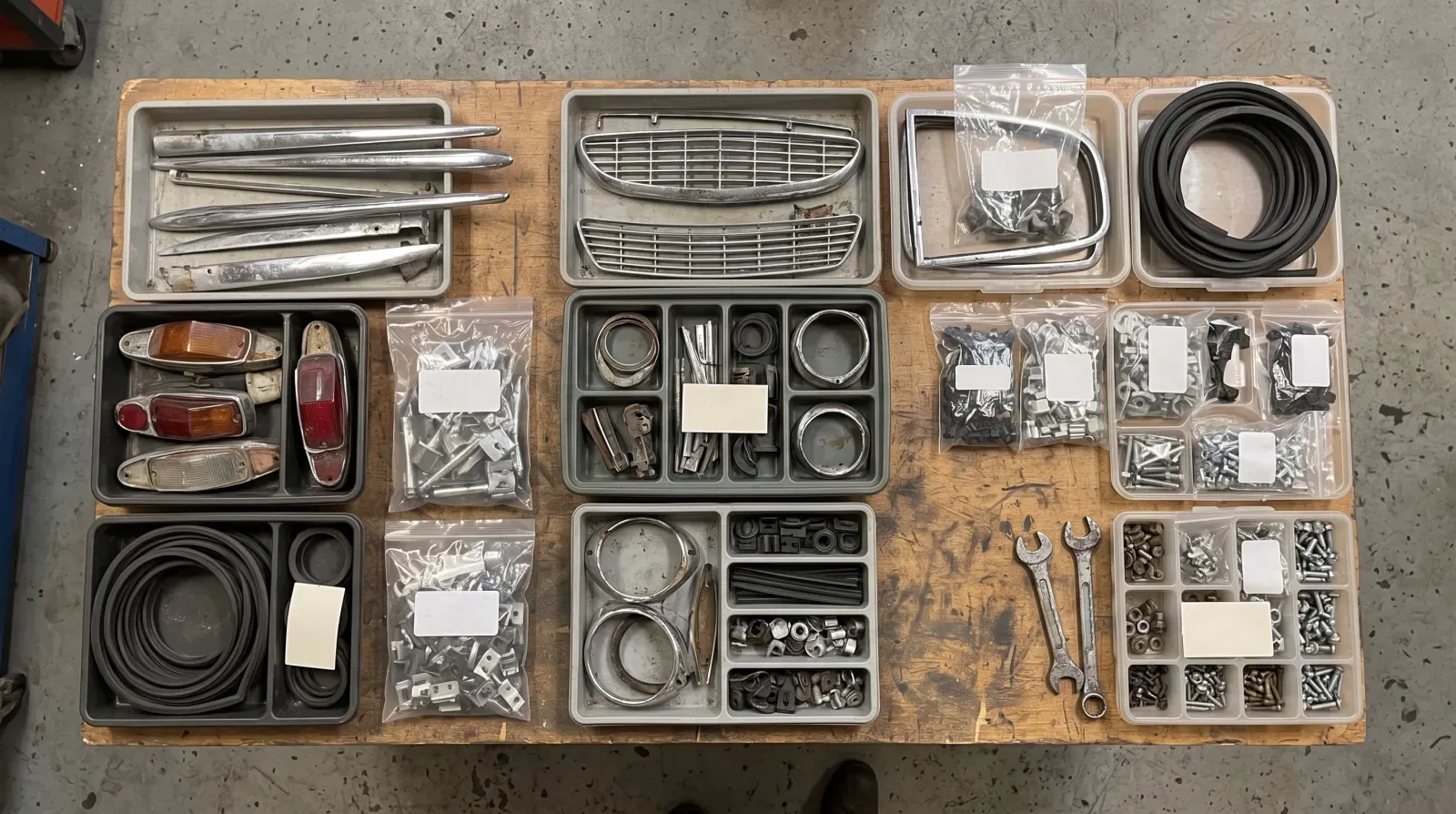
The strip-down. Everything that isn't body comes off: on a full restoration that's the trim, lights, glass, seals, interior, wiring and running gear. Every part is photographed in place, bagged and labelled with its fixings, so it goes back where it came from.
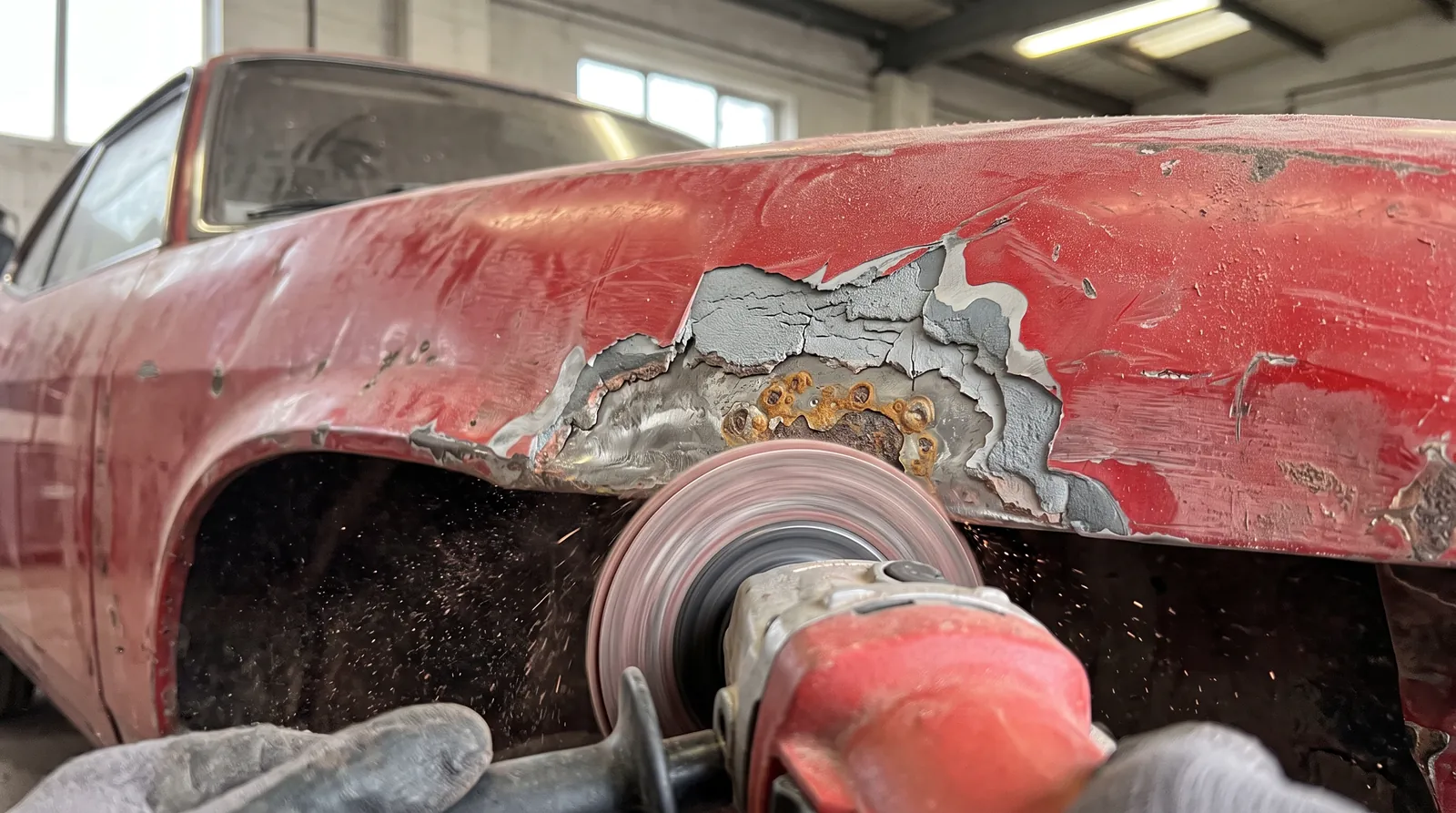
Then the real state of the shell shows. Old repairs, filler and rust under the seals all come to light here, and we show you before any more work is done. See strip-downs.
What makes a restoration take longer?
Mostly what the strip-down finds. The usual things:
- Rust. Rot cut out and new metal let in, or a new panel where it has spread.
- Old repairs. Thick filler, or a patch welded over rot, has to come out and be done again.
- Parts. Some are easy to buy, some have to be found, and some have to be made.
- Changes of plan. A new colour, a new interior or engine work each add a stage.
Why does rust take so long to put right?
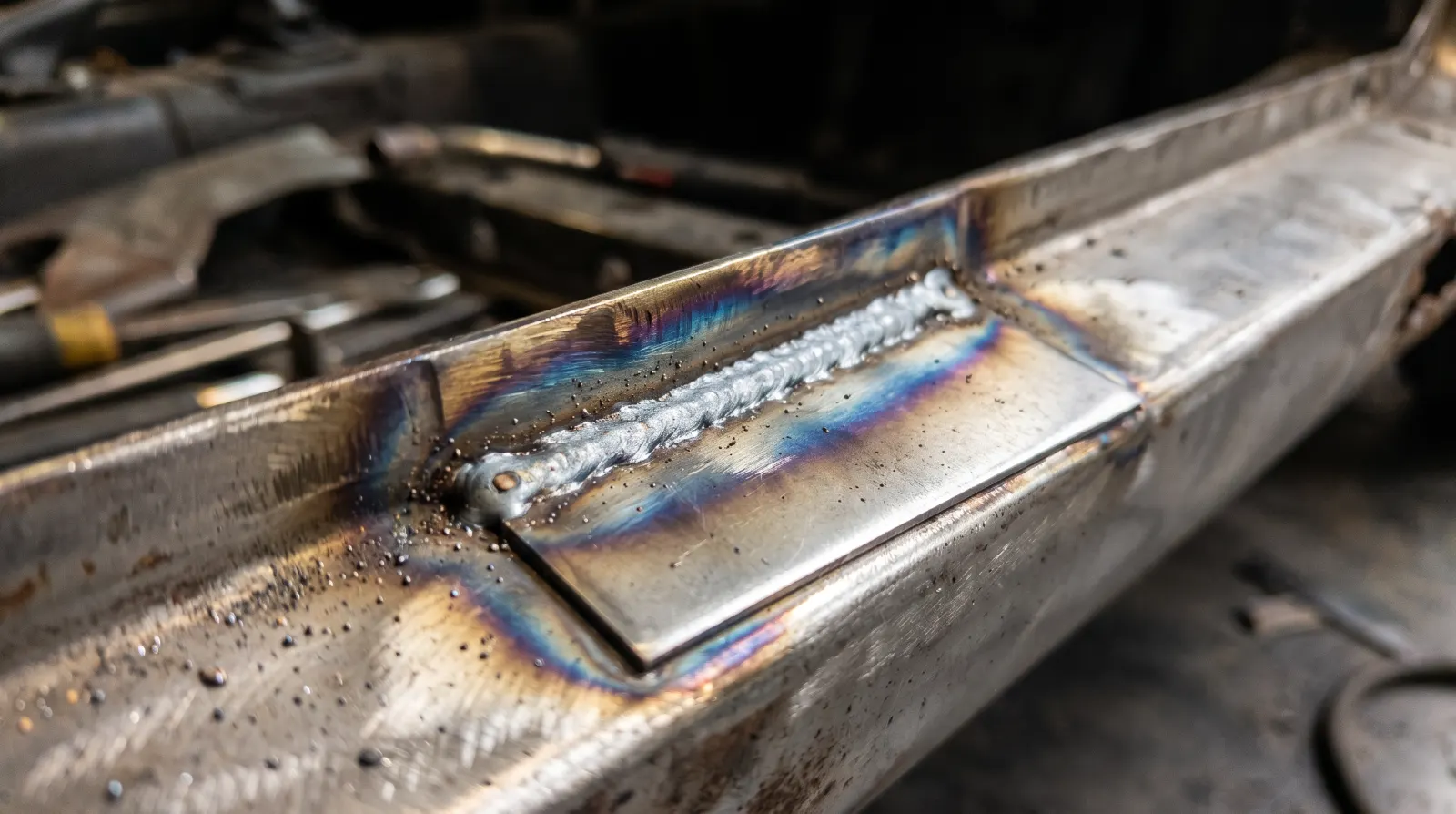
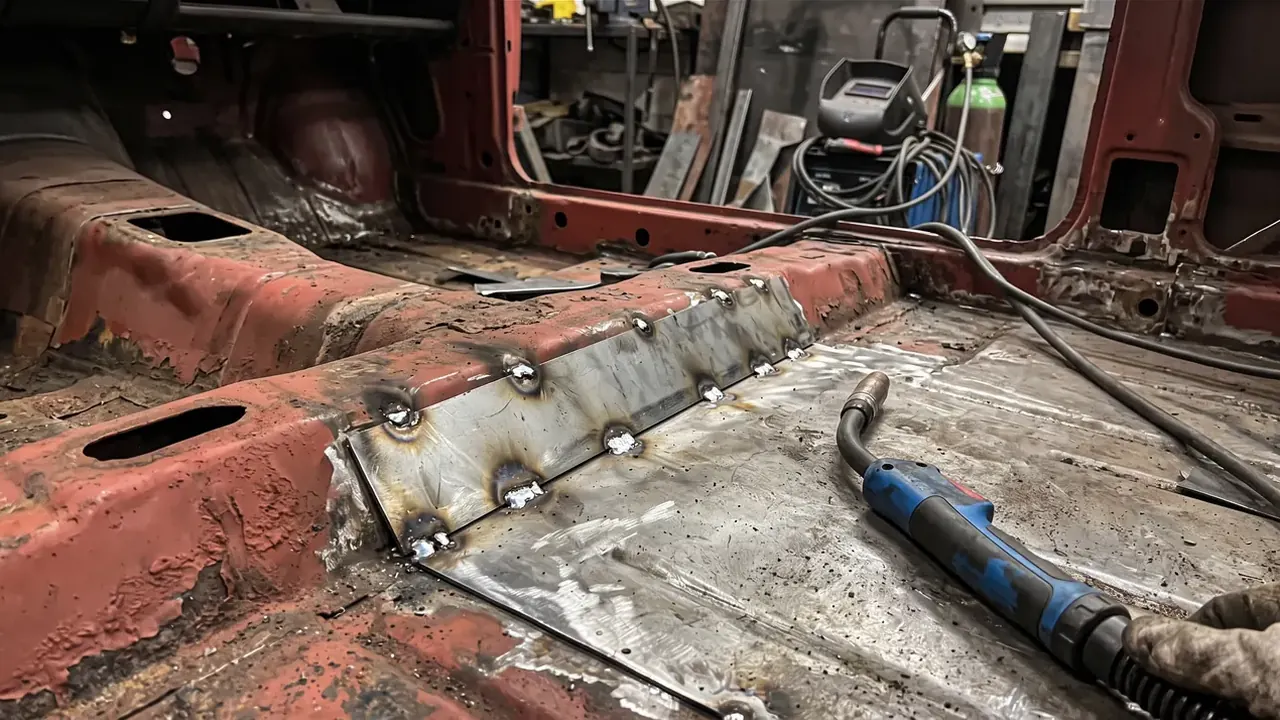
Because it's careful work, and rust usually runs further than it looks. Rot is cut back to clean steel, and new metal is shaped, fitted and welded in. Where it has spread or the panel is thin all over, a new panel goes on, and that has to be fitted to the car before it's welded.
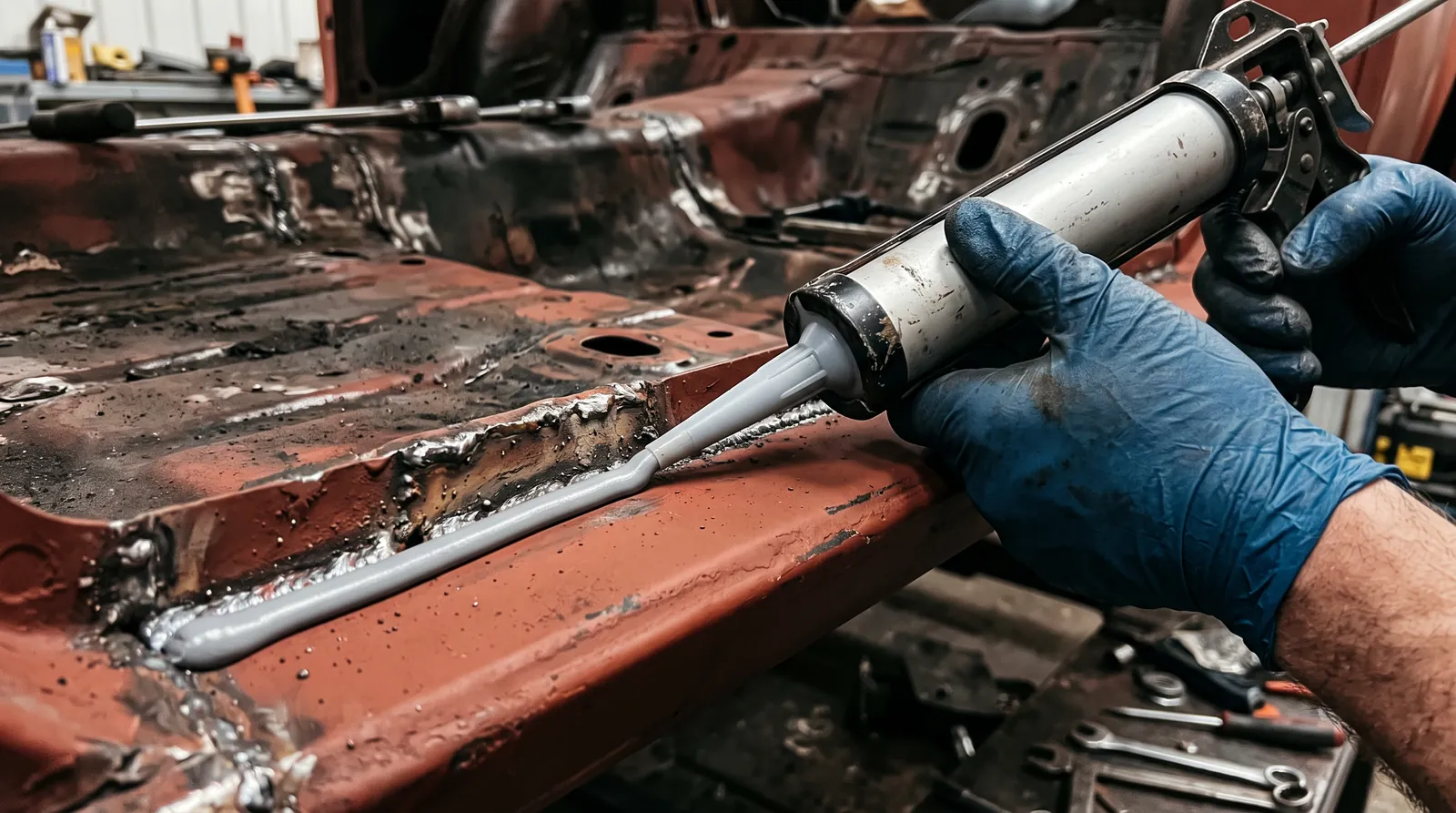
Then each repair is primed and seam sealed, which means a flexible sealer run along the joins to keep water out. Box sections get cavity wax, a waxy coating sprayed inside them, after the paint. See restoration.
Do parts hold a restoration up?
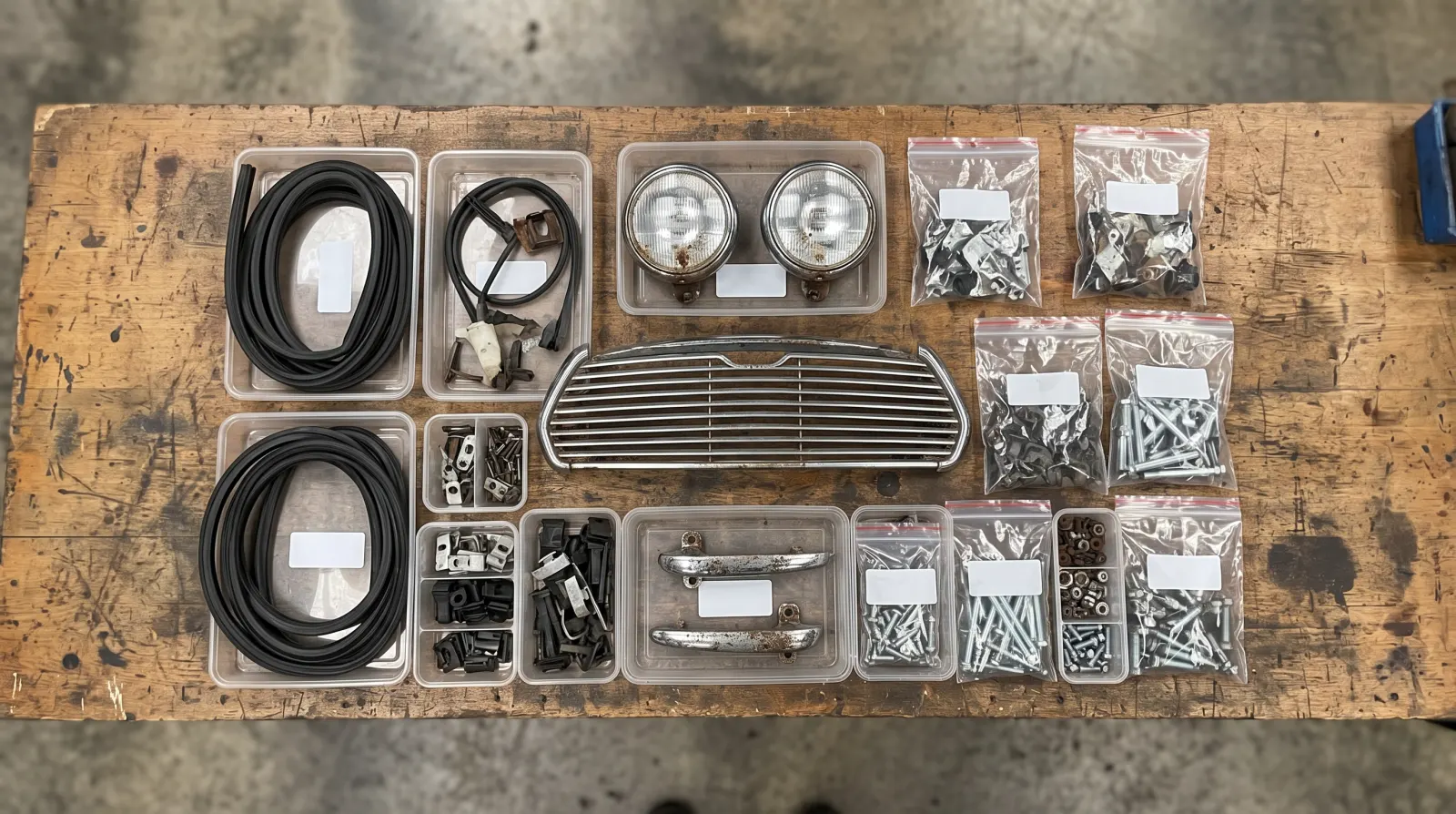
They can. Old rubbers, clips and some trim break on the way off. Some cars have plenty of new parts made for them, others very few, and a part that has to be found or made can hold up the stage that needs it.
We'll tell you what needs replacing, and you or we can source it. The earlier it's ordered, the less a stage waits for it.
What happens after the metalwork?
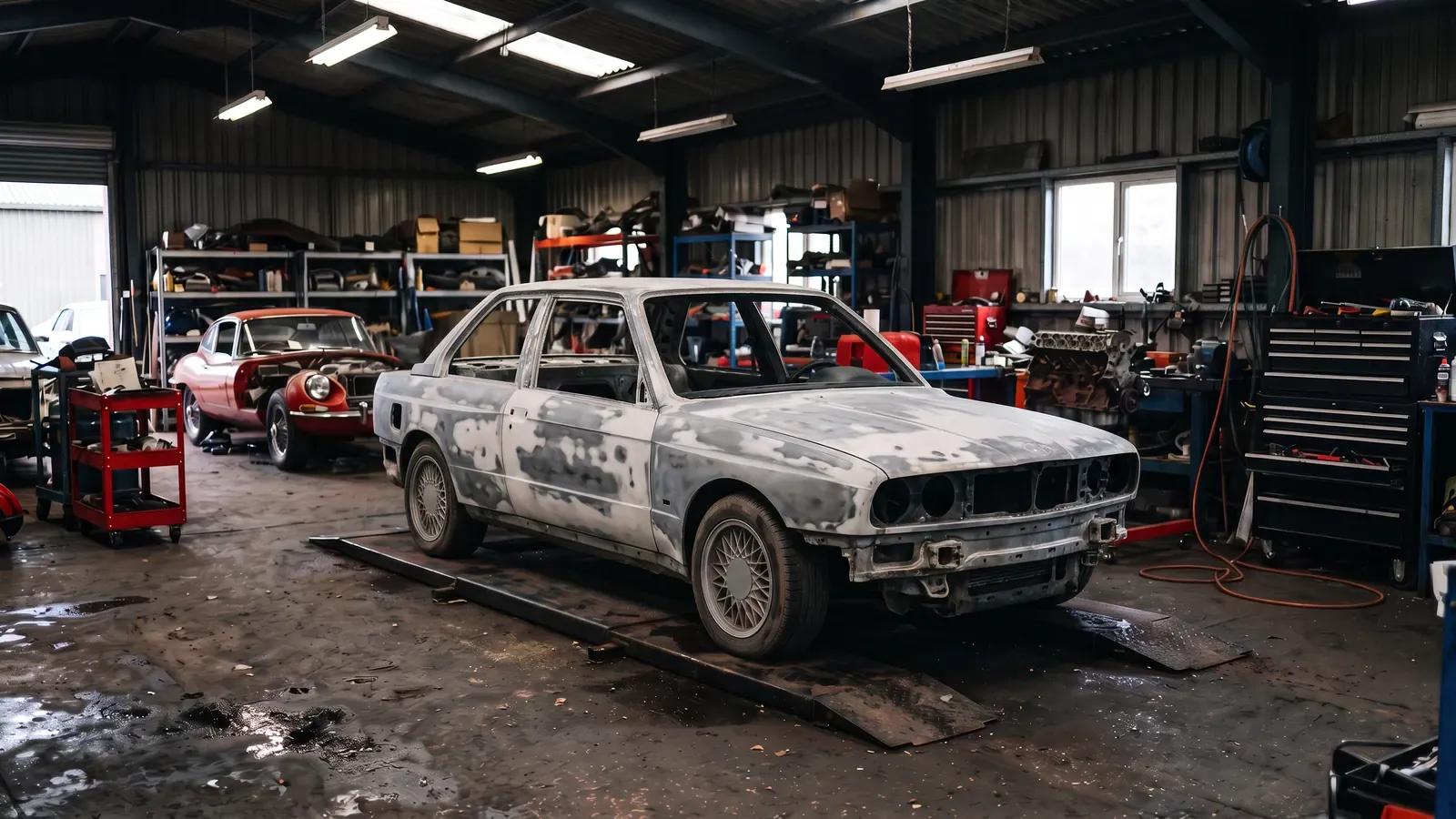
The bodywork: dents knocked back, filler skimmed thin and blocked flat by hand, and the doors, bonnet, boot and wings lined up so the gaps are even. All of it is done before any paint goes on, because paint shows every ripple under it.
What happens in the paint stages?
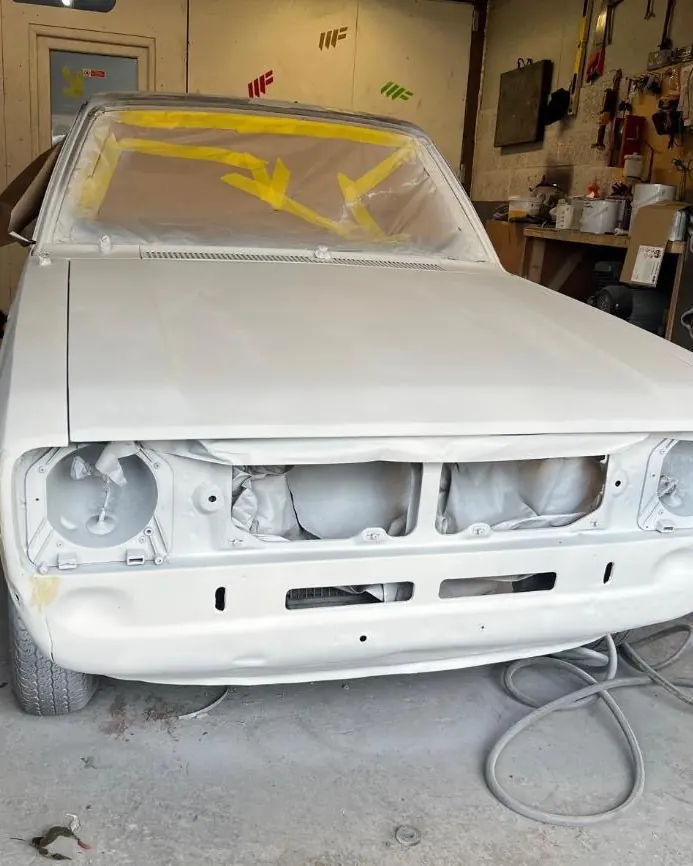
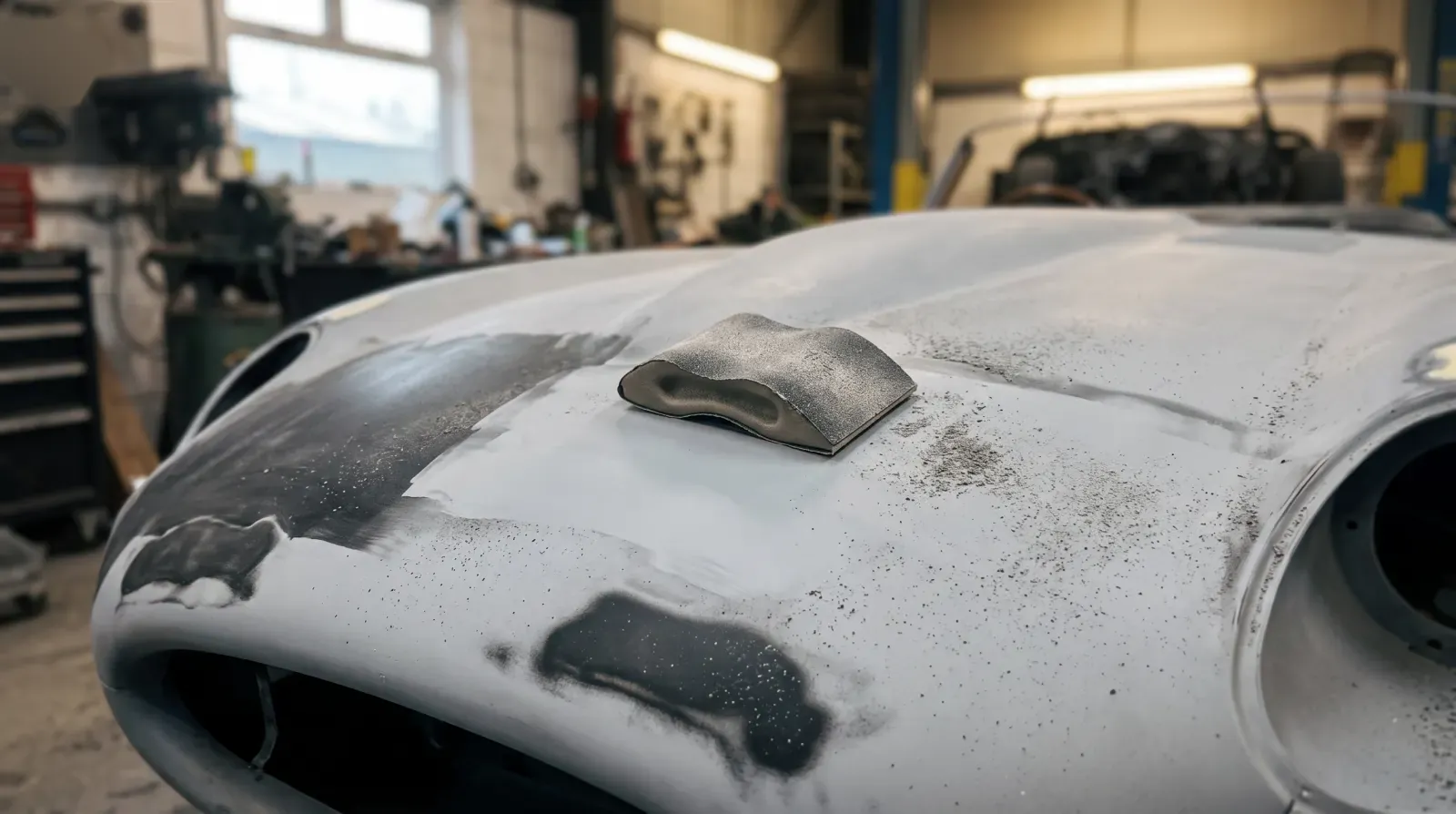
Primer, then guide coat: a light dusting over the primer that stays in the low spots. Blocking it back shows every high and low, and it carries on until the guide coat comes off evenly.
Then colour and lacquer, then flatting and polishing. Each coat needs its time before the next step, and how long depends on the paint system and the booth.
How is a restoration planned?
In stages, in the order the car needs them:
- Strip-down
- Welding and rust repair
- Bodywork: dents, filler and panel gaps
- Paint: primer, colour and lacquer, flatted and polished
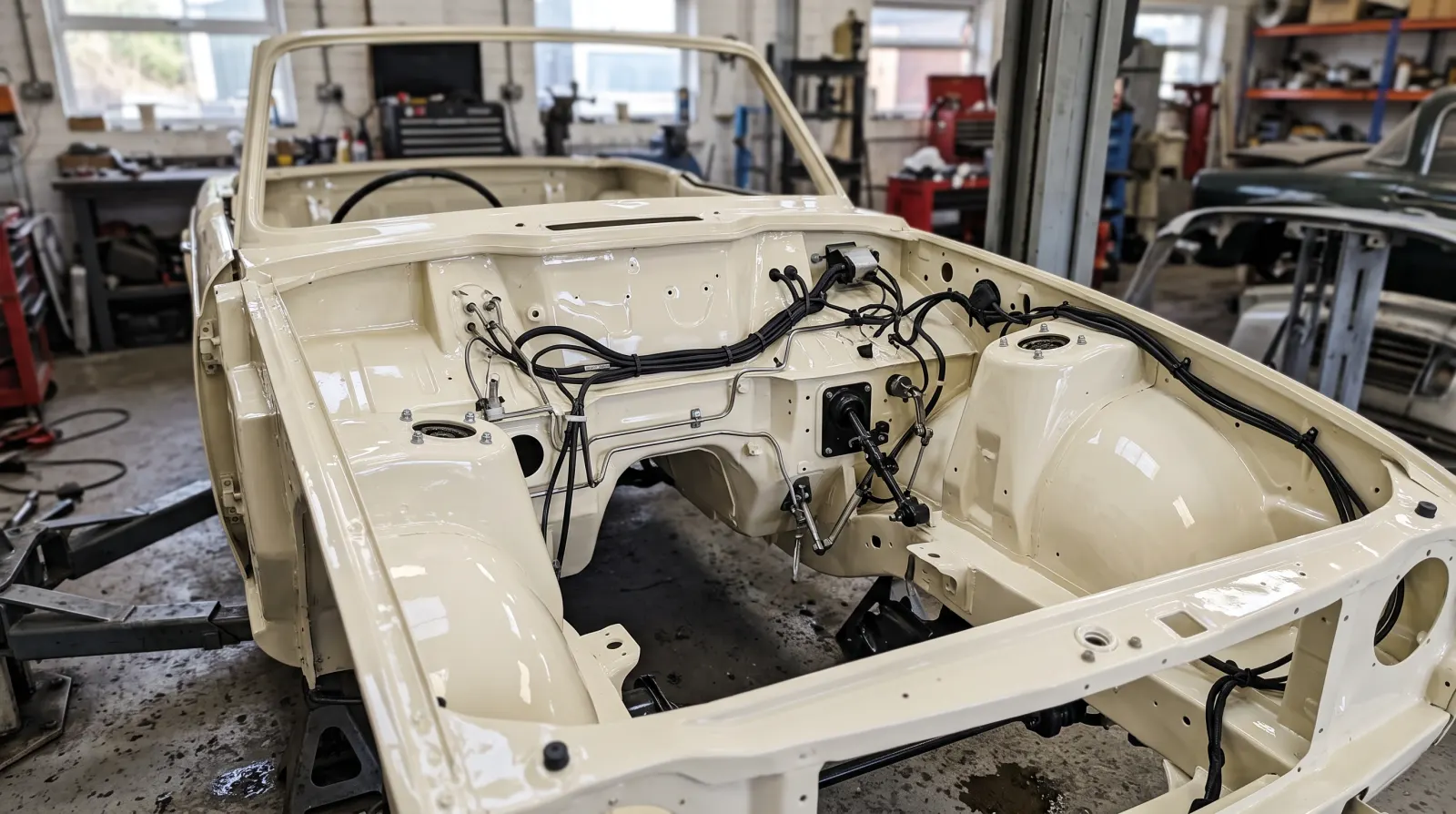
- Everything that came off goes back on
We photograph each stage, so you can see what was under the paint and what we did.
Can a restoration be paid for in stages?
Yes. Bigger jobs are priced and paid in stages, so the project keeps moving. You send photos and we come back with a rough price, then we confirm it once the car is here and stripped and show you what we've found.
Can the owner make it quicker?
Yes, by deciding early. The colour, the finish, what to keep original and what to change, and any engine or interior work all shape the plan. A decision made before the car comes in never holds a stage up.
What moves the cost?
The same things that move the time: how much rust the strip-down finds, what's been done to the car before, the parts, and the finish you want. See prices for how we quote.
Got a project in mind? Send us photos of the car, the sills, arches and floor if you can, and what you're after from the quote form.