Rinse it off, and soon. Salt speeds up rust, and on a classic it collects where you can't see it: under the floor, up in the wheel arches and along the sills. If your classic is out on salted roads this winter, rinse the underneath after every run, keep the drain holes clear, and get cavity wax into the box sections before the cold sets in.
Here's why it matters and what to do.
Why does road salt make a car rust faster?
Because it speeds up the reaction that makes rust. The Royal Society of Chemistry's classroom experiment on rusting shows that iron needs both water and air to rust, and that salt can increase the rate of rusting. A wet winter road gives your car all three.
On an old car, chips, cracked underseal and tired seams let that salty water reach bare steel.
When is salt on the roads?
Often before you'd think. National Highways says it works to get salt spread before the road surface drops below freezing, and treats the roads before any expected snowfall. It mostly uses rock salt, usually wetted with brine as it leaves the gritter.
So a road can carry salt on a cold, dry evening with no frost in sight. If the gritters have been out, assume your car has picked some up.

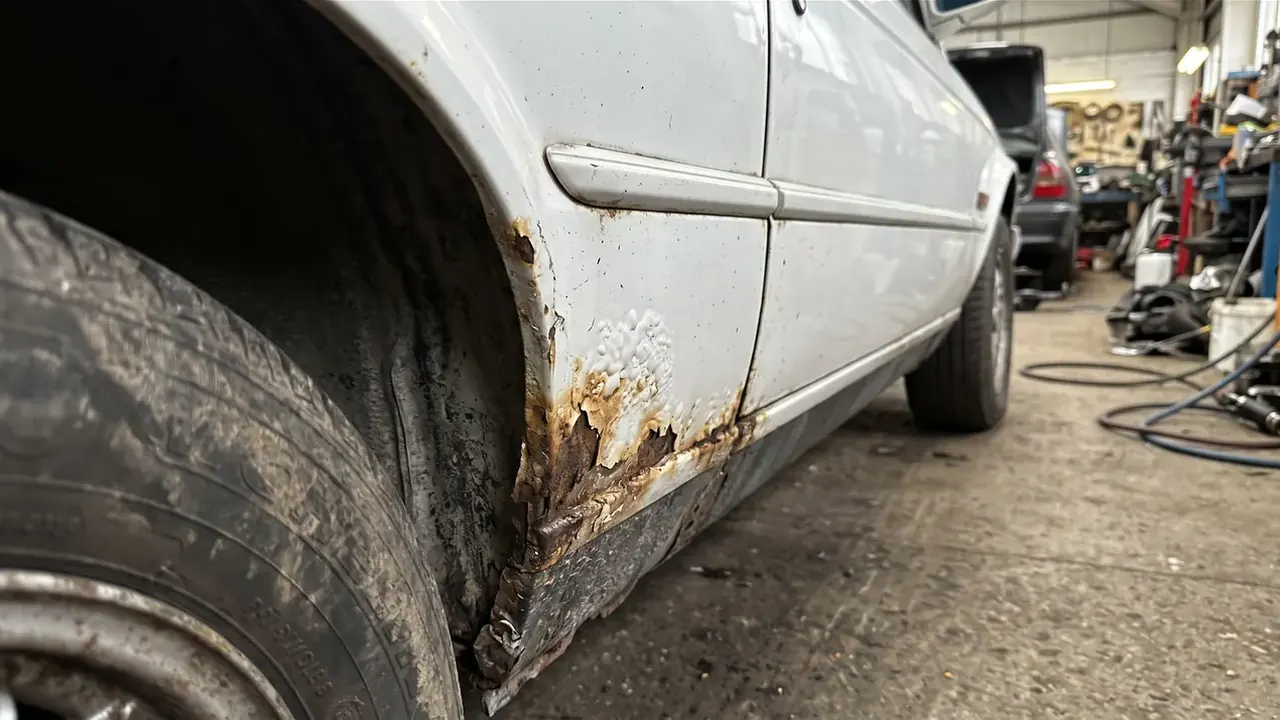
Where does the salt end up on a classic?
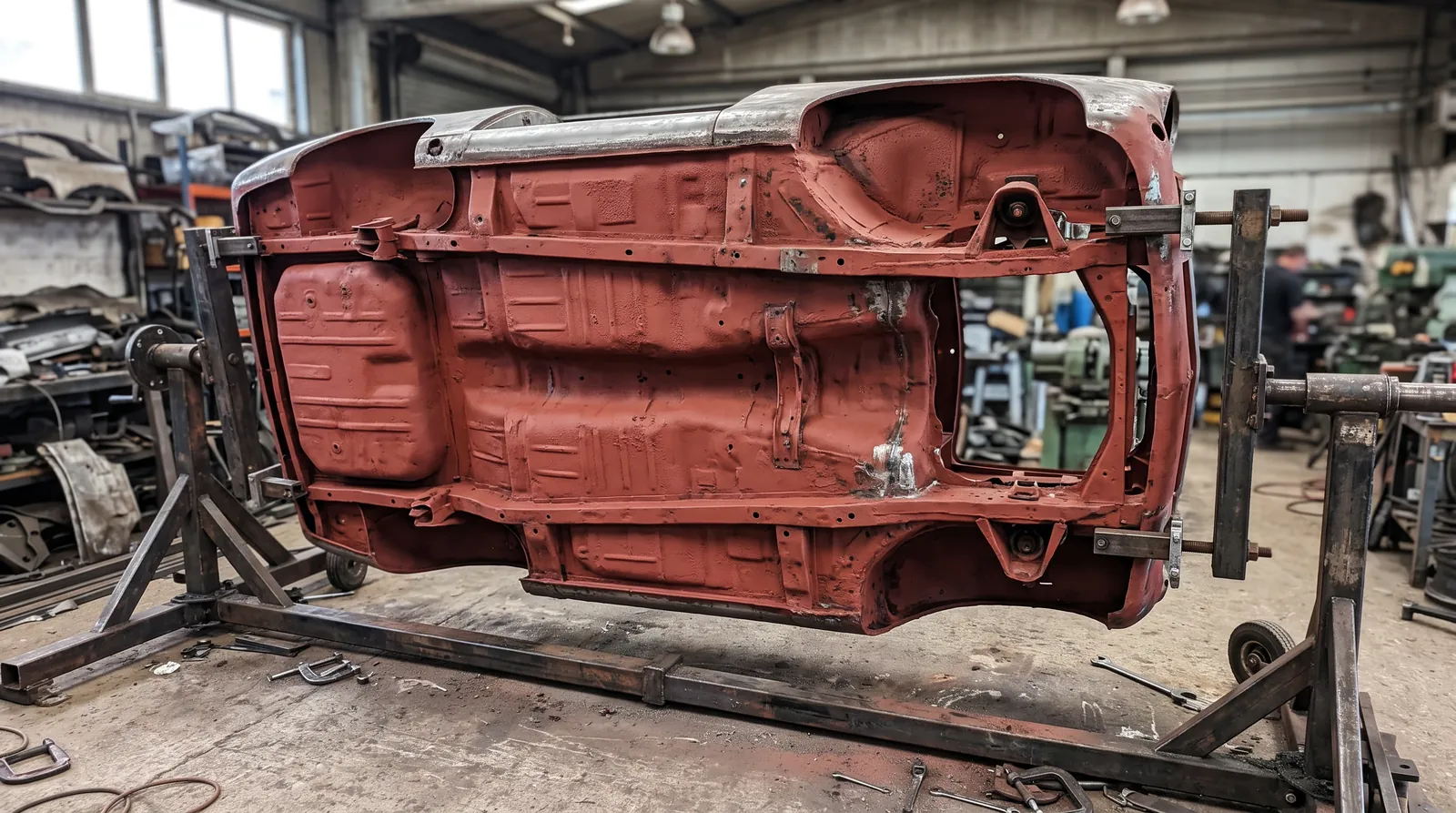
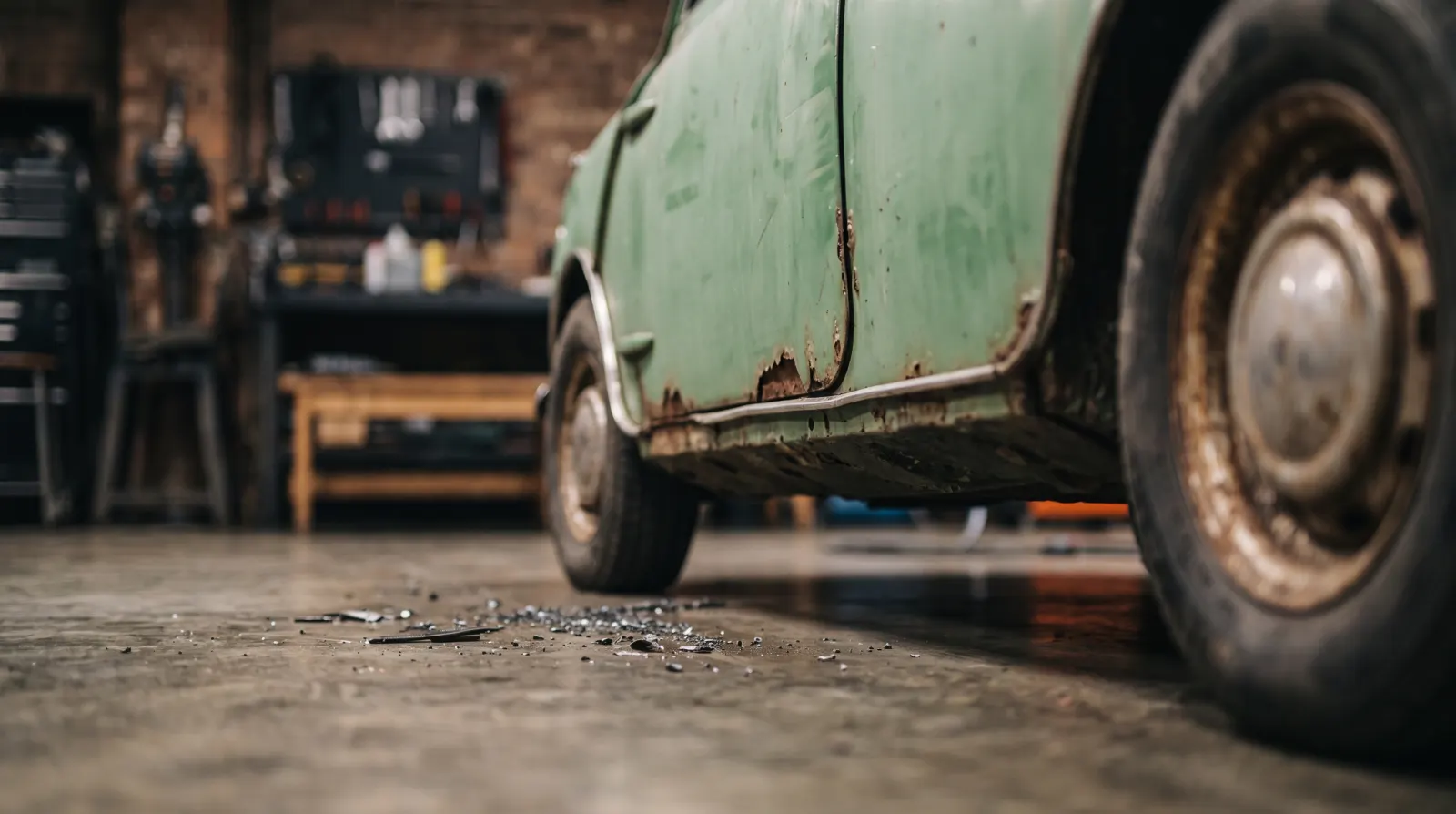
Wherever the tyres throw it and the water can't drain. That means the underside, the inner wheel arches, the sills, the bottoms of the doors and the backs of the bumpers and valances. Mud packed into the lip of an arch holds salty water against the metal long after the road has dried.
Those are the places classics rust anyway. Salt gets them there sooner.
How do I rinse the salt off?
With plenty of clean water, from underneath first. After a run on salted roads, hose the underside, the inner arches and the sills, then the lower panels and the bottoms of the doors. Knock out any mud packed in the arch lips, because that's where the salt sits.
A garden hose does the job. If you use a pressure washer, keep it well back and don't aim it at chips, seams or the edges of old underseal, where it can drive water in or lift what's there.
Then let the car dry before it's shut away. A car put away wet keeps the salty water in its seams.
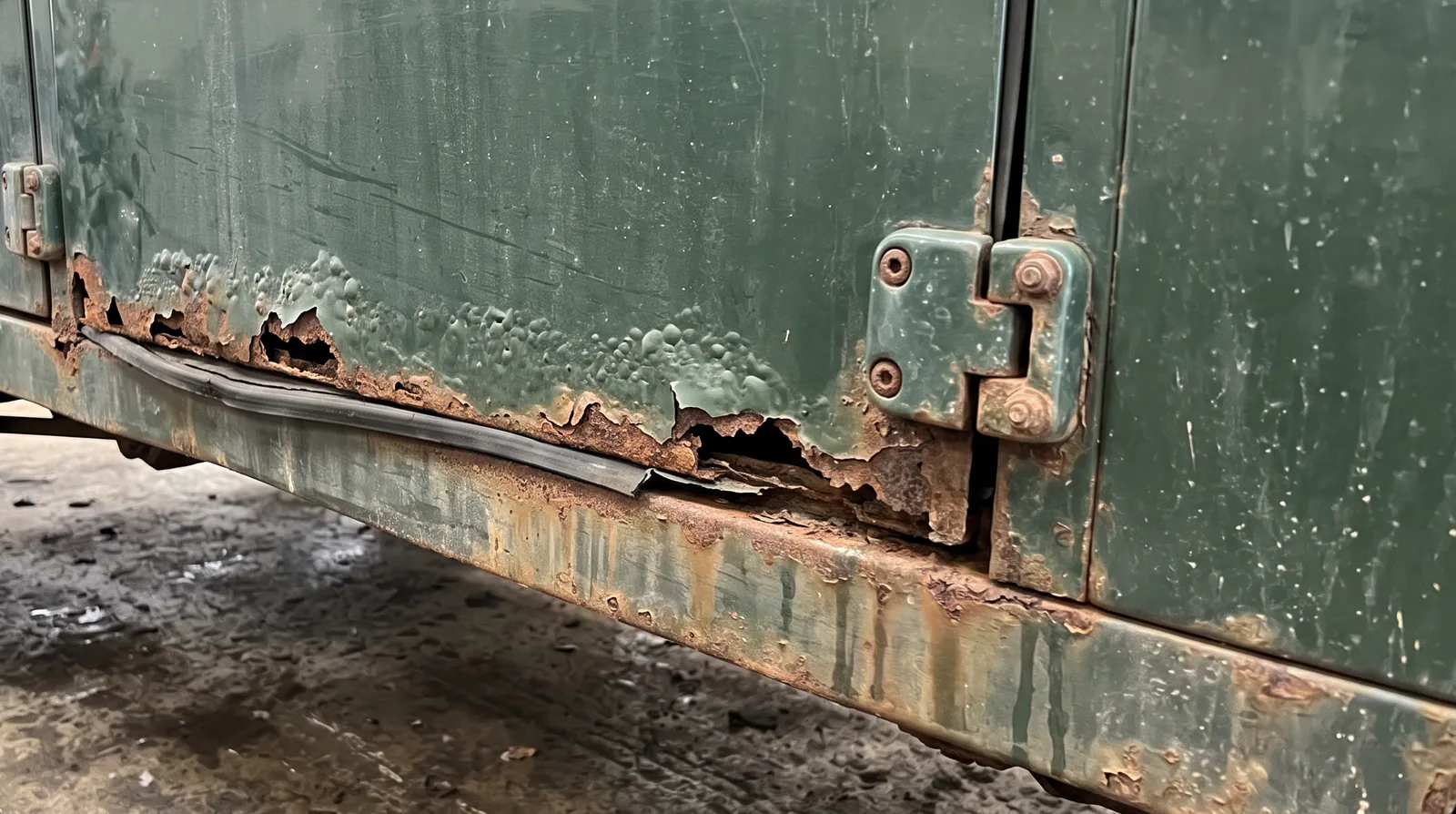
Why do the drain holes matter?
Because water that gets into the doors and sills is meant to run out through them. When they block with mud and leaves, salty water sits along the bottom seam and rots it from the inside.
Check the bottom edge of every door and along the sills, and clear the holes with something soft that won't scratch the metal round them. If water runs out when you do, they were blocked.
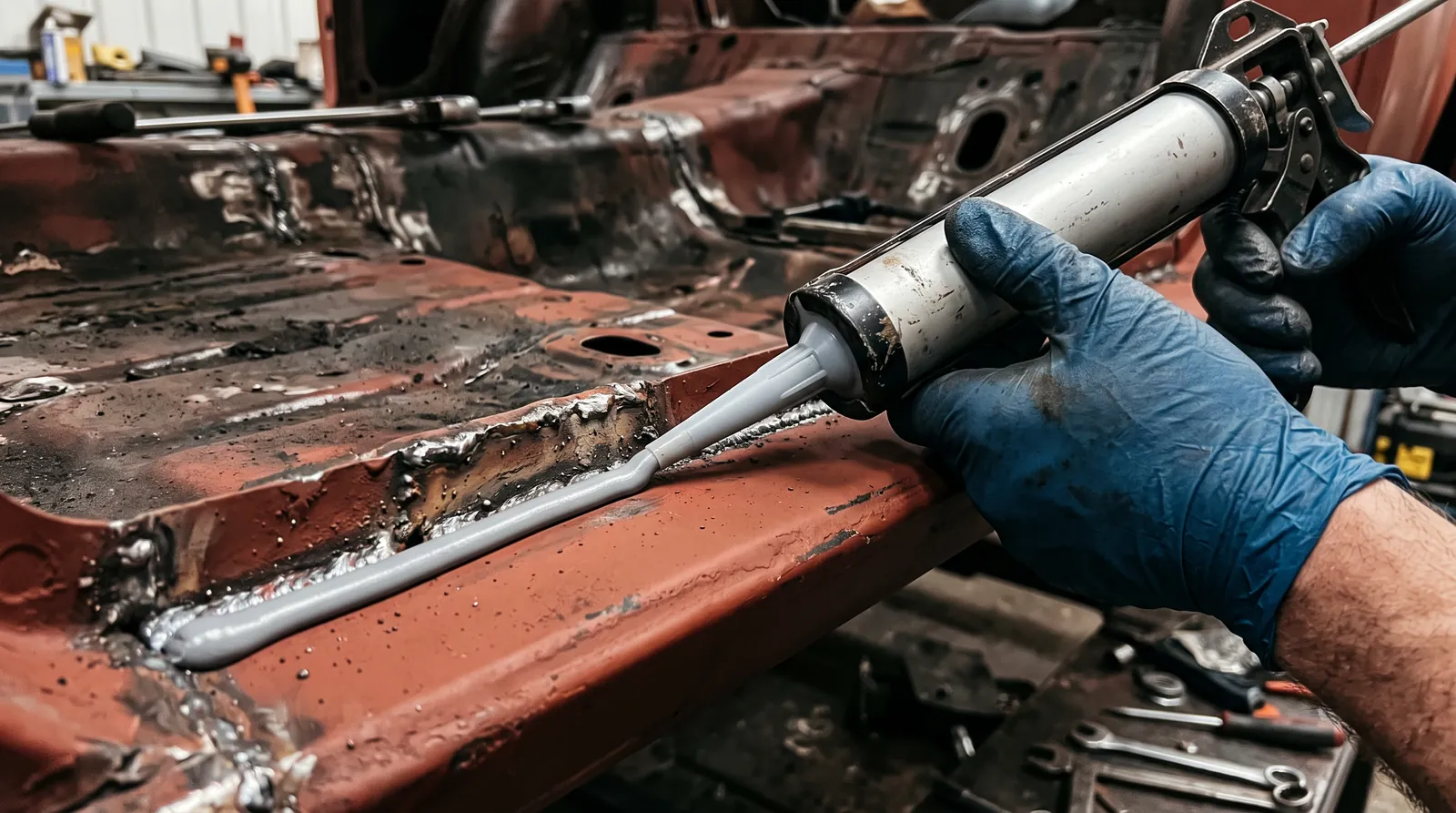
What should be done before winter starts?
Get it on a lift and looked over while it's dry. Anything already rusting is put right first, because wax or underseal over rust only hides it, and the rust carries on underneath. New metal and joints are seam sealed, which means a flexible paste run along the joins to keep water out.
Then cavity wax goes inside the sills, box sections, chassis rails and door bottoms. It's a thin wax sprayed into the hollow parts of the body, where rust starts from the inside. It creeps into the seams, pushes moisture out and stays soft, so it doesn't crack.
It goes in through the drain holes and access holes, and the drain holes are left clear afterwards. On a car that has just been painted, it goes in once the paint is finished and cured.
Is underseal a good idea on a classic?
Hard underseal can do more harm than good. As the old bitumen kind ages it goes brittle and cracks, and water gets trapped behind it against the metal. A wax-based underbody coating stays soft and can be checked and topped up.
If your car already has old underseal, look for cracks and lifting edges, especially along the sills and round the arches. Rust can be growing under it out of sight.
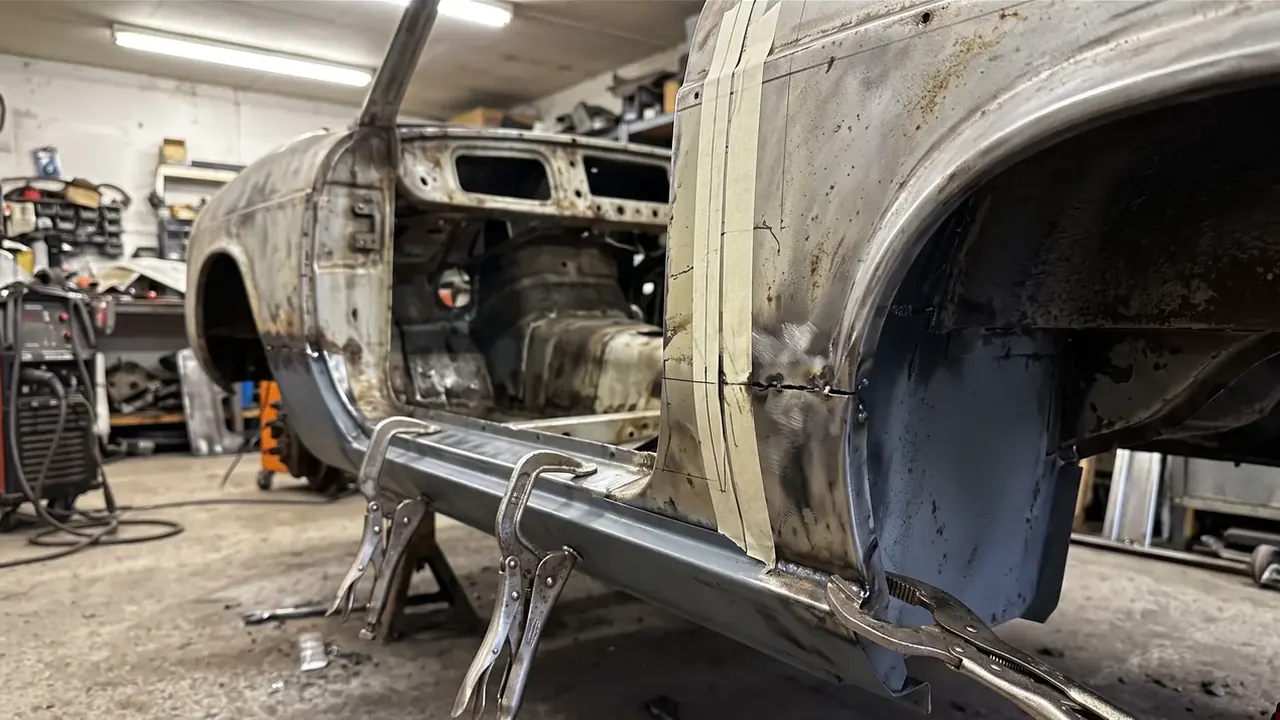
What if I find rust when the winter's over?
Get it looked at before the next one. Bubbling paint means rust has already started on the metal under it, and it carries on under fresh paint.
Light rust on sound metal is ground back to clean steel and primed. Where it has eaten through, the rot is cut out and new metal welded in, or a new panel goes on where it has spread. See welding and rust repair, and restoration if it turns into a bigger job.
Found rust after a winter's driving? Send us a few photos from the quote form.