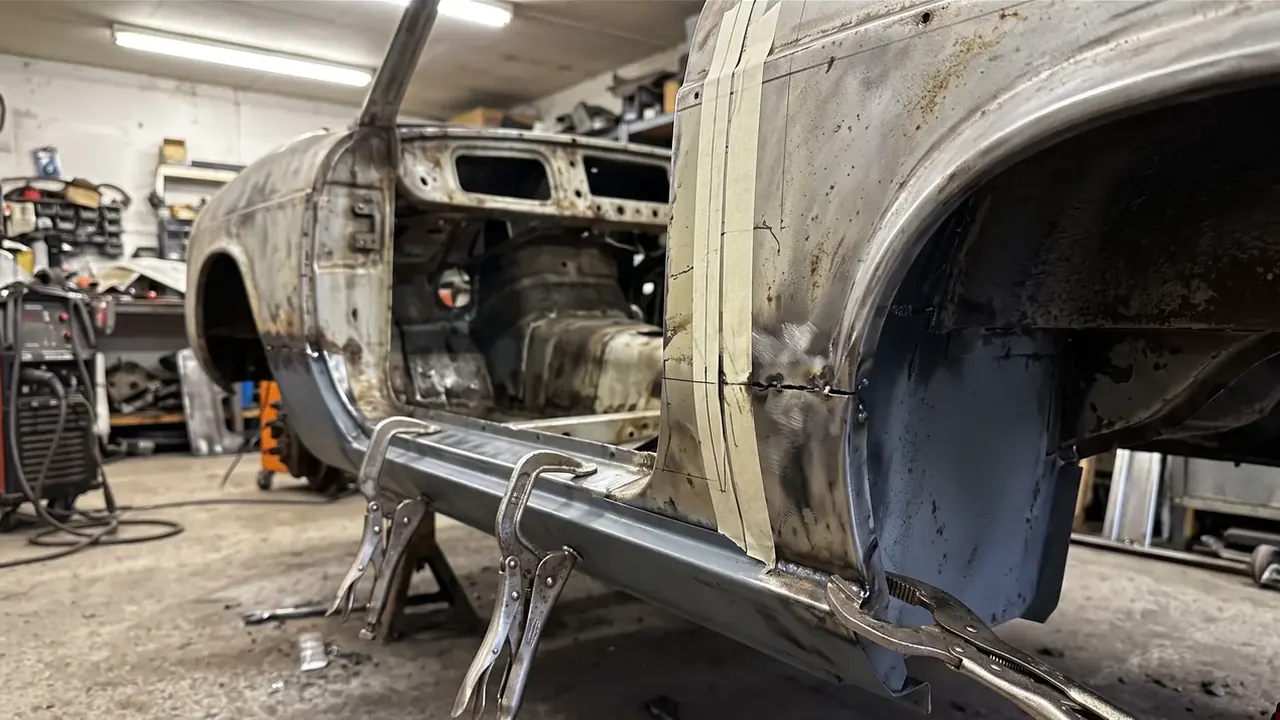
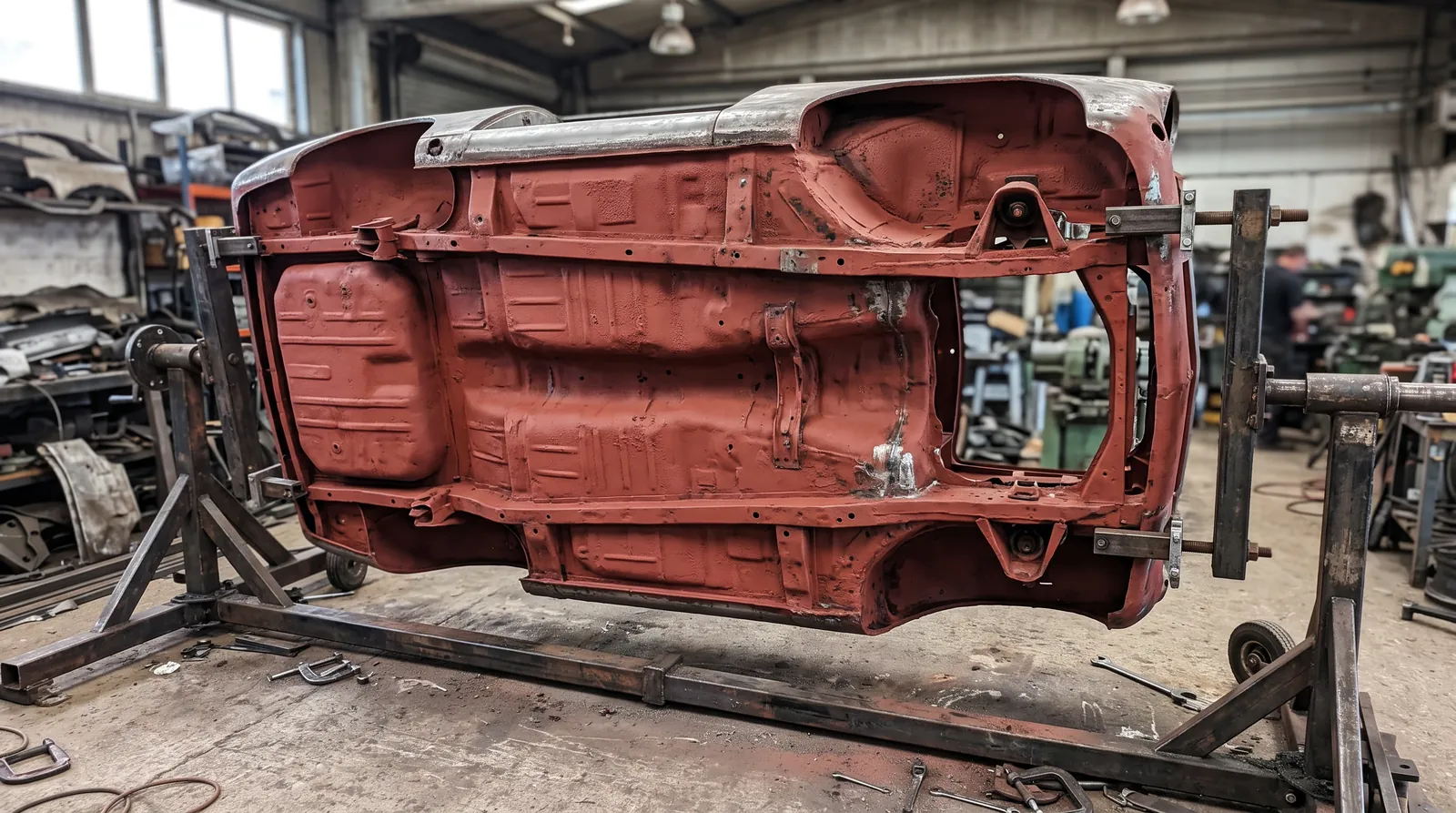
A rotisserie restoration is one where the stripped shell is bolted to a frame at each end and turned on its axis, so the floor, inner arches and chassis rails can be reached standing up. It's how a car that has rotted underneath as well as on top is put right.
If the rust is in the outer panels and the underside is sound, a lift does the job, and a rotisserie adds hours that buy nothing you'll see. The strip-down shows which a car needs.
What is a rotisserie?
A steel frame with a mount at each end of the shell and a pivot running through both. Some call it a spit. The shell is bolted to strong points at the front and back, often where the bumpers mount, then turned to any angle and locked there.
On its side, the floor stands upright in front of you. Upside down, the whole underside faces up at a height you can work at.
What does a rotisserie do that a lift can't?
It puts the work in front of you instead of over your head. A lift raises the whole car, but everything underneath is still done looking up, with the dust and sparks coming down.
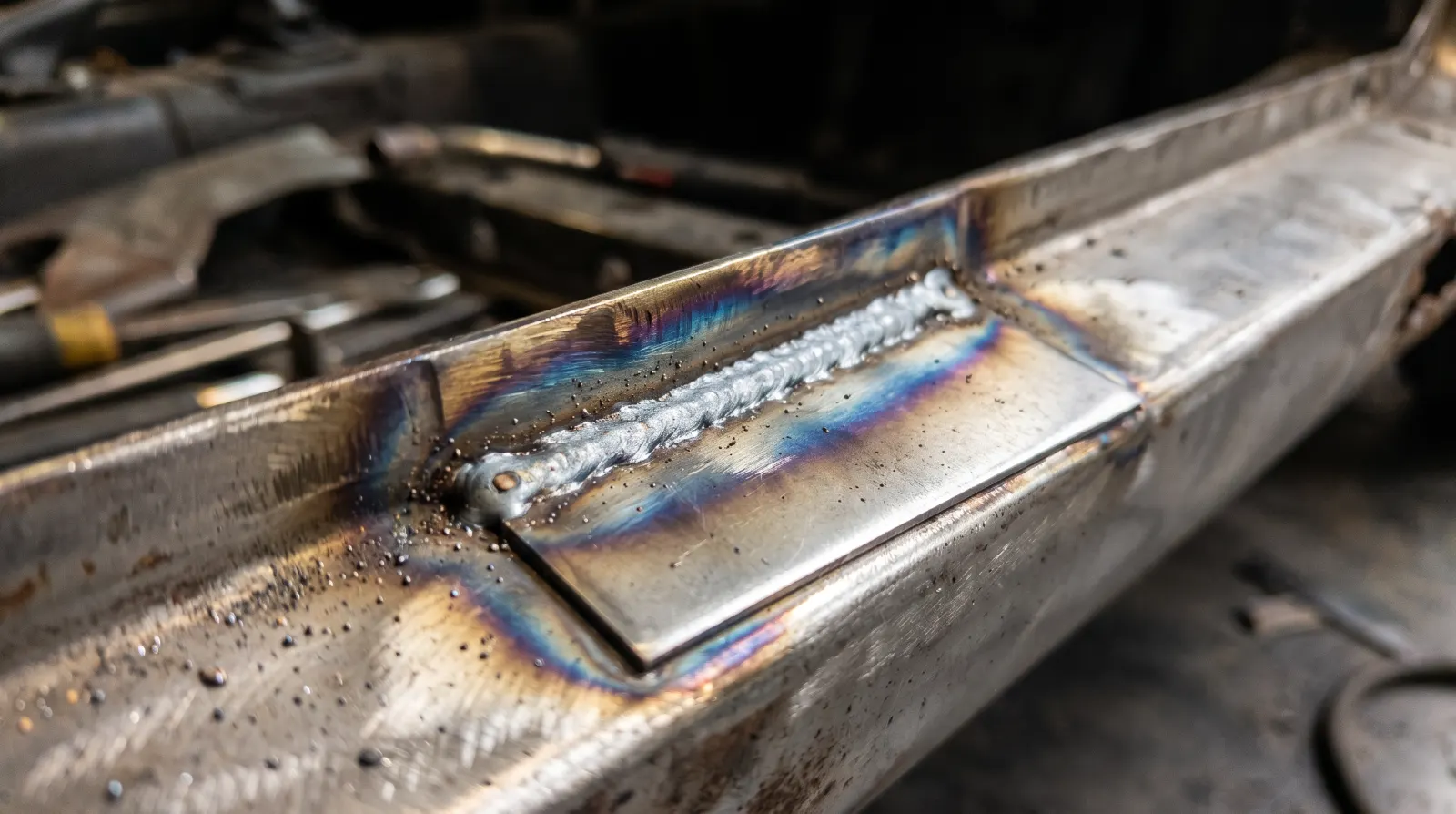
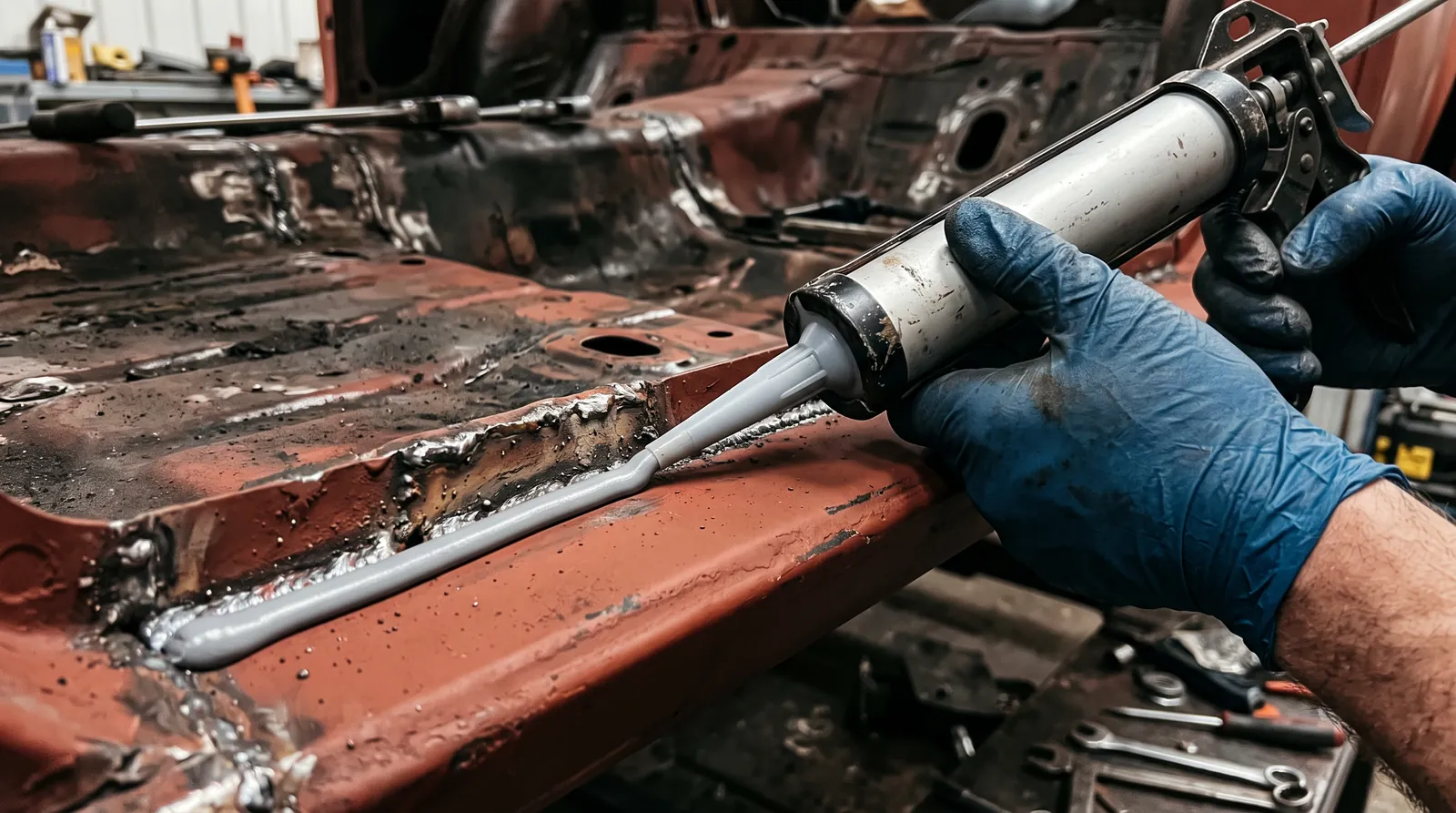
A weld is easier to do well on a panel you're looking down on than on one above you. Seam sealer and paint go on more evenly too. On a lift, the inner arches, the tops of the chassis rails and the seams round the floor are hard to reach and harder to see.
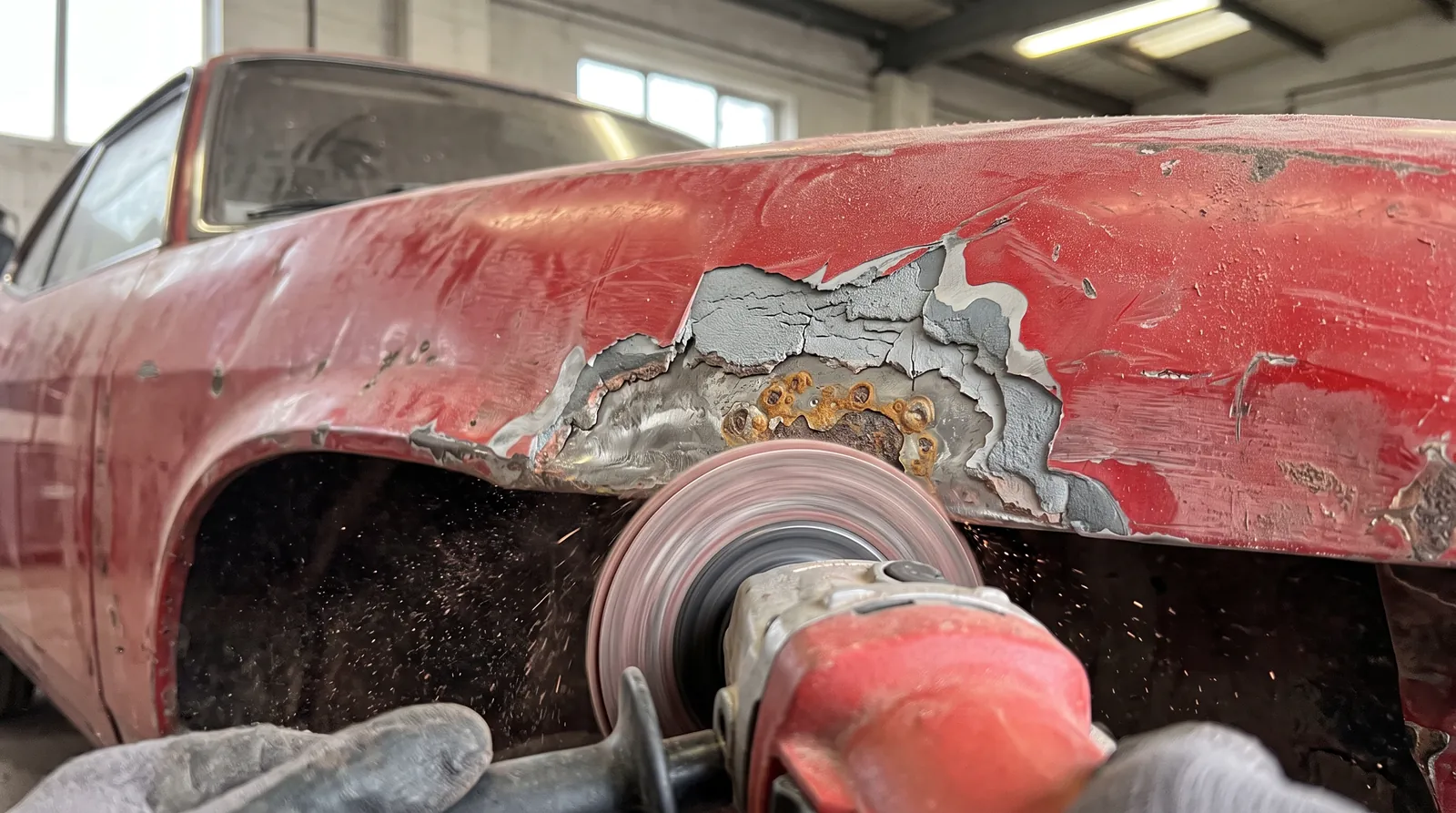
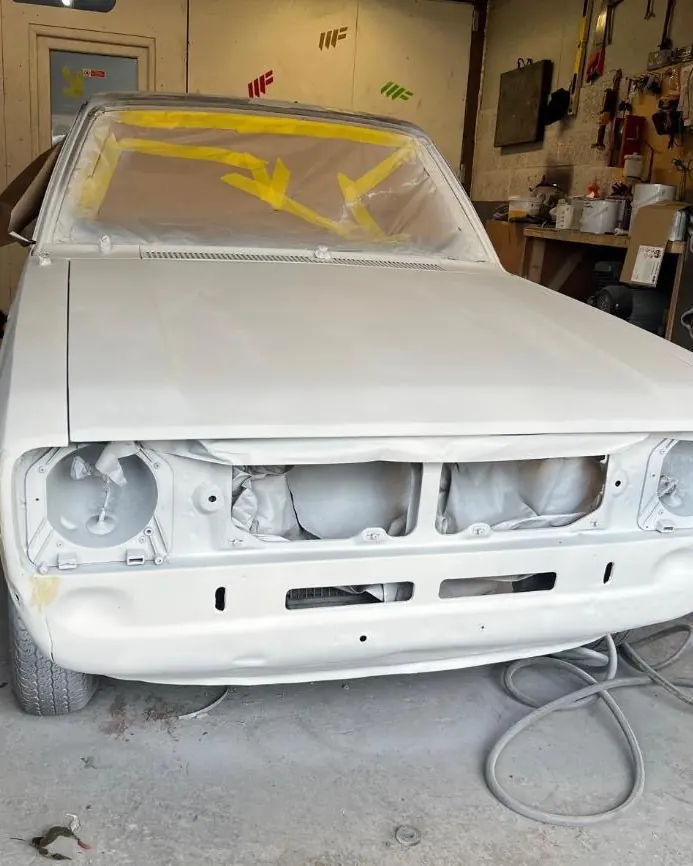
When does a car need a rotisserie restoration?
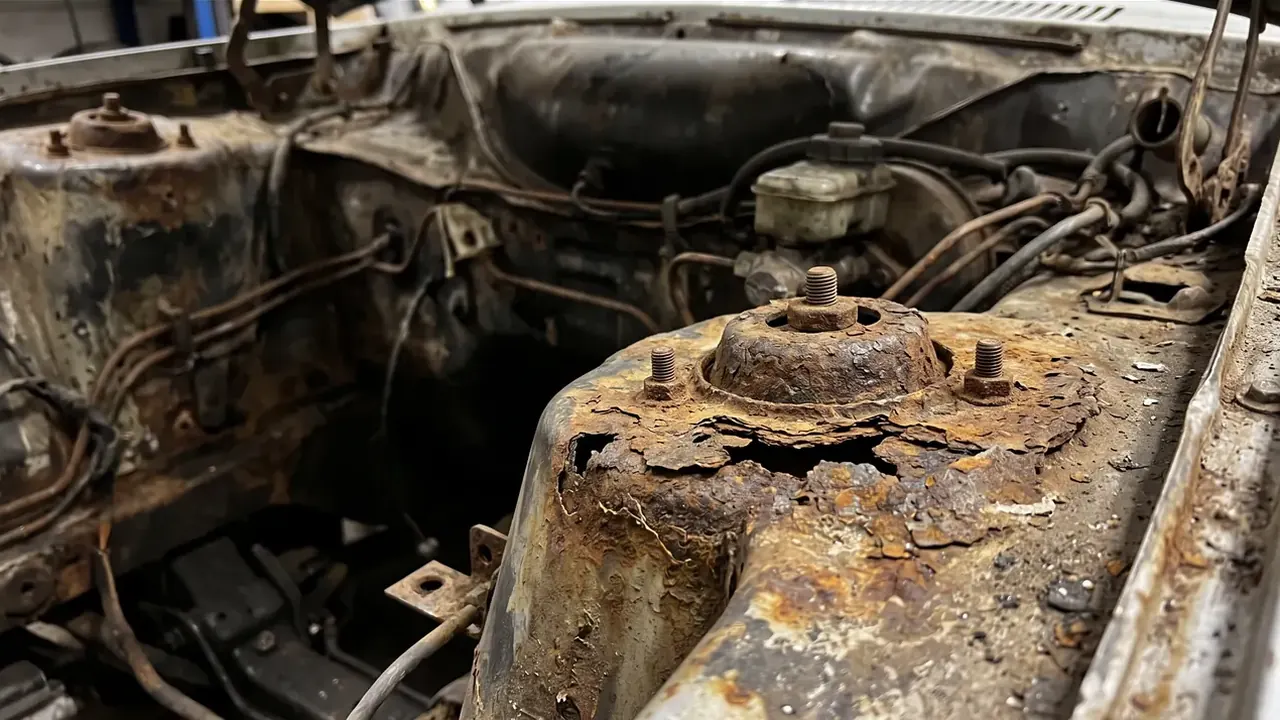
When the rot is underneath as well as on top. The usual signs:
- Floor pans rotted through, or patched over before
- Inner sills, crossmembers or chassis rails gone thin or holed
- Rust in the inner arches and round the suspension mounts
- Old underseal lifting, with rust coming through behind it
It also suits a car going back to bare metal all over, where the underside is stripped, repaired and painted along with the rest. See welding and rust repair for how the metal is put right.
When is a lift enough?
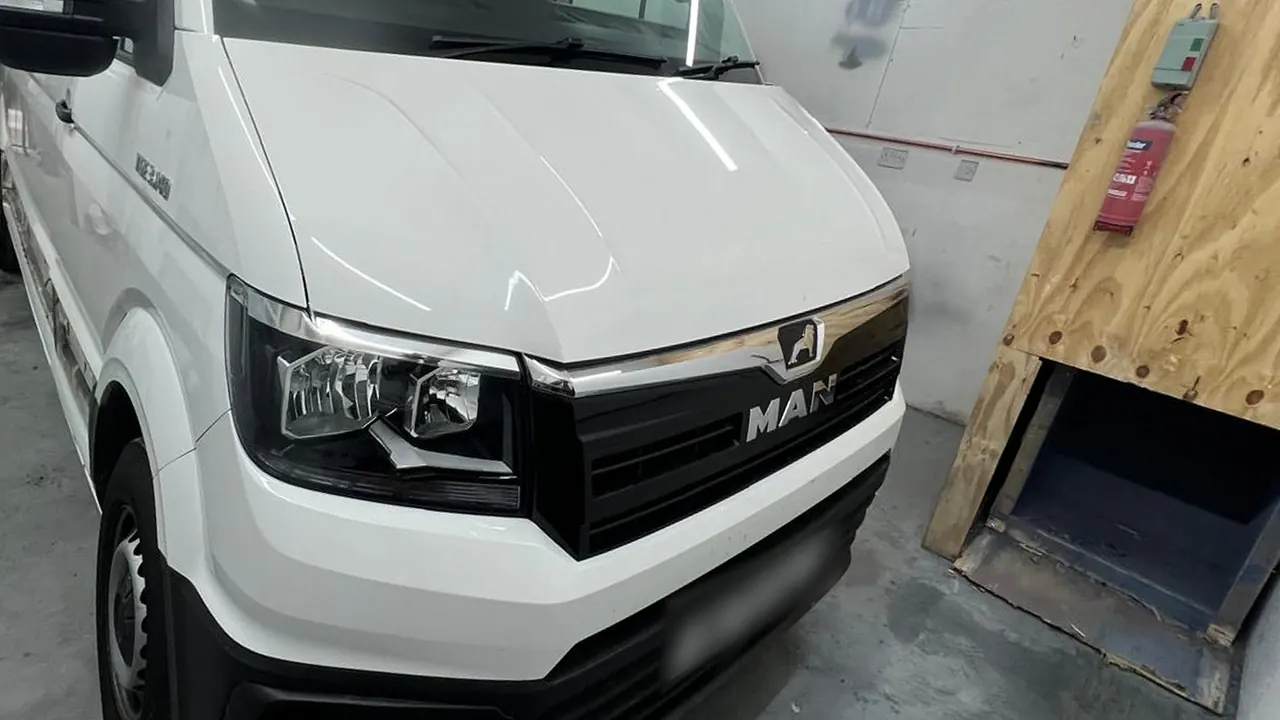
When the underside is sound and the work is round the outside. Outer sills, wheel arch lips, door bottoms and a wing can all be done with the car on a lift or on stands. So can a respray of a car whose floor and rails are solid.
What has to come off before it goes on?
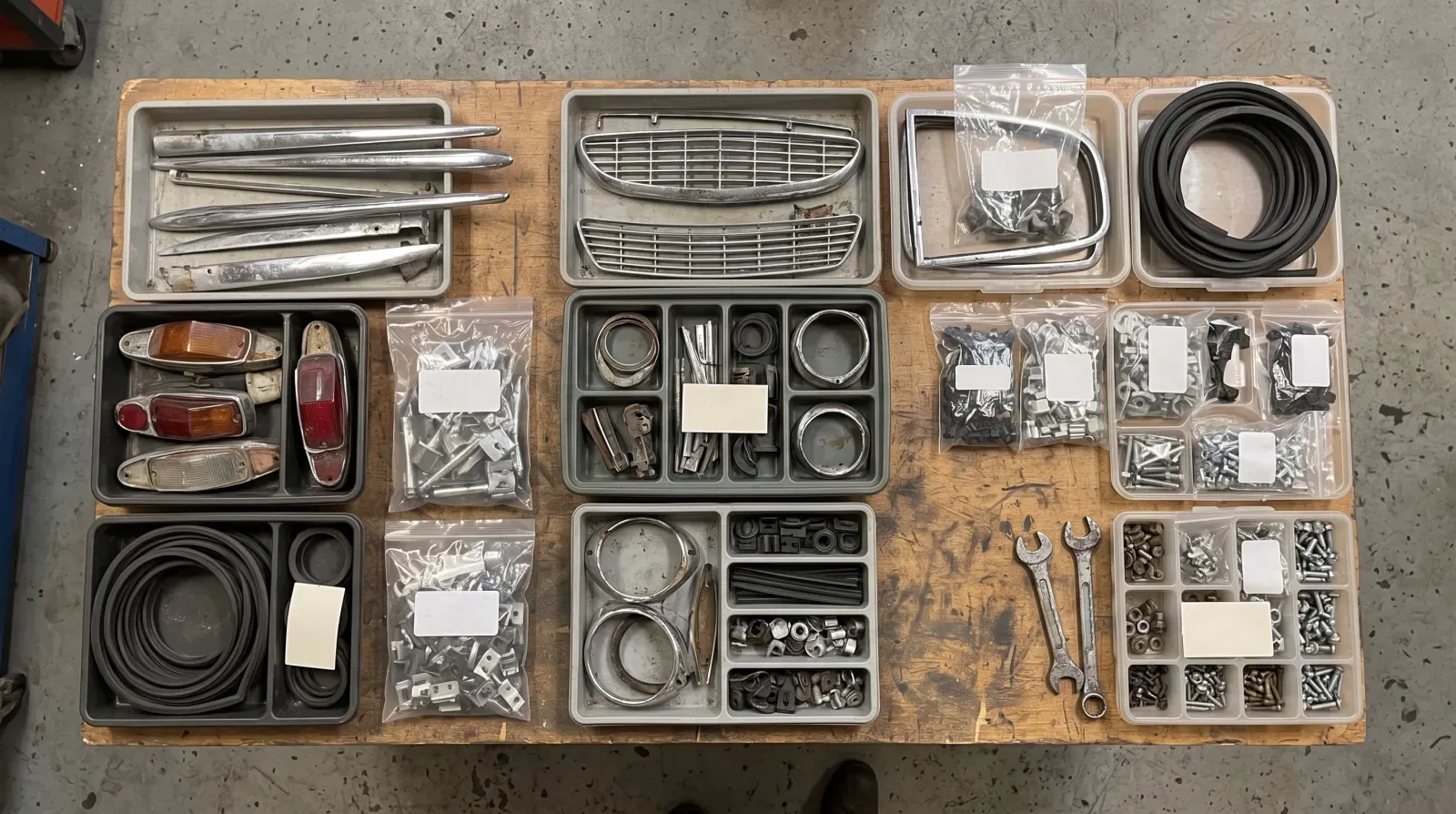
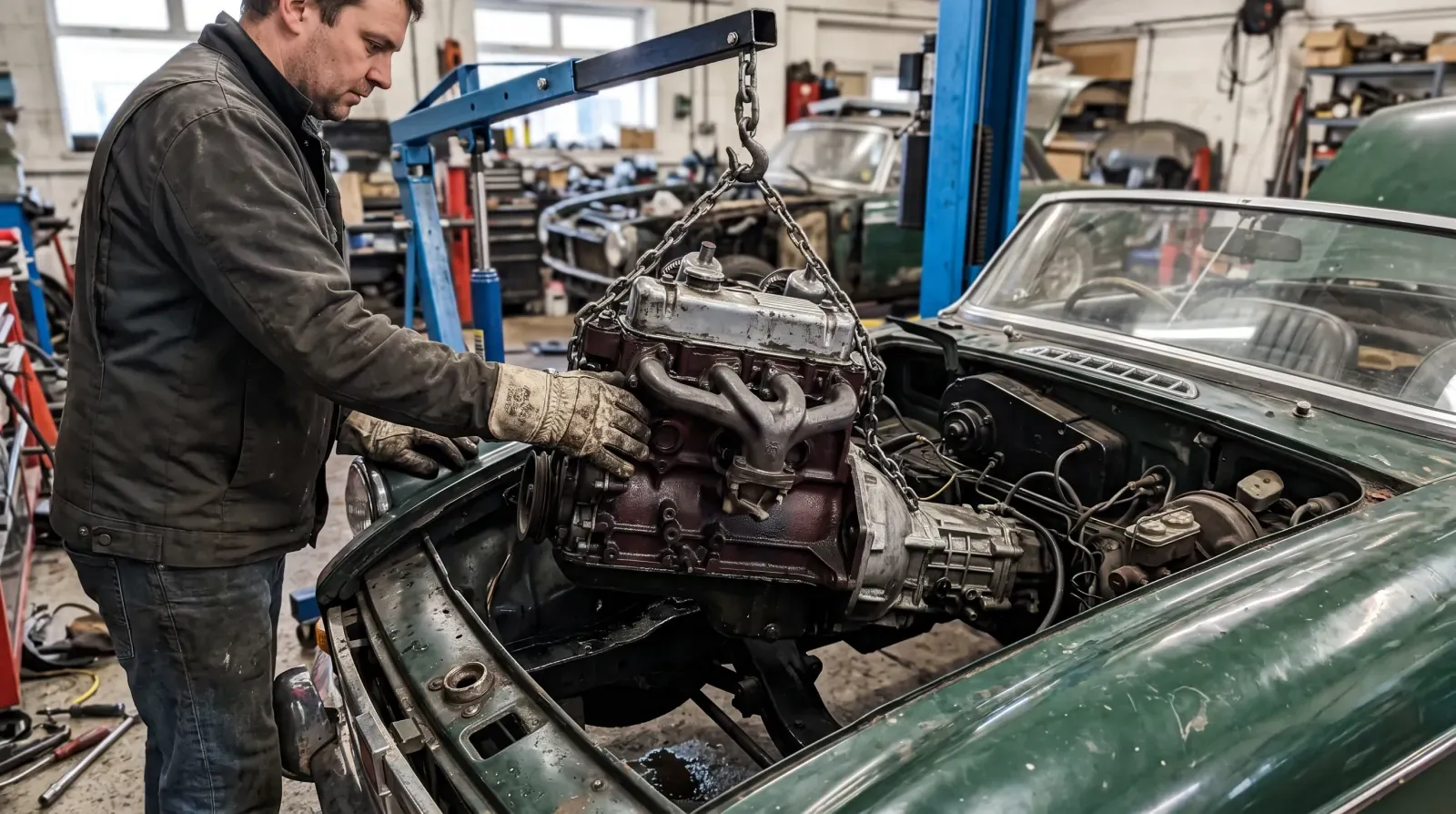
Everything that isn't body. The engine and gearbox, suspension, axles, fuel tank, brake and fuel lines, wiring, glass, trim and interior all come out, so what goes on the frame is a bare shell. Every part is photographed, bagged and labelled as it comes off, so it goes back where it came from. See restoration.
Before it's lifted, the shell is braced, with steel bar across the door openings so it holds its shape. A shell held only at its ends, with its floor or sills about to be cut out, can sag or twist without it.
Does every car go on a rotisserie?
No. A rotisserie is for a car whose body is also its chassis, called a monocoque. On a car built on a separate chassis, such as a Land Rover, the body comes off the chassis instead, and the two are repaired apart.
What happens to the underside once it's on?
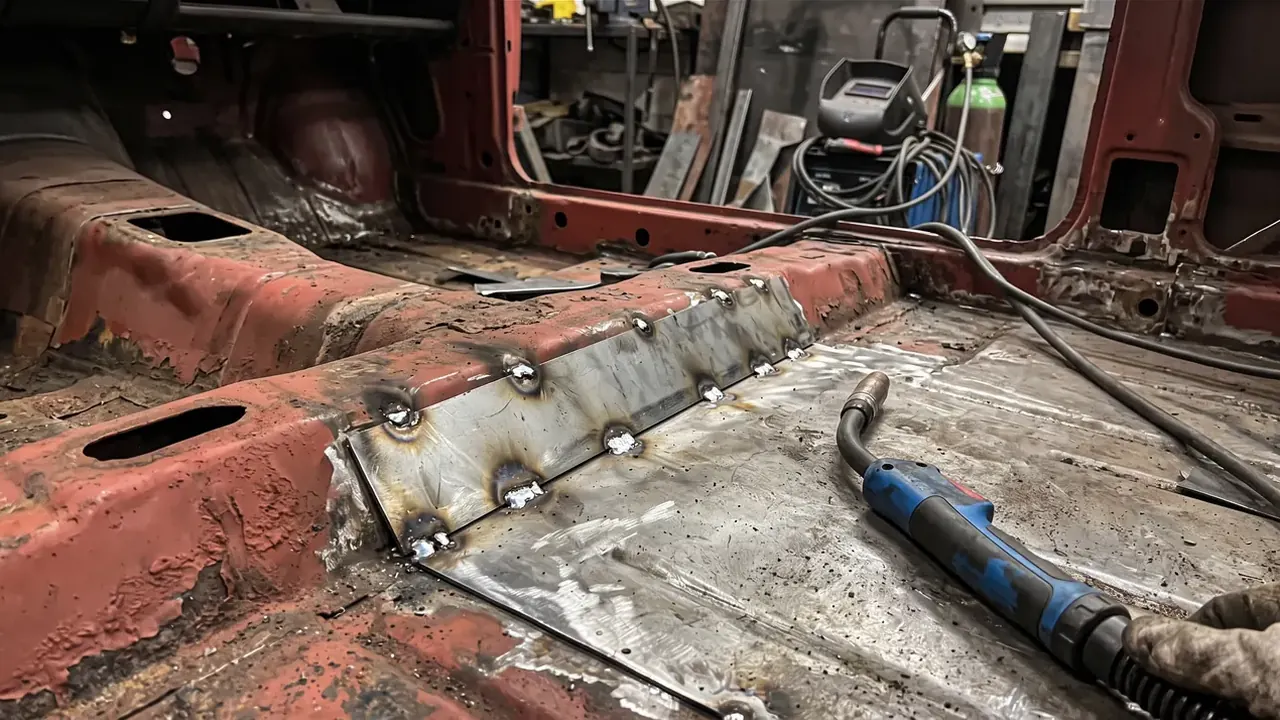
It's taken back to clean metal and every bit of rot is cut out. Old underseal, paint and surface rust come off, and then nothing is hidden. Rotten floor sections, inner sills and rails are cut out and new metal let in, with the shell turned to suit each weld.
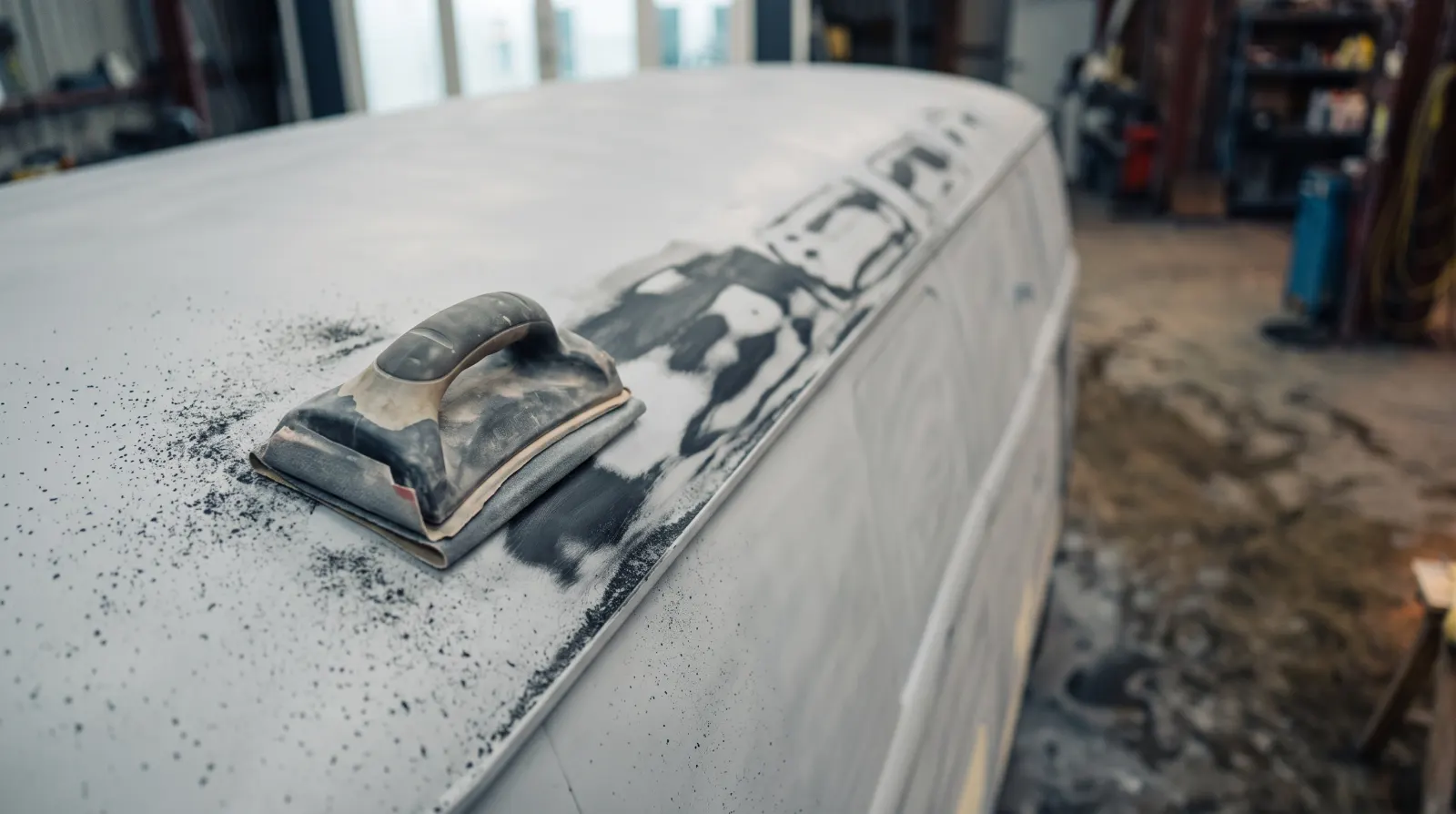
Then the bare metal is primed and the seams get seam sealer, a flexible sealer that keeps water out of the joins, before the underside is painted. Once the paint is finished, the box sections get cavity wax, a thin wax sprayed inside hollow sections to keep moisture off the metal.
What colour does the underside go?
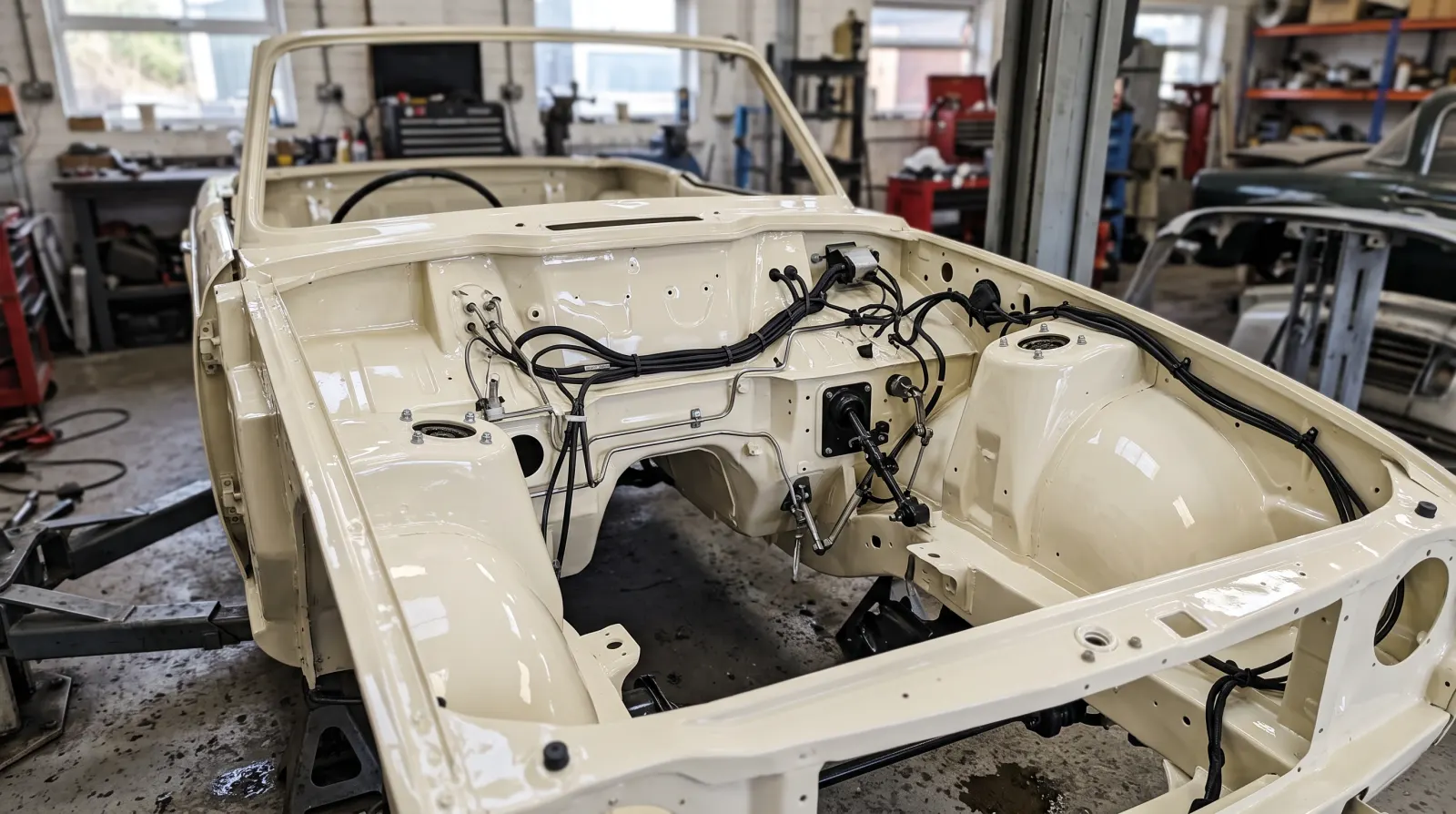
That's your choice. The underside can be painted in the body colour, covered in an underbody coating, or a mix of the two. With the shell bare, the engine bay, the inside and the door shuts can all be painted at the same time.
Is a rotisserie restoration worth it?
On a car that's rotten underneath, yes. It's how every bit of the rot is found and put right in one go, rather than chased later. On a car with a sound floor, no.
How do I know if my car needs one?
The strip-down tells you. From outside, the clues are under the car: patches over patches on the floor, rails or crossmembers with flaking edges, and rust round the jacking points. Once the car is stripped, we show you what we find and which we'd do before any work starts.
What moves the cost?
How much rot the underside holds, how much has been patched before, whether the car arrives stripped or whole, and the finish you want underneath. Bigger jobs are priced and paid in stages. See prices for how we quote.
Got a project with rot underneath? Send us photos of the floor, the sills and the underside if you can get under it, and what you're after, from the quote form.