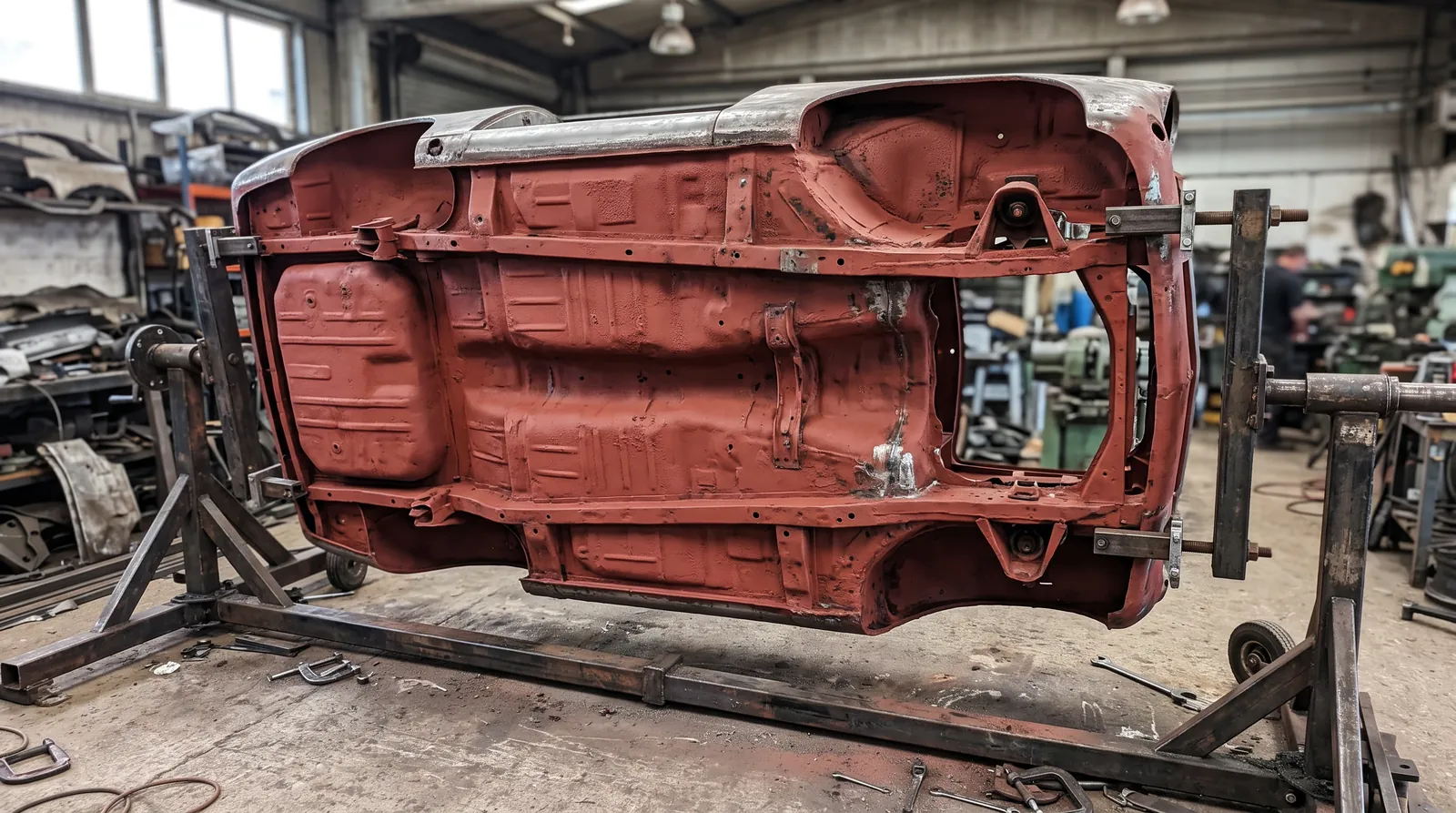
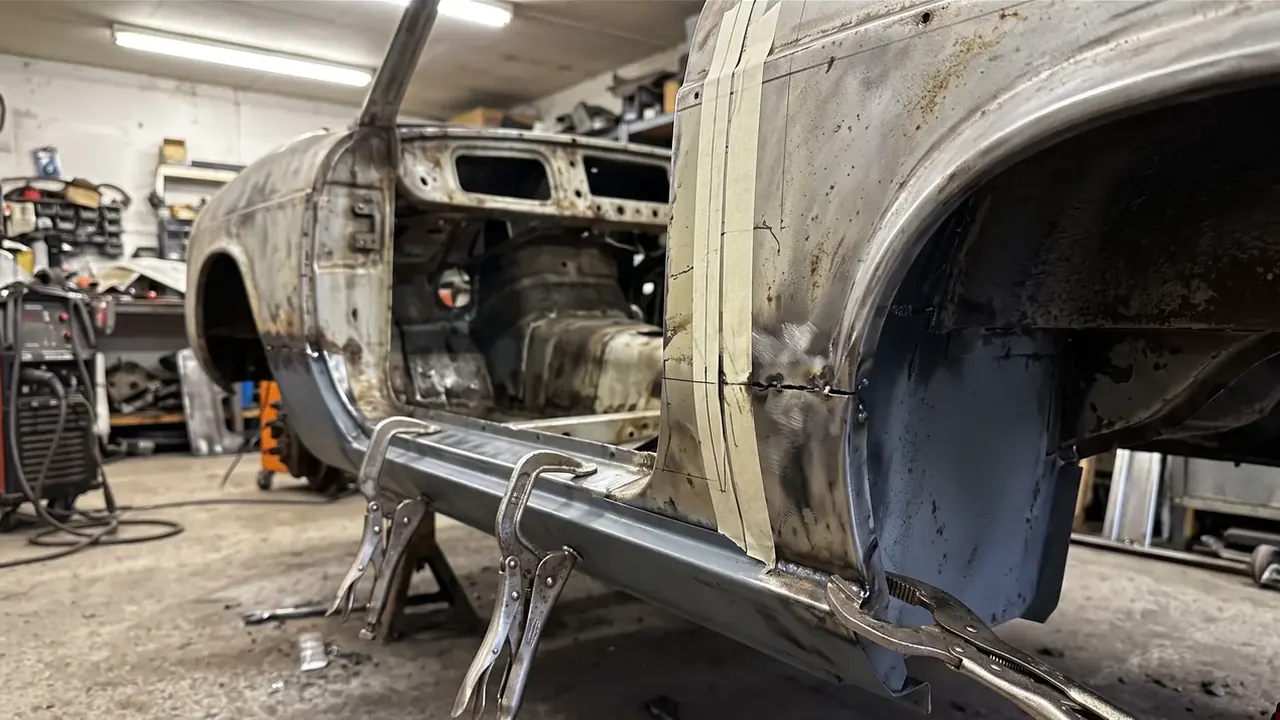
On most classics the sills are part of the car's strength, so replacing them is structural work. The old metal is cut out one side at a time, with the door gaps checked before the old sill comes off and again before the new one is welded in. Then the new box is sealed inside and out so it doesn't rot the same way.
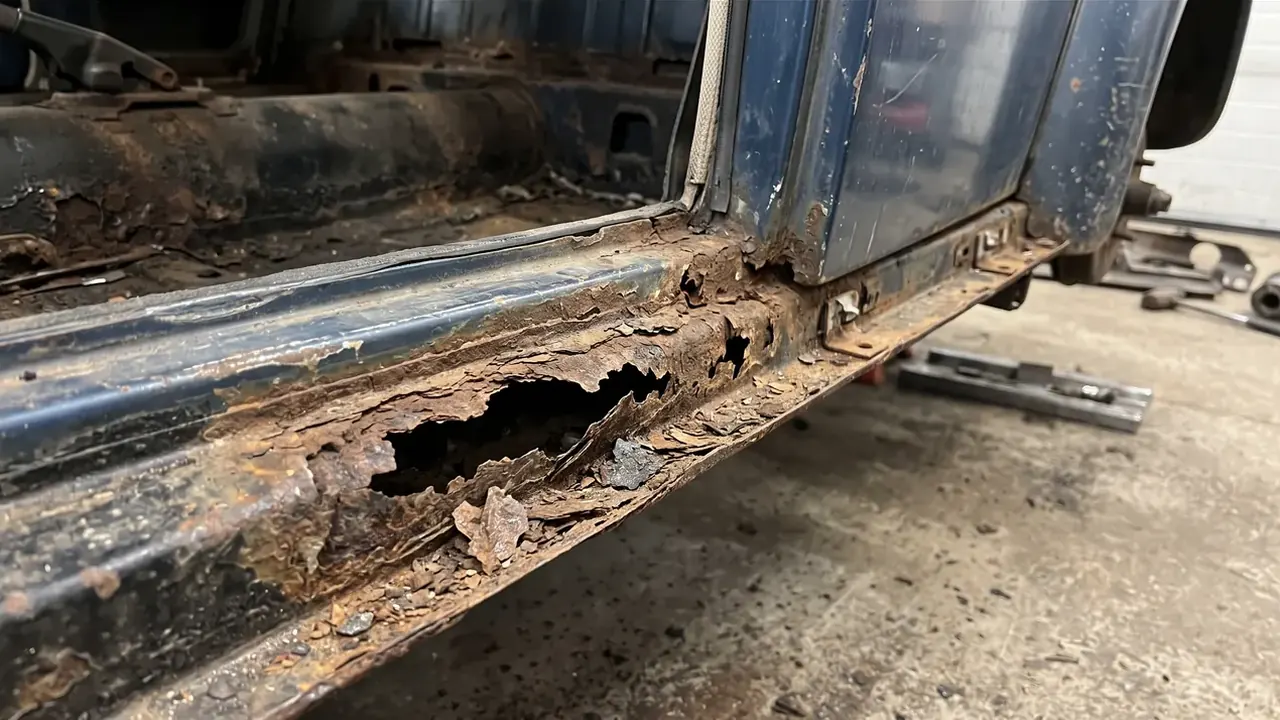
The panel you see below the door is only the outside of the sill, and the rot is rarely in that panel alone.
What does a sill do?
On a car whose body is also its chassis, the sills are box sections running along the bottom of the body between the front and rear wheel arches. With the floor, they tie the front of the car to the back and stop the middle sagging. Many cars carry their jacking points on them too.
That's why the MOT takes them seriously. GOV.UK's MOT inspection manual gives a seat belt mounting on an inner sill as an example: the tester also looks at the outer sill, the door pillar and the floor within 30cm of that mounting.

What are inner and outer sills?
The outer sill is the panel you see under the door. The inner sill is on the inside, usually under the carpet, where it joins the floor. On many classics a third panel sits between them, often called the membrane or stiffener, which closes the box and adds strength.
Water gets into the box through blocked drain holes and seams that have opened, and it sits there. So sills usually rot from the inside out, and by the time the outer one bubbles, the panels behind it can be worse.
How can you tell how far the rot has gone?
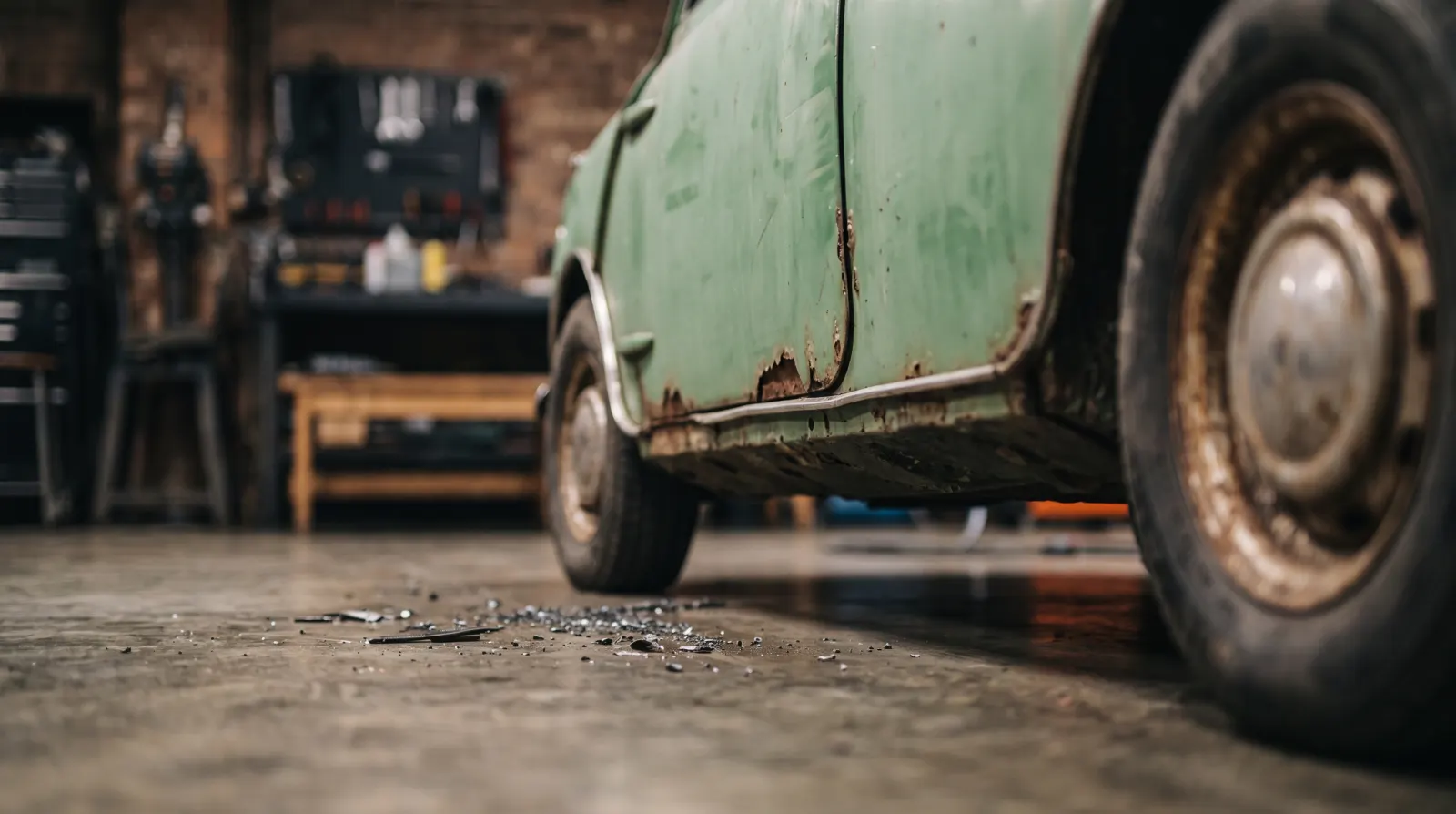
Only by opening it up. A bubble along the bottom of the outer sill shows rust has reached the paint, but not how far it runs inside. Lifting the carpet to look at the inner sill and the edge of the floor helps, and so does a look at the door pillars where they meet the sill.
Watch for a cover sill, a new outer panel fitted over the top of the old one. It looks tidy, but the rotten sill is still behind it. The same goes for filler along the bottom edge.
Why are the door gaps checked first?
Because the sill holds the shape of the door openings. Take it out of a weak shell and the middle of the car can drop, and the gaps round the doors show it straight away.
So before anything is cut, the gaps are checked and noted with the doors on. The door openings are braced with steel bar across them, and the car is supported level under its strong points, never on the sill being replaced. One side is done at a time, so the other holds the shape.
Then, with the new sill clamped in place and before it's welded, the doors go back on and the gaps are checked again. If they've moved, it's put right then, while the panels can still be shifted. If the body had already sagged before the car came in, that's corrected before welding too.
How is a new sill fitted?
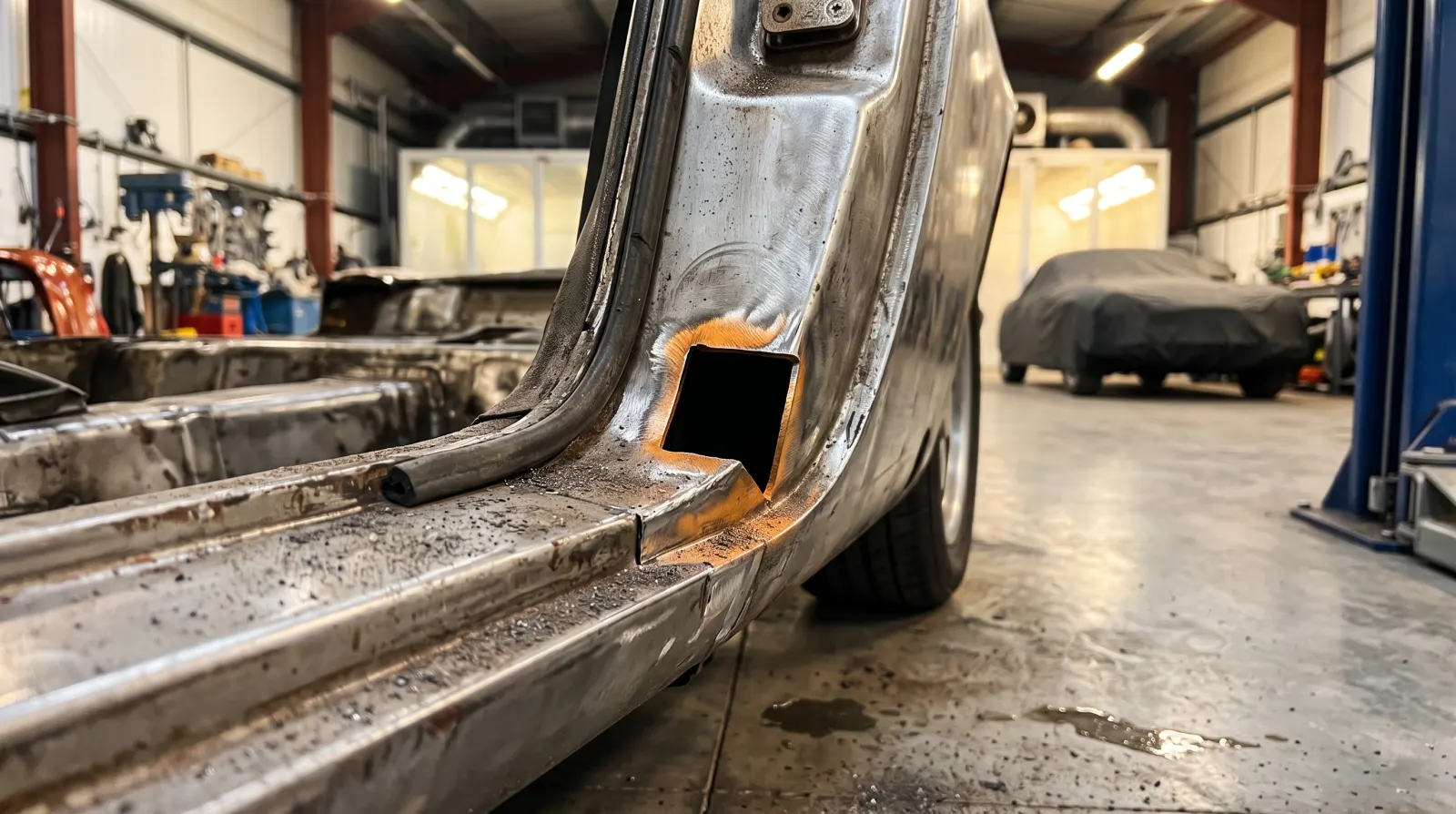
From the inside out. The rot is cut back to clean steel, then the inner sill is put right first, the membrane next and the outer sill last. A new sill is offered up and trimmed to fit, because a new panel rarely drops straight on, then clamped and checked against the door gaps before a weld goes on.
Where the factory joined the panels with spot welds along their flanges, the new sill can go back the same way. The MOT inspection manual says spot welded repairs only pass where the original panel was spot welded and has been removed, and that stitch or plug welding can be used instead of spot welds. A plug weld fills a hole drilled in the new panel, joining it to the one behind. Anywhere else a repair has to be continuously seam welded, and body filler isn't accepted on a load-bearing part.
Can a sill be patched instead?
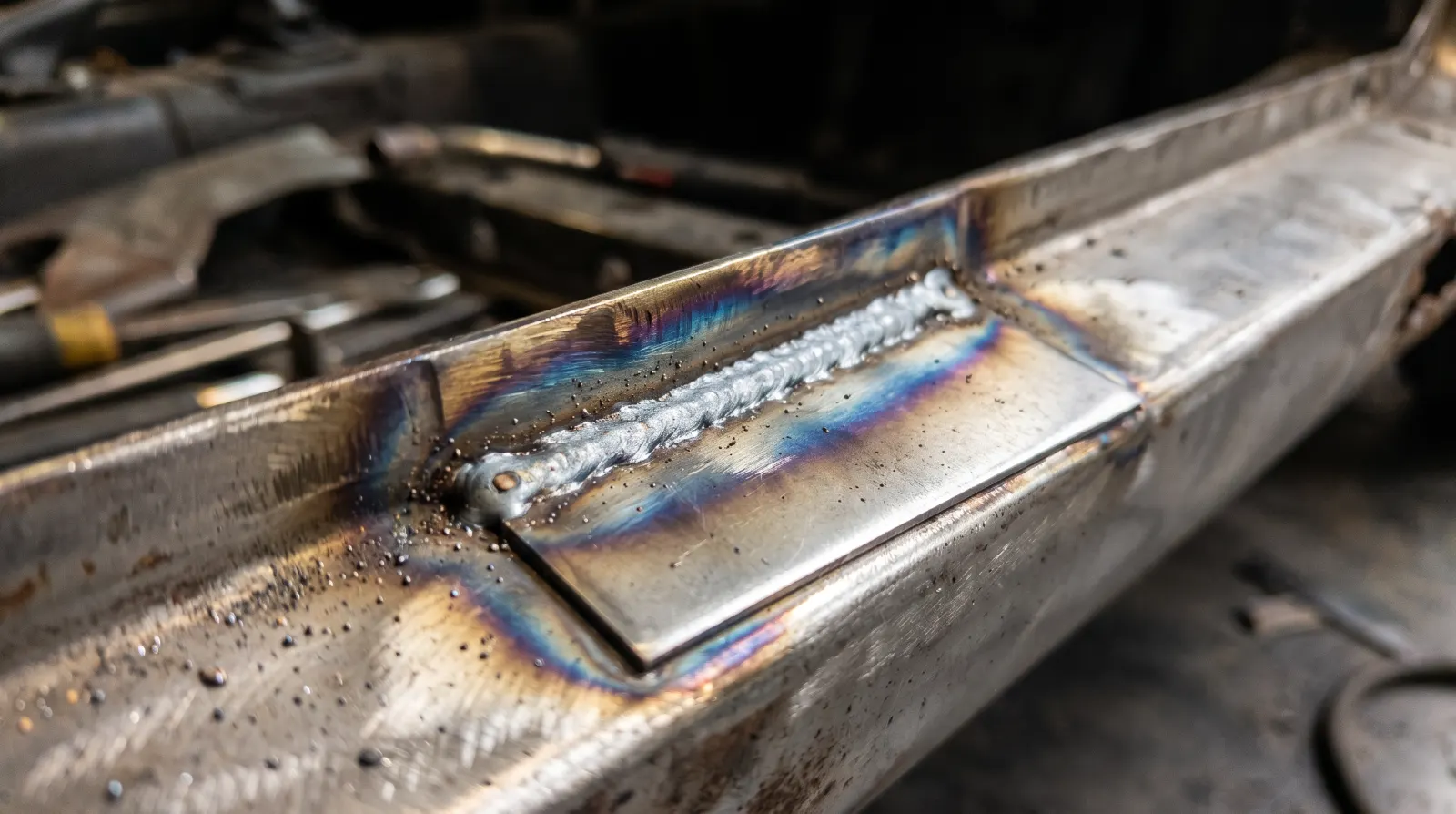
Sometimes. If the rot is in one short stretch and the inner sill and membrane behind it are sound, new metal can be let in where the rot was cut out. If it runs along the length, or the inner sill has gone, a whole new sill is the job that lasts. See welding and rust repair.
What stops the new sills rotting?
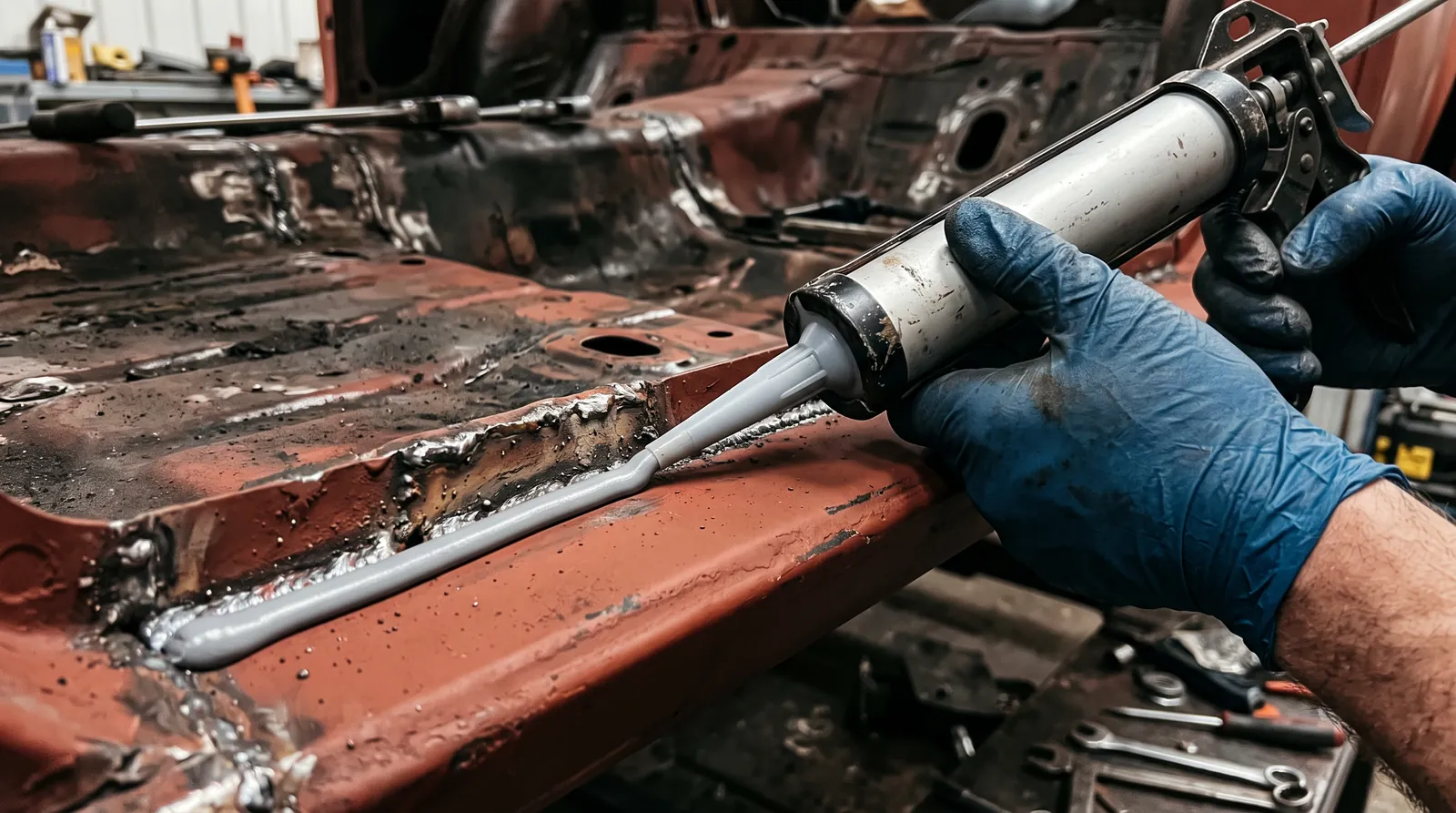
Treating the inside before the box is closed, and keeping water out after. The inside faces are primed before the outer sill goes on, the joins get seam sealer, a flexible sealer that closes the seam, and the drain holes are left clear so water can get out.
Once the car is painted, the box gets cavity wax, a thin wax sprayed inside hollow sections that keeps moisture off the metal. It's what stops a sill rotting from the inside again.
What moves the cost?
How far the rot runs. An outer sill on its own is a smaller job than outer, membrane and inner together. Rot where the sill meets the floor, the door pillars or the wheel arches adds to it, and so do old repairs and cover sills to cut off. We give a rough price from photos and confirm it once the sills are opened up. See prices, and restoration if the sills are part of a bigger job.
Got rusty sills? Send us close-up photos of them, and under the carpets if you can lift them, from the quote form.