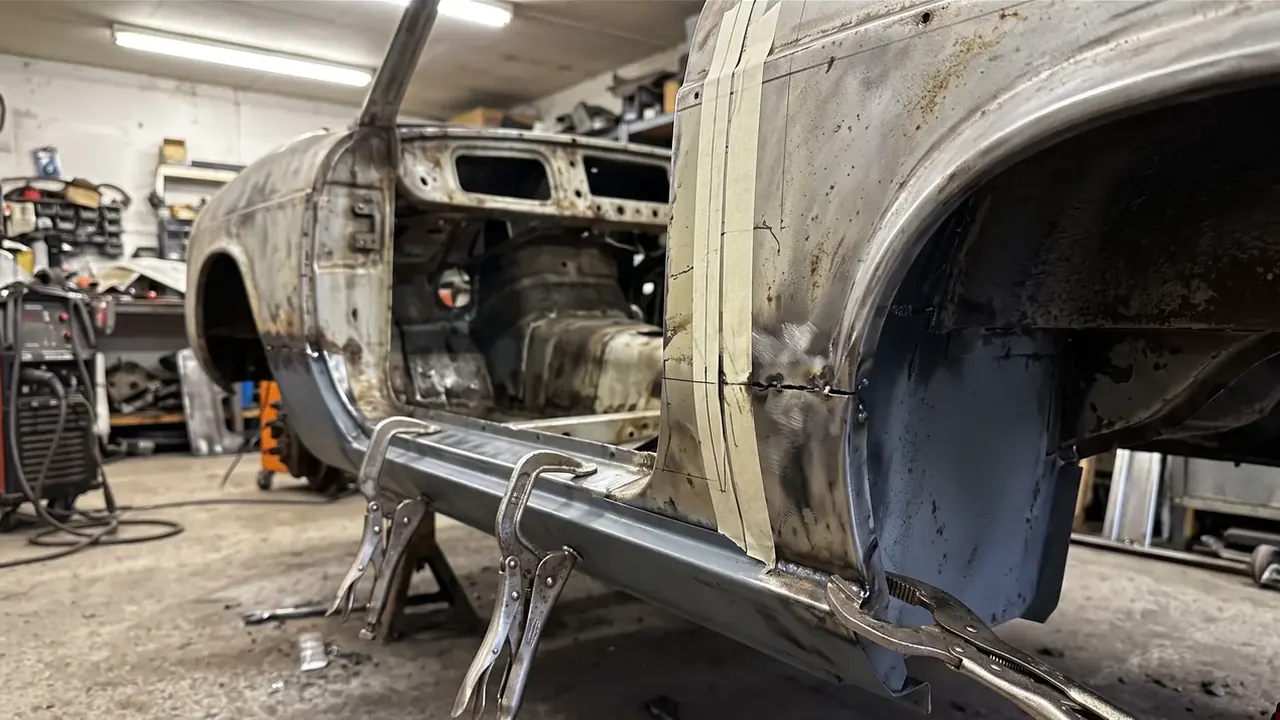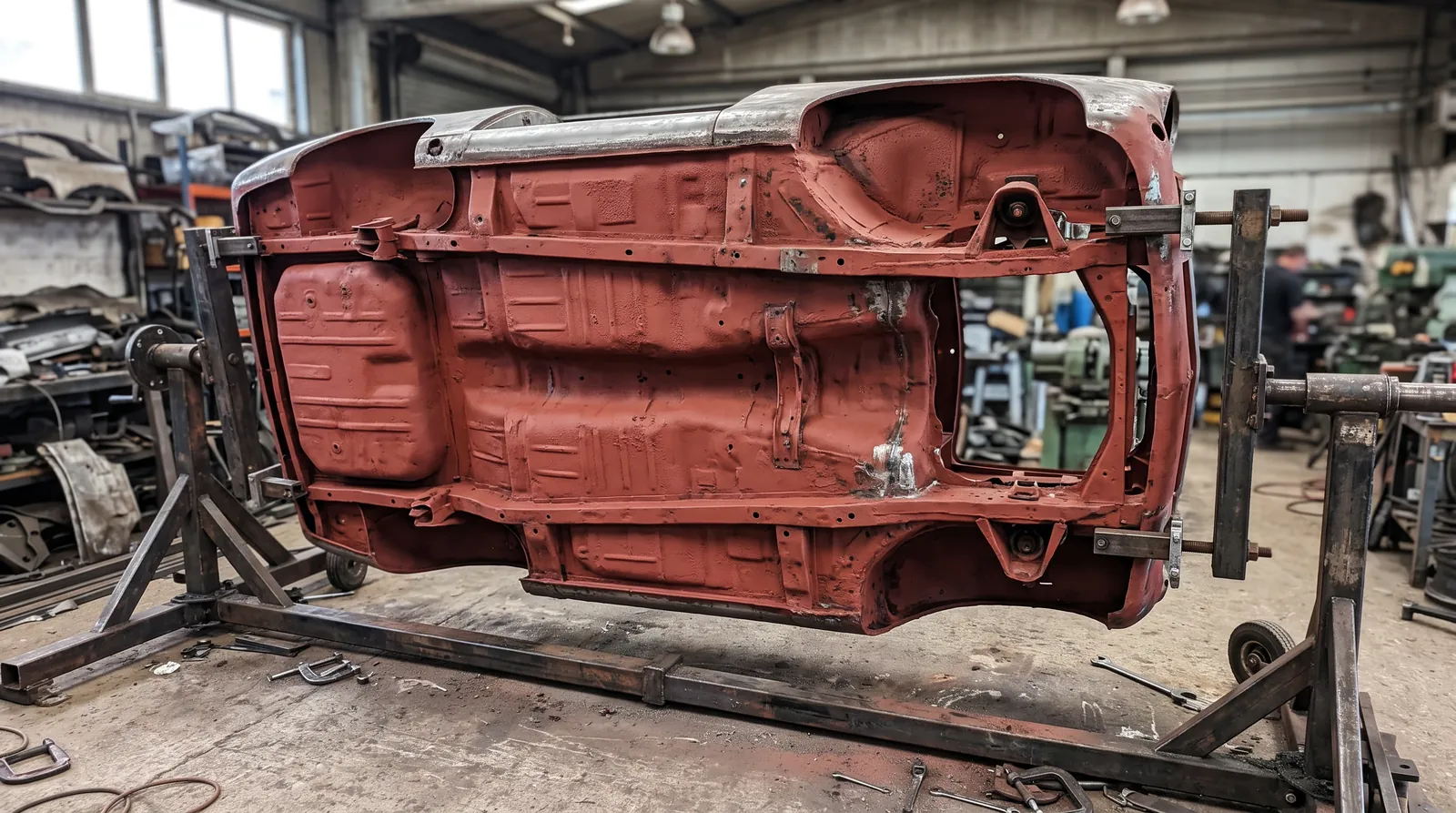
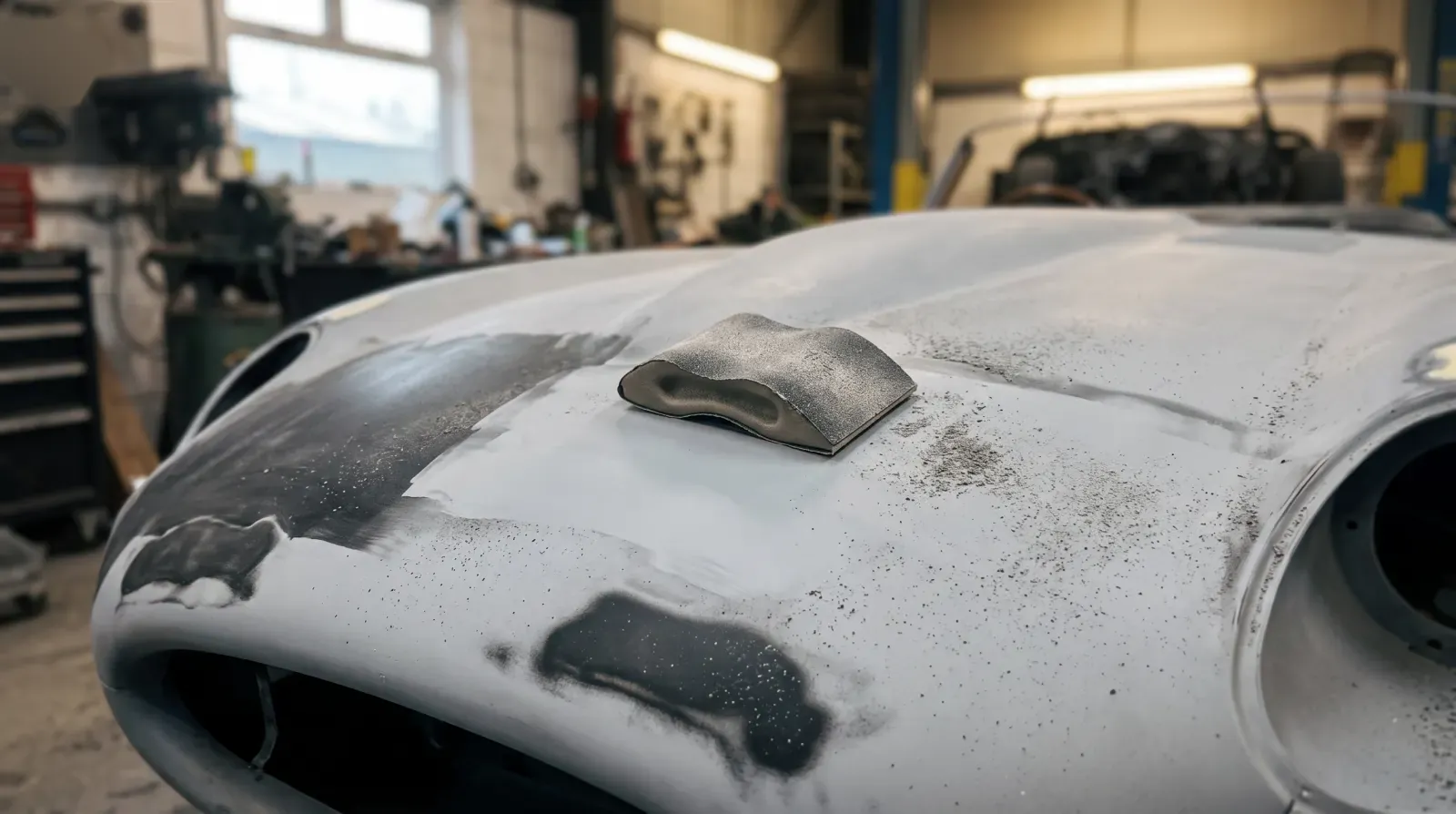
Lead loading and body filler both fill the last of the shape on a steel body, but they work in different ways. Lead loading melts body solder, an alloy of tin and lead, onto steel that has been tinned so the lead bonds to it, then shapes it with a wooden paddle and a file. Body filler is a two-part polyester paste that sets hard in minutes and skims a panel already knocked back to shape.
Lead is the older way, and the factory used it on seams and joints. Filler is quicker and easier to work. On a restoration each still has its place.
What is lead loading?
Lead loading, also called body soldering or lead wiping, fills a joint or a low spot with body solder. The steel is cleaned back to bright metal, then tinned: a flux paste carrying fine solder is heated on so a thin coat of solder bonds to the steel. Without that coat, the lead won't stick.
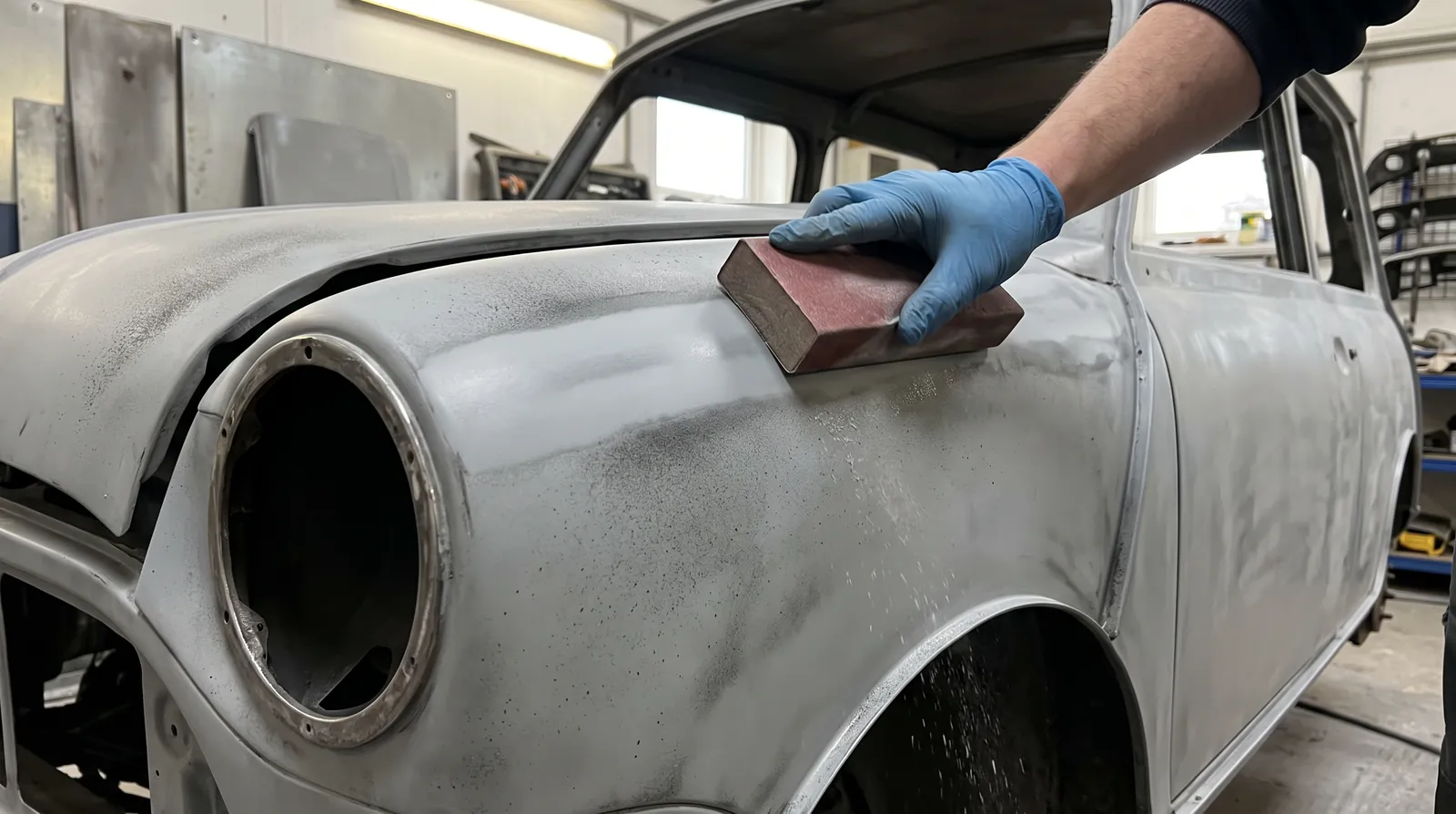
Sticks of body solder are warmed with a flame until they go soft and pasty, and pressed on in blobs. The panel is warmed again and the lead spread with a wooden paddle coated in tallow, a hard fat that stops the lead sticking to it. Once it's cold it's shaped with a body file, a coarse flat blade that shaves the lead down, then sanded by hand. Every trace of flux is cleaned off before primer, or it can cause trouble in the paint. Practical Classics walks through it in its guide to lead loading.
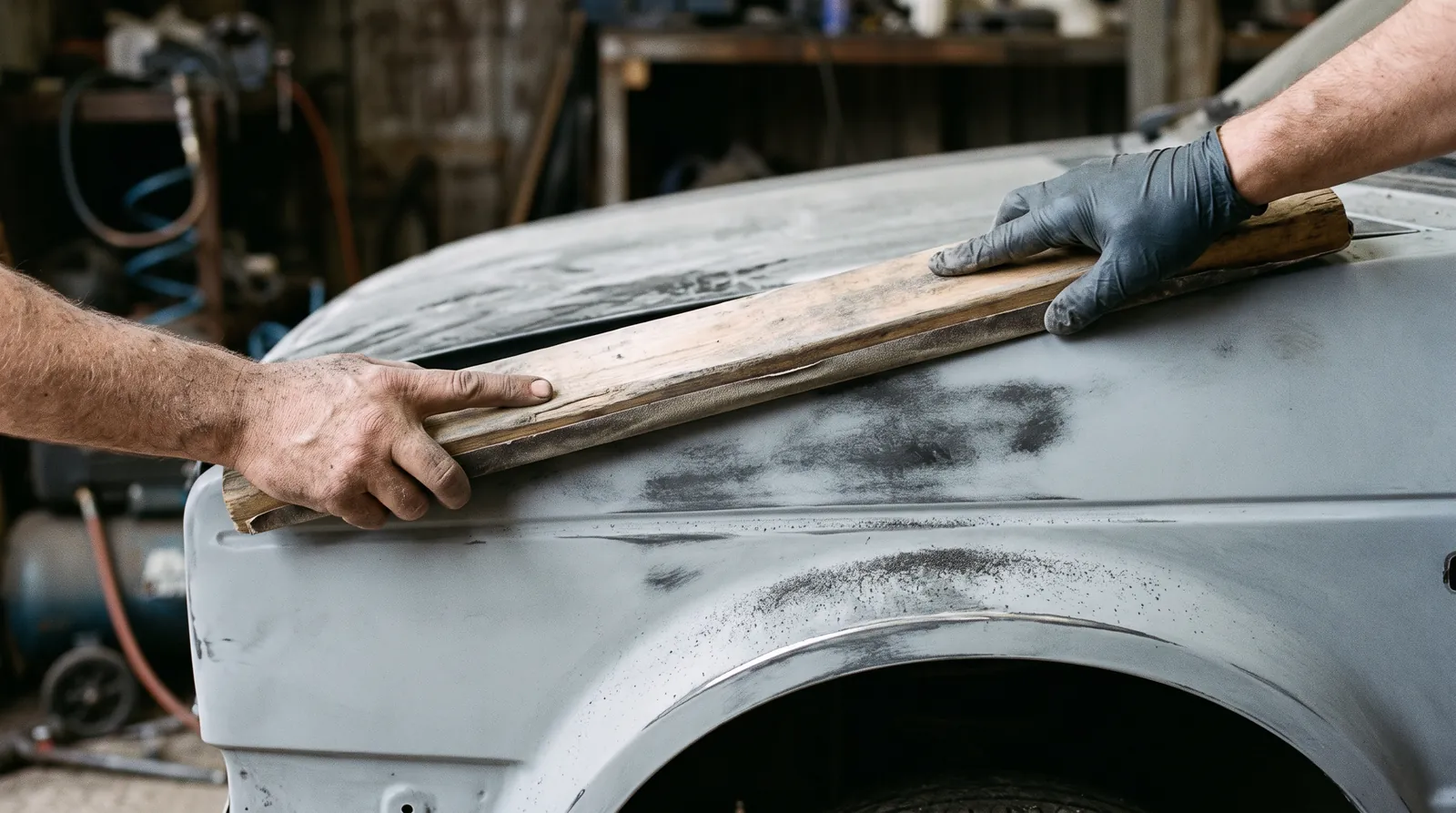
What is body filler?
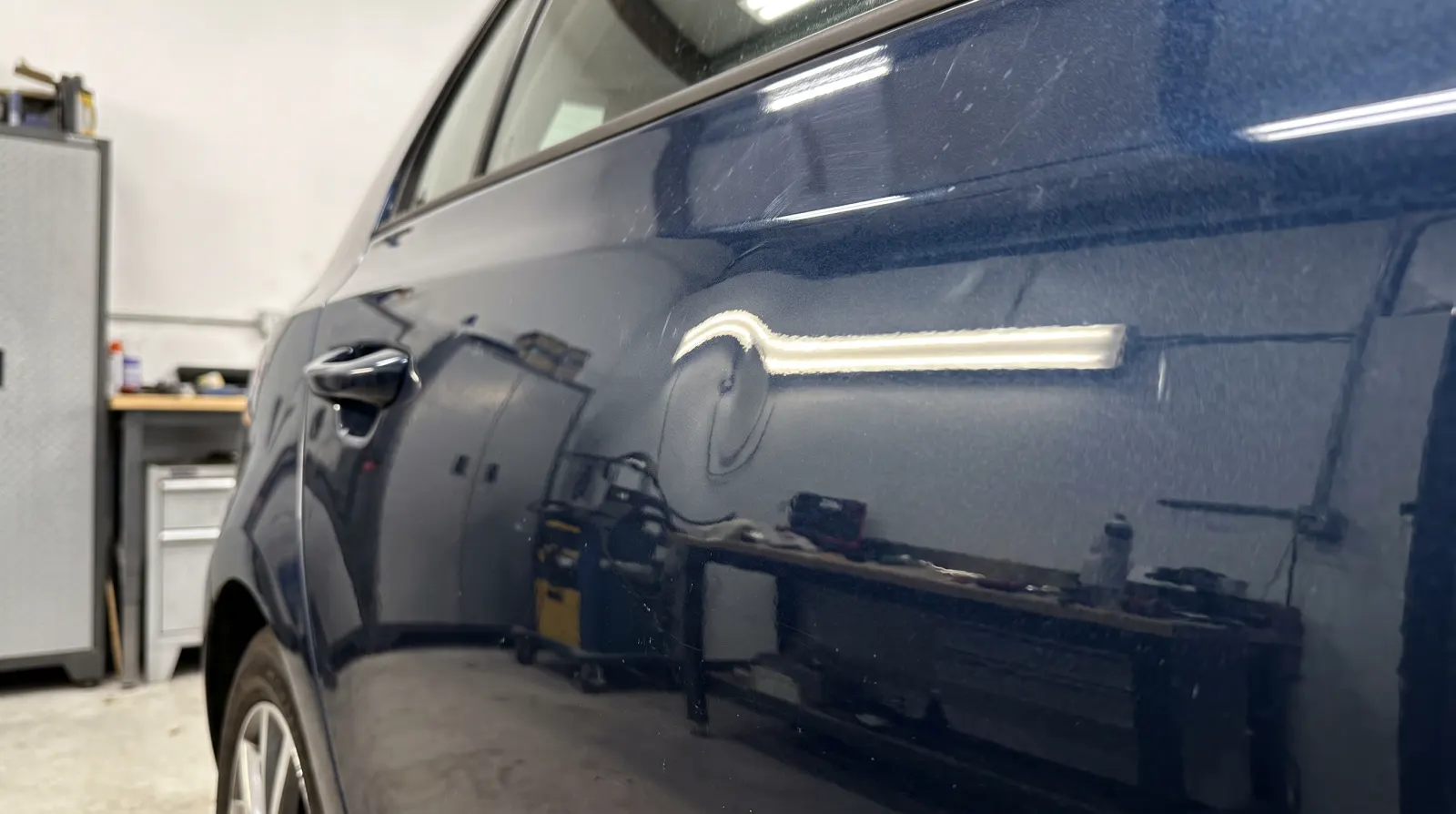
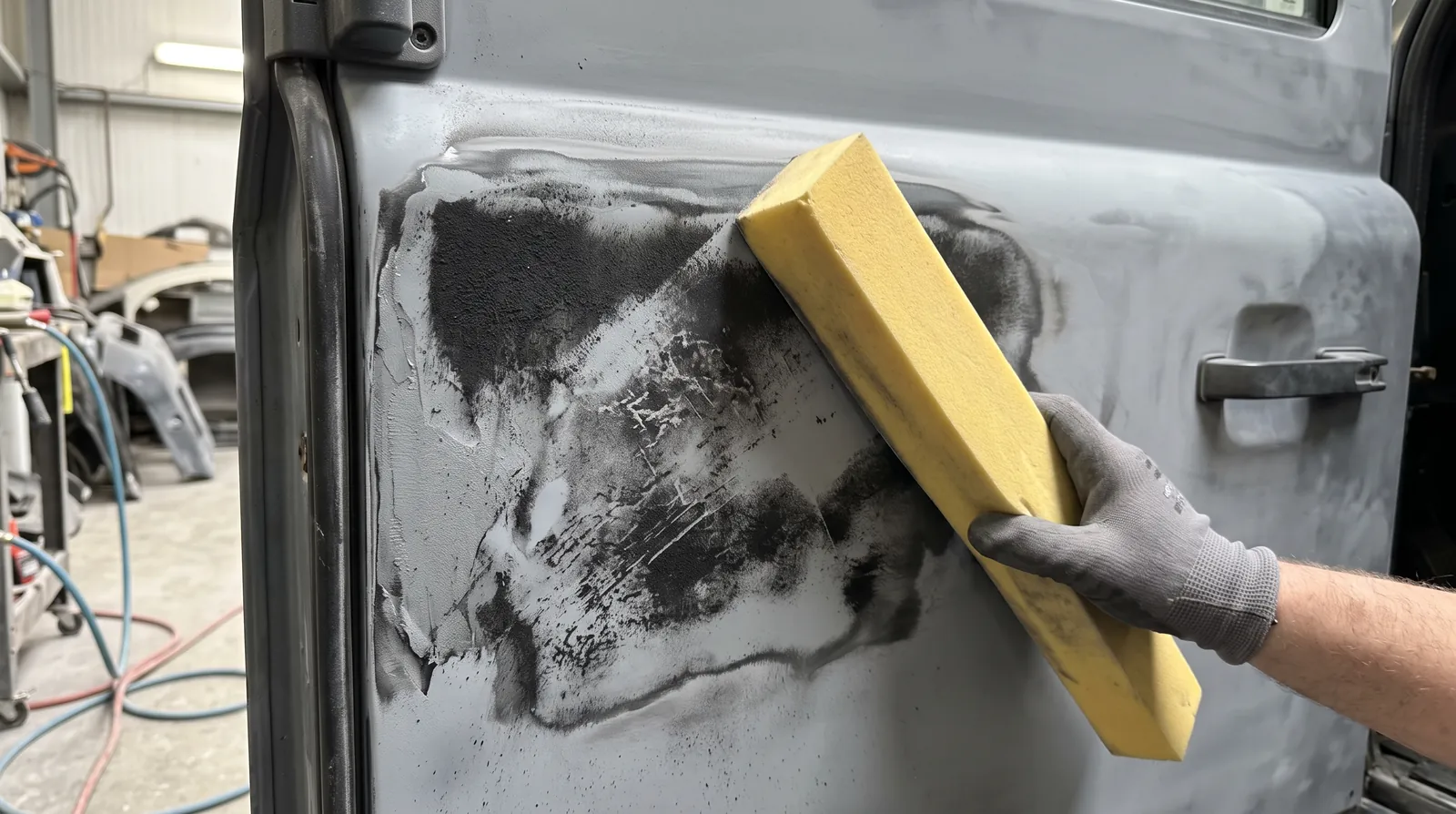
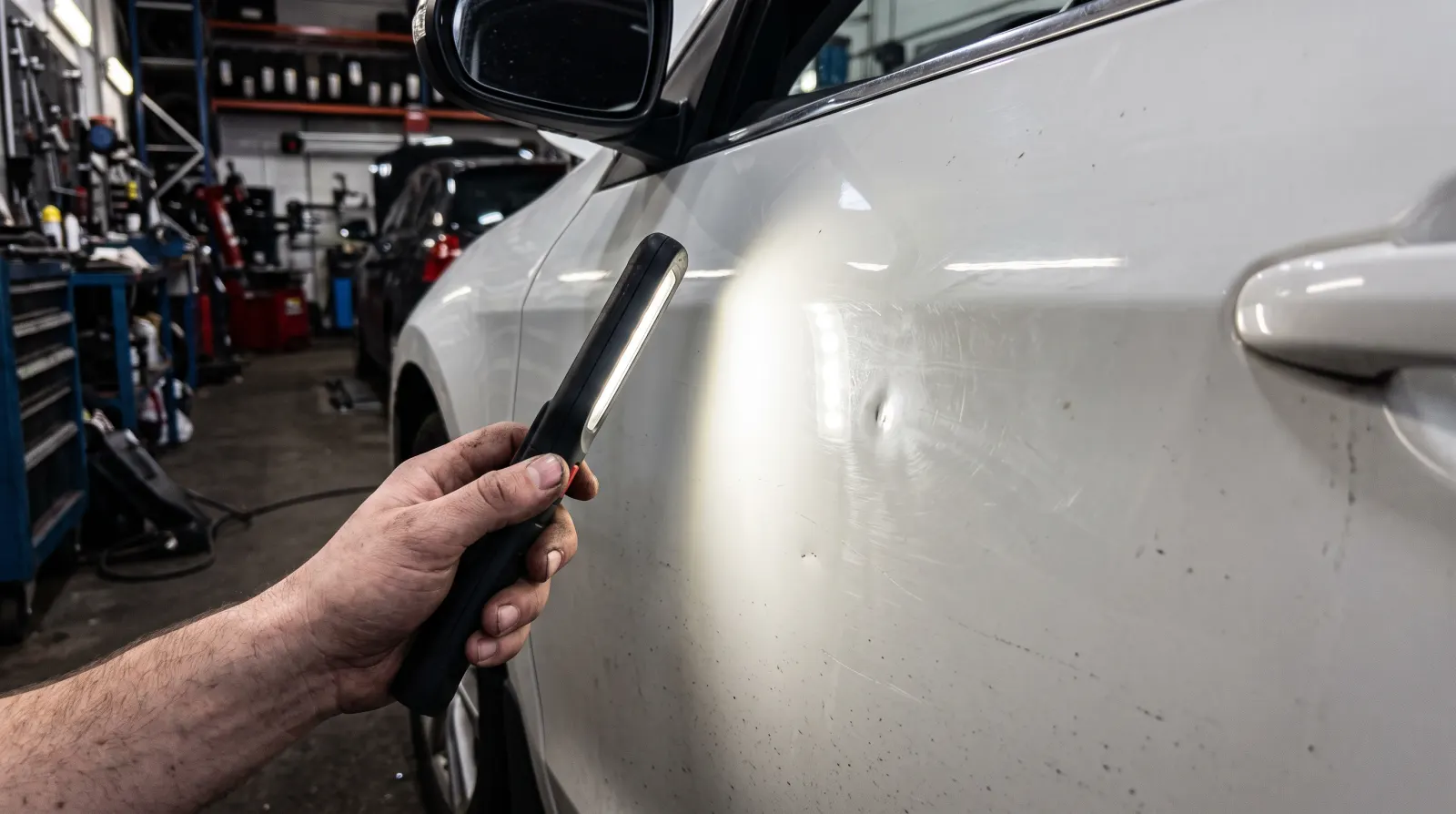
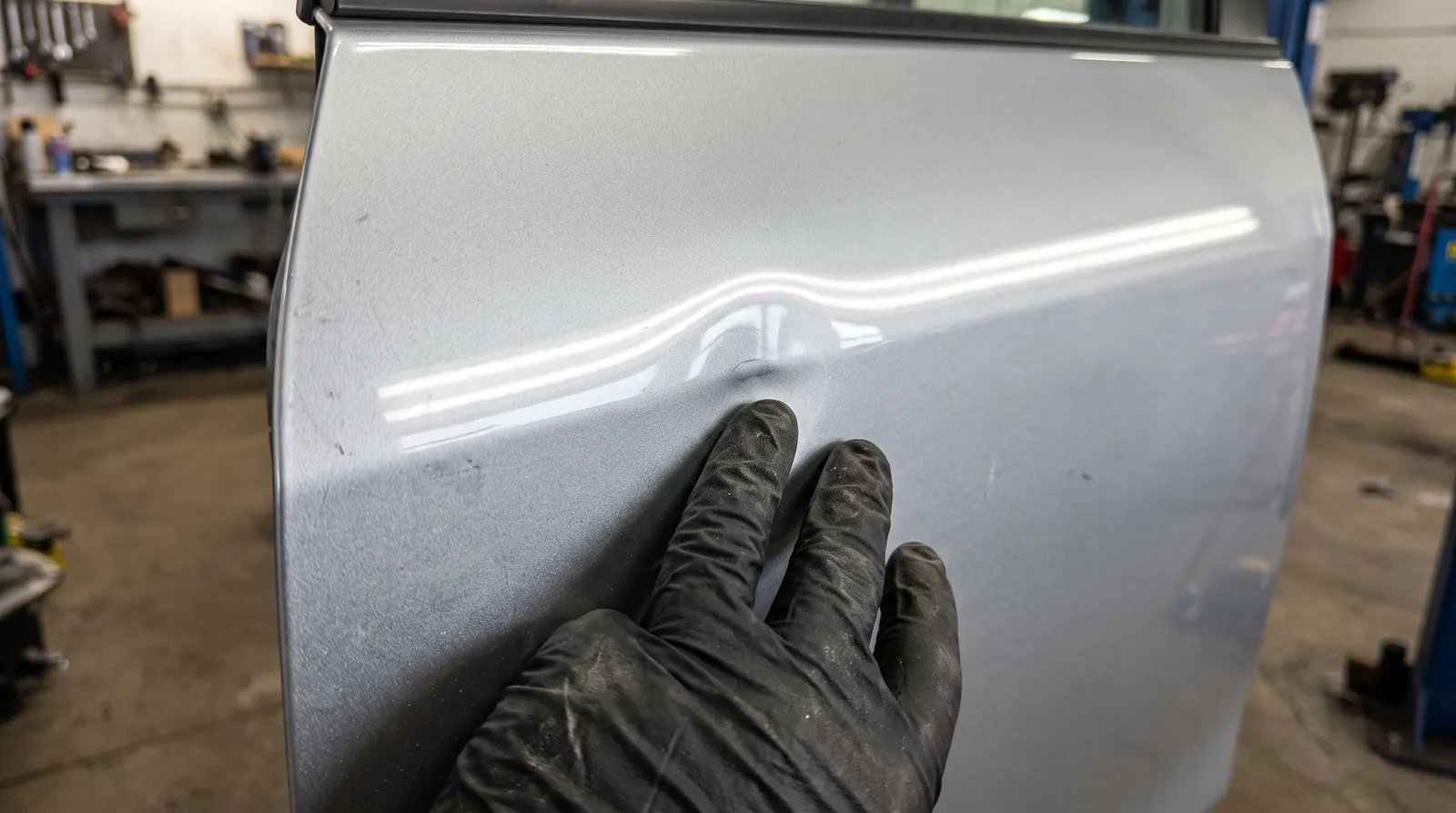
A two-part polyester paste, mixed with hardener, spread on and left to go off, then sanded to shape. It goes over metal that has already been knocked back as close to shape as it will go, and it only skims what's left. Dents come out first, and filler never rebuilds a panel. See bodywork.
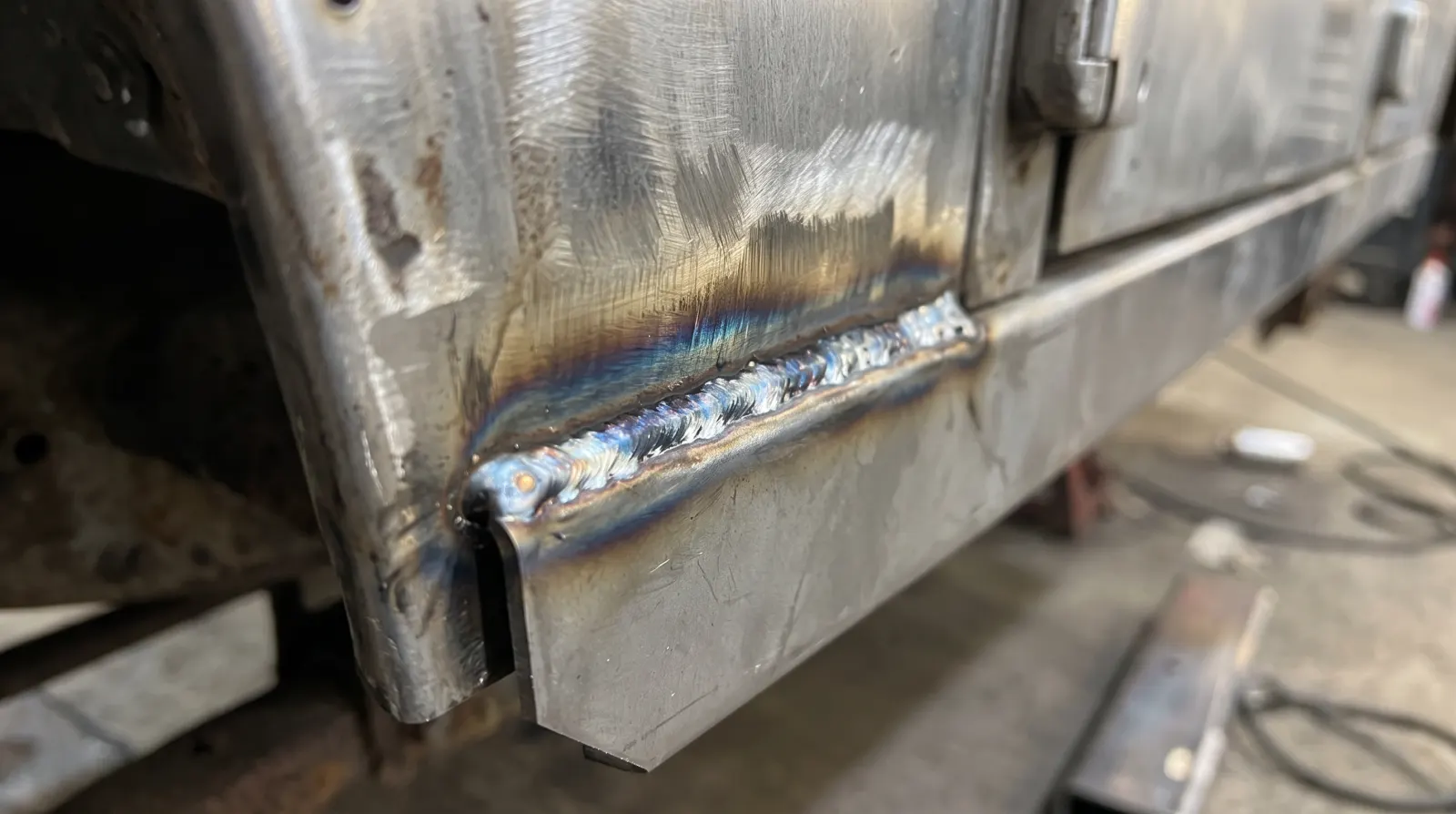
Where did the factory use lead?
At the joins. Practical Classics says lead was used to cover overlapping joints between panels and to close gaps round doors, boot lids and bonnets.
So lead found at a panel join on an older car can be the factory's own work, not a sign of an old repair. It's worth knowing before anyone starts grinding it out.
Why use lead instead of filler?
Because it bonds to the steel and keeps water out. Tinning ties the lead to the panel, so it won't crack or break off the way a thick lump of filler can, and lead doesn't soak anything up.
Polyester filler is porous. Left unsealed it takes in water, which is why it's always sanded dry and sealed with primer. Lead suits a join between two panels that has to stay sealed, and a restoration that keeps the car as it was built.
Why not use lead everywhere?
Because it's slower, it needs a flame, and it makes lead dust. Filler goes off at room temperature and sands easily. Lead needs the tinning, the heat, the paddle and the file, and every one of those takes time.
The heat matters too. A flame on a big flat panel can make the steel move, so lead goes on a bit at a time.
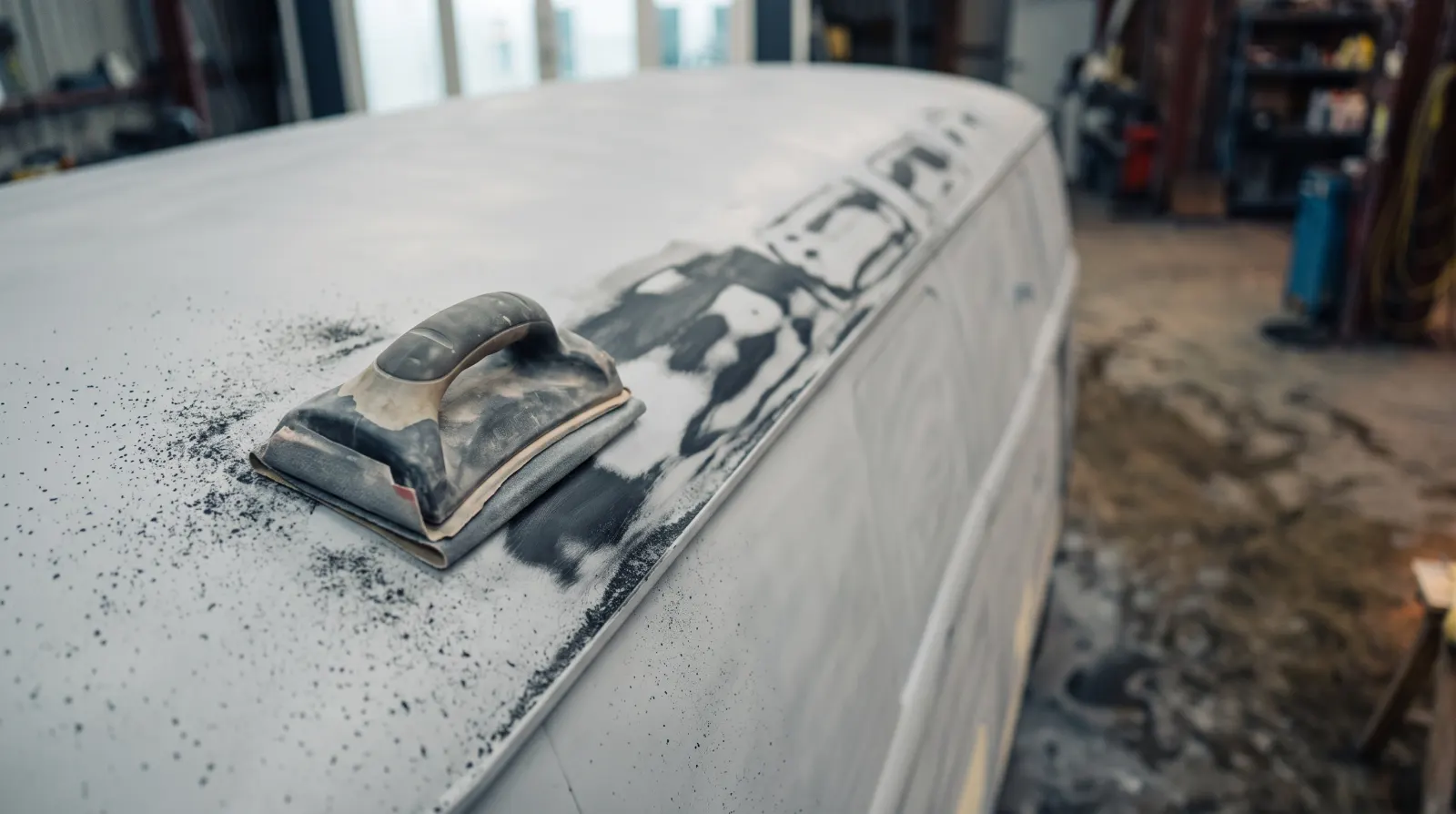
Is lead loading dangerous?
It can be, which is why it's done with care. HSE says the body takes in lead when you breathe in lead dust, fume or vapour, or swallow it, for example by eating, drinking or smoking without washing your hands and face first. Working with metallic lead and alloys containing lead, such as soldering, is one of the jobs it lists.
Filing and sanding lead makes dust. So it's shaped with a file and sanded by hand rather than with a machine, with the right mask and extraction to take the dust away. If you're thinking of trying it at home, read HSE's page on when you're most at risk from lead first.
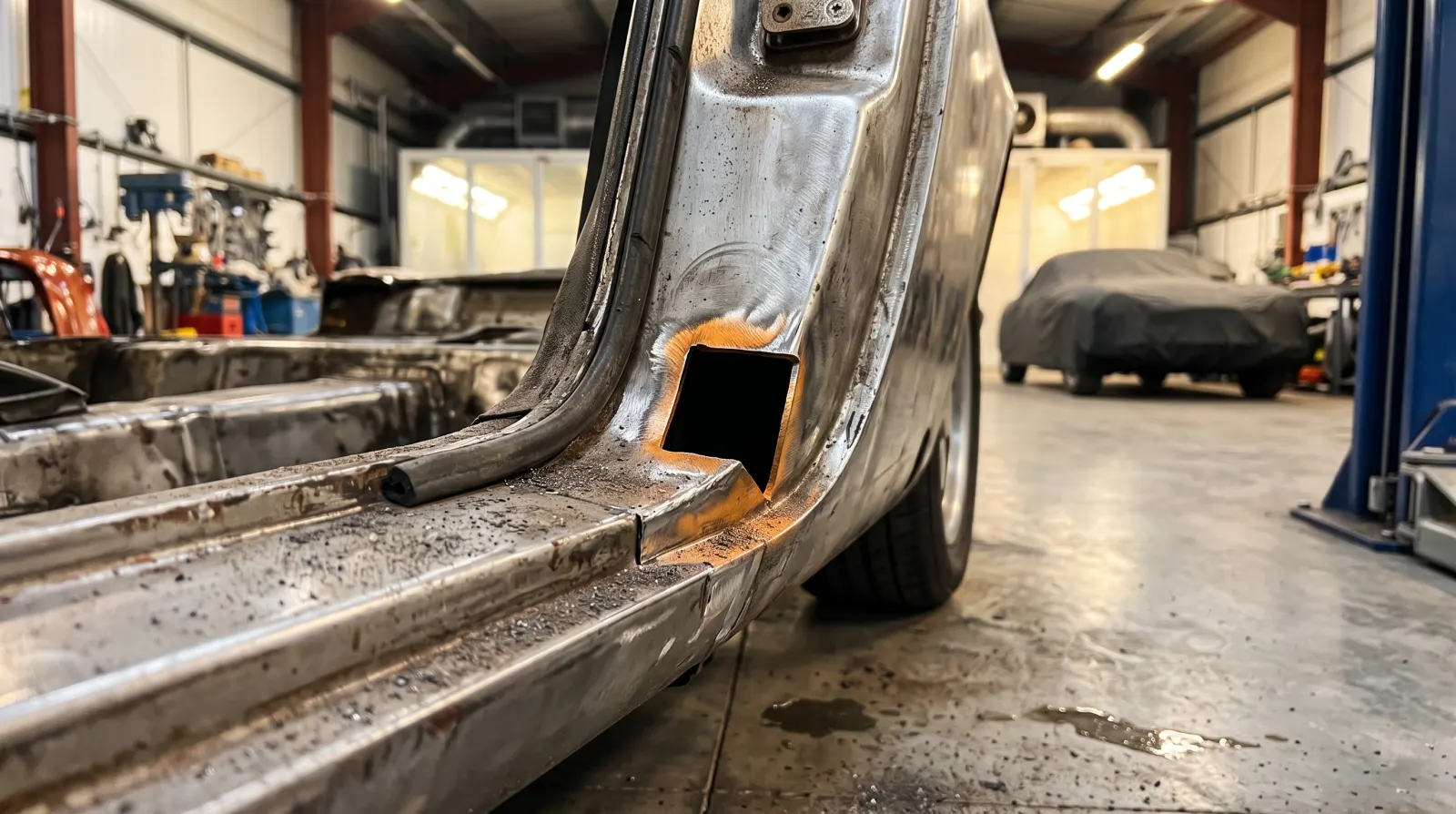
What happens to old lead when a car is stripped?
If it's still bonded and there's no rust round it, it's part of the car and it can stay. Where rust has got into the join behind it, the lead comes out so the rot can be cut back and new metal let in, and then the join is filled again.
Neither lead nor filler goes over rust. Tinning only takes on clean, bright steel, and filler lifts and cracks as rust carries on underneath it.
Which should my car have?
On a restoration, lead at the joins the factory leaded, if you want the car kept as it was built, and a thin skim of filler over flat panels once the metal is straight. Either way the metal is put right first, then it's checked, primed and painted. See restoration for how the stages fit together.
What moves the cost?
How much lead work there is. Lead is slower than filler, and so is taking old lead out where there's rust behind it. We give a rough price from photos and confirm it once the paint is off and we can see what's there. See prices.
Got old lead or filler showing through on a project? Send us a few photos from the quote form.