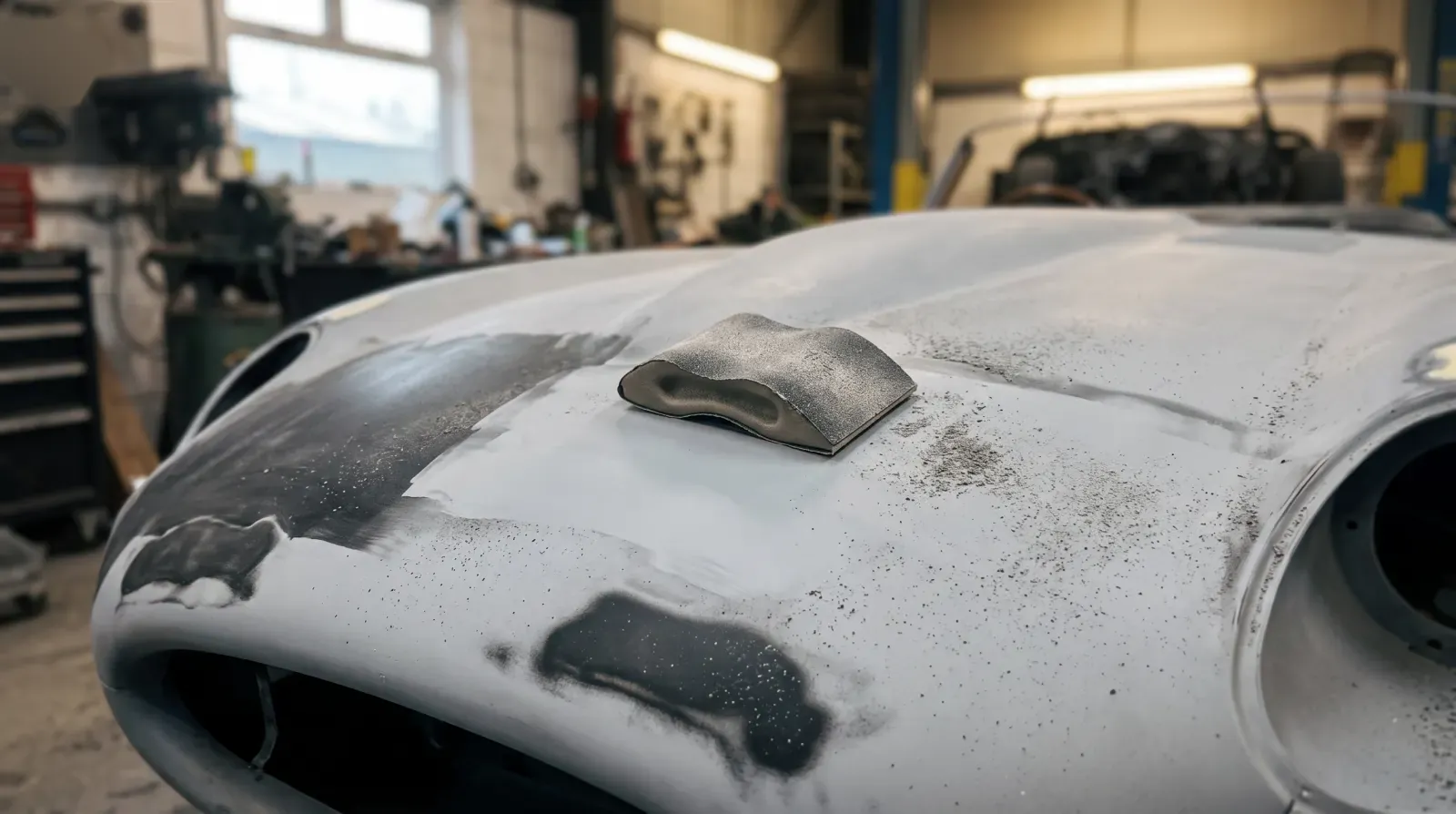
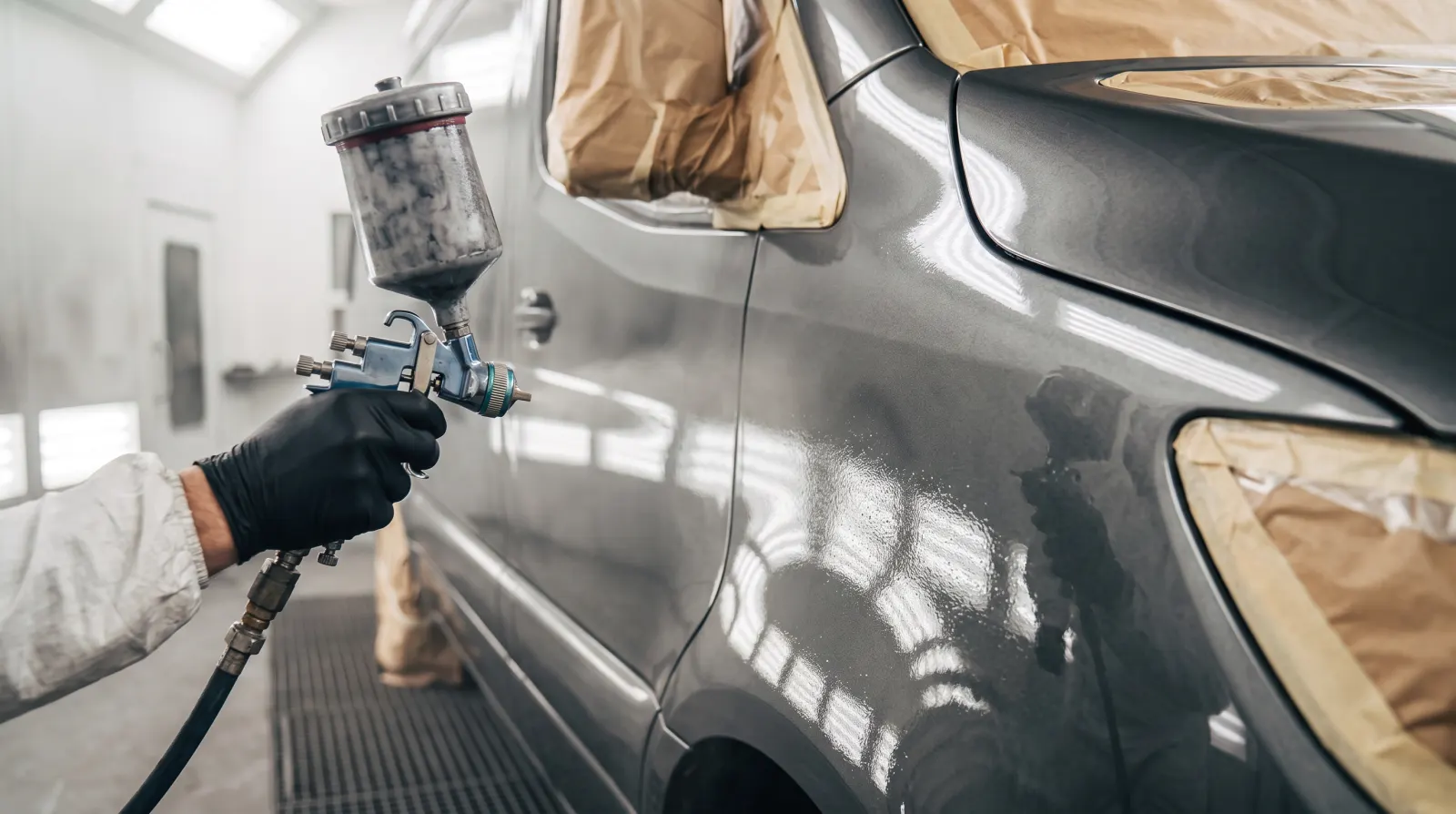
Panels are fitted and lined up before paint because moving them afterwards puts the new paint at risk. The doors, bonnet, boot lid and wings are hung and adjusted until the gaps between them are even and the swage lines run through from one panel to the next. Only then does colour go on.
That makes the gaps part of the bodywork, not the paintwork, and on an old car it's slow, careful work.

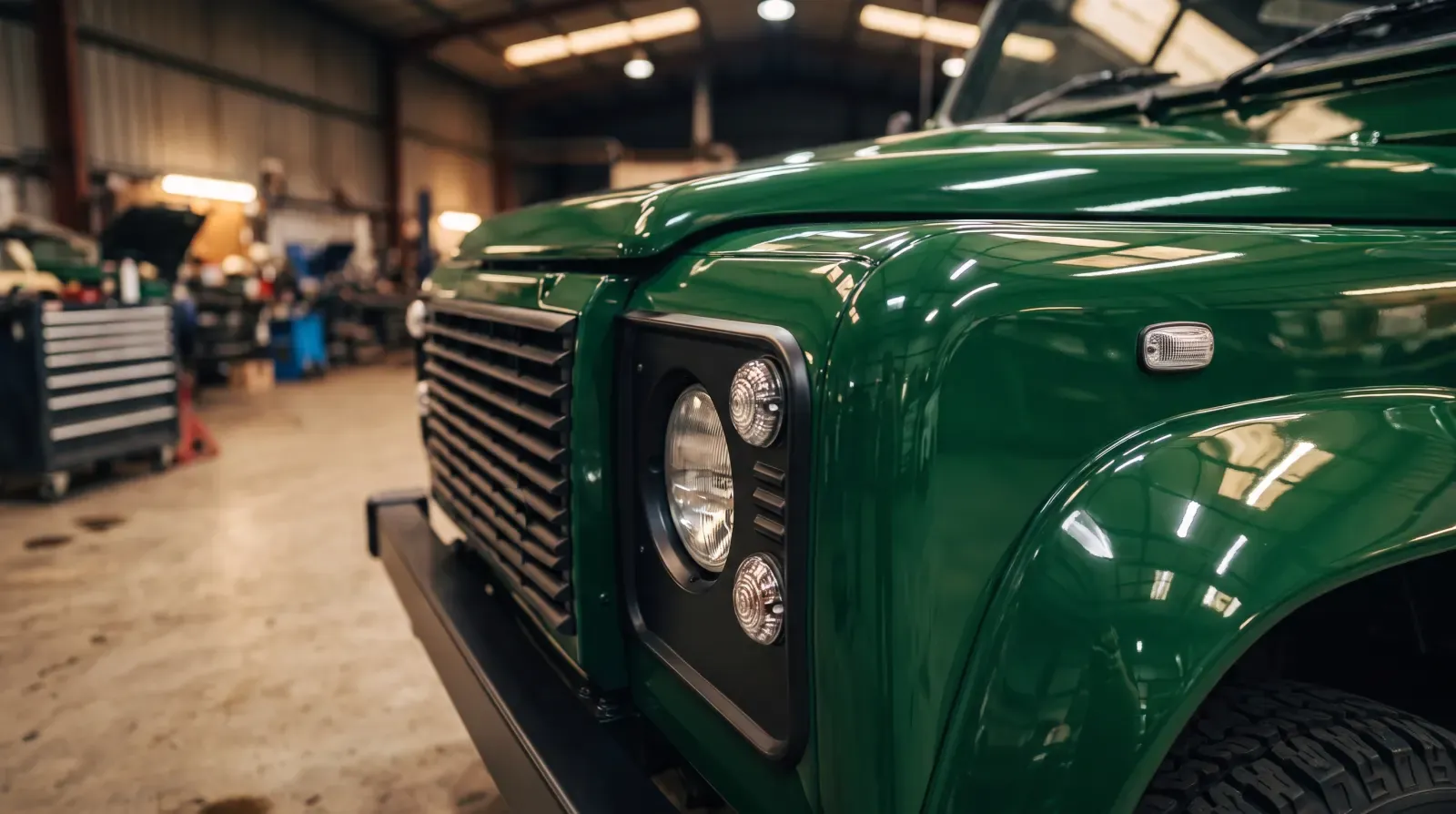
What is a panel gap?
The space between two panels that meet, such as a door and the wing in front of it, or the bonnet and the wings either side. A good gap is the same width along its whole length and matches the one on the other side of the car. The panels either side of it sit flush, with neither standing proud nor sunk below the other.
What is a swage line?
A crease or ridge pressed into a panel, often running along the side of the car from the front wing through the doors to the rear wing. When the panels are lined up it reads as one unbroken line. If a door sits low or a wing is out, the line steps at the gap.
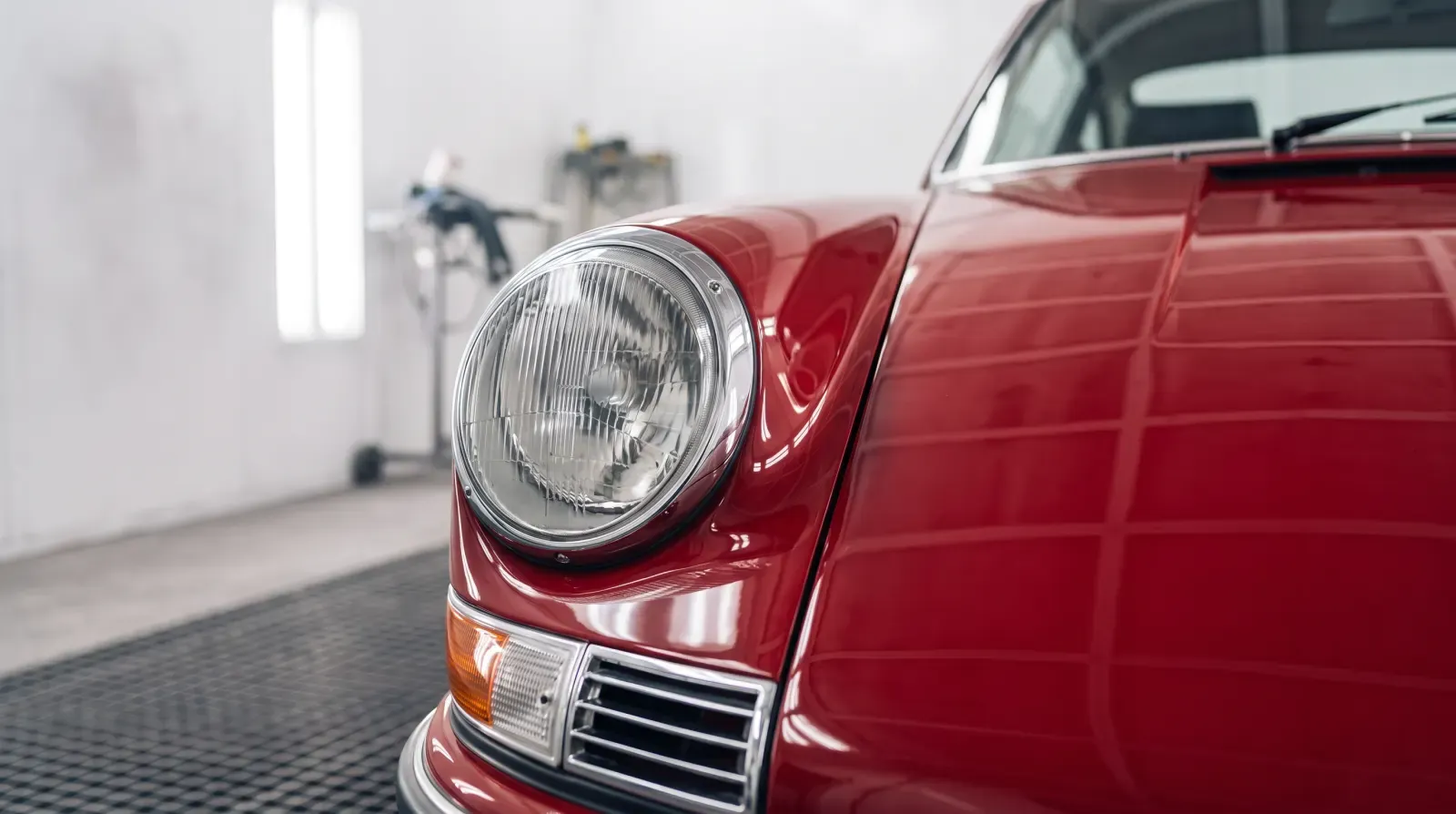
Fresh gloss shows that step more, not less. A straight reflection running down the side of the car bends wherever a panel is out of line.
Why are panels lined up before paint?
Because lining a panel up means moving it on its hinges, catches and bolts, and that's where new paint gets damaged. A door edge that catches the wing as it's shifted chips both. Hinge bolts loosened and turned after painting can crack the paint round them, and a spanner slipping off one marks the panel next to it.
So the gaps are set while the car is in bare metal or primer, when a chipped edge is easy to put right.
How are the gaps adjusted?
At the hinges, the catches and the mounting bolts. Doors, bonnets and boot lids usually have a little movement where their hinges bolt on, and the striker, the catch the door closes onto, sets where the back edge of the door sits. Bolt-on wings move on their mountings.
Where that isn't enough, thin packing pieces called shims go behind a hinge or a wing to bring it out. Worn hinge pins let a door drop at the back, so they're put right before any gap is set, or the door will drop again later.
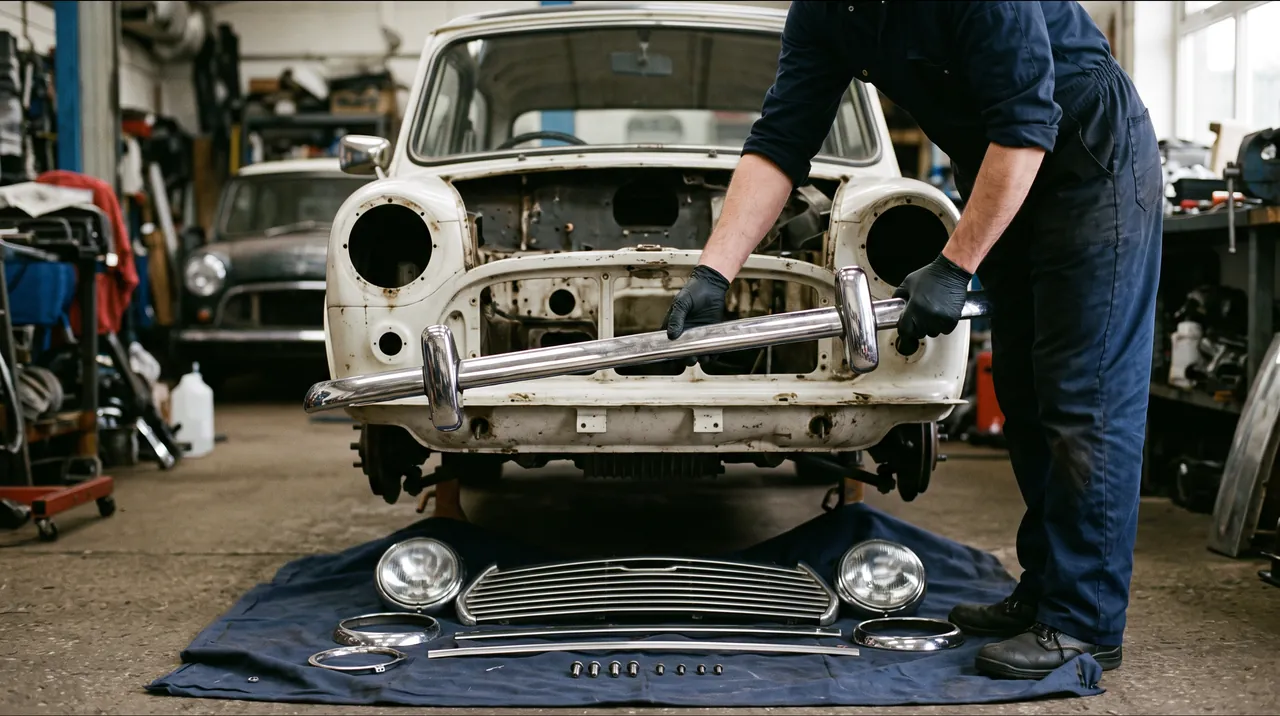
Do the panels come off again for paint?
They can. Doors, bonnet and boot lid are sometimes painted off the car, so their edges and insides get full colour. Once the gaps are right, the hinge positions are marked before anything comes off, and every panel goes back to its marks after paint, so the gaps come back as they were set.
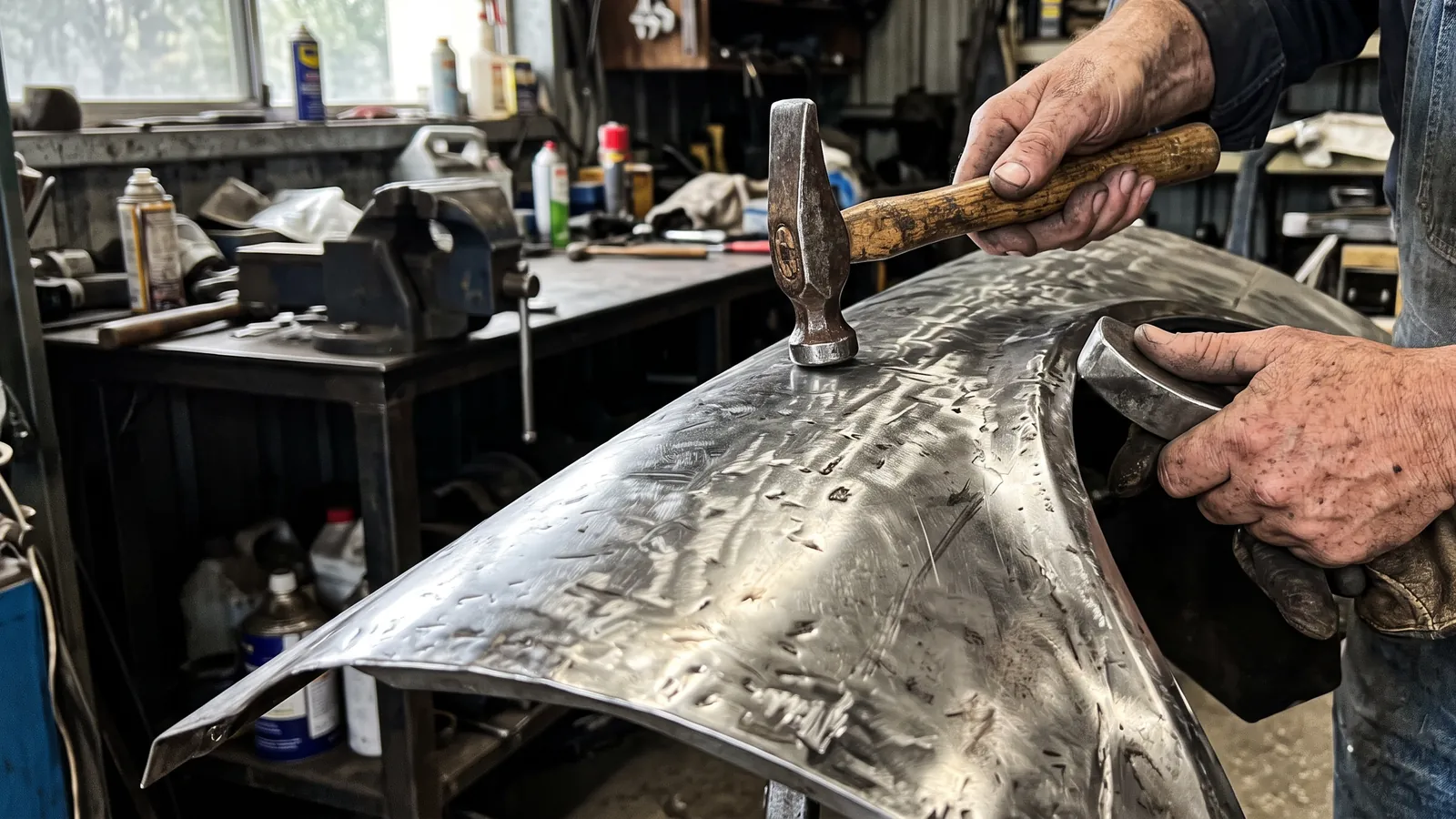
Do new panels fit straight on?
Rarely. A new panel, and a pattern one in particular (made by someone other than the car's maker), can need trimming, reshaping and its edges reworked before the gaps come right. It's offered up, checked against the panels round it, taken off, worked and tried again until it lines up.
All of that happens in bare metal or primer. A new wing that's painted before it has been fitted is a wing that may need painting twice.
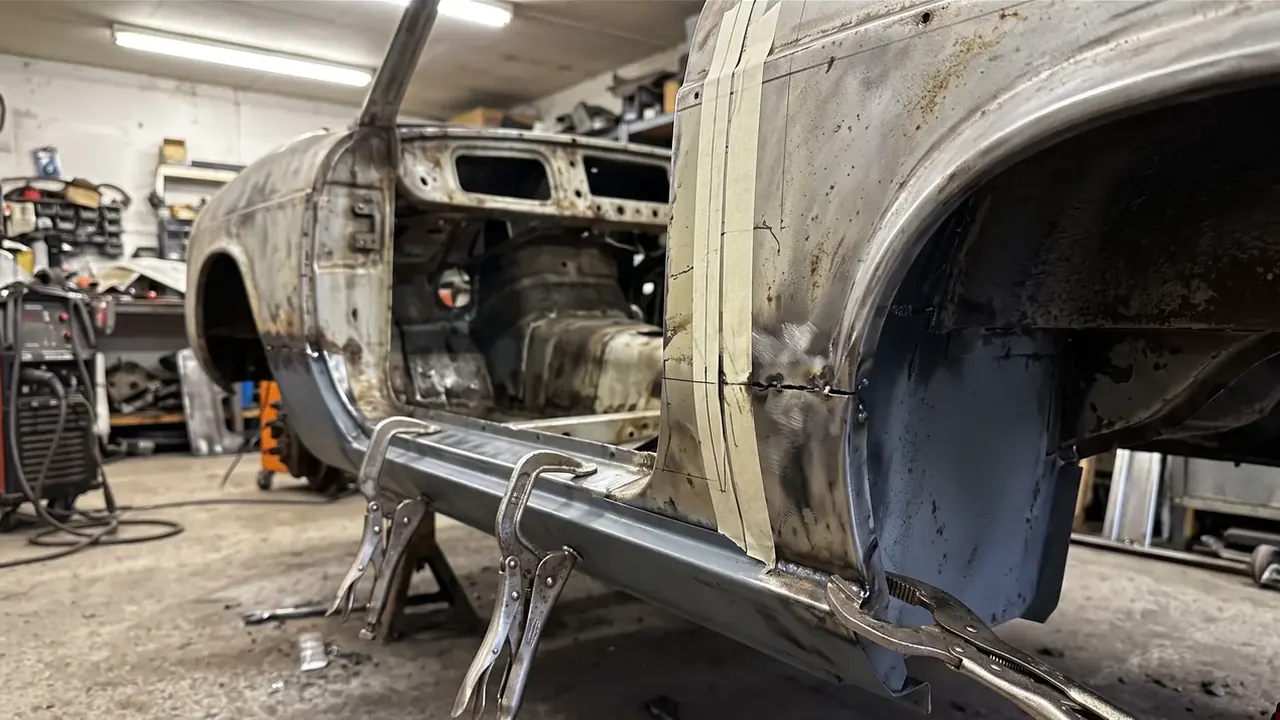
What about a car that's been welded?
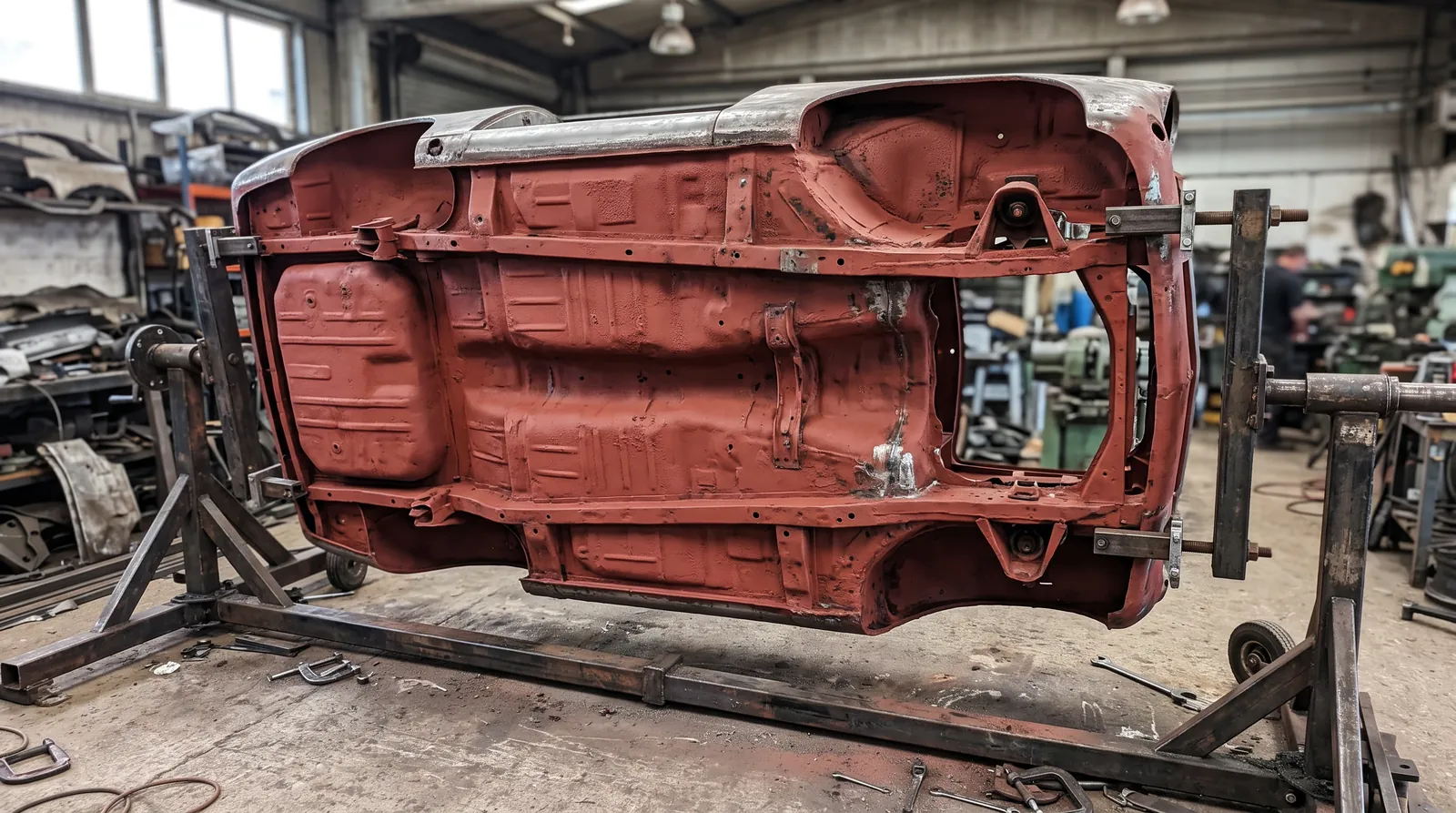
The gaps are a check on the body itself. A sill or floor repair can let the middle of a shell move, so the door gaps are checked before the old metal comes out and again before the new metal is welded in, while it can still be shifted.
If the gaps are already wrong when a car comes in, the cause is found first. It might be a dropped door, a hinge pillar that has rotted, an old accident or a body that has sagged in the middle. Shimming a door to hide a sagging shell doesn't fix the shell.
What moves the cost?
How far out the panels are to start with. A car whose doors and bonnet only need adjusting takes less time than one with new panels to shape, worn hinges to replace or a body that has dropped. We give a rough price from photos and confirm it once the car is here and stripped. See prices, and resprays for what happens once the gaps are set.
Doors not shutting right, or gaps that don't match side to side? Send us photos of both sides from the quote form.